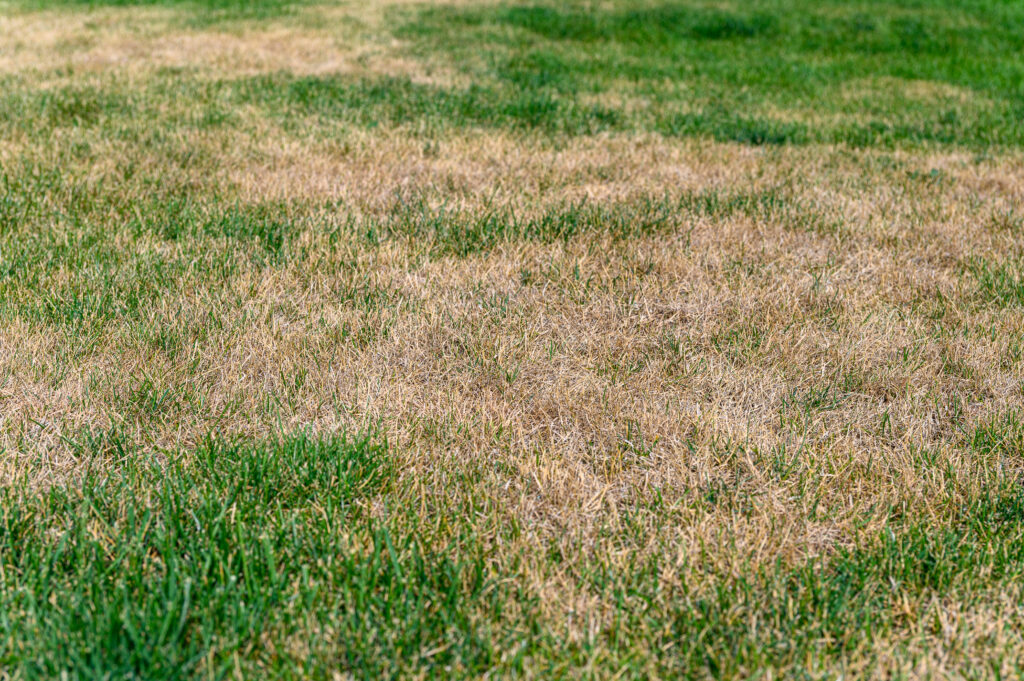

Short Answer: New Hampshire lawns commonly show five types of winter damage as the snow recedes: snow mold (circular matted patches with pink or gray rings), vole runs (snaking trails of dead grass at the soil surface), salt damage along driveways and street edges from winter de-icing, plow damage where heavy snow piles compressed turf for months, and ice damage from prolonged ice cover suffocating grass. Most snow mold and vole damage is cosmetic and recovers with light raking and a few weeks of warm weather. Salt damage often needs flushing irrigation and gypsum. Plow and ice damage where crowns died will not recover on their own and need replanting. Most lawns recover. The right intervention depends on which damage type you have.
You walk out in mid-April and look at the lawn. Brown patches everywhere. Some matted, some bare, some streaked. The lawn that went into winter looking solid is coming out looking ragged after another long New Hampshire winter. Before you panic, the good news is that most of what looks bad in early spring is recoverable with relatively light intervention. The harder part is identifying which damage type you actually have, because the recovery approach is different for each.
Across Manchester, Nashua, Bedford, Salem, Derry, Hudson, Londonderry, Hampton, Exeter, and our broader NH service area, here are the five most common winter damage types and how to tell which is happening on your lawn.
Snow Mold
Snow mold is a fungal disease that develops under prolonged snow cover. New Hampshire typically gets enough sustained snow each winter that snow mold is common when temperatures finally rise. Winters with 3+ months of continuous snow cover produce the worst pressure.
The visible signature is circular matted patches, typically 4 to 12 inches across. Pink snow mold (Fusarium patch) shows a salmon-colored ring at the active edge. Gray snow mold has a fuzzy white-gray appearance. Both can show up on the same lawn during heavier snow years. The patches feel crusty when stepped on.
Most snow mold damage is cosmetic. The grass underneath the matted layer is usually still alive at the crown level. Light raking lifts the matted blades and the underlying grass recovers within 3 to 6 weeks of warm weather.
For severe snow mold where crowns died (more common after extreme winters), the affected areas need overseeding to recover. Most NH properties do not face this; light recovery work handles routine snow mold.
Vole Runs
Vole damage shows as shallow snaking trails of dead grass that look like someone dragged a stick across the lawn. Voles are small rodents that tunnel just below the snow line through winter, eating grass crowns as they go. Properties next to wooded areas, heavy mulch beds, stone walls, or brush piles see the worst vole activity because those features provide vole habitat year-round.
The damage appears dramatic but is almost always cosmetic. The voles ate blade tissue but rarely killed crowns at the base. Once soil firms up, light raking lifts the dead grass and the surrounding turf typically fills in within 4 to 6 weeks of warm weather.
Long-term solutions include reducing vole habitat near the lawn: keeping mulch beds away from grass edges, clearing brush piles, and managing rodent populations along property boundaries.
Salt Damage Along Driveways and Walkways
Salt damage shows as brown strips paralleling driveways, walkways, or street edges. The salt accumulated through winter from de-icing applications, dehydrated the grass, and may have killed crowns in heavy zones. NH winters require significant de-icing, so salt damage is common.
The fix involves flushing irrigation in the affected areas to dissolve and leach the salt. Multiple deep waterings help. Gypsum applied to severely affected areas accelerates the leaching by displacing sodium with calcium.
Severely damaged areas where crowns died will need replanting after the soil chemistry is corrected. Light damage areas often recover within 6 to 10 weeks with flushing.
Long-term solutions include redirecting plow piles away from lawn areas, switching to less aggressive de-icers (calcium chloride is gentler than rock salt on lawns), or installing salt-tolerant plantings as buffer between lawn and hardscape in chronic damage zones.
Plow Damage
Plow damage appears as compressed dead areas where heavy snow piles sat for months. The combination of weight, prolonged moisture, and lack of light kills crowns under the pile. Properties with consistent plow pile locations (near driveways, at turnarounds) see this every year.
The visible result is bare patches that emerge as snow melts, typically with crusted dead grass. Recovery depends on whether crowns survived. Some did; some did not.
The fix is flushing and gentle raking, then replanting any areas where crowns are confirmed dead. For chronic plow pile locations, redirecting pile placement or installing pavers or mulched buffer in the pile zone is the only long-term fix.
Ice Damage
Ice damage shows as areas that suffocated under prolonged ice cover. Unlike snow which insulates and allows some gas exchange, ice creates a sealed layer that prevents oxygen from reaching crowns. Areas where ice sat for 4+ weeks often show dead grass after melt.
NH winters with thaw-freeze cycles produce more ice damage than winters with consistent cold and snow. The visible signal is brown areas in low spots, near drainage paths, or where water pooled and froze.
Recovery depends on crown survival. Some areas recover; others need replanting. The pattern of ice damage usually traces drainage paths on the property, suggesting drainage improvements that can prevent future occurrence.
The Crown Test
The single most reliable indicator of whether grass is alive or dead is the crown. The crown is the small white-to-green area at the base of each grass plant where the blade meets the soil. Live crowns produce new growth. Dead crowns do not.
To check, pull on a small section of grass. Healthy grass with intact crowns resists. Dead grass slides out easily. Look at the base. Live crowns are firm and have visible green or white tissue. Dead crowns are mushy and brown.
If most crowns in an apparently brown area are alive, that grass will green up within 4 to 6 weeks of warm weather. If most crowns are dead, the area will not recover on its own and needs reseeding or sodding.
The Recovery Sequence
For most NH lawns with typical winter damage:
Wait for the soil to firm up before doing any cleanup work. Working on saturated soil compacts and damages it. NH frost takes weeks to fully release.
Walk the lawn and document what you see. Note where damage is concentrated and what type it appears to be.
Light raking on snow mold and vole-damaged areas to lift matted grass.
Flushing irrigation on salt-damaged edges. Multiple deep waterings, then assess.
Crown checks on areas you suspect may be dead.
Patience for 4 to 8 weeks of warm weather to see what recovers naturally.
Reseeding or sodding on areas confirmed dead.
Standard spring program (pre-emergent, fertilization) on the rest of the lawn to support recovery.
When to Renovate vs Repair
If overall lawn density is below 50 percent of healthy, multiple damage types are contributing, or year-over-year trends are downward, renovation may make more sense than spot repair.
Renovation typically means killing the existing weak turf, prepping the soil, and reseeding or sodding. Cost runs $0.40 to $1.50 per square foot. For NH lawns, fall is usually the better renovation window than spring.
For most properties, targeted spot repair plus better ongoing care produces visible improvement at a fraction of renovation cost. The decision depends on how widespread the damage is.
Common NH Mistakes
Heavy power raking too early. Save aggressive dethatching for fall. Spring power raking damages dormant crowns.
Reseeding before soil warms. Cool-season seed germinates poorly until soil hits 50 to 55 degrees consistently. Late April at earliest in southern NH, mid-May in northern areas.
Heavy fertilization to push recovery. Soft new growth from heavy nitrogen is more vulnerable to summer disease.
Skipping crown checks. Most “dead” grass in early spring turns out to be dormant. Check before declaring damage permanent.
Treating all damage the same way. Different damage types need different responses. Snow mold gets raked; salt damage gets flushed; plow damage often gets replanted.
Working the lawn too soon after frost release. Soil needs to firm up before any meaningful work.
What to Do Next
If you would rather have someone else handle the timing decisions, product selection, and application for your New Hampshire lawn, we are here for that.
Lawn Squad of New Hampshire serves Manchester, Nashua, Bedford, Salem, Derry, Hudson, Londonderry, Hampton, Exeter, Merrimack, Milford, Windham, and surrounding areas.
Call us at 603-716-9498 or request a free quote at lawnsquad.com. Our VitaminLawn program is built specifically for the grass types, soils, and weather patterns in our service area. Most homeowners see noticeable improvement within the first two applications.