
Short Answer: Central Georgia Bermuda lawns typically begin green-up in mid-March, with full green-up usually complete by mid-April. The timing varies year to year based on soil temperatures, late cold snaps, fall fertilization quality from the previous year, and shade exposure. Lawns that received strong fall feeding and have full sun green up first. Lawns under tree canopy or with fertility deficits lag. Most differences between neighboring lawns even out by late April. Patience matters in early spring; aggressive intervention before the lawn is fully active rarely helps.
If you live in Central Georgia, you know the spring lawn timing question never repeats exactly. One year your Bermuda is green by St. Patrick’s Day. The next year it is still showing brown patches in mid-April. The variation is normal, and the reasons are predictable.
Across Macon, Warner Robins, Forsyth, Centerville, and our broader Central Georgia service area, here is how Bermuda green-up actually works and what affects timing on your specific property.
The Soil Temperature Trigger
Bermuda starts active growth when soil temperatures hit 65 degrees consistently. Air temperature does not directly drive green-up; soil temperature does. A few warm days do not warm the soil enough to wake up the grass.
Central Georgia soil temperatures typically reach 65 degrees somewhere between mid-March and early April depending on the year. Warm winters and early springs push timing earlier. Cold winters and late springs delay it.
Within a single property, soil temperatures vary. Sun-exposed southern slopes warm faster than shaded north sides. Open lawn areas warm faster than under tree canopy. The first parts to green up are typically the sunniest, warmest areas.
Strong Fall Feeding Drives Spring Speed
One of the biggest predictors of Bermuda green-up speed is the late-fall fertilization done the previous year. Lawns that received quality late-fall feeding (winterizer) typically green up faster and more uniformly than lawns that did not.
Fall feeding builds carbohydrate reserves in roots and stolons that the grass uses to wake up faster in spring. Without those reserves, the lawn has to build green tissue from scratch using stored sugars only, which is slower.
If your lawn is greening up slower than the neighbor’s, the answer often traces back to last fall.
Shade Effects
Bermuda needs at least 6 hours of direct sun for healthy growth. Areas under significant tree canopy receive much less sun and stay cooler longer.
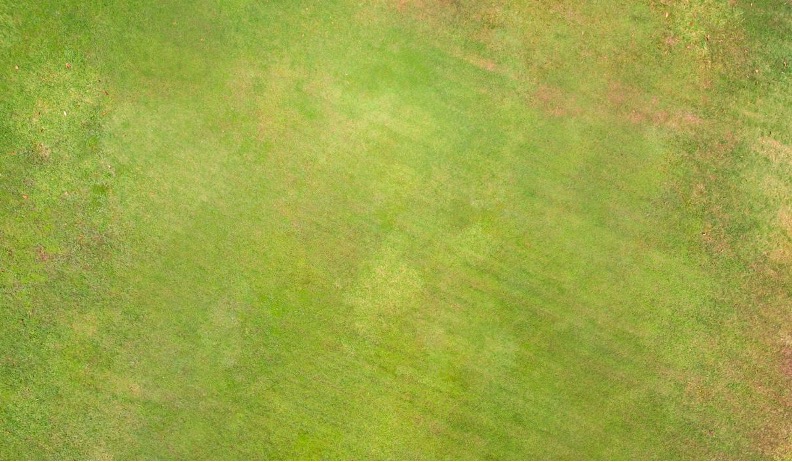
The visible result on shaded properties is patchy green-up: open lawn greens up first, shaded areas under trees green up weeks later or sometimes thin out instead of greening because of progressive shade-driven decline.
Properties with mature shade trees often have year-over-year worsening Bermuda performance under the canopy as shade increases. Switching to Zoysia or accepting that shaded zones will not match sun areas may be the right call for chronic shade decline.
Late Cold Snaps
Central Georgia winters are generally mild but occasional late cold snaps can damage Bermuda that started greening up. Severe cold (below 25 degrees) on actively greening Bermuda can set growth back by weeks.
Years with cold late-March or early-April nights typically show slower or more uneven green-up than years with consistent warm spring temperatures. There is little that can be done in the moment; the lawn recovers as warm weather returns.
Compaction and Soil Conditions
Compacted soils hold cold longer and have less root function than well-aerated soils. Areas with foot traffic or play equipment use show slower green-up than open undisturbed areas.
Annual aeration during the active growing season relieves compaction. Properties on regular aeration programs typically show faster more uniform spring green-up than properties not aerated in years.
What to Do During the Wait
Several productive things to do while waiting for full green-up:
Soil test if you have not done one in 2 years.
Spring debris cleanup. Clear sticks and accumulated leaves so the soil can absorb sunlight when the grass wakes up.
Pre-emergent crabgrass control on appropriate timing. In Central Georgia, this typically means early to mid-March, often before Bermuda fully greens up because crabgrass germinates as soon as soil hits 55 degrees, which happens before Bermuda’s 65-degree threshold.
Equipment service before the first mow.
What Not to Do
Heavy fertilization before full green-up. Bermuda cannot use nitrogen efficiently until fully active.
Aggressive raking or scalping before crowns are fully active.
Heavy traffic on still-dormant or barely-greening areas. Grass is fragile during transition.
Comparing your lawn to neighbors during transition. Comparison is unfair until both are fully green.
Panicking before mid-April. Most slow green-up resolves with patience.
Patience Factor
Most Central Georgia Bermuda lawns that look slow in mid-March look fine by late April. Spring green-up is a 4 to 8 week process, and judging your lawn at week 2 produces unfair comparisons.
Wait until late April to assess. Lawns that have not greened up by then are signaling actual issues. Lawns still catching up are usually fine.
What Pre-Emergent Timing Has to Do With Green-Up
Properties on the right pre-emergent timing produce cleaner, more uniform green-up than properties with weak or off-timing pre-emergent. The mechanism is straightforward: a healthy dense canopy without weed competition fills in evenly. A canopy fighting crabgrass and Poa annua emergence has weed pressure interrupting that uniformity.
The visible signal is patchwork green-up where weed-dominated areas show different timing and color than turf-dominated areas. Properties on multi-year strong pre-emergent programs show progressive improvement in green-up uniformity year over year.
Reading Color Changes During Wake-Up
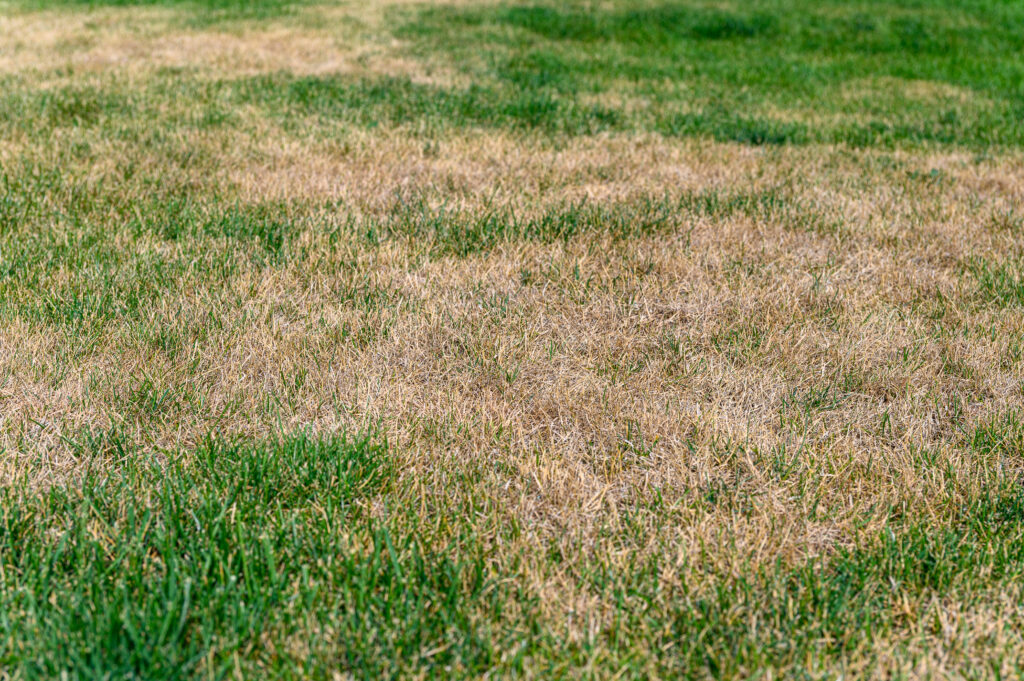
Bermuda green-up shows distinct color stages. Tan-brown dormant grass is the winter baseline. Light olive-brown indicates stolons that are awakening but blades have not yet produced new tissue. Light green is active early growth. Bright green is full activity.
Some homeowners get concerned when they see olive-brown patches and assume the grass is damaged. In most cases, olive-brown is just an intermediate stage between dormant and active. Light raking these areas reveals the green tissue underneath stolons. Patience reveals what active growth produces.
Watering During Green-Up
Watering during the green-up phase needs to support active growth without overwatering dormant or barely-active areas. Most Central Georgia Bermuda lawns coming out of dormancy do well with about half an inch of water per week from natural rainfall plus light irrigation only as needed.
Once the lawn is fully active (typically mid to late April), normal summer watering schedules apply: about 1 to 1.5 inches per week including rainfall, applied in 2 to 3 deep cycles in early morning. Properties that water heavily during the transition period often produce more disease pressure than they solve.
How Mowing Restart Affects Green-Up
When and how the first mow of the season happens influences green-up speed and quality. A first mow done on actively-growing Bermuda triggers tillering and stolon development, supporting density. A first mow on barely-active Bermuda removes the green tissue the lawn needs to drive recovery.
For Central Georgia properties, the right time for the first mow is after full green-up plus 2 weeks. Most Macon and Warner Robins lawns hit that point in late April to early May. Mowing earlier than that produces a thinner canopy that takes longer to fill in.
Cut height for the first mow matters too. Lower cuts (around 1 inch) work for properties planning to scalp later. Standard mowing height (1.25 to 1.5 inches for common Bermuda) is the safer choice for most homeowners.
Iron Application as a Green-Up Accelerator
Iron applied to actively-greening Bermuda produces visible deeper green within 5 to 7 days. The mechanism is direct: Bermuda often shows mild iron deficiency in our alkaline-to-neutral Central Georgia soils, and chelated iron applications correct the deficiency quickly.
Iron does not actually speed biological green-up; it just makes the green that has already happened more visible. Properties looking for that final color boost in mid to late April benefit from a chelated iron application. Properties expecting iron to push dormant grass into growth will be disappointed.
What to Do Next
If you would rather have someone else handle the timing decisions, product selection, and application for your Central Georgia lawn, we are here for that.
Lawn Squad of Central Georgia serves Allentown, Bolingbroke, Bonaire, Byron, Cadwell, Centerville, Chauncey, Chester, Clinchfield, Cochran, Danville, Dexter, and surrounding areas.
Call us at 478-901-2620 or request a free quote at lawnsquad.com. Our VitaminLawn program is built specifically for the grass types, soils, and weather patterns in our service area. Most homeowners see noticeable improvement within the first two applications.