
Short Answer: Massachusetts lawns commonly show two distinct types of winter damage as the snow clears: snow mold (circular matted patches with pink or gray rings) and vole runs (snaking trails of dead grass at the soil surface). The two look different and have different recovery paths. Most damage of both types is cosmetic and recovers within 4 to 6 weeks of warm weather with light raking. Severe cases where grass crowns died require overseeding or sod patching. Prevention focuses on fall practices: shorter final mow, cleared leaf debris, reduced late-season nitrogen, and avoiding heavy snow piles in lawn areas. Here is the practical guide for properties across Worcester, Framingham, Natick, Marlborough, and the surrounding Central and Eastern Massachusetts area.
If you walked your Central Massachusetts lawn this past weekend and noticed matted circular patches or snaking trails of dead grass, you are looking at the two most common winter damage signatures we see across our service area. Both have distinctive appearances. Both are mostly recoverable. And both follow predictable patterns that tell us something about the lawn.
Across Worcester, Framingham, Natick, Marlborough, Westborough, and our broader Central and Eastern Massachusetts service area, here is the practical guide to identifying these two damage types and walking through recovery.
What Snow Mold Looks Like
Snow mold is a fungal disease that develops under prolonged snow cover. Massachusetts winters typically include enough sustained snow that snow mold is common when temperatures finally rise in March.
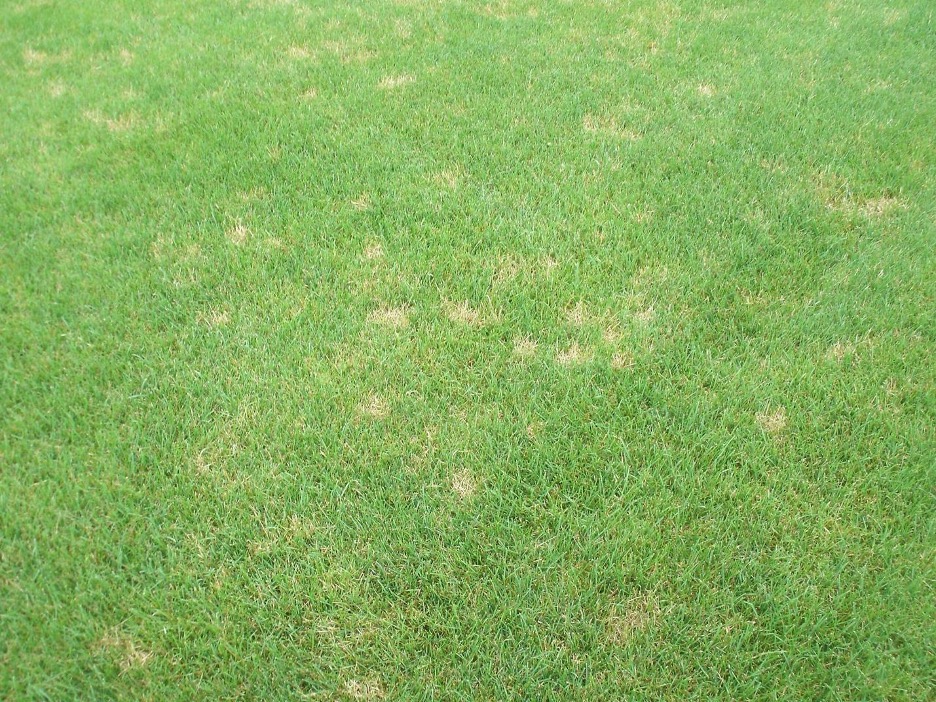
Two types affect our area. Pink snow mold (Fusarium patch) shows circular patches typically 4 to 12 inches across with a salmon-colored ring at the active edge. The grass within the patch is matted, tan, and crusty looking. Gray snow mold (Typhula blight) shows similar circular patches but with a fuzzy gray-white appearance. Both can show on the same lawn during heavier snow years.
The patches feel crusty when stepped on. The grass blades within them are matted flat and stuck together. Active fungal mycelium can sometimes be seen as fine web-like threads on close inspection during cool damp mornings.
What Vole Damage Looks Like
Vole damage shows as shallow snaking trails of dead or chewed grass that look like someone dragged a stick across the lawn. The trails are typically 1 to 2 inches wide and can run for several feet. They often connect to small holes or depressions in the lawn surface.
Voles are small rodents (often confused with mice or moles, though distinct from both) that tunnel just below the snow line through winter. They eat grass blades and crowns as they go, leaving behind the visible trails when snow clears.
Heavy vole damage can look dramatic. Lawns next to woods, brush piles, stone walls, or heavy mulched beds often show worse damage than open lots because voles use those features for cover.
How to Tell Which Is Which
The visual difference is fairly clear once you know what to look for. Snow mold makes circular or roughly oval patches with a distinct edge. Vole damage makes linear, snaking trails that branch and reconnect.
Some lawns have both, sometimes overlapping. A vole trail running through an area where snow sat heavily can show both linear chewed paths and circular fungal patches in the same square yard. Each type still recovers along its own timeline.
Why Massachusetts Lawns Get These Specific Problems
Several factors create ideal conditions for both:
Long winters with sustained snow cover. Massachusetts typically sees 6 to 14 weeks of sustained snow each winter, providing the moist insulated environment snow mold needs and the cover voles use to move freely.
Heavy snow piles from plowing. Areas where snow accumulates extra high (along driveways, walks, and curbs) face heavier snow mold pressure because cover lasts longer and creates more anaerobic conditions.
Mature properties with significant tree canopy. Shaded areas hold snow longer and stay cooler through spring, extending damage windows.
Adjacent natural areas. Properties bordering woods, brush, or undeveloped land see more vole activity than properties in fully developed neighborhoods.
Long fall growth seasons. Late fall growth that did not get its final mow before winter provides more grass tissue for both diseases and voles to attack.
Recovery From Snow Mold
Most snow mold damage is cosmetic. The grass underneath the matted layer is usually still alive at the crown level. Light raking lifts the matted blades and the underlying grass recovers within 3 to 5 weeks of warm weather.
The recovery sequence: wait until the soil firms up enough to walk on without leaving deep footprints. Lightly rake affected patches with a leaf rake, just enough to lift the crusty surface and improve air circulation. Avoid aggressive raking that pulls up healthy grass with the damaged tissue.
For severe snow mold where crowns died (rare but possible after very long snow cover or in areas with anaerobic conditions), affected zones need overseeding to recover. Most Massachusetts properties do not face this; light recovery work handles routine snow mold.
Fungicide treatment is rarely needed for snow mold once the snow has melted. The disease is no longer active. Treatment has limited benefit at this point. Properties with chronic severe snow mold may benefit from a preventative fungicide application in late fall before the first snow.
Recovery From Vole Damage
Vole damage looks dramatic but is almost always cosmetic. The voles ate blade tissue but rarely killed crowns at the soil surface. Once the lawn fills in during active growing season, the trails disappear.
The recovery sequence: walk the lawn and document where damage shows. Light raking on the trails lifts the dead grass and improves air circulation. Surrounding grass typically fills in within 4 to 6 weeks of warm weather as new tillers and stolons spread.
Severe vole damage where grass crowns died, often in heavier vole years or in spots where rodents concentrated for weeks, may need overseeding for full recovery. Light pet damage and standard vole runs usually recover on their own.
Telling Crown Damage From Surface Damage
The single most useful skill in winter damage assessment is the crown test. The crown is the small white-to-green area at the base of each grass plant where the blade meets the soil. Live crowns produce new growth. Dead crowns do not.
To check, pull on a small section of grass in a damaged area. Healthy grass with intact crowns resists. Dead grass slides out easily. Look at the base. Live crowns are firm and have visible green or white tissue. Dead crowns are mushy, brown, or absent.
If most crowns in an apparently brown area are alive, that grass will green up within 4 to 6 weeks of warm weather. If most crowns are dead, the area will not recover on its own and needs reseeding.
Prevention Through Fall Practices
Both snow mold and vole damage are largely preventable. Fall practices substantially reduce or eliminate the problem.
Lower final mow height. Cut the lawn to 2.5 to 3 inches for the final mow of the season, slightly shorter than your summer height. The shorter cut reduces grass tissue available to both fungus and rodents while improving air circulation.
Reduce late-season nitrogen. Avoid heavy nitrogen applications in October. Soft late growth is more disease-prone and provides more food for voles.
Clear all leaf debris before snow. Leaves trapped under snow create disease pockets and rodent cover. Mulch leaves into the lawn during fall mowing or remove them entirely.
Avoid piling snow on lawn areas where possible. Plowed snow that sits in deep piles for months produces some of the worst snow mold every year. Where snow piles are unavoidable, expect to do remediation in those areas each spring.
Reduce vole habitat near the lawn. Heavy mulch piles, brush, stone walls, and dense ground covers next to lawn areas all provide vole cover. Thinning these features helps. Trap voles in chronic-problem properties where habitat changes are not possible.
Improve drainage in chronic problem areas. Compacted poorly draining areas get worse snow mold than well-drained zones. Fall aeration improves drainage.
What Does Not Help
Heavy raking that damages dormant crowns. Light raking is good; aggressive raking removes healthy grass along with damaged tissue.
Heavy fertilization to push recovery. Soft new growth from heavy nitrogen is more vulnerable to other early-spring diseases.
Watering more in spring to revive matted areas. Spring lawns rarely need extra water; matted grass needs air, not water.
Spring fungicide on dormant snow mold. The disease is no longer active. Treatment is unnecessary.
Ignoring the problem and assuming the lawn will recover on its own. Light damage does. Severe damage often does not.
What Massachusetts-Specific Conditions Add
A few factors make our area particularly prone:
Long winters with reliable snow cover from December through March most years.
Heavy snow accumulation in some neighborhoods, particularly higher elevations and properties on the north side of structures.
Mature properties with significant tree canopy that shades lawns and slows snow melt.
Adjacent woods and natural areas common in the Worcester County and Metro West suburbs where vole habitat is abundant.
Cold spring weather that prolongs the recovery period before active growth resumes.
Fescue and Kentucky bluegrass lawns common across the area, both susceptible to snow mold pressure and vole damage.
What to Do Next
If you would rather have someone else handle the timing decisions, product selection, and application for your Central and Eastern Massachusetts lawn, we are here for that.
Lawn Squad of Central and Eastern Massachusetts serves Acton, Andover, Ashland, Bedford, Billerica, Burlington, Carlisle, Chelmsford, Concord, Danvers, Framingham, Franklin, and surrounding areas.
Call us at 617-468-4486 or request a free quote at lawnsquad.com. Our VitaminLawn program is built specifically for the grass types, soils, and weather patterns in our service area. Most homeowners see noticeable improvement within the first two applications.