Short Answer: Sod webworms cause some of the worst lawn damage we see across the Palm Beaches in late spring and summer. The damage shows as ragged irregular brown patches, often appearing almost overnight, with chewed grass blades visible on close inspection. Treatment requires the right insecticide applied at the right life stage. Prevention combines watering practices, healthy turf, and timely scouting. Most damaged areas recover with proper care once the active feeding stops. Here is the practical guide for properties across West Palm Beach, Boca Raton, Delray Beach, and the surrounding Palm Beaches area.
You walk out one morning and notice ragged brown patches across your Palm Beach area lawn that were not there a week ago. The grass blades along the edges look chewed. Birds and lizards seem more active in the affected areas than usual. You are likely looking at sod webworm damage.
Sod webworms are one of the most destructive pests on St. Augustine, Bermuda, and Bahia lawns across our service area. Their damage can transform a healthy lawn into a patchwork of brown areas within days during peak feeding.
Across West Palm Beach, Boca Raton, Delray Beach, Lake Worth, and our broader Palm Beaches service area, here is what to look for and what actually works to stop them.
What Sod Webworm Damage Looks Like
The damage progresses through several stages:
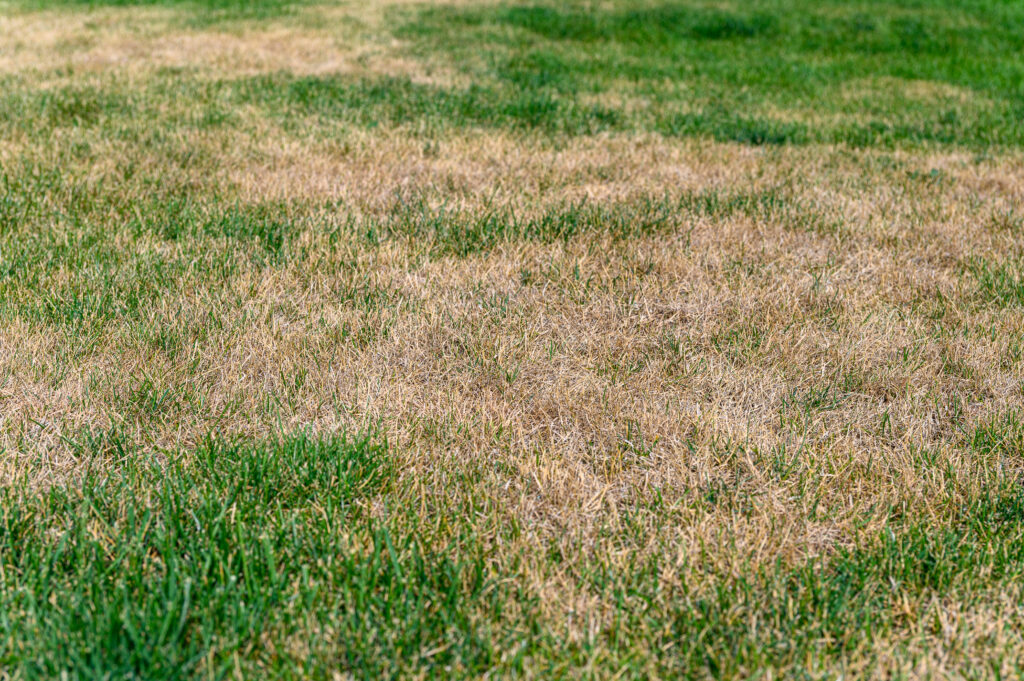
Early stage: small irregular brown spots, often the size of a fist or smaller, scattered across the lawn. Easy to miss or dismiss as drought stress.
Mid stage: spots merge into larger brown patches with ragged edges. Grass blades within the affected areas show feeding damage when examined closely. Look for blades chewed off at unusual angles or showing notches along edges.
Late stage: large bare or thin areas where webworm populations have consumed significant grass tissue. Damage can resemble drought stress but does not respond to watering.
Active populations are visible in early morning or late evening. Walk the lawn slowly and look for small green or tan caterpillars (about half an inch long) at the soil surface or moths flying low over the grass at dusk.
The Soap Test
To confirm sod webworm activity, mix 2 tablespoons of dish soap into a gallon of water and pour it over a 1-foot square area at the boundary between damaged and healthy turf. Within minutes, the soap irritates and drives caterpillars to the surface. Counts of 5 or more in that square area indicate an active infestation that needs treatment.
The soap test also reveals other lawn caterpillars (army worms, cutworms) that respond to similar treatments.
Why Sod Webworms Hit Palm Beach Lawns
Several factors create ideal conditions in our area:
Long growing season. Multiple generations per year are possible in our climate, with peak activity from April through October.
Warm humid nights. Adult moths are most active during warm humid evenings, exactly the conditions our climate provides routinely.
Lush actively-growing turf. Webworms prefer healthy growth over dormant or stressed grass. Properties with high-input lawn care often face more webworm pressure than neglected lawns.
Thatch buildup. Heavy thatch provides shelter for caterpillars and protects them from predators and treatment.
Limited natural predators in most residential settings. Birds, lizards, and beneficial insects help, but populations can outpace natural control.
How We Treat Active Infestations
Active sod webworm damage requires a targeted insecticide application. Several active ingredients work effectively:
Bifenthrin and similar pyrethroids provide quick knockdown.
Spinosad-based products work well and have lower environmental impact.
Bacillus thuringiensis (Bt) is a biological option that targets caterpillars specifically without affecting beneficial insects.
Application timing matters. Late afternoon applications coincide with the time webworms are most active at the soil surface. Watering the lawn the day before treatment helps drive caterpillars up where the product can reach them.
Read product labels for application rates and post-treatment watering instructions. Some products require watering in; others require no irrigation for 24 hours.
Why Some Treatments Fail
Wrong product. Many lawn pest products do not effectively target lepidopterous larvae like sod webworms.
Wrong timing. Treating during the day when caterpillars are deep in the thatch reduces contact and effectiveness.
Insufficient coverage. Spot treatment leaves untreated areas where webworms continue feeding. Treat the affected area plus a buffer of healthy grass.
Single applications when multiple are needed. Heavy infestations often require follow-up treatment 10 to 14 days later targeting newly hatched caterpillars.
Heavy thatch protecting the population. Untreated thatch problems perpetuate webworm populations regardless of treatment.
Damage Recovery
The good news about sod webworm damage is that the grass crowns typically survive even when significant blade tissue is consumed. Recovery is usually faster than disease damage.
Light damage where the crowns are intact recovers within 3 to 5 weeks of feeding stopping. Deep watering and balanced fertility support faster recovery.
Severe damage where caterpillars consumed enough tissue to kill crowns will not recover on its own. Plugging or sodding is required for these areas.
Prevention Strategies
Several practices reduce sod webworm pressure over time:
Regular monitoring. Walk the lawn weekly during peak season (April through October) looking for early signs of damage. Early detection limits spread.
Reduce thatch through annual aeration. Heavy thatch is a webworm haven.
Avoid excessive nitrogen. Lush over-fertilized growth attracts more webworms and faster damage.
Encourage natural predators. Tolerating birds and lizards in the yard, avoiding broad-spectrum insecticides that kill beneficial insects, and maintaining some plant diversity all support natural control.
Consider preventative applications on high-pressure properties. Properties with sod webworm history may benefit from a preventative insecticide application in late spring before populations build.
Mow at proper height. Slightly taller mowing produces denser turf that resists damage better.
What Doesn’t Work
Watering more after damage appears. Helps recovery once webworms are stopped but does nothing to control active populations.
Adding nitrogen to revive damaged areas before the population is controlled. Often makes the problem worse by feeding the next generation.
Generic broad-spectrum insecticides without confirming the active ingredient targets webworms.
Treating only the visibly damaged area. Webworms are typically already feeding in surrounding apparently healthy grass.
Ignoring early signs. Damage spreads exponentially during peak generations. Acting at first sign limits total damage substantially.
Distinguishing Webworms From Similar Damage
Several other problems can produce similar symptoms:
Chinch bug damage tends to start at sunny edges and spreads outward. Webworm damage is more scattered and irregular.
Drought stress responds to watering. Webworm damage does not.
Disease damage often shows characteristic patterns (rings, smoky edges, distinct shapes) that webworm damage lacks.
Pet urine damage is concentrated and matches the pet’s habits.
The soap test is the definitive way to confirm sod webworms when symptoms are unclear.
Palm Beach Specifics
Several factors make sod webworms particularly active in our area:
Year-round growing season with multiple generations per year.
Long humid summer evenings when adult moths are most active.
High-input lawn care common across many properties, producing the lush growth webworms prefer.
Established St. Augustine plantings with significant thatch buildup.
Limited natural predator populations in many gated communities and intensively landscaped properties.
What to Do Next
If you are seeing irregular brown patches with chewed grass blades on your Palm Beach area lawn, the sooner we treat, the less damage you have to deal with. We walk properties across West Palm Beach, Boca Raton, Delray Beach, and our broader service area to confirm the diagnosis, time the treatment correctly, and put together a prevention plan to keep webworms from returning. If you would rather have someone else handle the timing decisions, product selection, and application for your Palm Beaches lawn, we are here for that.
Visit lawnsquad.com to find Lawn Squad of The Palm Beaches and request a free quote. Our VitaminLawn program is built specifically for the grass types, soils, and weather patterns in our service area. Most homeowners see noticeable improvement within the first two applications.