Short Answer: The best time to aerate North Shore Massachusetts lawns is early to mid September. Cool soil temperatures, active root growth, reliable rainfall, and reduced weed pressure all work together to maximize the benefits. Spring aeration is sometimes appropriate but creates pre-emergent timing conflicts and exposes lawns to summer weed pressure. Aerating during summer or winter is generally counterproductive. The right approach is annual fall core aeration combined with overseeding for cool-season lawns. Here is the practical guide for properties across Beverly, Salem, Marblehead, and the surrounding North Shore.
Aeration is one of the most beneficial lawn services for North Shore Massachusetts properties, and getting the timing right doubles or triples the value. Aerating at the wrong time can actually hurt the lawn rather than help it.
Across our service area covering Beverly, Salem, Marblehead, Peabody, Danvers, and surrounding North Shore communities, here is the practical guide to when aeration produces real results and why fall is almost always the answer.
What Aeration Actually Does
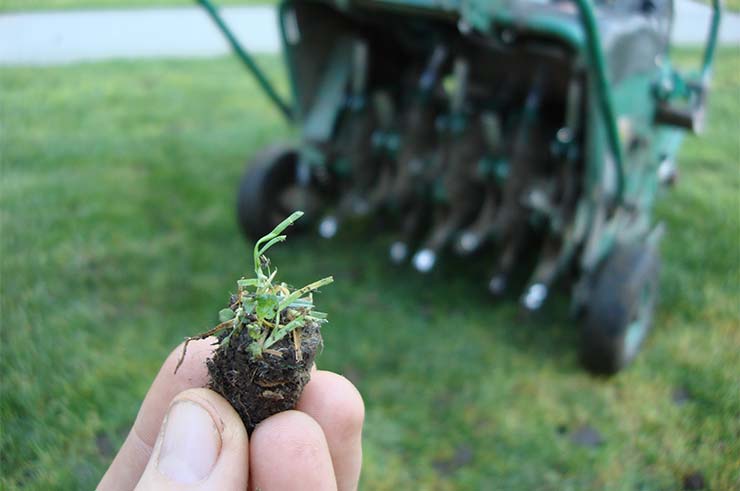
Core aeration pulls small plugs of soil and thatch from the lawn, leaving holes about 2 to 3 inches deep across the surface. Several beneficial things happen as a result:
Soil compaction relieved. Foot traffic, mowers, and natural settling compact soil over years. Compacted soil holds less water, supports fewer roots, and produces weaker grass. Aeration creates immediate channels for air, water, and nutrients to reach the root zone.
Thatch reduced. Heavy thatch (over half an inch) blocks water penetration and harbors disease. Aeration plugs bring soil microorganisms to the surface that accelerate thatch decomposition.
Root growth stimulated. Roots find the soft channels created by aeration and grow into them, producing deeper, denser root systems.
Overseeding effectiveness improved. Seed dropped into aeration holes makes excellent soil contact and germinates more reliably than seed broadcast on intact turf.
Fertilizer reaches roots faster. Granular nutrients fall into aeration holes rather than sitting on the surface.
Why Fall Is the Right Time
Several factors converge in early to mid September that make it the ideal window for aeration on cool-season lawns in our climate.
Soil temperature. Cool-season grass roots grow most actively when soil temperatures are between 50 and 65 degrees. September brings exactly this range, which means the lawn capitalizes on aeration immediately.
Reduced weed pressure. Most summer weeds (crabgrass especially) have stopped germinating by September. Spring aeration creates open soil at exactly the wrong time, when weeds are actively germinating.
Reliable rainfall. New England Septembers typically deliver enough rain to keep aerated soil moist without flooding. The plugs break down naturally and the holes stay open long enough for roots to colonize.
Overseeding window. Fall is also the best time to overseed cool-season lawns. Combining aeration and overseeding in the same week multiplies the benefit of each.
Recovery before winter. Aerated and overseeded lawns have 6 to 8 weeks to establish before frost. The lawn enters winter denser and stronger, which means a faster spring green-up and reduced winter damage.
Spring Aeration: When It Makes Sense
Spring aeration is sometimes appropriate but rarely the right first choice. Conditions that justify spring aeration:
Severe compaction limiting spring green-up. Heavy clay or new construction lawns sometimes need spring aeration just to function.
Late fall aeration not done the previous year. If you missed the September window, spring is the secondary option.
Sod or new lawn installation needing to integrate with existing turf.
The catch with spring aeration is that it creates timing conflicts with pre-emergent crabgrass control. Aeration done after pre-emergent application disrupts the chemical barrier and lets crabgrass through. The workaround is aerating in early April before pre-emergent, but this is challenging in years with cold late springs.
For most cool-season lawns, fall aeration is simply better than spring aeration. If you can only do one, choose fall.
What About Summer Aeration?
Summer aeration is generally not recommended for cool-season lawns. The combination of heat, drought stress, and active weed germination means the holes do more harm than good. Aerated soil dries out fast in summer heat. Crabgrass and other summer weeds happily fill the open spaces. Most commercial lawn services do not aerate cool-season grasses in July or August.
Some specific exceptions: warm-season grass (Zoysia, Bermuda) can benefit from summer aeration during peak growth. New construction lawns sometimes need summer aeration to manage extreme compaction. These are exceptions, not the default.
What About Winter or Very Late Fall?
Aerating after the lawn has gone dormant produces no benefit. The lawn cannot heal or grow into the holes. Winter aeration on frozen ground damages turf without producing any of the benefits of properly timed aeration.
Late October aeration in our area is usually the latest practical window before the lawn shuts down for winter. After mid-October, results drop off significantly.
How Often to Aerate
Most North Shore lawns benefit from annual aeration. Properties with severe compaction, heavy clay soil, or significant traffic may benefit from twice-annual aeration in years where major recovery is needed.
Lawns on sandy soil or with minimal traffic can stretch to every other year. The visible signal that aeration is overdue is increasingly compacted feel underfoot, water that runs off rather than soaking in, and grass that thins despite proper care.
Core Aeration vs Spike Aeration
Core aeration pulls actual plugs of soil and thatch out of the ground. This is the type of aeration that produces real benefits.
Spike aeration uses solid tines that punch holes without removing soil. Spike aeration is largely ineffective and may actually increase compaction by pressing soil sideways. If you see a lawn service offering aeration, ask whether they pull cores. If not, the service is not delivering real value.
Liquid aeration products claim to break up compaction chemically. Research generally does not support strong results from liquid products compared to mechanical core aeration. They can be a supplement but not a replacement.
Combining With Overseeding
The single most valuable combination in lawn care is fall aeration with overseeding done the same day. The aeration holes give seed perfect soil contact. The cool September weather and reliable rain support germination. The combination rebuilds density faster than either practice alone.
For most North Shore lawns, this combination should be an annual investment. Properties on a 3 to 5 year cycle of aeration plus overseeding develop noticeably denser, healthier turf than properties that skip the practice.
Watering After Aeration
Aerated lawns benefit from deep watering for the next 2 to 3 weeks to keep cores soft and support new root growth. If overseeding was done at the same time, watering shifts to lighter and more frequent (twice daily for 10 minutes) for the first 2 weeks to support germination.
Common Mistakes
Skipping aeration entirely. The most common mistake. Compaction builds up gradually and the lawn weakens slowly until obvious problems appear.
Aerating in spring without considering pre-emergent timing.
Hiring services that do spike aeration rather than core aeration.
Aerating wet sloppy soil. Wait until the lawn is moist but not soaked.
Not following up with overseeding. The aerated holes are perfect seedbeds; not using them is a missed opportunity.
What to Do Next
If you are not sure whether your North Shore Massachusetts lawn needs aeration or want help building a complete fall renovation program, we walk properties across Beverly, Salem, Marblehead, and our broader service area to evaluate compaction, recommend timing, and combine aeration with the overseeding and fertility work that produces real results. If you would rather have someone else handle the timing decisions, product selection, and application for your North Shore lawn, we are here for that.
Visit lawnsquad.com to find Lawn Squad of North Shore and request a free quote. Our VitaminLawn program is built specifically for the grass types, soils, and weather patterns in our service area. Most homeowners see noticeable improvement within the first two applications.