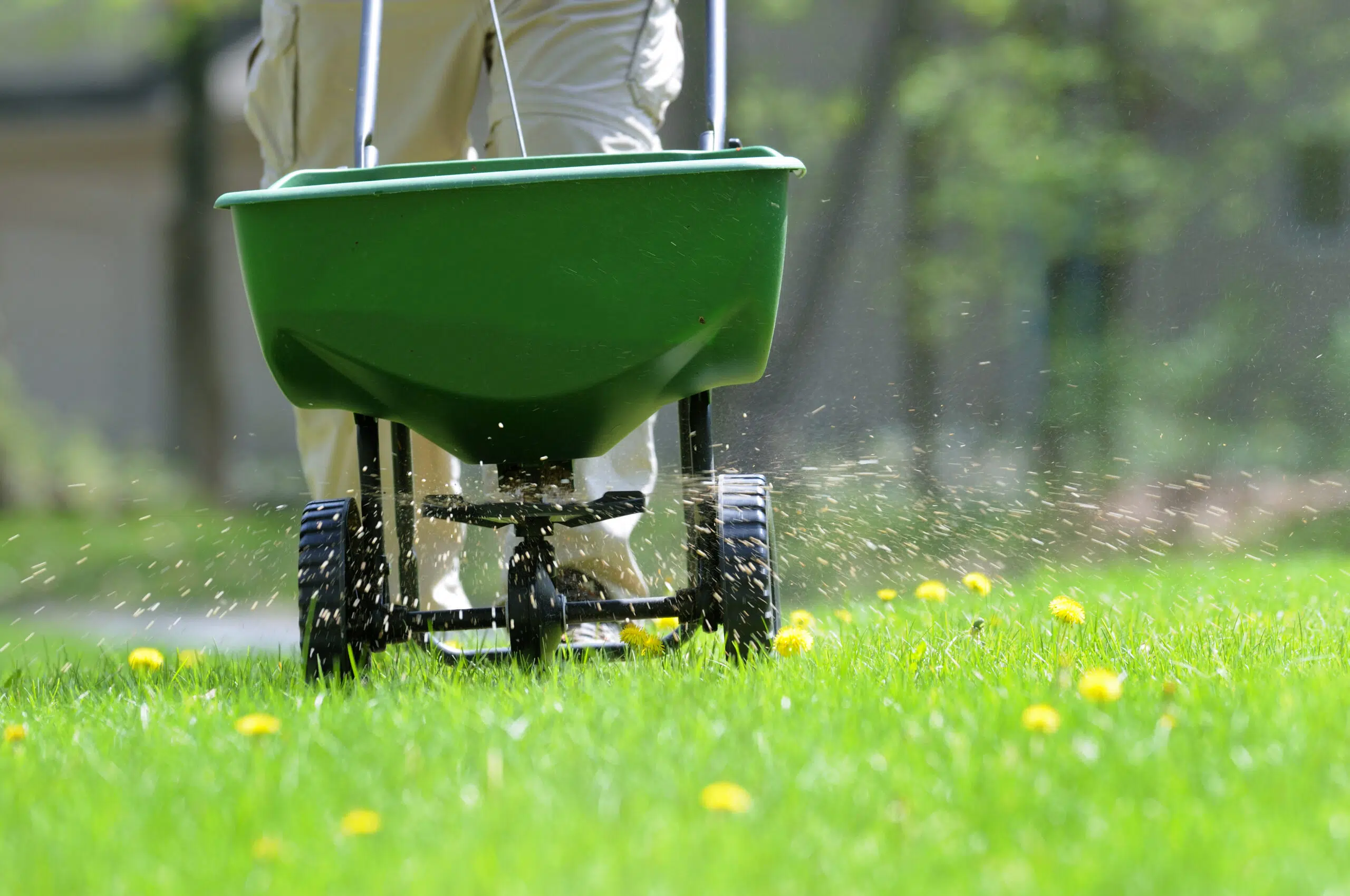
Short Answer: For Central and Eastern Massachusetts cool-season lawns, the best fertilizer schedule is 4 to 5 applications per year, with the heaviest in fall. Late March or early April brings the spring wake-up application. May to June brings a moderate spring boost. July is typically skipped or kept very light. Late August through September is the most important visit of the year, supporting peak fall growth. Late October to early November brings the winterizer application. Annual total nitrogen runs 3 to 4 pounds per 1,000 square feet for most lawns. Fall matters more than spring in our climate. Here is the practical schedule.
If you are managing fertilization for a cool-season lawn anywhere across Central and Eastern Massachusetts, getting the timing right matters more than getting the specific product right. The same fertilizer applied at the wrong time produces weaker results than a basic fertilizer applied at the right time. Across Andover, Concord, Framingham, Burlington, and our broader service area, here is the practical month-by-month schedule.
Why Fall Matters Most for Cool-Season Grass
Cool-season grasses (tall fescue, Kentucky bluegrass, perennial ryegrass) do their most efficient growth during cool weather. Spring is good but lasts only weeks before summer stress begins. Fall growing season runs from late August through October in Eastern Massachusetts, often 8 to 10 weeks of optimal growth conditions.
Fertility applied during fall produces the strongest density gains. Spring fertility, while important, is overshadowed by what happens in fall. If you can do only one or two applications per year, do them in fall.
Late March to Early April: Spring Wake-Up Application
The first fertilization of the year goes down as the lawn begins active growth, typically when the lawn needs its first mowing. Soil temperatures should be in the 50s consistently.
Application: light to moderate nitrogen with a balanced fertilizer. Rates typically 0.5 to 0.75 pounds of nitrogen per 1,000 square feet.
Pre-emergent herbicide for crabgrass control is often combined with this application. Soil temperature timing is more important than calendar date for the pre-emergent component, particularly in years with unusual spring weather.
Purpose: support early spring growth as the lawn comes out of winter dormancy. Provides nitrogen for color and density without pushing excessive top growth that would stress the lawn entering summer.
Mid-May to Early June: Spring Boost
Second application typically goes down 6 to 8 weeks after the first. The lawn is fully active and growing strongly through this window.
Application: moderate nitrogen with broadleaf weed control if needed. Rates 0.75 to 1 pound of nitrogen per 1,000 square feet.
Purpose: support continued spring growth and address any weed pressure (dandelions and clover are at peak vulnerability now). Sets up the lawn to handle summer stress better.
Late June to July: Light or Skip
This is the most debated visit in the New England fertilization calendar. Two valid approaches:
Skip the summer application entirely. Cool-season grasses are stressed in summer heat, and pushing nitrogen during stress can cause more harm than good. Many professional programs skip this round.
Light summer application focused on iron and minimal nitrogen to maintain color without forcing growth. Rates typically 0.25 to 0.5 pounds of nitrogen per 1,000 square feet, or just iron and micronutrients.
The right choice depends on your lawn condition. Healthy lawns typically benefit from skipping. Stressed or recovering lawns may benefit from light support. Pushing heavy nitrogen on humid Massachusetts summer turf invites brown patch fungus.
Late August to Early September: Fall Recovery Application
This is the most important application of the year for cool-season lawns. As temperatures cool and grass enters its peak growing season, fertilization fuels density-building growth.
Application: substantial nitrogen application. Rates 1 to 1.5 pounds of nitrogen per 1,000 square feet.
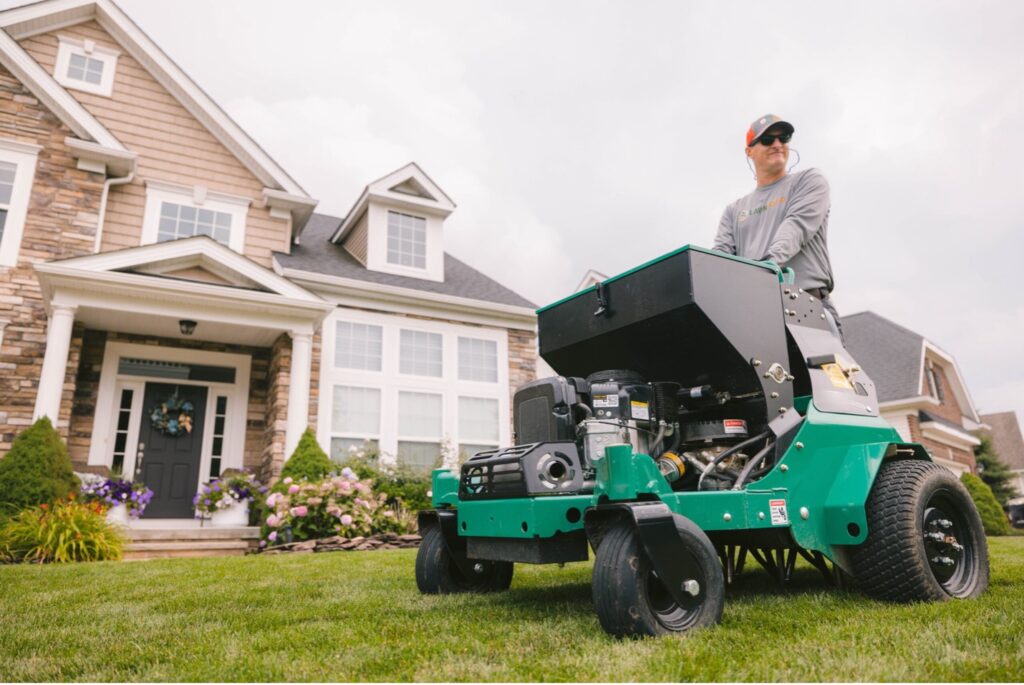
If overseeding is planned, this application coordinates with seeding. Aeration combined with overseeding and this fertilization produces the highest-value lawn renovation work available for cool-season lawns. The combination produces dramatic improvement that no other single intervention matches.
Purpose: rebuild density that summer stress damaged, support root development heading into winter, fuel the fall growth flush that produces a thicker lawn next spring.
Late October to Early November: Winterizer
The final fertilization of the year goes down before the lawn fully stops growing. The lawn is still actively photosynthesizing but mostly above ground; below ground, root growth continues.
Application: nitrogen plus higher potassium content. Rates typically 1 pound of nitrogen per 1,000 square feet.
The potassium component is sometimes called “winterizer” and helps with cold tolerance and disease resistance through winter. Particularly important in our climate where cold temperatures and snow cover put significant stress on dormant turf.
Purpose: store nutrients in the root system for spring use, improve cold hardiness, support disease resistance through dormancy.
Annual Nitrogen Targets
For most Central and Eastern Massachusetts cool-season lawns, total annual nitrogen should fall between 3 and 4 pounds per 1,000 square feet. Applying more does not improve results and can cause environmental issues plus disease pressure.
Higher rates (4 to 5 pounds annually) are sometimes appropriate for high-traffic athletic-style lawns or for renovation projects rebuilding density. Lower rates (2 to 3 pounds) work for low-input or organic-focused programs.
Tracking total nitrogen across applications keeps the lawn properly fed without overdoing it.
Slow-Release vs Quick-Release Nitrogen
Most professional fertilizers contain a mix of quick-release and slow-release nitrogen. Quick-release provides initial green-up. Slow-release feeds the lawn over the following 4 to 8 weeks.
For New England cool-season lawns, slower-release products produce more even growth and lower risk of fertilizer burn during application. Quick-release products can be useful in fall when you want maximum growth response, but they produce more burn risk if applied incorrectly.
Organic fertilizers (made from poultry manure, alfalfa meal, blood meal, or similar sources) are slow-release by nature and work well for homeowners who prefer organic programs. They typically need slightly higher rates to achieve the same nitrogen delivery as synthetic blends, but they also build soil organic matter over time.
What Not to Do
Heavy summer nitrogen on stressed cool-season grass. Pushes soft growth that invites disease and stresses already-stressed turf.
Skipping fall applications. The single biggest fertilization mistake in our climate. Fall is when cool-season grass thrives.
Applying fertilizer too late in fall after grass has gone fully dormant. Wasted product, and may contribute to nutrient runoff.
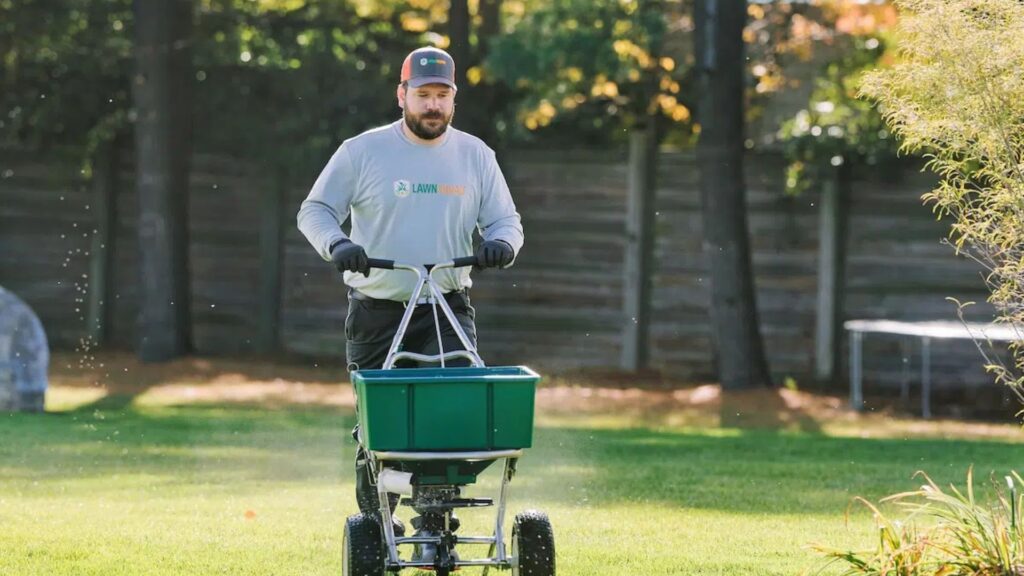
Applying fertilizer to dry lawn without watering in. Concentrated product on hot dry blades produces fertilizer burn. Granular products especially need to be watered in within 24 to 48 hours.
Using wrong product for the season. Heavy nitrogen winterizer applied in spring produces weak results compared to balanced spring blends.
Combining With Other Practices
Fertilization alone produces only part of the result. The strongest cool-season lawns combine the right fertilizer schedule with proper mowing height (3.5 to 4 inches), deep infrequent watering, fall aeration, and overseeding to maintain density.
Soil testing every 3 to 5 years confirms that fertility decisions are matching what the soil actually needs. Mass Audubon and UMass Extension both offer affordable soil testing services that pair well with a structured fertilization program.
What to Do Next
If you want help dialing in fertilization for your specific Central or Eastern Massachusetts lawn, we walk properties across our service area to recommend the right schedule based on grass type, soil conditions, and current health. If you would rather have someone else handle the timing decisions, product selection, and application, we are here for that.
Lawn Squad of Central and Eastern Massachusetts serves Acton, Andover, Ashland, Bedford, Billerica, Burlington, Carlisle, Chelmsford, Concord, Danvers, Framingham, Franklin, and surrounding areas.
Call us at 617-468-4486 or request a free quote at lawnsquad.com. Our VitaminLawn program is built specifically for the grass types, soils, and weather patterns in our service area. Most homeowners see noticeable improvement within the first two applications.