Short Answer: In May, Aurora lawns transition out of spring recovery into active growth, and a few specific actions now will carry your lawn through the Fox Valley’s July and August heat. The biggest priorities this month are: shift from daily shallow watering to deep infrequent cycles, apply a second round of pre-emergent if your first was in early April, handle broadleaf weed flushes while they’re actively growing, watch for early grub activity, and plan the June grub preventive. Below is the week-by-week plan we follow across Aurora, Naperville, Oswego, Plainfield, and the rest of our service area.
You step onto your Aurora, Naperville, or Oswego lawn one May morning and the picture looks different than it did in early April. The grass is growing fast, the neighbor is mowing twice a week, dandelions are in full bloom along the driveway, and the humidity is starting to feel different. April was about waking the lawn up. May is about setting it up for summer.
We see two kinds of Aurora homeowners in May. The first is the person who crushed April, got the pre-emergent down on time, and now wants to know what happens next. The second is the person who is behind, did not get the pre-emergent in, and is trying to figure out how to salvage the season. This checklist speaks to both. Here is what we do, week by week, on Fox Valley lawns in May.
Week 1 of May: Shift Your Watering Strategy
April watering for Aurora cool-season lawns should have been light to none. Spring rain and cool temperatures meant your Kentucky bluegrass and fescue needed minimal help. May is when that changes.
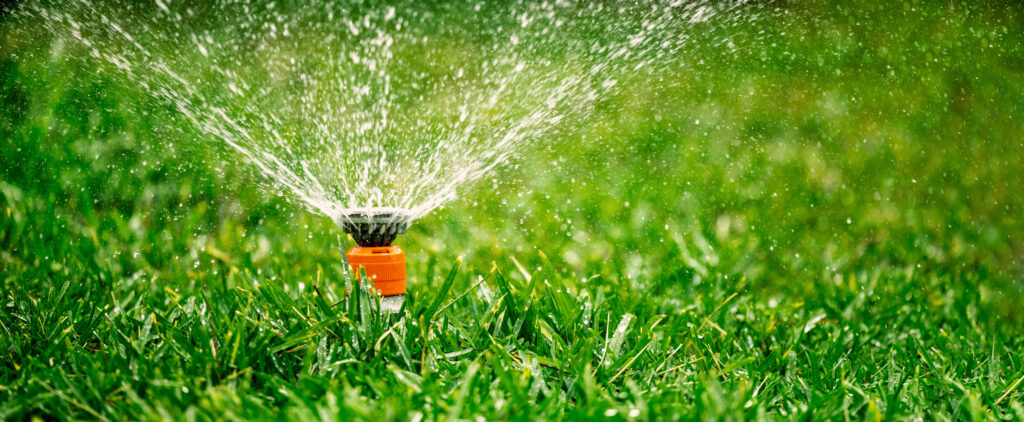
The single biggest watering mistake we see across Naperville and Plainfield lawns is daily shallow watering. A homeowner sets the irrigation for 10 minutes every morning, which puts down maybe a quarter inch of water. That water evaporates before it reaches the root zone, and the grass develops shallow roots that cannot survive July heat.
The right May strategy on Aurora clay: 1 inch of water per week, delivered in one or two deep soakings, early morning only (target 4 to 7 a.m.). Use a rain gauge or tuna can to measure how long your system needs to run to put down half an inch. Then water that long, twice a week, if rainfall has not covered the week’s needs.
Clay soil holds water longer than sand. You can go longer between watering cycles than homeowners on sandy Florida or Texas soils. What matters in Aurora is depth, not frequency.
Week 2 of May: Second Pre-Emergent Application (Split Rate)
If you applied pre-emergent in early to mid-April, this is the window for the split-rate second application. Aurora’s germination window for grassy weeds runs from April through June, longer than a single application typically covers. A follow-up application now catches late-germinating crabgrass and goosegrass that would otherwise come up in June and July.
Dithiopyr is often the second-round choice because it has light early post-emergent activity, meaning it can still catch crabgrass seedlings at the 1 to 3 leaf stage. Prodiamine at a reduced rate also works.
If you completely missed the April pre-emergent window, a May dithiopyr application is your last real shot at catching crabgrass before it tillers. It will not be as effective as a well-timed April application, but it is significantly better than nothing.
Week 3 of May: Broadleaf Weed Control While Weeds Are Active
By mid-May, dandelions, clover, wild violet, ground ivy, and creeping Charlie are all in full growth mode across Fox Valley lawns. Active growth is exactly when these weeds are most vulnerable to post-emergent herbicides. They are drawing nutrients into their root systems, which means systemic products move through the plant and kill the entire plant rather than just burning the tops.
Spot-treat where you can. For lawns with heavy broadleaf pressure, a selective broadleaf application is appropriate. Keep spray drift away from flower beds, vegetable gardens, and any young trees. Apply in calm morning conditions before temperatures climb above 85 degrees.
A reminder for DIY homeowners: three-way herbicides (products containing 2,4-D, MCPP, and dicamba) work best on dandelion and clover but are harder on ornamentals if they drift. Read the label carefully.
End of May: Balanced Feeding and Disease Watch
May is a good time for a modest balanced fertilizer application on Aurora cool-season lawns, but resist the urge to load up on nitrogen. Heavy nitrogen now pushes top growth that our compacted clay roots cannot support, and it sets up brown patch and dollar spot pressure when the humidity hits in July.
A slow-release product at a modest rate is the right choice. Save heavier feeding for September, which is the most important application of the year for Aurora Kentucky bluegrass and fescue.
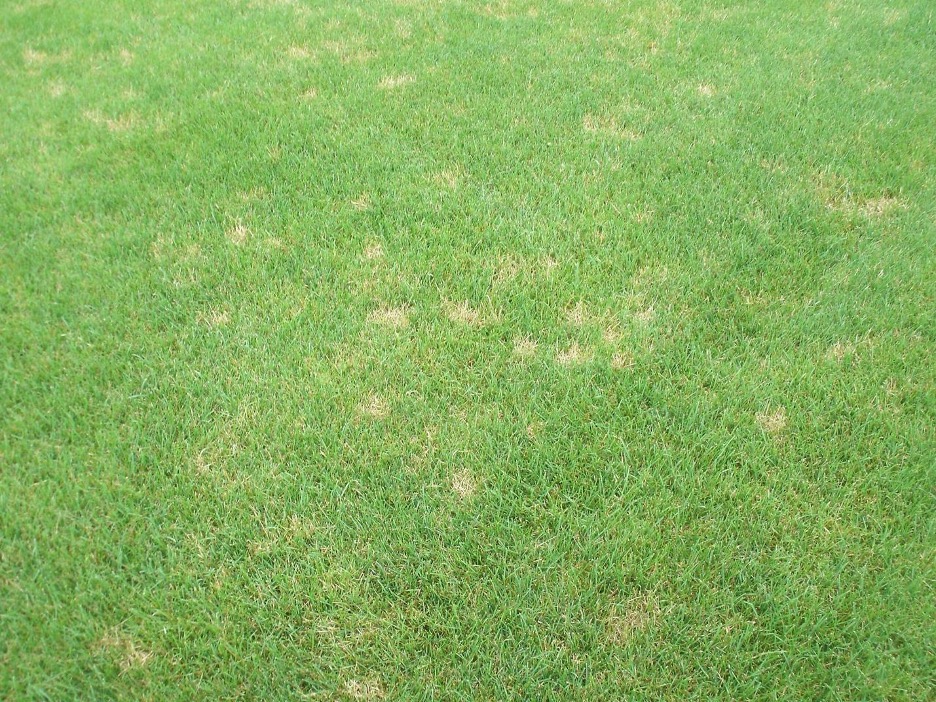
Start scanning for early disease signs as humidity builds. Red thread appears as pinkish-red patches 4 to 8 inches across, typically on lawns that are low on nitrogen. Dollar spot starts as small silver-dollar-sized bleached spots. If either appears, the fix is often a light nitrogen application plus adjusted watering (early morning only, never evening).
Plan the June Grub Preventive
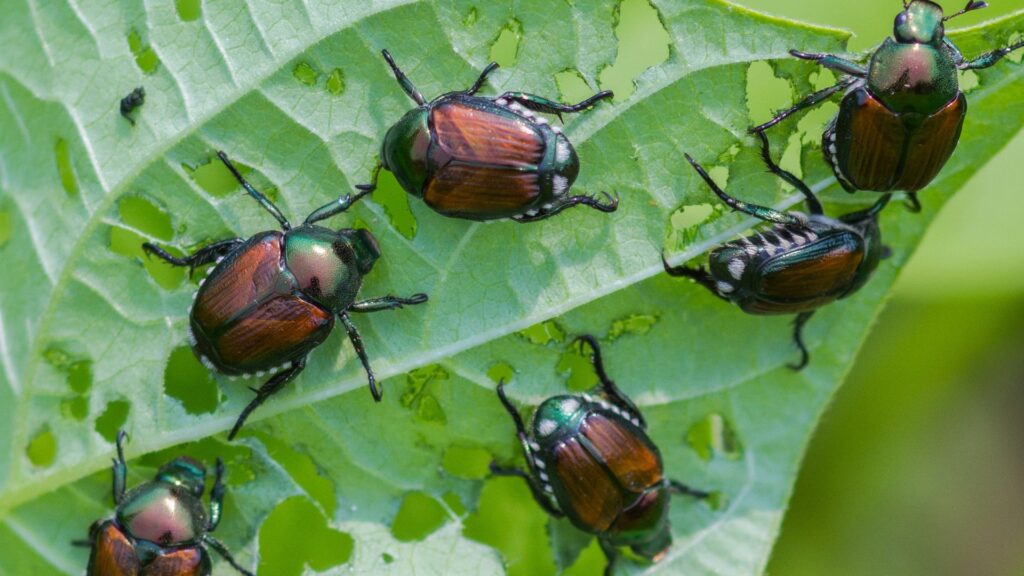
May is the month to schedule or buy your grub preventive for June application. Japanese beetle and masked chafer grubs hatch in July and August in the Fox Valley and begin feeding on roots in late summer. Damage shows up in September and October as brown patches that pull up like loose carpet.
A preventive application in mid-to-late June stops the cycle before it starts. If you wait until you see damage in fall, you are treating after the fact, and the damaged turf will need overseeding or sod patches.
The cost math is clear. A preventive grub application for a typical Aurora lawn costs $60 to $100. Renovating a grub-damaged lawn costs $1,500 to $3,500 depending on the extent of the damage.
Mowing: Raise the Height, Sharpen the Blade
As May temperatures climb, raise your mowing height to the top of the recommended range for your grass type. For Kentucky bluegrass and tall fescue blends common in Aurora, that means 3.5 inches, not 3.
Taller grass shades the soil, holds moisture, and develops deeper roots. It also shades out crabgrass seedlings trying to germinate. The single cheapest thing you can do for your lawn in May is raise the mower height.
Also: sharpen or replace the mower blade. A dull blade tears grass instead of cutting it, which leaves a silver-gray tint across the lawn a day after mowing and increases disease pressure on the torn blade tips.
What Not to Do in May in Aurora
- Do not dethatch or power-rake. It is too late for that action, and the lawn is actively growing. Save aggressive cultural work for fall.
- Do not overseed. Your pre-emergent is still active, and new grass seed will not germinate.
- Do not blanket-apply broadleaf herbicide unless pressure justifies it. Spot-treat instead.
- Do not apply heavy nitrogen. Fall feeding is the main event.
- Do not scalp the lawn by mowing too short. Cool-season grass in May should be at 3.5 inches.
What to Do Next
If you would rather have someone else handle the timing decisions, product selection, and application for your Aurora lawn, we are here for that.
Lawn Squad of Aurora serves Aurora, Batavia, Bristol, Fox Valley, Montgomery, Mooseheart, Naperville, North Aurora, Oswego, Plainfield, Plano, and Yorkville.
Call us at 630-389-4996 or request a free quote at lawnsquad.com. Our VitaminLawn program is built specifically for Aurora’s cool-season grasses, clay soils, and Fox Valley weather patterns. Most homeowners see noticeable improvement within the first two applications, with the full payoff showing up by midsummer when the neighbor’s lawn is struggling and yours is holding steady.