Short Answer: The five most expensive spring lawn care mistakes we see across West Houston are overwatering St. Augustine, mistiming the pre-emergent window, fertilizing before warm-season green-up, ignoring chinch bug pressure, and mowing too short. Each one costs $300 to $2,000 in summer recovery work. Below is how to spot and avoid each, specifically for lawns from Memorial to Bellaire to Energy Corridor.
West Houston lawns face pressures most of the country does not see: extreme summer heat on top of high humidity, gumbo clay soil, year-round insect pressure, and a long humid disease window. Small spring mistakes compound fast. The same lawn that looked great in April can be ragged by July if the wrong decisions were made in the first few weeks of spring.
Here are the five we see every year across West Houston. None of these are complicated to fix. All of them are expensive if you let them slide.
Mistake 1: Daily Shallow Watering
This is the single most common mistake on Houston St. Augustine lawns. Homeowners water for 15 minutes every morning (or worse, every evening), which delivers shallow water that never reaches the root zone. The grass develops shallow roots that cannot survive the July heat dome, and it collapses into dormancy or dies outright by August.
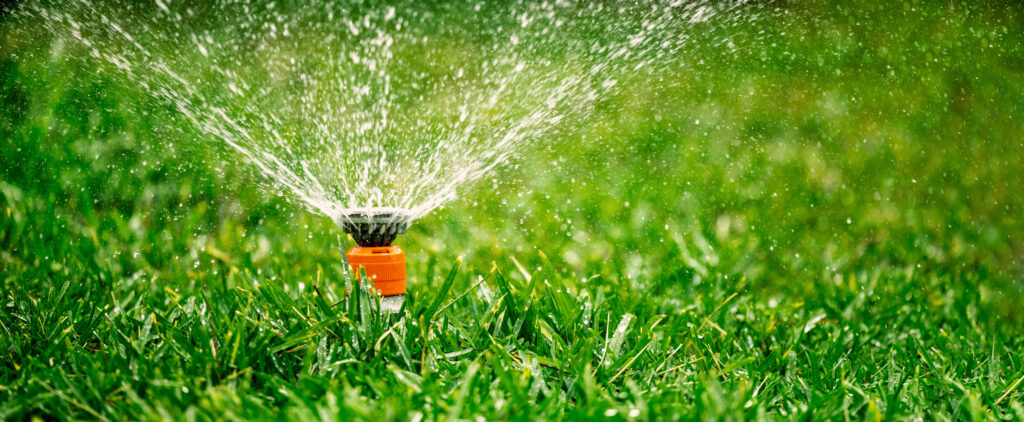
The right approach: St. Augustine needs 1 to 1.5 inches of water per week, delivered in one or two deep soakings. Use a rain gauge or empty tuna can to measure how long your sprinklers need to run to put down half an inch. Then water that long, twice a week. Early morning only, never at night.
Daily watering also fuels disease. Gray leaf spot and large patch both love consistent moisture. Shifting from daily to twice-weekly deep irrigation often resolves disease issues without fungicide.
Mistake 2: Mistimed Pre-Emergent
In West Houston, crabgrass germinates when soil temperatures hit 55 degrees. That usually happens between February 1 and February 20. If your first pre-emergent application goes down in April, you have missed the window. The crabgrass is already germinated, and pre-emergent does not kill what is already there.
What most West Houston DIY homeowners do: wait until they “see spring” and apply pre-emergent in late March. By then it is weeks too late.
What the pros do: apply prodiamine or pendimethalin between February 1 and February 20, with a split-rate second application in April to extend coverage through the full germination window. If you missed February entirely, April dithiopyr with light post-emergent activity is your last salvage option.
Mistake 3: Fertilizing Before Green-Up
The instinct is to feed the lawn the moment you see any green. Resist it. Warm-season grasses (St. Augustine, Bermuda, Zoysia) need to be 70+ percent green and actively pushing new growth before they can use nitrogen. Feeding a dormant or partially dormant lawn in February or early March does not wake it up, it just feeds the winter weeds still in the yard and can trigger disease when the grass does start growing.
Wait for your lawn to be actively growing (you have mowed at least once, often twice), typically late March or early April in Houston. Then apply a balanced fertilizer matched to your grass type. For St. Augustine, a slow-release product at a modest rate. For Bermuda, a stronger nitrogen feed. For Zoysia, moderate nitrogen with attention to iron.
Mistake 4: Ignoring Chinch Bug Pressure
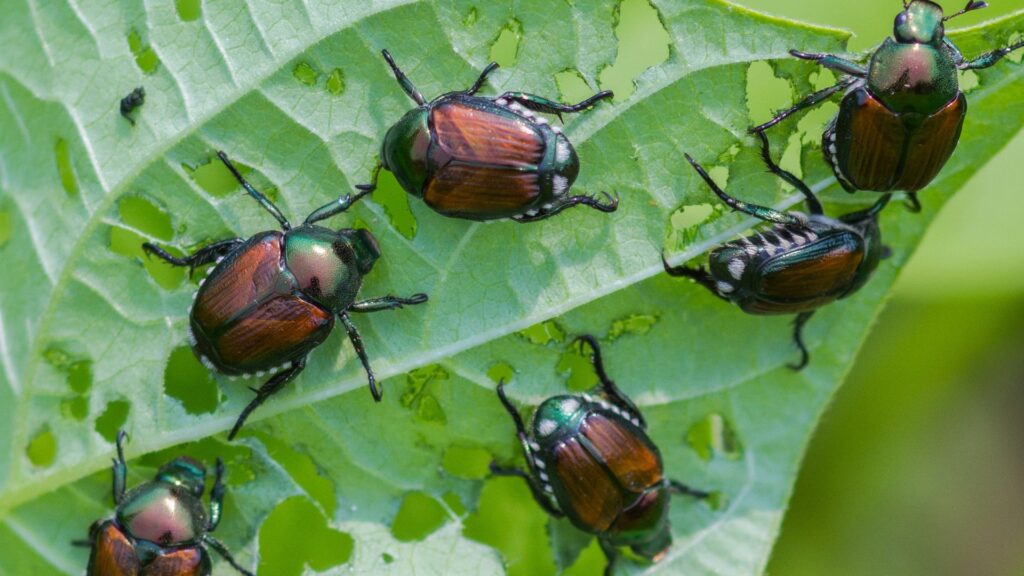
Chinch bugs are Houston’s signature St. Augustine pest. They overwinter in thatch at the edge of the lawn and in landscape beds. In April and May, as temperatures rise, they emerge and begin feeding. By July, unchecked populations can strip large sections of St. Augustine.
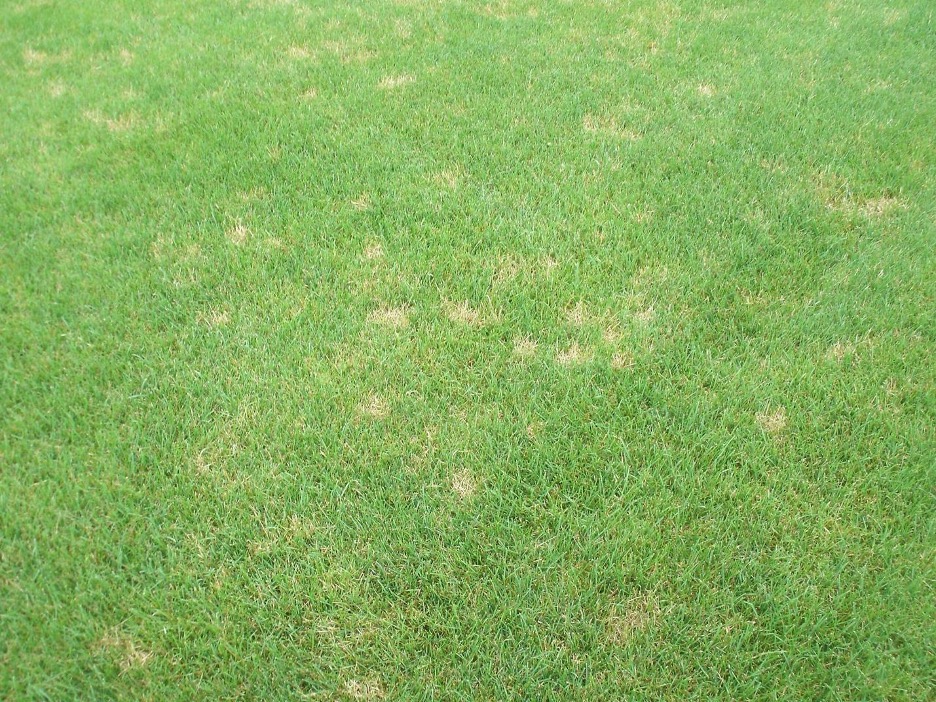
The mistake: waiting until you see damage. By the time you see yellow-brown irregular patches along the driveway or south-facing walls, the chinch bug population is large and established. Treatment still works, but you have already lost turf.
The fix: preventive surface insect control in April. A single well-timed spring application protects the lawn through the heaviest chinch bug months. It is included in VitaminLawn Pro and Elite programs for this reason.
Mistake 5: Mowing St. Augustine Too Short
St. Augustine wants to be mowed at 3.5 to 4 inches. Full stop. We regularly see West Houston lawns scalped at 2 inches or shorter because the homeowner thinks shorter looks neater. Shorter St. Augustine invites:
- Weed germination in the thinner canopy
- Drought stress from roots that cannot get as deep
- Disease pressure because the crown sits closer to moisture
- Chinch bug damage that is more visible and spreads faster
Set the mower at 3.5 inches and leave it there from April through October. Never cut more than one-third of the blade in a single mow. If the grass is 5 inches tall, do not drop below 3.3 inches.
A Sixth Mistake Worth Mentioning: Skipping Soil Testing
Houston soils vary widely. Gumbo clay in Memorial, sandy loam in some Energy Corridor subdivisions, mixed fill in newer developments. A $15 soil test through Texas A&M AgriLife Extension tells you pH, phosphorus, potassium, and cation exchange capacity. From there, your fertilizer and amendment choices stop being guesses.
On Houston lawns we commonly find high pH (7.5+) where iron and manganese are chemically unavailable even though the nutrients are “present.” Supplemental iron applications and occasional sulfur are often part of a good program.
The Pattern Behind All Five
Every one of these mistakes comes from doing what feels intuitive (feed when it looks tired, water often, cut short, wait to see damage) when the right answer is to do something specific at a specific time. Houston lawn care rewards calibration and timing, and punishes guesswork.
What to Do Next
If you want a team that tracks soil temperature, applies the right product at the right time, and handles chinch bug and disease pressure before it becomes visible damage, we are here.
Lawn Squad of West Houston serves Bellaire and the Houston communities including Memorial, Energy Corridor, West University Place, Tanglewood, Briargrove, Afton Oaks, River Oaks, and surrounding areas.
Call us at 713-489-6519 or request a free quote at lawnsquad.com. Our VitaminLawn program is built for Houston’s St. Augustine grass, gumbo clay soil, and year-round pest and disease pressure. Most homeowners see real difference by the second application.