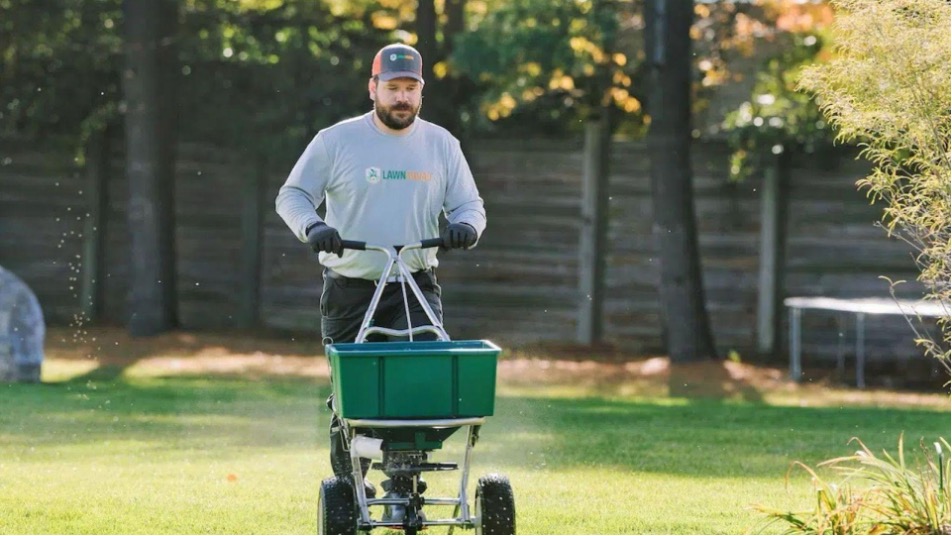
Short Answer: Spring is when North Dallas warm-season grasses (Bermuda, St. Augustine, Zoysia) rebuild root systems before the brutal summer heat arrives. Decisions made from February through May (pre-emergent, pH correction, green-up fertilization, fire ant prevention, chinch bug watch) determine whether your lawn survives or suffers from June through September. Below is why North Dallas-Prosper spring is uniquely important and what to prioritize.
North Texas summers are brutal on lawns. Heat domes, 100+ degree days, low humidity on the windy days, high humidity on the still days, and regular water restrictions. The difference between a lawn that survives and a lawn that collapses by August is almost always root depth, and root depth is built in spring.
Here is what spring should accomplish on a North Dallas-Prosper lawn.
The Pre-Emergent Window Is Already Opening
Crabgrass germinates when soil temperatures at 2 inches hit 55 degrees for several consecutive days. In North Dallas-Prosper, that threshold is typically reached between February 1 and February 20, much earlier than most of the country.
Our first pre-emergent application goes down mid-February in most years. A split-rate second application in April extends coverage through our long germination window. If you missed February, April dithiopyr with light post-emergent activity is your remaining option but expect reduced effectiveness.
Green-Up Feeding Timing Matters
Bermuda and St. Augustine in North Dallas green up between mid-March and early April depending on microclimate. Once the lawn is 70+ percent green and actively pushing new growth, apply a balanced fertilizer matched to your grass type.
Do not feed before green-up. The nitrogen does not wake up dormant grass. It feeds winter weeds and can trigger disease when the grass finally starts growing. Patience here pays off later.
For Bermuda, a higher-nitrogen product works well at green-up. For St. Augustine, a slow-release product at a modest rate. For Zoysia, moderate nitrogen with attention to iron and potassium.
Fire Ants Explode in Spring
Fire ants in North Dallas are a constant. Colonies that overwintered push workers outward in April and May. New colonies from mating flights establish in May and June. A lawn with 5 visible mounds in March can have 30 by July without preventive treatment.
Broadcast fire ant bait in spring is the single highest-leverage preventive treatment for a North Texas lawn. Spot-treating individual mounds all summer is always more expensive and less effective than one well-timed April application.
Chinch Bugs Wake Up for St. Augustine Lawns
Chinch bugs are Texas St. Augustine’s signature pest. They overwinter in thatch and landscape beds. In April and May they emerge and begin feeding. By July unchecked populations strip large sections of St. Augustine.
Spring preventive surface insect control in April is the single best preventive treatment for St. Augustine lawns. Waiting to see damage means you have already lost turf.
Take-All Root Rot Watch Starts Now
Take-all root rot is widespread on North Dallas alkaline clay lawns. Spring is when it shows up, typically as Bermuda or St. Augustine areas that are slow to green up while the surrounding lawn has greened normally.
Soil testing, pH correction with sulfur, and manganese supplementation are the fixes. Addressing take-all in spring prevents the summer lawn collapse that follows untreated cases.
Water-Efficient Root Training
Summer water restrictions are a reality in most North Dallas cities. Lawns that handle restrictions well are lawns with deep roots. Deep roots are built in spring through deep infrequent watering (1 inch twice a week, early morning only).
Daily shallow watering in March and April produces shallow roots that fail in July. Deep watering in spring trains roots to chase water downward, which is what survives summer restrictions.
What Happens If You Skip Spring
Here is the honest picture of a North Dallas lawn that misses its spring window:
- By June: crabgrass and goosegrass filling thin spots, chinch bug damage appearing in St. Augustine
- By July: fire ant mounds every 15 feet, take-all root rot visible as slow-green areas
- By August: drought-stressed Bermuda thinning, St. Augustine damaged from chinch bug, gray leaf spot spreading in humid weather
- By September: the lawn is patchy, you are watering constantly, mowing harder, and every blade is fighting for survival
Compare that to a lawn that got spring right: pre-emergent holding, fertility dialed in by grass type, fire ants suppressed, chinch bugs caught early, take-all treated. That lawn coasts through summer instead of collapsing into it.
What to Do Next
If you want someone else watching soil temperature, applying the right product at the right moment, and handling the whole spring transition for your specific grass type, we are here.
Lawn Squad of North Dallas-Prosper serves Allen, Dallas, Frisco, Plano, and Prosper.
Call us at 469-629-1599 or request a free quote at lawnsquad.com. Our VitaminLawn program is built specifically for North Dallas alkaline clay soils, warm-season grasses, and extreme summer heat.