Short Answer: Spring is when warm-season grasses in our area (Bermuda, zoysia) break dormancy and cool-season grasses (fescue) rebuild before summer stress hits. The decisions you make from late February through May set the trajectory for the whole year. Get the pre-emergent window, green-up feeding, fire ant treatment, and early disease watch right, and your lawn cruises through July humidity. Miss the window, and you fight crabgrass, large patch, fire ants, and thinning fescue from June through September. Below is why our specific climate makes spring uniquely high-stakes.
You step out one Saturday in early April. The Bermuda in the front yard is half green, half tan. The fescue in the shaded backyard looks tired after winter. A fire ant mound has popped up by the mailbox overnight. The dogwoods are in full bloom, and you are thinking: “I should probably do something, but what?”
Spring in the Tennessee Valley and North Georgia is uniquely stacked. Because we sit in the transition zone, we have both warm-season and cool-season grass issues on a single property, sometimes on a single lawn. That makes April the busiest and most important month of the year for getting things right.
Two Different Grass Types, Two Different Spring Calendars
Most Chattanooga and North Georgia lawns fall into one of three categories:
- Bermuda and zoysia (warm-season): dormant all winter, green up as soil temperatures pass 65 degrees. In the Chattanooga valley, this usually happens mid-March to mid-April. On Signal Mountain or Lookout Mountain, a week or two later.
- Fescue (cool-season, mostly in shade): stays green all winter, pushes new growth at 55 degrees soil temperature, most vulnerable in late spring as heat arrives.
- Mixed lawns: common in our area. Sunny sections are Bermuda, shaded sections are fescue. They need different treatments in the same month.
A “one-size-fits-all” spring program fails here. This is the single biggest reason national programs underperform in our area.
The Pre-Emergent Window Is Tight and Early
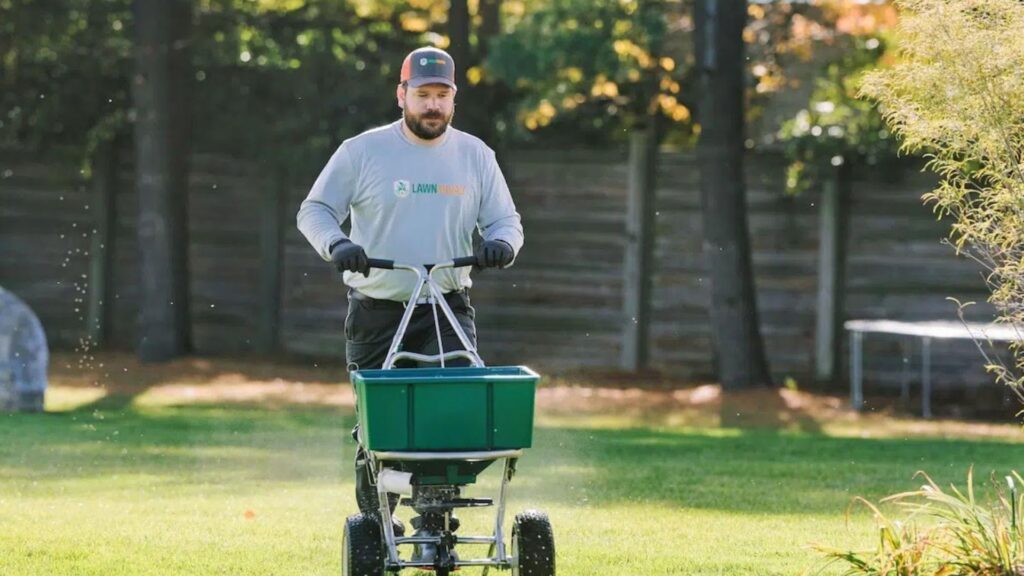
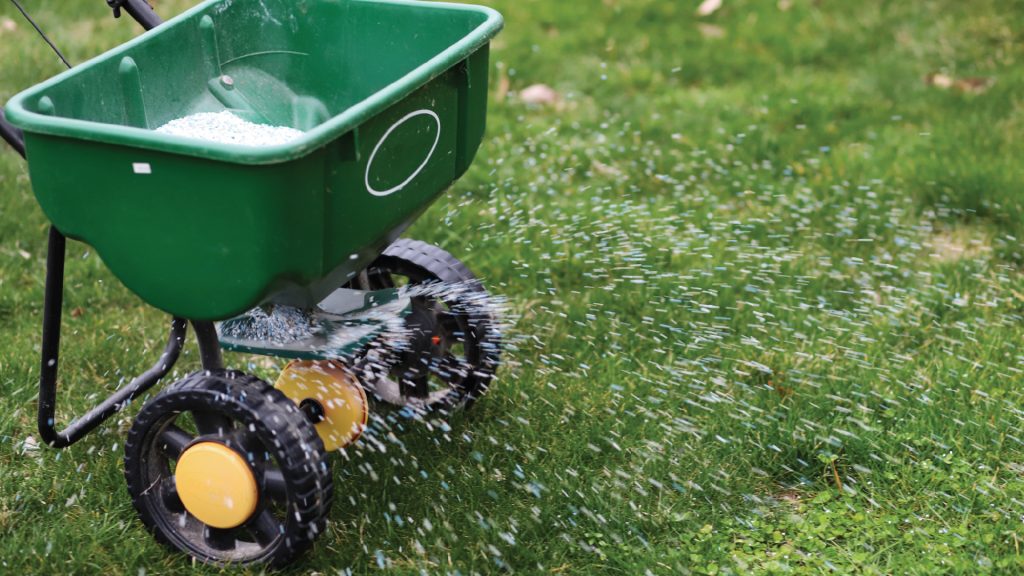
Crabgrass germinates at 55 degree soil temperatures. In our area, that threshold is often hit in the last week of February in the valley. Our first pre-emergent application typically goes down between February 20 and March 15, with a second application in April.
If you missed the February to early March window, April is your last real shot. And it needs to happen by mid-month. Pre-emergent applied after goosegrass and crabgrass have germinated does not work, and you are pushed into post-emergent products that are harder on stressed spring turf.
Green-Up Feeding: Timing Matters More Than Quantity
A common mistake in our area is feeding warm-season grass before it has actually greened up. Applying nitrogen to dormant Bermuda in February does not wake it up. It just feeds winter weeds.
Wait until your lawn is 70 to 80 percent green and actively pushing new leaves. Then match the product to your grass:
- Bermuda: responds strongly to nitrogen at green-up, can handle higher rates
- Zoysia: moderate, spoon-fed. Heavy spring nitrogen fuels large patch.
- Fescue: light feeding only, save major nitrogen for fall
Fire Ants: Spring Is When the Colonies Explode
Fire ants in our region are active year-round but explode in spring. Colonies that overwintered push workers outward by mid-April. New colonies from mating flights establish in May. A lawn with three visible mounds in February often has 15 to 20 by June without intervention.
Broadcast bait applied in spring hits the whole colony over 2 to 4 weeks and dramatically reduces pressure for the rest of the year.
Early Disease Pressure Starts Now
Large patch on zoysia, brown patch on fescue, and take-all root rot on Bermuda all begin underground activity in April, weeks before visible symptoms appear. By the time you see a full disease patch, the fungus has been active for 2 to 6 weeks.
Preventive treatment on a known problem lawn costs a fraction of curative treatment plus renovation later.
What Happens If You Skip Spring
Here is what an untreated Chattanooga or North Georgia lawn typically looks like by July:
- Crabgrass and goosegrass visible throughout Bermuda and zoysia areas
- Large patch rings expanding in zoysia, slow-green areas in Bermuda
- Fire ant mounds every 15 to 20 feet
- Brown patch showing up as circular dead patches in fescue
- Bermuda thinning where chinch bugs or armyworms have been active unchecked
Every one of those is preventable in April.
What to Do Next
If you want someone else watching the timing, applying the right product at the right moment, and handling the whole spring transition for you, we are here.
Lawn Squad of Chattanooga and North Georgia serves Apison, Chattanooga, Chickamauga, Cleveland TN, Cohutta, Collegedale, East Brainerd, Flintstone, Fort Oglethorpe, Graysville, Harrison, Hixson, Lakesite, Lookout Mountain (GA and TN), Lupton City, McDonald, Ooltewah, Red Bank, Ringgold, Rossville, Signal Mountain, Soddy-Daisy, Tunnel Hill, and Wildwood.
Call us at 423-287-4871 or visit lawnsquad.com. Our VitaminLawn program is built for the transition zone: warm-season and cool-season grasses, red clay, elevation variation, and the specific disease and pest pressures of the Tennessee Valley.