The short answer: Frederick lawns need different care in each season because our transition zone climate brings hot, humid summers and cold winters that stress cool season grasses. The key is timing your treatments to match what your lawn needs most during each part of the year.
Spring focuses on preventing weeds before they start. Summer protects against insects and disease. Fall rebuilds strength. Winter lets your lawn rest while you plan ahead.
Quick overview:
- Spring (March through May): Apply pre-emergent herbicides and start fertilizing as grass wakes up
- Summer (June through August): Control insects, treat disease, and help grass survive heat stress
- Fall (September through November): Aerate, overseed, and apply winterizer fertilizer
- Winter (December through February): Plan next year’s program and avoid walking on frozen grass
Keep reading to learn exactly what your Frederick lawn needs during each season and when to schedule each treatment.
The Complete Lawn Care Approach: Our 7 Round Program
At Lawn Squad of Frederick, we designed our lawn care programs specifically for the challenges Maryland lawns face throughout the year. Our ELITE program delivers 14 treatments across 7 visits, timed perfectly for Frederick’s transition zone climate.
What makes this approach work is the scheduling. Every treatment happens when your lawn can use it most. Pre-emergent goes down before crabgrass germinates. Grub prevention applies when beetles are laying eggs. Winterizer strengthens roots before the first freeze.
Whether you handle lawn care yourself or hire professionals, understanding what your grass needs each season helps you make smarter decisions. The information below explains why timing matters and what happens when treatments are missed or applied too early or too late.
Why Seasonal Lawn Care Matters More Than Most Frederick Homeowners Realize
Frederick sits in what turf experts call the transition zone. This means we get weather patterns from both northern and southern climates. Our cool season grasses like fescue and bluegrass love spring and fall temperatures. But they struggle during our humid summers and can be damaged by our cold winters.
Here’s what can go wrong without proper seasonal care:
Skipping spring pre-emergent means crabgrass takes over by July. Once crabgrass establishes, you cannot remove it without killing surrounding grass. You have to wait until fall to reseed bare spots.
Missing summer grub prevention leads to brown patches in August and September. Grubs eat grass roots underground where you cannot see the damage until it is too late. Skunks and raccoons then dig up your lawn looking for grubs to eat.
Forgetting fall aeration leaves soil compacted. Compacted soil prevents water, air, and nutrients from reaching roots. Your grass enters winter weak and may not survive until spring.
Frederick’s variable climate makes generic lawn advice from other regions unreliable. What works in Florida or Minnesota does not work here. Our team at Lawn Squad understands exactly what Frederick County lawns need because we have been caring for them since 2001.
Spring Lawn Care Guide for Frederick (March through May)
Spring is the most important season for Frederick lawns. The treatments you apply now determine whether you fight weeds all summer or enjoy thick, healthy grass.
Round 1: Early Spring Kickoff (Mid March)
Your first treatment should include pre-emergent herbicide, fertilizer, and broadleaf weed control.
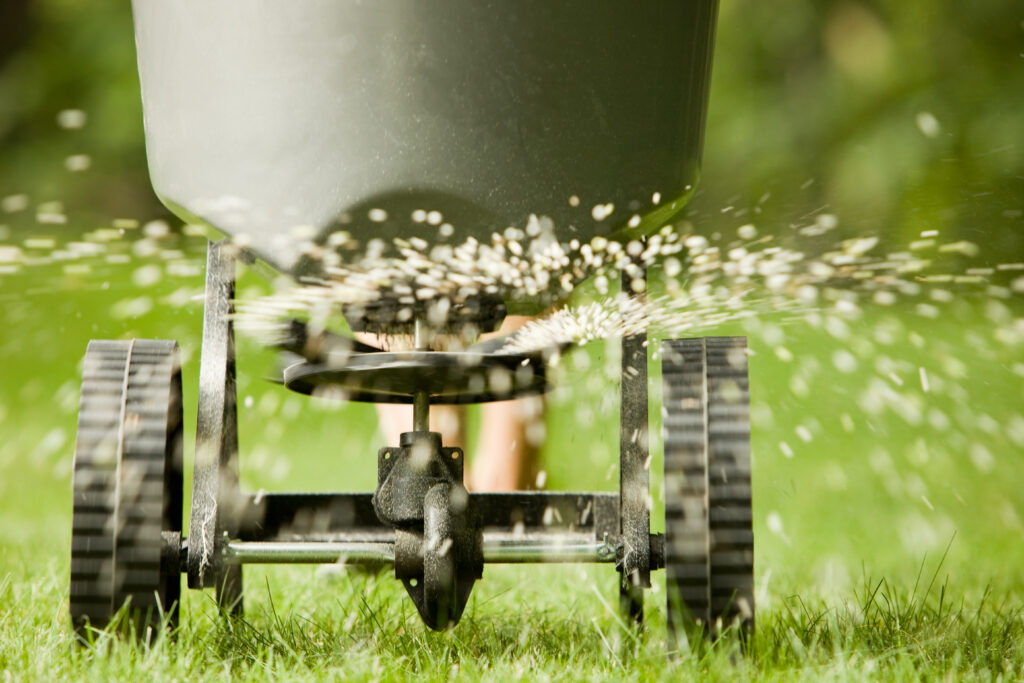
Pre-emergent creates a barrier in the soil that stops crabgrass and other weeds from sprouting. Timing is critical. Apply before soil temperatures reach 55 degrees for several days in a row. In Frederick, this usually happens in mid to late March.
Fertilizer gives grass the nutrients it needs to green up and start growing. Use a balanced formula that feeds gradually over several weeks.
Broadleaf weed control targets dandelions, clover, and other weeds already growing in your lawn. These weeds are easiest to kill when they are young and actively growing.
A soil test during Round 1 tells you exactly what nutrients your lawn needs. Without a test, you are guessing. The ELITE program includes soil testing because proper nutrition prevents many problems later in the season.
Round 2: Late Spring Prevention (Late April)
Your second treatment adds another layer of pre-emergent plus surface insect control.
The second pre-emergent application extends protection through late spring when crabgrass pressure is highest. Many homeowners skip this step and wonder why crabgrass appears in June despite their early spring treatment.
Surface insect control targets chinch bugs, sod webworms, and other pests that damage grass blades. These insects become active as temperatures warm and can cause brown patches that look like drought stress.
Critical warning: Do not aerate in spring if you applied pre-emergent. Aeration punches holes through the chemical barrier and allows weeds to germinate. Spring aeration also stimulates weed growth more than grass growth.
Our PRO and ELITE programs include both pre-emergent applications because single treatments rarely provide season-long protection in Frederick’s climate.
Summer Lawn Care Guide for Frederick (June through August)
Summer is survival season for Frederick lawns. Your grass naturally slows growth during hot weather. The goal is protecting it from insects and disease until cooler temperatures return.
Round 3: Early Summer Protection (Late May)
This treatment combines fertilizer, broadleaf weed control, surface insect control, grub prevention, and disease prevention.
Grub prevention is the most important summer treatment. Japanese beetles and other grubs lay eggs in lawns during June and July. Preventative products kill grubs as eggs hatch, before they can damage roots. Waiting until you see grub damage means the damage is already done.
Disease prevention protects against brown patch, dollar spot, and other fungal infections common during humid Frederick summers. These diseases spread quickly once established and can kill large sections of lawn within days.
Round 4: Midsummer Maintenance (Late June)
Round 4 continues broadleaf weed control, surface insect control, grub prevention, and disease control.
The second grub prevention application ensures complete protection during peak egg-laying season. Grub damage typically appears in late August or September, long after beetles have finished laying eggs.
What to Avoid: Summer Overwatering
Many Frederick homeowners overwater during summer, thinking more water helps grass survive heat. This actually causes more problems.
Overwatering encourages shallow root growth. Shallow roots make grass less drought tolerant, not more. Excess moisture also promotes fungal disease.
Water deeply but infrequently. Most Frederick lawns need about one inch of water per week, including rainfall. Water early in the morning so grass blades dry before nightfall.
Round 5: Late Summer Recovery (Early August)
Round 5 includes broadleaf weed control, surface insect control, disease control, and aeration for ELITE program customers.
Summer aeration helps relieve soil compaction from foot traffic and heat stress. It also prepares your lawn for fall overseeding by creating holes where new seed can establish.
Fall Lawn Care Guide for Frederick (September through November)
Fall is rebuilding season. Cooler temperatures and increased rainfall create perfect growing conditions for cool season grasses. This is when your lawn recovers from summer stress and prepares for winter.
Round 6: Early Fall Rebuilding (Early September)
This treatment includes fertilizer, root stimulant, broadleaf weed control, surface insect control, disease control, and aeration.
Root stimulant encourages deep root growth before the ground freezes. Deep roots help grass survive winter and green up faster in spring. This is one reason ELITE program lawns look better than neighboring properties.
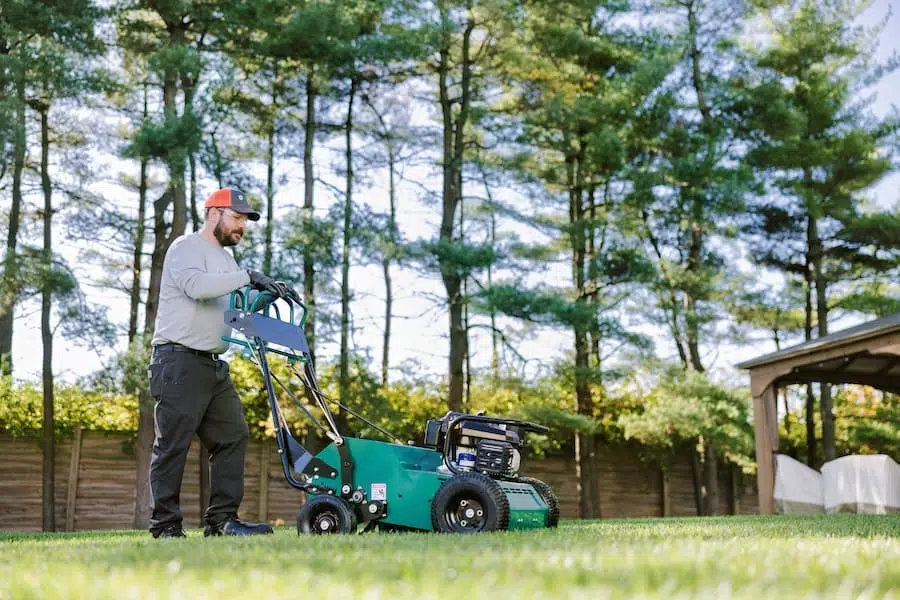
Fall aeration is the most beneficial time to aerate Frederick lawns. Soil is moist but not soggy, grass is actively growing, and weed pressure is low. Aeration removes small plugs of soil, allowing air, water, and nutrients to reach the root zone.
Round 7: Late Fall Winterizing (Mid October)
The final treatment of the season includes fertilizer, broadleaf weed control, winterizer, and a final aeration for ELITE customers.
Winterizer fertilizer is specially formulated to strengthen roots and store nutrients for spring. This is not the same as regular fertilizer. Winterizer contains higher potassium levels that improve cold tolerance and disease resistance.
Late fall weed control targets winter annuals like henbit and chickweed that germinate in autumn and grow during mild winter weather. Killing these weeds now prevents them from taking over in early spring.
Critical warning: Do not apply fertilizer after the first hard freeze. Grass cannot absorb nutrients once it goes dormant. Late fertilizer applications waste money and can run off into waterways.
How to Calculate Your Lawn Size for Accurate Treatment
Throughout this guide, we mention that treatment costs depend on lawn size. Here’s how to measure your property accurately.
Step by step process:
- Walk the perimeter of your lawn area, excluding flower beds, driveways, and other non-grass areas
- Measure the length and width of each section in feet
- Multiply length times width to get square footage for each section
- Add all sections together for total lawn square footage
Example: A front yard measuring 50 feet by 30 feet equals 1,500 square feet. A backyard measuring 60 feet by 40 feet equals 2,400 square feet. Total lawn size is 3,900 square feet.
Most Frederick residential lawns range from 5,000 to 15,000 square feet. Knowing your exact size helps you purchase the right amount of product for DIY treatments or understand professional service quotes.
What About Overseeding?
Overseeding adds new grass seed to existing lawns, filling in thin areas and introducing improved grass varieties. This service pairs perfectly with fall aeration.
Why overseeding matters for Frederick lawns:
Grass plants only live about five to seven years before declining. Without overseeding, lawns gradually thin out and weeds move in. New seed varieties are also more disease resistant and drought tolerant than older grass types.
At Lawn Squad of Frederick, we recommend overseeding every one to three years depending on lawn condition. The best time is immediately after fall aeration when seeds can settle into aeration holes and make good soil contact.
Overseeding prices range from $40 for small lawns up to $1,000 for properties over 20,000 square feet. This investment pays off through thicker grass that crowds out weeds and handles stress better.
Common Seasonal Lawn Care Mistakes Frederick Homeowners Make
After caring for Frederick lawns since 2001, our team has seen the same mistakes repeated year after year. Avoiding these errors will save you time, money, and frustration.
Mistake #1: Applying Pre-Emergent Too Late
Crabgrass germinates when soil temperatures reach 55 degrees. By the time you see crabgrass growing, it is too late for pre-emergent. Many homeowners wait until April or May to start lawn care and wonder why crabgrass takes over by summer.
Mistake #2: Skipping Grub Prevention
Grub damage appears in late summer, but the beetles that cause it lay eggs in June and July. Once you see brown patches from grub feeding, the damage is already done. Curative treatments cost three times more than prevention and cannot restore dead grass.
Mistake #3: Aerating in Spring After Pre-Emergent
Spring aeration sounds like a good idea, but it destroys the chemical barrier created by pre-emergent herbicides. Every hole punched in your lawn becomes a spot where weeds can germinate. Save aeration for late summer and fall.
Mistake #4: Fertilizing During Summer Heat
Heavy fertilizer applications during hot weather stress grass and can burn leaves. Frederick lawns need lighter nutrition during summer, with heavier feeding in spring and fall when grass is actively growing.
Mistake #5: Ignoring Soil pH
Most Frederick soils are naturally acidic. Acidic soil prevents grass from absorbing nutrients, even when plenty of fertilizer is present. A soil test reveals pH problems that can be corrected with lime applications. Without testing, you might fertilize repeatedly with poor results.
DIY Lawn Care vs. Professional Service: Which Should You Choose?
DIY lawn care gives you complete control over products and timing. You save money on labor costs and can address problems immediately when you notice them.
Best for: Homeowners who enjoy yard work, have time to research proper products and timing, own or can rent application equipment, and have lawns under 10,000 square feet.
Professional lawn care provides expert knowledge, commercial-grade products, and precise timing without your involvement. Programs are designed for your specific region and lawn conditions.
Best for: Busy homeowners who value their time, those unfamiliar with lawn care science, properties with persistent problems, and lawns over 10,000 square feet where DIY becomes time-consuming.
The honest truth is that professional programs often cost less than DIY when you factor in equipment, products, time, and mistakes. A single grub infestation requiring curative treatment and reseeding can cost more than a full year of professional care.
Your Frederick Lawn Care Calendar at a Glance
ELITE Program Schedule
| Round | Timing | What Happens | Why It Matters |
|---|---|---|---|
| 1 | Mid March | Pre-emergent, fertilizer, weed control, soil test | Prevents crabgrass, feeds spring growth |
| 2 | Late April | Pre-emergent, weed control, insect control | Extends weed barrier, starts pest protection |
| 3 | Late May | Fertilizer, weed control, insect control, grub prevention, disease prevention | Maximum summer protection |
| 4 | Late June | Weed control, insect control, grub prevention, disease control | Continues summer protection |
| 5 | Early August | Weed control, insect control, disease control, aeration | Prepares for fall recovery |
| 6 | Early September | Fertilizer, root stimulant, weed control, insect control, disease control, aeration | Rebuilds lawn strength |
| 7 | Mid October | Fertilizer, weed control, winterizer, aeration | Prepares for winter dormancy |
PRO Program Schedule
| Round | Timing | What Happens | Why It Matters |
|---|---|---|---|
| 1 | Mid March | Pre-emergent, fertilizer, weed control | Prevents crabgrass, feeds spring growth |
| 2 | Late April | Pre-emergent, weed control, insect control | Extends weed barrier, starts pest protection |
| 3 | Late May | Fertilizer, weed control, insect control, grub prevention | Summer protection begins |
| 4 | Late June | Weed control, insect control, grub prevention | Continues summer protection |
| 5 | Early August | Weed control, insect control | Maintains pest control |
| 6 | Early September | Fertilizer, root stimulant, weed control, insect control | Rebuilds lawn strength |
| 7 | Mid October | Fertilizer, weed control, winterizer | Prepares for winter dormancy |
The Bottom Line
Frederick lawns need year-round attention because our transition zone climate creates challenges in every season. The key to success is matching your treatments to what your grass needs most at each time of year.
Key principles to remember:
- Apply pre-emergent in early spring before crabgrass germinates
- Treat for grubs preventatively in late May and June, not after damage appears
- Reserve aeration for late summer and fall, never spring after pre-emergent
- Feed heavily in spring and fall, lightly in summer
- Test soil pH and correct with lime if needed
Following this seasonal approach produces thick, healthy grass that crowds out weeds and handles stress better than neglected lawns.
Let Lawn Squad of Frederick Handle It For You
Every Frederick lawn is different. Soil conditions, sun exposure, grass type, and past care history all affect what your property needs. Our programs account for these variables with customized treatments and unlimited service calls.
ELITE Program includes:
- 14 treatments across 7 visits timed perfectly for Frederick’s climate
- Pre-emergent applications in spring
- Grub prevention in early summer
- Disease control through the growing season
- Fall aeration and winterizer
- Soil testing to identify nutrient deficiencies
- Unlimited service calls for problems between scheduled visits
Stop spending your weekends researching lawn care products and worrying about whether you applied them at the right time. Our team has been serving Frederick, Hagerstown, and surrounding Maryland communities since 2001. We understand exactly what local lawns need.
Contact Lawn Squad of Frederick today at 774-855-6949 or visit lawnsquad.com/contact-us to get a free quote and start enjoying a healthier lawn through every season.