
Why Sandy Soil Changes How You Feed a Jacksonville Lawn
Short Answer: Northeast Florida sand has very little ability to hold nutrients, so fertilizer applied heavily moves past the root zone with rain and irrigation before the grass can use it. The practical response is lighter applications more often, using slow release nitrogen that dissolves gradually rather than all at once. Sand also holds almost no water, which is why lawns here need irrigation within a day of a granular application and why they show drought stress within a week of dry weather. Building organic matter over years is the only durable fix, and it works slowly.
If you have fed your lawn on schedule with a good product and still watch the color fade after two or three weeks, you are probably not doing anything wrong. You are fighting the soil. Across most of Jacksonville and out through St. Johns County, what we call soil is mostly sand, and sand behaves in a way that changes nearly every fertilization decision you make.
This is one of the more useful things a homeowner here can understand, because it reframes a frustration that otherwise looks like product failure. Here is what is actually happening underground and what genuinely works about it.
Sand Cannot Hold On to Nutrients
Soil holds nutrients through a property called cation exchange capacity, which is essentially the soil’s ability to grip nutrient ions and keep them available to roots. Clay and organic matter have high capacity. Sand has very little, because the particles are large, round, and chemically inactive by comparison.
What that means in practice is that nitrogen applied to sandy soil does not stay put. It dissolves, moves downward with water, and a share of it passes below the root zone. Grass roots reaching six or eight inches down cannot retrieve what has already traveled to two feet. That nitrogen is gone, and it was not cheap.
Potassium behaves similarly, leaching readily through sand. Phosphorus is more stable, which is part of why Florida restricts phosphorus applications without a soil test showing a need. Understanding this one property explains most of the difference between lawn care here and lawn care in Georgia clay an hour north.
Why Heavy Applications Backfire
The instinct when a lawn fades is to apply more next time. On sand, that makes the problem worse rather than better, and it is worth understanding why.
A heavy application delivers far more nitrogen than the plant can use in the short window before water moves it down. The grass takes up what it can, produces a surge of growth, and the rest leaches away. Two or three weeks later the surge has passed, the nitrogen is gone, and the lawn fades again. You have paid for a full application and received a couple of weeks of benefit.
That surge and fade cycle is the pattern most homeowners here describe to us. It looks like the fertilizer stopped working. What actually happened is that the delivery method never matched the soil. The same total amount of nitrogen split across more applications produces a steadier lawn for the same money.
Slow Release Is Not a Premium, It Is a Requirement
Fertilizer labels distinguish between quickly available nitrogen and slow release nitrogen, and on sandy soil that distinction matters more than the headline percentage on the front of the bag.
Quick release nitrogen, typically urea or ammonium sulfate, dissolves immediately and is fully available the moment water hits it. On clay that is fine, because the soil holds what the plant does not use right away. On sand it is a race between the roots and the water table, and the water often wins.
Slow release forms, including coated urea and methylene urea, dissolve gradually over six to eight weeks. The plant gets a steady supply, and far less leaches because less is dissolved at any given moment. This is why Florida ordinances in many jurisdictions require a minimum percentage of slow release nitrogen. It is not bureaucratic, it reflects how our soil works.
Reading for this is straightforward. Turn the bag over and look for a line breaking down the nitrogen sources. A product listing a substantial share as coated, controlled release, or slow release is the right tool here. A product that is entirely urea is not, at least not for a base feeding.
Sand Does Not Hold Water Either
The same physics that lets nutrients through lets water through, and the two problems compound. Sandy soil drains fast, which is genuinely useful during our summer downpours but leaves very little reserve moisture.
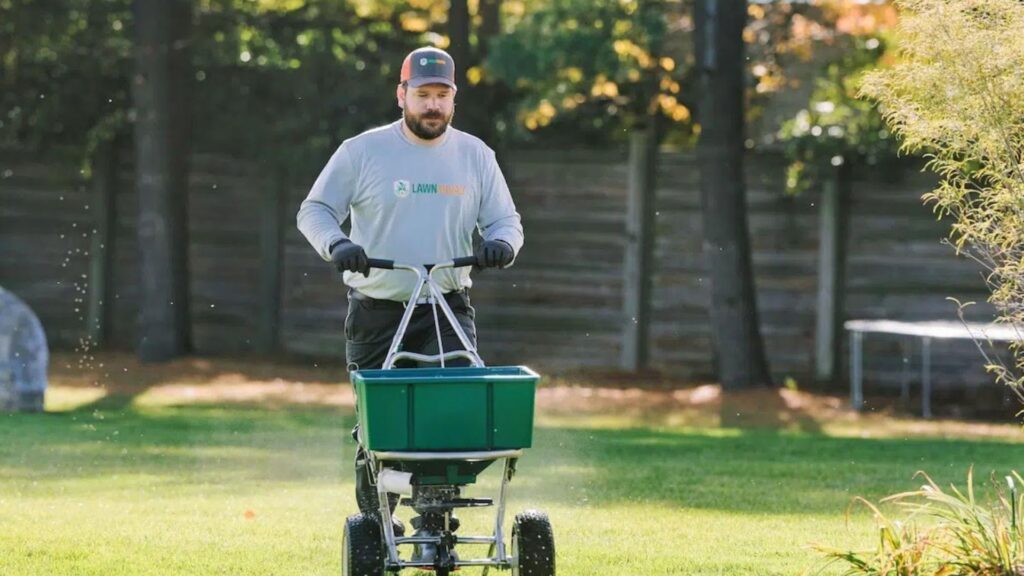
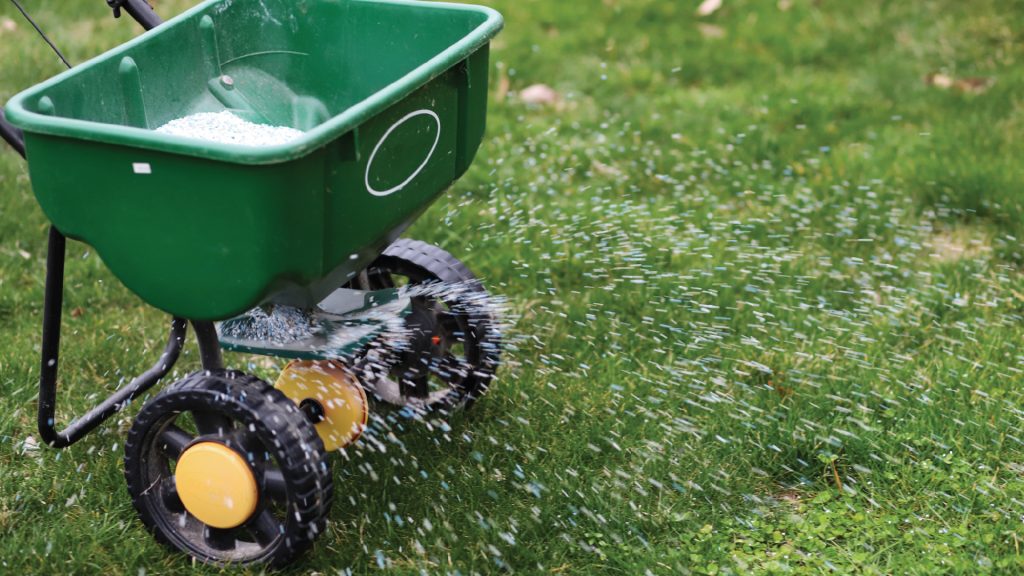
That has two practical consequences for fertilization. First, granular product needs to be watered in within a day, because a prill sitting dry on the surface does nothing and can blow or wash off. Second, lawns here show drought stress quickly, sometimes within a week of dry weather, because there is no stored moisture in the profile.
It also means overwatering is easy and costly. Watering deeply every day pushes nutrients down through the sand and out of reach, effectively flushing your fertilizer. Watering deeply but less often, generally about three quarters of an inch two or three times a week during active growth, encourages deeper roots and keeps more nutrient in the zone where it can be used.
The Long Term Fix Is Organic Matter
There is a durable solution, and we want to be honest that it is slow. Adding organic matter increases the soil’s ability to hold both nutrients and water, and it is the only change that addresses the root cause rather than working around it.
The realistic ways to do that on an established lawn are topdressing with a thin layer of quality compost, returning clippings rather than bagging them, and core aeration to help organic material work into the profile. Each is modest on its own. Done consistently across several years, they measurably change how a sandy lawn performs.
What we would steer you away from is expecting a fast result. Building meaningful organic matter in sand takes years, not a season, and any product promising to transform your soil in one application is overselling. The properties we manage that have noticeably better soil are ones where this has been done patiently.
What This Means for Your Fall Application
Pulling it together for right now. The fall feeding on a sandy Northeast Florida lawn should use a slow release nitrogen source at a moderate rate rather than a heavy one, timed so it is the last nitrogen of the year, which around here means by roughly the middle of October.
Potassium is worth including and worth applying again later in the season, because it leaches from sand readily and supports the cold tolerance our winters actually call for. Iron helps color without pushing growth, which is exactly right for late season.
Water the application in, then back off. Heavy irrigation after a fall feeding on sand moves your nitrogen down and away, and a wet cool canopy in November is also what large patch disease needs. Light watering in the early morning is the combination that serves both goals.
What to Do Next
Find out what you actually have under the grass. Dig a small hole six inches deep in a couple of places and look. If it is pale, gritty, and falls apart in your hand with no structure, that is sand and everything above applies. If it holds together and stains your fingers, you have more organic matter than typical and can space applications further apart.
Get a soil test, ideally before your next application. On sandy soil a test is unusually valuable because nutrient levels swing more than they do on clay, and it will tell you about pH at the same time, which matters where limestone or shell fill was used during construction.
Then check the bag you already own. Turn it over, find the nitrogen breakdown, and see how much is slow release. If the answer is none, that alone may explain the surge and fade you have been experiencing, and switching products will do more than increasing the rate.
If you would rather have someone else match the product and rate to your soil rather than guessing at it, we are here for that. Visit lawnsquad.com to find Lawn Squad of Jacksonville-St. Augustine and request a free quote. Our VitaminLawn program is built around the sandy soils, leaching, and long growing season we actually work with here.