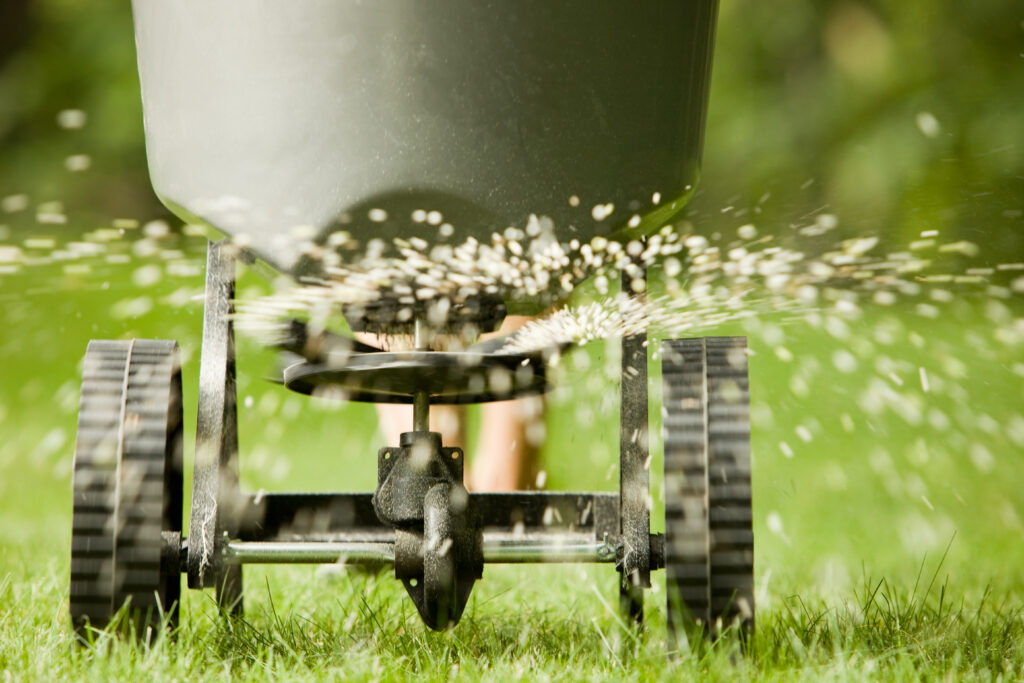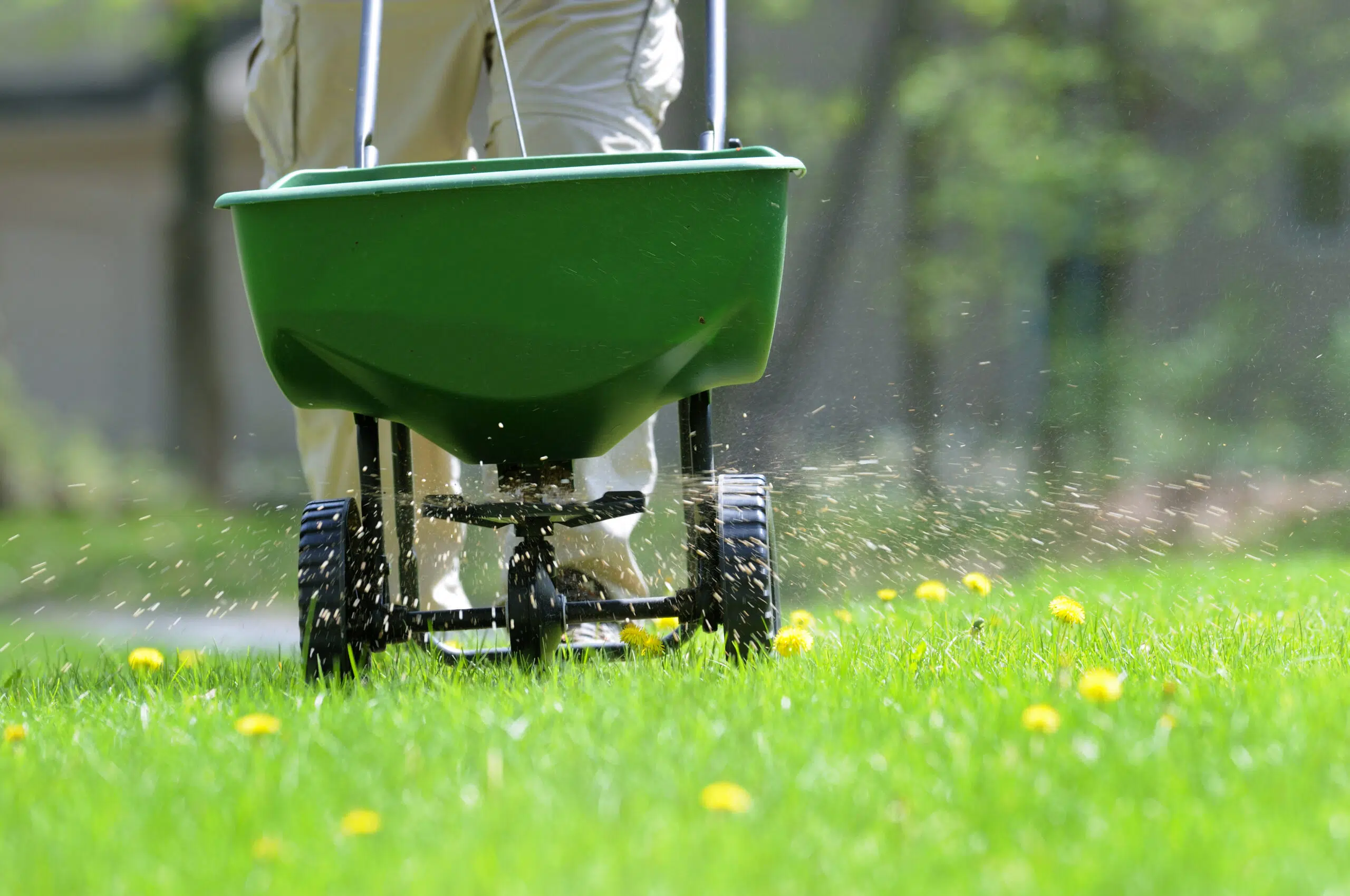
Short Answer: The weeds you see in March germinated the previous September and October. Henbit, purple deadnettle, common chickweed, and annual bluegrass are winter annuals: they sprout in fall as soil cools, grow slowly through winter while your lawn is dormant, then explode and set seed in early spring. By the time they are visible they have nearly finished their life cycle, which is why spring treatment feels like it never quite works. The practical fix is a fall pre-emergent applied when soil temperatures fall through about seventy degrees, which in Cincinnati usually lands in September.
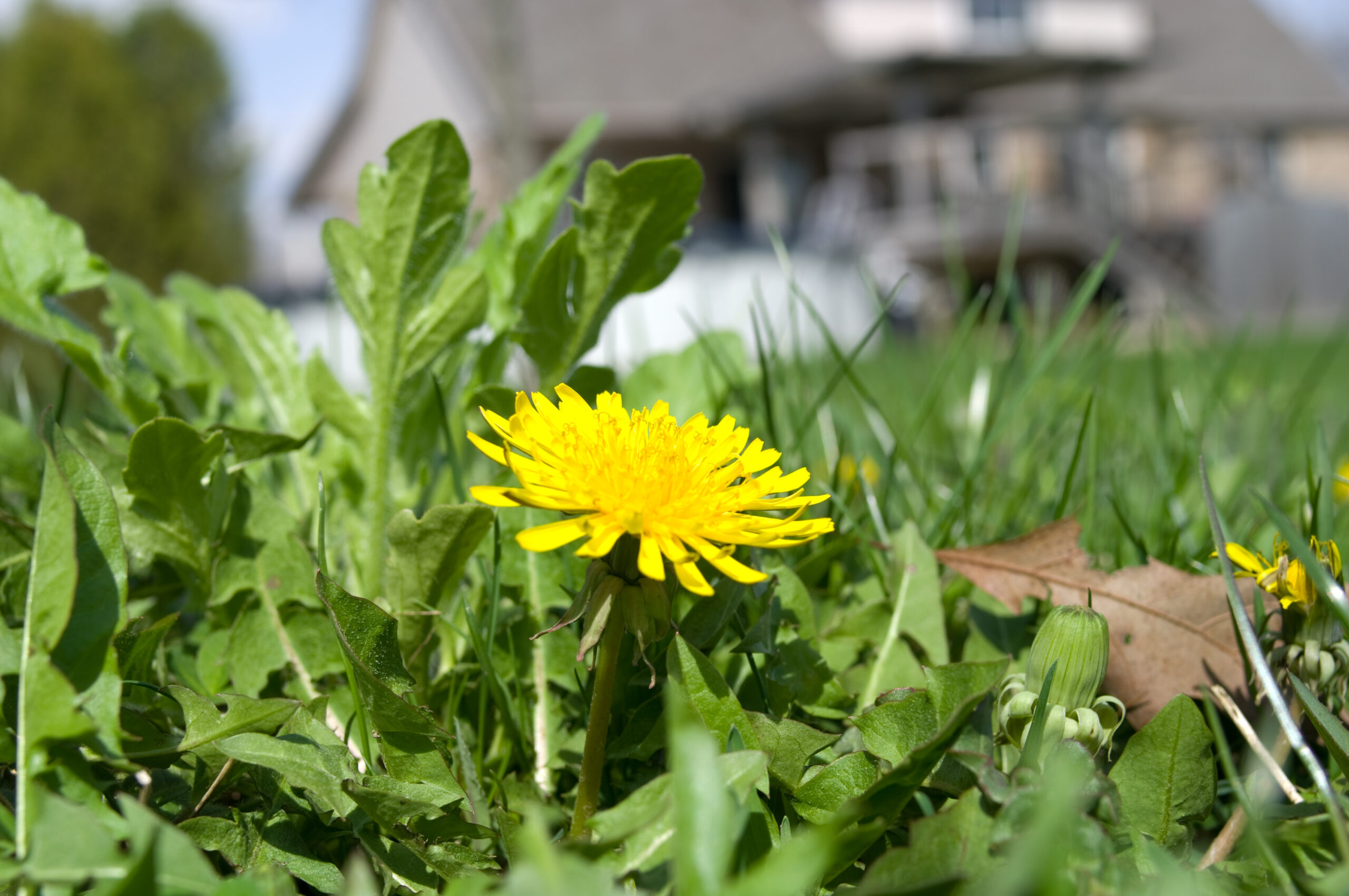
Every spring we get the same call from Cincinnati homeowners. The lawn looked fine in November, and by the middle of March it is carpeted in low purple flowers and light green clumps that nobody planted. The natural assumption is that something went wrong in spring.
It did not. It went wrong in September.
What These Weeds Actually Are
The plants taking over your lawn in March are winter annuals, and they run on the opposite schedule from the weeds most people think about.
Henbit and purple deadnettle are the two producing the purple haze across lawns and fields all over the Cincinnati area in early spring. Both have square stems and small purple flowers, and they look similar enough that most people never separate them.
Common chickweed forms dense low mats with small white flowers and thrives in the cool damp conditions our late winters provide.
Annual bluegrass, usually called poa annua, is the one that frustrates people most. It is a light green, fine bladed clumping grass that stands out badly against a lawn just coming out of dormancy, and because it is a grass it is far harder to remove selectively once it is up.
All of them germinate in fall, sit through winter, then finish fast in spring.
Why Spring Treatment Disappoints
By the time these weeds are visible in a Cincinnati lawn, they are adult plants that have already done most of their growing and are moving toward setting seed.
You can kill them in spring, and people do. The problem is that killing a winter annual in April is closing the barn door. It has already dropped, or is about to drop, the seed that becomes next year’s problem. You get a cleaner looking lawn for a few weeks and precisely the same infestation the following March.
There is a second issue. Spring is when everyone wants to seed thin areas, and broadleaf herbicide and new grass seed do not mix. So the spring treatment that would clean up the weeds also blocks the seeding that would thicken the lawn, and homeowners end up choosing between them every year.
Handling it in fall breaks that cycle.
The Timing Is Soil Temperature, Not a Date
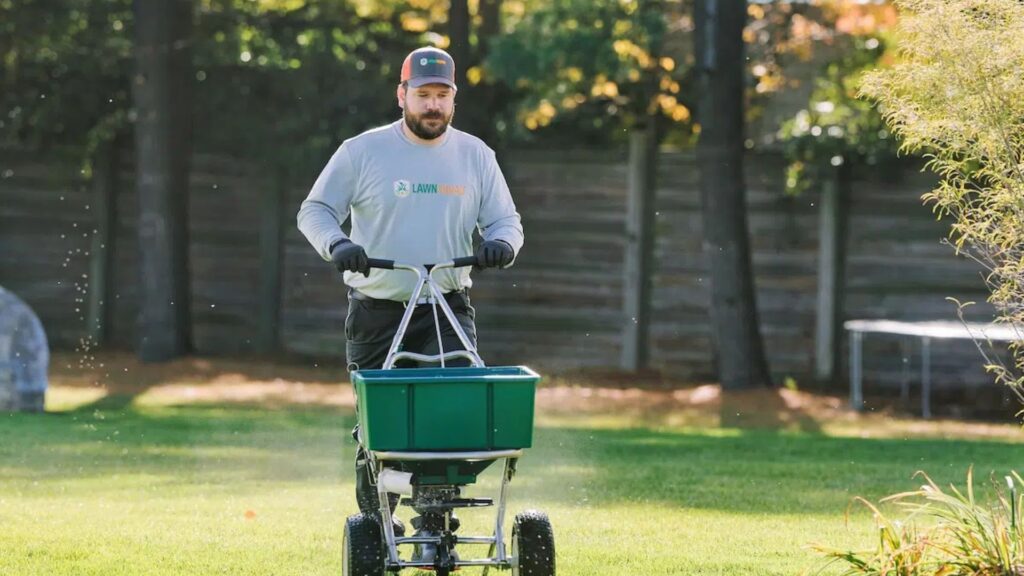
Pre-emergent works by creating a barrier in the top layer of soil that stops germinating seedlings before they reach the surface. It has to be in place and watered in before germination begins.
Winter annual seeds respond to soil temperature falling through roughly the low seventies. In Cincinnati that usually happens in September, but the actual date moves by two or three weeks depending on the year. A warm September pushes it later. An early cool spell pulls it forward.
This is why applying on the same calendar date every year works some years and not others. A soil thermometer costs very little, and several regional extension services publish current soil temperature readings that are close enough for this decision.
Once the weeds have germinated and are up, pre-emergent does nothing at all. There is no partial credit on this one.
The Conflict With Overseeding
Here is the genuine complication for Cincinnati lawns, and it catches people every year.
Pre-emergent cannot tell the difference between an annual bluegrass seed and a tall fescue seed. Both are seeds trying to germinate. If you overseed this fall and apply pre-emergent in the same window, one of them will fail, and it is usually the grass you paid for.
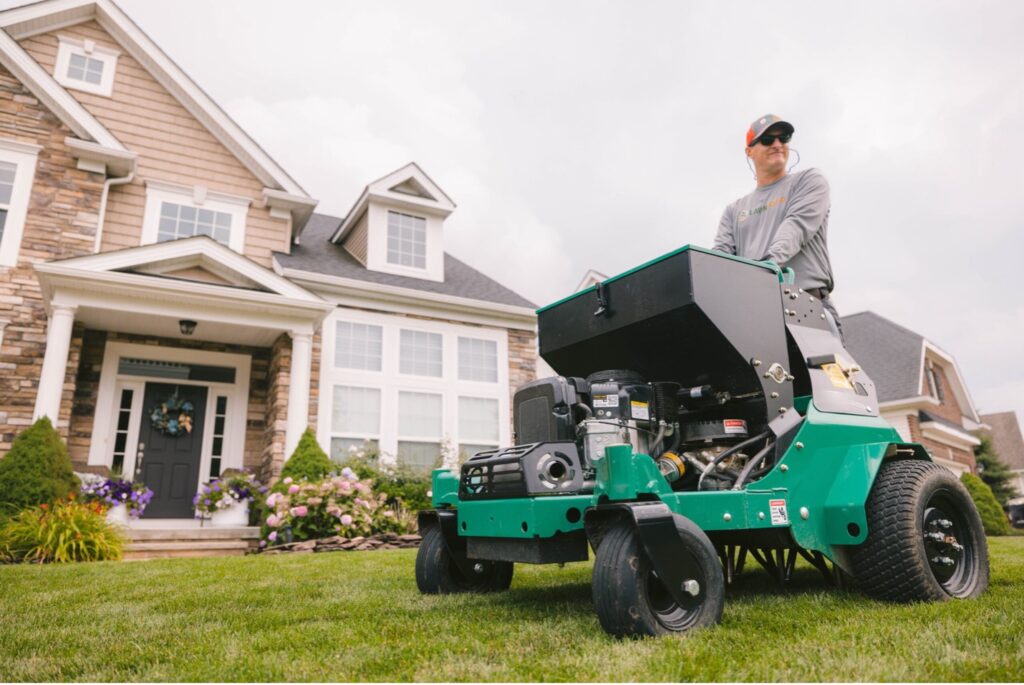
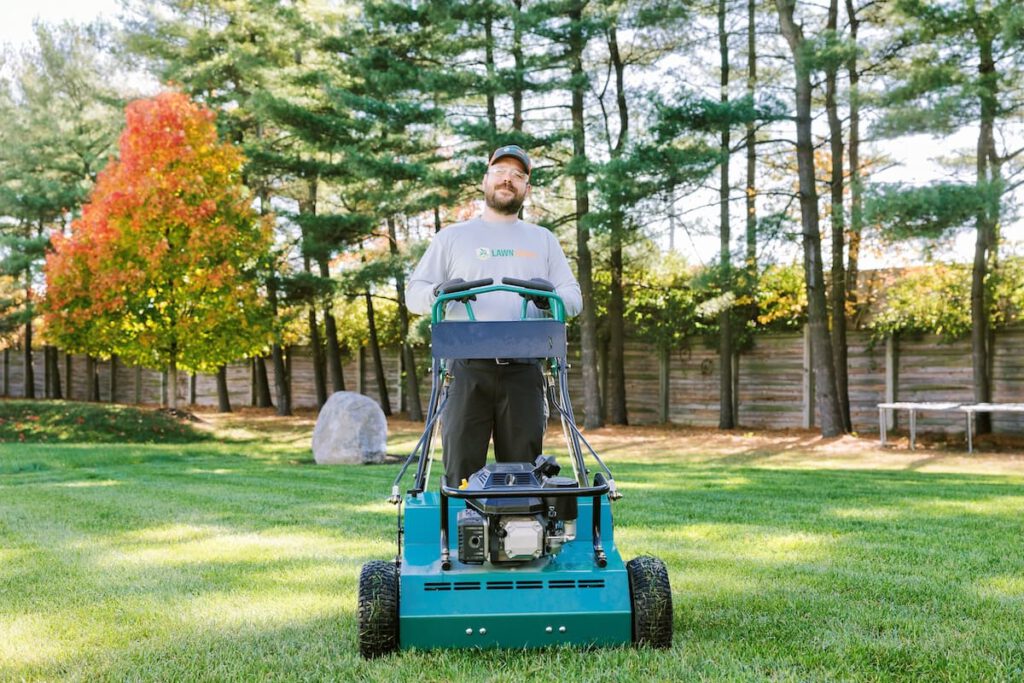
Given that fall is also the best time to aerate and overseed here, most Cincinnati lawns face a real choice each autumn. There are a few honest ways through it.
If the lawn is thin and needs seed, seed it, skip the fall pre-emergent on that area, accept a heavier winter weed load, and plan to handle it post-emergent in late winter.
If the lawn is reasonably dense and the recurring problem is winter weeds, skip seeding this year and get the pre-emergent down at the right moment.
You can also split the property, seeding the thin areas and treating the rest. That is often the practical answer on a larger lot.
Where the Weeds Come From on Your Property
Weed pressure is not evenly distributed, and knowing where it concentrates helps.
Edges are worst. Along driveways, sidewalks, and curbs the soil warms and cools faster than the open lawn, which shifts germination timing, and seed accumulates along hard edges. These are also the areas most often shorted on any application.
Thin turf is next. Winter annuals establish in gaps, and a dense lawn simply has fewer places for them to get started. This is why the single most effective long term weed control in Cincinnati is a thick stand of grass rather than any product.
And shaded, damp areas hold the moisture these weeds prefer, which is why the north side of a house or the strip under mature trees tends to be the worst of it.
What a Realistic Two Year Plan Looks Like
If your lawn is both thin and weedy, and many are, you are not fixing everything in one season. A sequence works better than trying to do it all at once.
Year one, treat the thinness. Aerate, overseed, and feed properly through fall, and accept that winter weeds will show up in spring. Handle them post-emergent when they appear.
Year two, with the lawn thicker and needing less seed, apply the fall pre-emergent on time. The denser turf plus the barrier means far fewer weeds get started.
From there it becomes maintenance rather than rescue. That is a slower answer than most people want, and it is the one that actually holds.
Telling Poa Annua From Your Actual Grass
Annual bluegrass causes more confusion than the broadleaf weeds because it is a grass growing in a lawn made of grass, and homeowners often do not realize it is a weed at all until it dies.
Look for a lighter, almost yellow green against the darker green of fescue or Kentucky bluegrass. It grows in distinct clumps rather than blending in. The blades have a boat shaped tip, curving up at the end like the bow of a canoe, which is the reliable identifying feature.
The giveaway most people notice is the seedheads. Poa annua produces small whitish seedheads very low in the canopy, often below mowing height, so it seeds successfully no matter how often you cut. A lawn that looks faintly speckled with white in April is usually full of it.
Then in late spring, as soon as Cincinnati gets its first genuinely hot stretch, it dies all at once and leaves bare patches exactly where the clumps were. Homeowners frequently blame the heat or a disease for those patches, when the actual cause was a winter annual finishing its life cycle on schedule.
What Fall Pre-Emergent Will Not Do
Being clear about the limits prevents disappointment in spring.
It does nothing to perennial weeds like dandelion, clover, or ground ivy, which regrow from existing roots rather than from seed. Those need a systemic post-emergent, and autumn happens to be the best time of year to treat them, which is a separate application and a separate decision.
It does nothing to anything already germinated at the time you apply.
And it does not last forever. Products break down over a period of weeks to months, which is why the spring crabgrass application is a separate job rather than a renewal of this one.
What to Do Next
Walk the lawn this week and write down the two or three things that actually bother you about it, then work backward from the window rather than forward from today. Almost every fall mistake we see in Cincinnati comes from starting with the calendar instead of with the lawn.
If you would rather have someone look at it with you, Lawn Squad of Cincinnati offers a free quote. Call 833-816-7508 or find us at lawnsquad.com. Every Lawn Squad location is independently owned and operated, and our VitaminLawn fertilization and weed control program is built around the grass, soil, and conditions here rather than a national average.
A first visit is a walk of the property, a look at the thin areas, a check of mowing height and irrigation, and a straight conversation about what is realistic in the weeks left this season. At 30 days you should see color and density improve. At 90 days the lawn should be visibly thicker, with the root growth that carries it through winter.