
The short answer: Bermuda grass and Zoysia grass are the best heat-tolerant options for most Central GThe short answer: Central Georgia yards need weed control applications in early spring (late February to March) and again in fall (September to October) to prevent most weeds, with spot treatments during summer as needed.
Pre-emergent herbicides work best when applied before weeds sprout. Post-emergent herbicides kill weeds that have already appeared in your lawn.
Quick overview:
- Late February to March: Pre-emergent for summer weeds like crabgrass
- April to August: Spot treat any weeds that break through
- September to October: Pre-emergent for winter weeds like henbit and chickweed
- November to February: Post-emergent for active winter weeds on warm days
Keep reading to learn exactly which weeds threaten Central Georgia lawns and how to stop them before they take over.
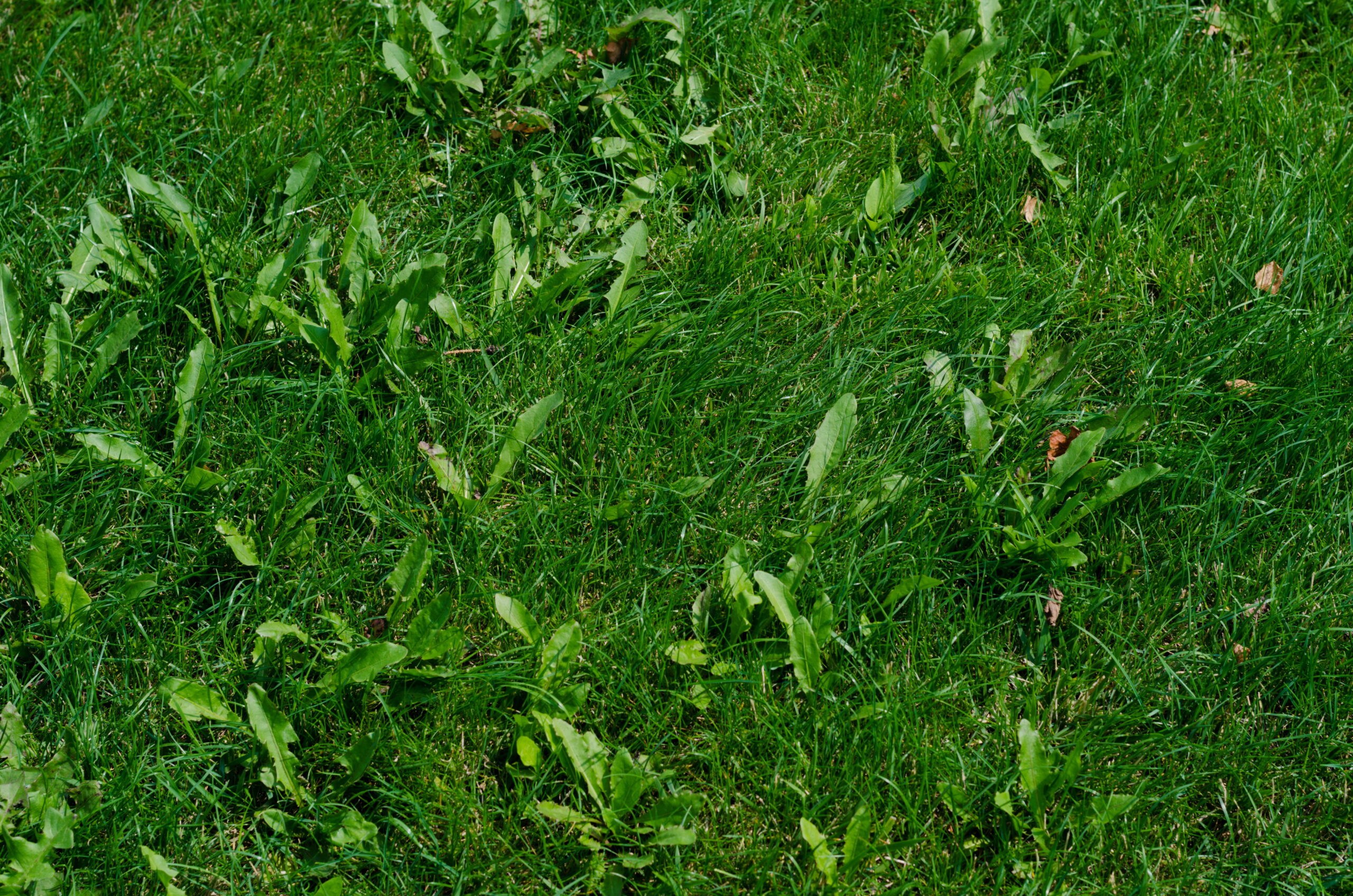
The Complete Weed Control Approach: Our 4-Step Program
Effective weed control in Central Georgia is not about reacting to problems. It is about preventing them before they start.
Our weed control program targets the specific weeds that plague Central Georgia yards based on our unique climate and soil conditions. We time applications to soil temperature rather than calendar dates because that is what actually determines when weed seeds germinate.
Whether you handle weed control yourself or bring in professionals, understanding the seasonal patterns of Central Georgia weeds helps you stay ahead of the problem instead of constantly playing catch-up.
Why Weed Control Matters More Than Most Central Georgia Homeowners Realize
Weeds do more than make your lawn look bad. They steal water, nutrients, and sunlight from your grass. A lawn overrun with weeds becomes weaker every season, creating more bare spots where even more weeds can move in.
Central Georgia’s long growing season makes weed control especially challenging. Our mild winters mean certain weeds stay active nearly year-round. Our hot, humid summers create perfect conditions for aggressive invaders like crabgrass and nutsedge.
The key principle is this: one weed plant can produce thousands of seeds. Those seeds can survive in your soil for years, waiting for the right conditions to sprout. Letting weeds go to seed this year means fighting ten times more weeds next year.
Central Georgia sits in a transition zone where both warm-season and cool-season weeds thrive. This means you face threats in every season, not just during summer.
Pre-Emergent Weed Control Guide for Central Georgia Yards
Pre-emergent herbicides create a barrier in the soil that kills weed seeds as they try to germinate. Think of it like a shield that stops weeds before you ever see them.
Timing Your Spring Application
The most important weed control application of the year happens in late winter. In Central Georgia, this typically falls between mid-February and mid-March.
The goal is to apply pre-emergent before soil temperatures consistently reach 55 degrees. At that temperature, crabgrass seeds start germinating. Once you see crabgrass, pre-emergent cannot help.
Watch the forsythia bushes around Central Georgia. When they start blooming bright yellow, soil temperatures are approaching the danger zone. Apply pre-emergent before or right as forsythias bloom.
Choosing the Right Product
Look for pre-emergent herbicides containing prodiamine, pendimethalin, or dithiopyr. These active ingredients control the widest range of Central Georgia weeds.
Dithiopyr offers a slight advantage because it can stop very young crabgrass that has just sprouted, giving you a small window of forgiveness if your timing is slightly off.
Application Tips for Clay Soil
Central Georgia’s red clay soil requires careful attention during application. Water the pre-emergent into the soil within 24 hours of applying. Without water, the product sits on top of the clay and breaks down in sunlight before it can work.
Apply about half an inch of water after spreading pre-emergent. This moves the herbicide into the top layer of soil where weed seeds germinate.
Critical warning: Do not aerate or dethatch your lawn after applying pre-emergent. These activities break up the chemical barrier and allow weeds to push through.
Our weed control program includes properly timed pre-emergent applications calibrated for Central Georgia’s soil and typical weather patterns.
Post-Emergent Weed Control Guide for Central Georgia Yards
Post-emergent herbicides kill weeds that have already sprouted and are actively growing in your lawn. These products work best on young, actively growing weeds.
Identifying Your Weeds First
Different herbicides work on different weeds. Using the wrong product wastes money and can damage your lawn. Central Georgia yards typically deal with these common invaders:
Broadleaf weeds (wide, flat leaves): dandelions, clover, chickweed, henbit, dollarweed Grassy weeds (look like grass): crabgrass, dallisgrass, goosegrass Sedges (triangular stems): nutsedge, also called nutgrass
Standard broadleaf herbicides containing 2,4-D, dicamba, and MCPP handle most broadleaf weeds. Grassy weeds and sedges require specialized products.
Temperature Matters for Effectiveness
Post-emergent herbicides work best when temperatures stay between 60 and 85 degrees. In Central Georgia, this means spring and fall are ideal treatment times.
Avoid spraying when temperatures exceed 85 degrees. The herbicide can volatilize (turn to gas) and drift onto plants you did not intend to treat. It also stresses your lawn during already difficult conditions.
Spot Treatment vs. Broadcast Application
For scattered weeds, spot treatment makes more sense than spraying your entire lawn. Use a pump sprayer to apply herbicide directly to individual weeds.
Broadcast applications cover the whole lawn and work better when weeds have spread throughout. Most Central Georgia lawns benefit from one or two broadcast applications per year combined with spot treatments as needed.
Do Not Spray Before Rain
Post-emergent herbicides need time to absorb into weed leaves. Check the weather forecast and avoid spraying if rain is expected within 24 hours. Rain washes the product off before it can work.
How to Calculate Herbicide Application Rates
Getting the application rate right matters for both effectiveness and lawn safety. Too little product fails to kill weeds. Too much can damage your grass.
Step by step process:
- Measure your lawn area (length times width for rectangular areas)
- Check the product label for the recommended rate per 1,000 square feet
- Divide your lawn’s square footage by 1,000
- Multiply that number by the recommended product amount
For example, if your lawn is 5,000 square feet and the product calls for 3 pounds per 1,000 square feet, you need 15 pounds total (5 times 3 equals 15).
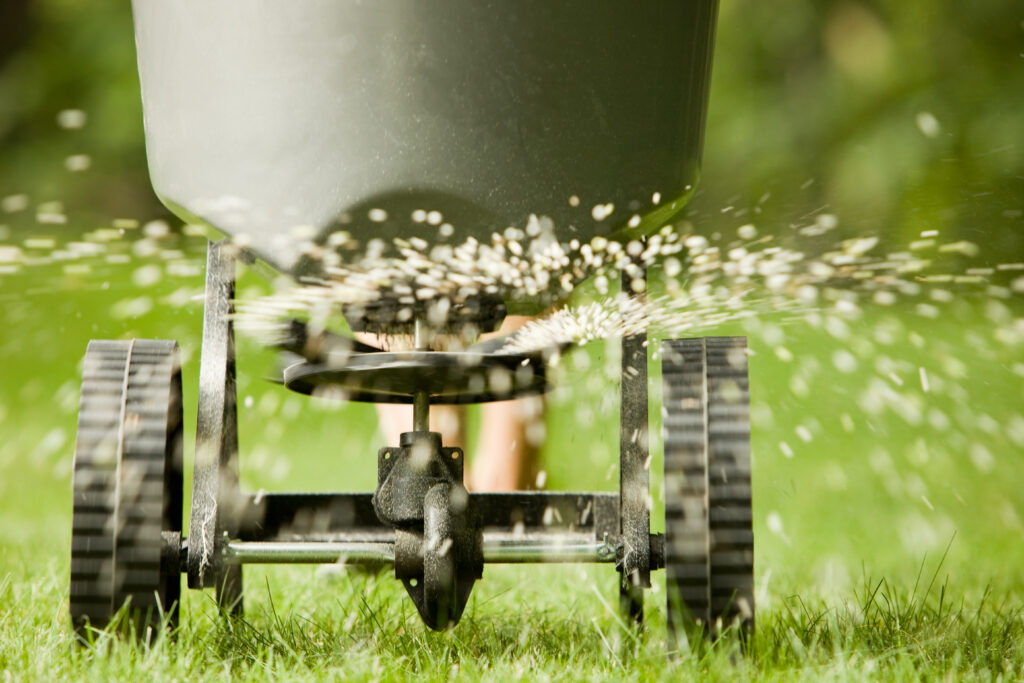
Use a calibrated spreader for granular products. For liquid applications, walk at a steady pace and use the correct nozzle setting.
What About Nutsedge Control?
Nutsedge, often called nutgrass, is one of the most frustrating weeds in Central Georgia yards. It grows faster than your grass, creating ugly tall spikes throughout your lawn.
Here is the honest truth: regular herbicides do not kill nutsedge. You need a product specifically designed for sedge control, such as those containing sulfentrazone or halosulfuron.
Nutsedge thrives in wet areas. If you have a drainage problem or overwater your lawn, nutsedge will keep coming back no matter how much you spray. Fixing moisture issues is just as important as herbicide applications.
Our weed control program includes targeted nutsedge treatments because this weed is so common in Central Georgia yards.
We recommend treating nutsedge in late spring through summer when it is actively growing. Multiple applications spaced 6 to 8 weeks apart may be necessary for heavy infestations.
Common Weed Control Mistakes Central Georgia Homeowners Make
After treating thousands of Central Georgia lawns, we have seen these mistakes repeatedly undermine homeowners’ weed control efforts.
Mistake #1: Applying Pre-Emergent Too Late Once you see crabgrass or other summer annual weeds, pre-emergent cannot help. Many homeowners wait until April or May, missing the critical window entirely. In Central Georgia, late February to early March is the target.
Mistake #2: Skipping the Fall Application Winter weeds like henbit, chickweed, and annual bluegrass germinate in fall. Without a September or October pre-emergent application, these weeds take over your lawn by February.
Mistake #3: Mowing Right Before or After Spraying Mowing removes leaf surface where post-emergent herbicides need to land. Wait 2 to 3 days after mowing before spraying, and wait 2 to 3 days after spraying before mowing again.
Mistake #4: Expecting Instant Results Post-emergent herbicides take 7 to 14 days to fully kill weeds. Homeowners often respray after a few days, thinking the product failed. This wastes money and can stress your lawn with excess chemicals.
Mistake #5: Using the Wrong Product for Your Grass Type Some herbicides safe for Bermuda grass will damage Zoysia or Centipede grass. Always check the product label to confirm it is safe for your specific lawn type before applying.
Pre-Emergent vs. Post-Emergent: Which Should You Choose?
Pre-emergent herbicides prevent weeds before they sprout by killing seeds as they germinate. They require proper timing and do nothing for weeds already growing in your lawn. Best for: Preventing crabgrass, goosegrass, annual bluegrass, and other weeds that spread primarily by seed
Post-emergent herbicides kill weeds that have already sprouted and are actively growing. They work on visible weeds but cannot prevent new ones from appearing. Best for: Killing existing dandelions, clover, nutsedge, and other established weeds
Most Central Georgia lawns need both. Pre-emergent applications in spring and fall prevent the majority of weeds. Post-emergent spot treatments handle any breakthrough weeds throughout the year.
Your Central Georgia Weed Control Calendar at a Glance
Pre-Emergent Schedule
| When | What to Do | Target Weeds |
|---|---|---|
| Late February to Mid March | Spring pre-emergent application | Crabgrass, goosegrass, spurge |
| Late March to Early April | Second application if needed | Extended crabgrass prevention |
| Mid September to Mid October | Fall pre-emergent application | Henbit, chickweed, annual bluegrass |
Post-Emergent Schedule
| When | What to Do | Target Weeds |
|---|---|---|
| March to May | Broadleaf weed treatment | Dandelions, clover, wild onion |
| May to August | Nutsedge and summer weed treatment | Nutsedge, spurge, lespedeza |
| October to November | Winter broadleaf treatment | Henbit, chickweed, Carolina geranium |
| December to February | Spot treat on warm days above 50 degrees | Active winter weeds |
The Bottom Line
Winning the weed battle in Central Georgia requires a year-round approach that targets weeds at the right time with the right products.
Key principles to remember:
- Apply spring pre-emergent in late February to March before soil hits 55 degrees
- Apply fall pre-emergent in September to October to prevent winter weeds
- Use post-emergent herbicides when weeds are young and temperatures are between 60 and 85 degrees
- Match your herbicide to your specific weed and grass type
- Water pre-emergent into the soil within 24 hours of application
Follow this seasonal approach and you will spend less time fighting weeds and more time enjoying a healthy Central Georgia lawn.
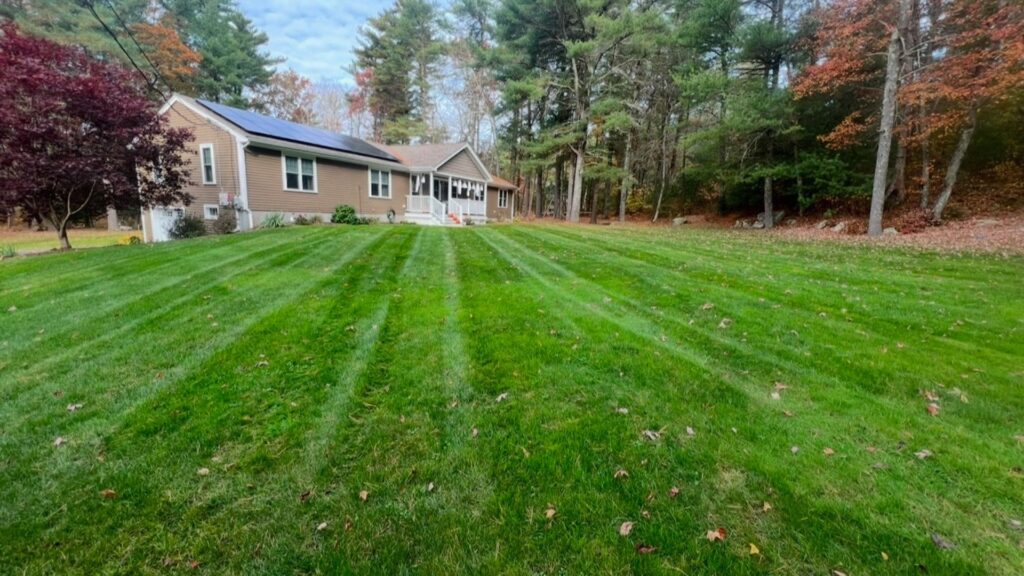
Let Us Handle It For You
Every Central Georgia yard faces different weed pressures based on your grass type, soil conditions, shade patterns, and surrounding landscape. A cookie-cutter approach cannot address these variables.
Our weed control program is designed specifically for Central Georgia conditions and adjusts throughout the year based on actual weather patterns and weed pressure.
Our Central Georgia Weed Control Program includes:
- Properly timed pre-emergent applications based on soil temperature
- Targeted post-emergent treatments for your specific weed problems
- Specialized nutsedge control for this stubborn Central Georgia invader
- Products matched to your grass type for safe, effective results
Stop spending your weekends pulling weeds and spraying products that may not even work. Life is too short to fight the same weeds year after year.
Contact us today for a free lawn evaluation and discover how a professional weed control program can transform your Central Georgia yard.