The short answer: The best time to aerate warm season lawns in The Woodlands is during summer when grass is actively growing and can recover quickly. Our ELITE program includes aeration in Rounds 4, 5, and 6, which fall in May, June, and August. This timing takes advantage of peak growing conditions while relieving soil compaction when it matters most.
Here’s a quick overview:
- Best timing: May through August when warm season grasses are actively growing
- Avoid: Fall and winter when grass is slowing down or dormant
- Frequency: Once per year minimum, up to three times for compacted lawns
- Method: Core aeration pulls plugs from soil; liquid aeration is an alternative
If you want your Woodlands lawn to develop deep roots and absorb water efficiently, understanding when and why to aerate makes a real difference.
The Complete Aeration Approach: Our 3 Round Summer Strategy
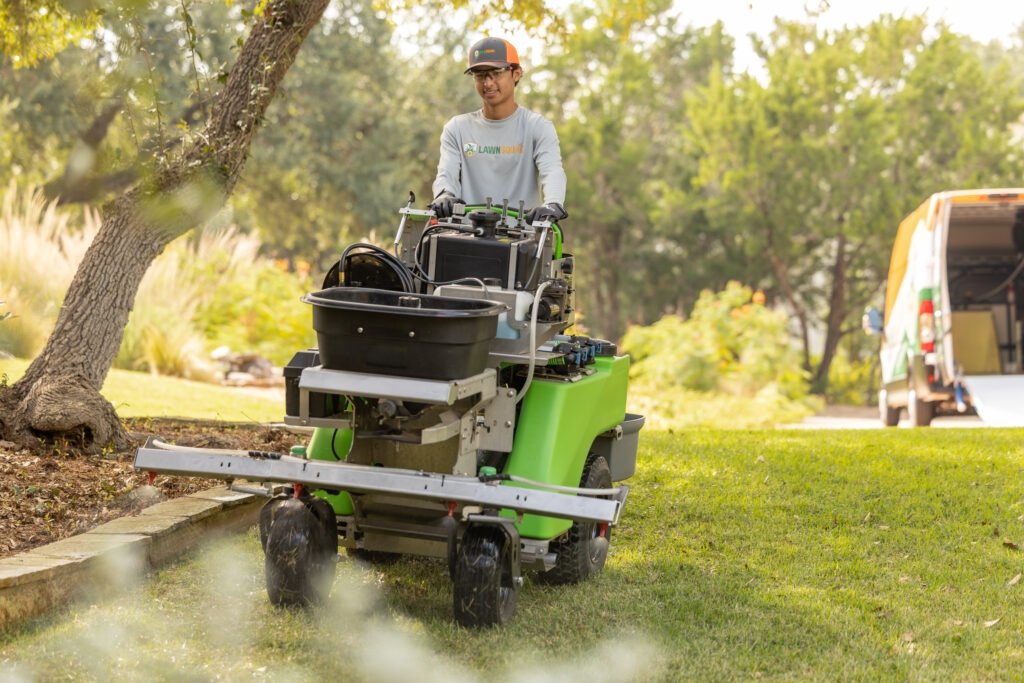
At Lawn Squad, we include aeration in three rounds of our ELITE program because The Woodlands soil conditions demand it. Round 4 in May kicks off aeration season as soil warms up. Round 5 in June continues the process during peak growth. Round 6 in August provides relief before the fall transition.
This approach works because compacted soil is a year round problem, not a one time issue. Every time someone walks across your lawn, drives on the edge, or mows the grass, soil gets compressed. Rain events compact soil further. By the time summer arrives, roots are struggling to breathe and water runs off instead of soaking in.
Three aerations spread across summer keep soil loose during the months when your lawn needs oxygen and water most. Whether you aerate yourself or hire professionals, understanding the timing principles helps you make better decisions for your specific lawn.
Why Aeration Timing Matters More in The Woodlands
Aeration timing advice from national sources doesn’t account for what makes The Woodlands different. Our soil, grass types, and climate create specific conditions that determine when aeration actually helps versus when it might cause problems.
Our clay soil compacts severely. Montgomery and Harris counties sit on heavy clay that compresses easily and stays compressed. Unlike sandy soils that naturally stay loose, our clay needs mechanical intervention to maintain proper structure. A lawn that was aerated in spring can be completely compacted again by midsummer.
Our warm season grasses recover differently. St. Augustine, Bermuda, and Zoysia lawns dominate The Woodlands. These grasses grow most aggressively from May through September. Aerating during active growth means holes fill in within two to four weeks. Aerating during slow growth or dormancy leaves holes open for months, inviting weeds and looking unsightly.
Our summer stress period is when aeration helps most. Compacted soil makes summer heat stress worse because roots can’t access water or oxygen. Aerating before and during summer’s worst months gives roots the breathing room they need to survive July and August.
Pre emergent conflicts matter here. Many Woodlands homeowners apply pre emergent herbicide in spring to prevent crabgrass. Core aeration punches through that chemical barrier, creating gaps where weeds can germinate. Summer aeration avoids this conflict because pre emergent has already broken down.
The key principle is this: aerate when your grass can heal fast and when the benefits of loose soil matter most. In The Woodlands, that means summer.
Summer Aeration Guide for The Woodlands
Summer aeration delivers the best results for warm season lawns because grass is growing vigorously and soil relief provides immediate benefits during heat stress.
Step 1: Schedule for May Through August
The ideal window opens in early May when soil temperatures consistently reach 65 degrees and warm season grass is actively spreading. It closes in late August as grass begins its fall transition.
Our treatment schedule places aeration in Round 4 starting May 10, Round 5 starting June 21, and Round 6 starting August 2. These dates align with peak growing conditions in Montgomery and Harris counties.
Step 2: Water Before Aerating
Soil should be moist but not saturated when you aerate. Dry, hard soil resists the aerator tines and produces shallow cores. Waterlogged soil smears instead of breaking apart cleanly.
Water your lawn the day before aeration if rain hasn’t fallen recently. The goal is soil that’s damp several inches deep, similar to conditions a day or two after a good rain.
Step 3: Choose Core Aeration for Best Results
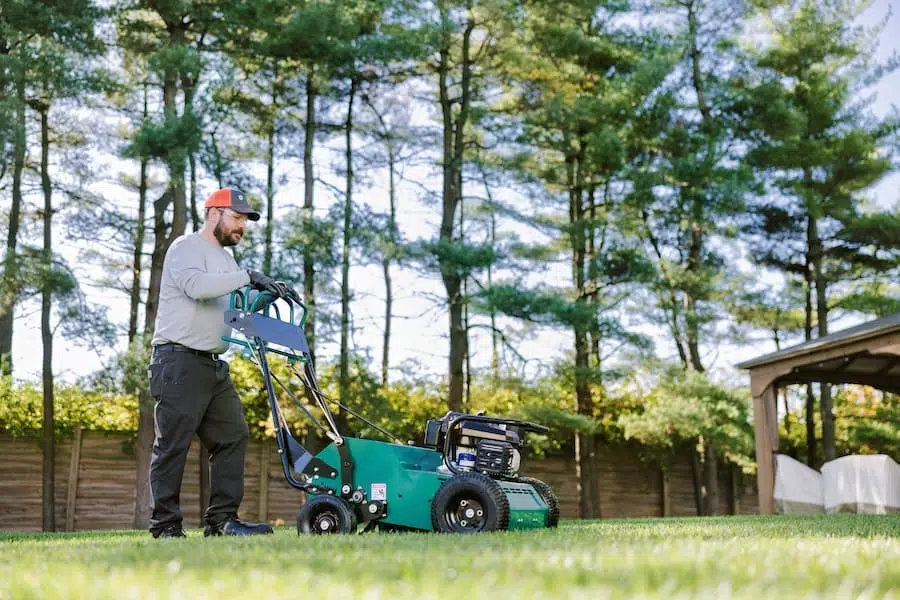
Core aeration uses hollow tines to pull plugs of soil from your lawn. These plugs, typically 2 to 3 inches deep and half an inch wide, break apart on the surface and filter back into the holes over the following weeks.
This method physically removes compacted soil rather than just poking holes. The channels created allow air, water, and nutrients to reach root zones directly.
Step 4: Leave the Cores on the Lawn
Those soil plugs scattered across your lawn after aeration might look messy, but leave them alone. They break down within one to two weeks and return organic matter and microorganisms to the soil surface.
Raking up cores removes beneficial material and adds unnecessary work. Mowing over them speeds breakdown if you want the lawn to look cleaner faster.
Critical warning: Avoid aerating during extreme heat waves when temperatures exceed 95 degrees for multiple days. While summer aeration is ideal, grass stressed by extreme heat recovers more slowly. Wait for a slightly cooler period or ensure irrigation keeps the lawn hydrated during recovery.
Liquid Aeration Guide for The Woodlands
Liquid aeration offers an alternative for homeowners who want soil improvement without the mess of core aeration or who need to preserve pre emergent barriers.
Step 1: Understand What Liquid Aeration Does
Liquid aeration products contain soil conditioners that break down compacted clay particles and create microscopic channels in the soil. They don’t physically remove soil like core aeration, but they improve soil structure over time.
Step 2: Apply in Spring or Fall
Unlike core aeration, liquid aeration works well during shoulder seasons. Our service list includes liquid aeration for both spring and fall applications. This timing avoids summer heat stress while still improving soil conditions.
Step 3: Know the Limitations
Liquid aeration improves soil structure gradually over multiple applications. It doesn’t provide the immediate, dramatic relief that core aeration delivers. For severely compacted lawns, core aeration is more effective. Liquid aeration works best for maintenance on lawns with moderate compaction or as a supplement to occasional core aeration.
Critical Consideration: Pre Emergent Compatibility
Liquid aeration doesn’t disturb pre emergent barriers because it doesn’t create physical holes in the soil. If you’ve applied pre emergent and don’t want to compromise weed prevention, liquid aeration lets you improve soil conditions without that trade off.
How to Tell If Your Lawn Needs Aeration
Not every lawn needs aeration every year. Some signs indicate urgent need while others suggest your soil is still in good shape.
Step by step assessment:
- Push a screwdriver into your lawn after watering. If it slides in easily to 4 to 6 inches, soil compaction is minimal. If it stops at 1 to 2 inches or requires significant pressure, compaction is severe.
- Look at water behavior during irrigation. Water that pools on the surface or runs off quickly indicates compacted soil that can’t absorb moisture.
- Check for thinning grass and bare patches. Compacted soil prevents roots from spreading, leading to thin turf that can’t fill in damaged areas.
- Consider traffic patterns. Areas where people walk regularly, where kids play, or where you drive equipment compact faster than less trafficked zones.
Practical example: A lawn in The Woodlands that passed the screwdriver test easily in March might fail it by July. Summer activities, rain events, and regular mowing all contribute to progressive compaction. Testing multiple times per year gives you accurate information about current conditions.
What About Overseeding After Aeration?
Aeration creates ideal conditions for overseeding because seeds fall into the holes and make direct contact with soil. However, overseeding warm season lawns in The Woodlands requires careful consideration.
Summer overseeding with warm season grass can work if you’re filling bare patches with plugs or sprigs of St. Augustine, Bermuda, or Zoysia. These grasses establish quickly during summer’s warm soil and long days. Our overseeding service for summer ranges from $37 to $925 depending on lawn size.
Fall overseeding with cool season grass is sometimes done to keep lawns green through winter. However, this requires skipping fall pre emergent, which means dealing with winter weeds. Most Woodlands homeowners find the trade off isn’t worth it.
The pre emergent conflict is real. If you’ve applied pre emergent within the past 8 to 12 weeks, any grass seed you put down will fail to germinate just like weed seeds. Our treatment schedule accounts for this by placing aeration during summer months after spring pre emergent has broken down.
Seed enhancement treatments can improve germination rates when overseeding. Lawn Squad offers seed enhancement as an add on service to maximize results when establishing new grass.
Common Aeration Mistakes Woodlands Homeowners Make
After serving The Woodlands, Conroe, Spring, Porter, Magnolia, and Tomball since 2001, we’ve seen aeration mistakes that waste money and sometimes damage lawns.
Mistake 1: Aerating in Fall or Winter Cool season aeration advice doesn’t apply to warm season lawns. Aerating St. Augustine or Bermuda in October leaves holes that won’t heal until the following May. Those holes become weed nurseries and look terrible for months.
Mistake 2: Aerating Dry Soil Running an aerator over hard, dry clay produces shallow, ineffective cores and puts stress on the equipment. The tines can’t penetrate properly, so you’re doing all the work for minimal benefit.
Mistake 3: Aerating Right After Pre Emergent Punching holes through a fresh pre emergent barrier opens doorways for every weed seed waiting in your soil. Either wait until pre emergent breaks down naturally or accept that you’ll have weed pressure after aerating.
Mistake 4: Raking Up the Cores Those soil plugs contain beneficial microorganisms and organic matter. Removing them is extra work that actually hurts your lawn by taking away material it needs.
Mistake 5: Aerating Only Once and Calling It Done Compaction is ongoing. A single aeration provides temporary relief, but clay soil recompacts within months. Annual or multiple summer aerations maintain the benefits over time.
Core Aeration vs. Liquid Aeration: Which Should You Choose?
Core aeration physically removes plugs of soil, creating immediate channels for air, water, and nutrients. Results are visible and dramatic, especially on severely compacted lawns. Best for: Heavily compacted clay soil, lawns with serious drainage issues, establishing new grass, and situations where maximum immediate impact matters.
Liquid aeration uses chemical soil conditioners to gradually improve structure without physical disruption. No mess, no holes, and no pre emergent concerns. Best for: Maintaining lawns with moderate compaction, spring applications when pre emergent is active, smaller lawns where equipment access is difficult, and homeowners who prefer no visible disruption.
Many Woodlands homeowners benefit from combining both approaches. Core aeration once or twice during summer provides major relief while liquid aeration in spring maintains soil structure without compromising weed prevention.
Our pricing for aeration services ranges from $60 to $302 depending on lawn size. Liquid aeration is available for both spring and fall applications.
Your Aeration Schedule at a Glance
ELITE Program Aeration Schedule
| Round | Timing | Services Combined with Aeration |
|---|---|---|
| 4 | May 10 | Fertilizer, weed control, insect control, disease control, sedge suppression |
| 5 | June 21 | Fertilizer, root stimulant, weed control, insect control, sedge suppression |
| 6 | August 2 | Fertilizer, weed control, insect control, sedge suppression, disease control |
DIY Aeration Schedule
| When | What to Do | Important Notes |
|---|---|---|
| Late April | Test soil compaction | Screwdriver test after watering |
| May | First core aeration | After pre emergent breaks down |
| June or July | Second aeration if needed | During active growth |
| August | Final summer aeration | Before fall transition |
| Spring or Fall | Liquid aeration option | Won’t disrupt pre emergent |
The Bottom Line
Aeration timing in The Woodlands comes down to one simple rule: aerate when your warm season grass is growing fast enough to heal quickly. For our area, that means May through August.
Key principles to remember:
- Summer aeration works best for warm season lawns common in The Woodlands
- Clay soil needs annual aeration at minimum to stay loose
- Core aeration provides immediate, dramatic relief for compacted soil
- Liquid aeration maintains soil structure without disrupting pre emergent
- Multiple aerations per summer provide better results than a single treatment
- Leave soil cores on the lawn to break down naturally
The lawns with the deepest roots and best drought tolerance are lawns that get aerated during the growing season when grass can take full advantage of improved soil conditions.
Let Lawn Squad Handle It For You
Aeration is one piece of a complete lawn care strategy. The timing has to coordinate with pre emergent applications, fertilization, disease control, and insect management. Getting one element wrong can undermine everything else.
Our ELITE program integrates aeration into a comprehensive year round plan designed specifically for Montgomery and Harris county conditions.
ELITE Program aeration benefits:
- Three aerations during peak growing season
- Timed to avoid pre emergent conflicts
- Combined with fertilizer for maximum root development
- Paired with root stimulant for drought resistance
- Coordinated with disease control for healthy recovery
- Included in the program cost with no surprise charges
If you’ve been aerating at the wrong time, skipping aeration entirely, or just unsure whether your lawn needs it, our team can assess your soil conditions and recommend the right approach.
Contact Lawn Squad at 281-674-9226 today to get a quote for your property and give your lawn the soil conditions it needs to thrive.