
What South Florida’s Fertilizer Rules Mean for Your South Miami Lawn
Short Answer: South Florida regulates lawn fertilizer more closely than most of the country, and the rules vary by county and municipality. They generally address four things: seasonal restrictions on nitrogen and phosphorus during the summer rainy season, a required minimum share of slow release nitrogen, limits on phosphorus without a soil test showing need, and buffer distances from canals, lakes, and the bay. Because specifics differ locally and change over time, checking your own jurisdiction’s current rule is the only reliable approach. Working inside these limits generally produces a better lawn, not a worse one.
If you have picked up a bag of fertilizer in a South Miami garden center and noticed it looks different from what your cousin buys in Georgia, that is not your imagination. Florida regulates lawn fertilizer more tightly than most states, and South Florida counties layer additional requirements on top of the state rule.
Most homeowners we talk with find this out either from a neighbor or from a citation, neither of which is a good way to learn. So here is a plain overview of what these rules generally cover and why they exist. We are going to be careful not to quote specific dates or numbers, because they differ between jurisdictions and they get amended, and an out of date figure is worse than no figure.
Why These Rules Exist Here
The reasoning is geographic and it is worth understanding, because it makes the rules feel less arbitrary. Much of our area sits on porous oolitic limestone with a thin soil layer over it. Water moves through that profile quickly and connects to the canal system and to Biscayne Bay with very little filtration in between.
Nitrogen and phosphorus that leave a lawn reach surface water fast here. In the bay and in the canals, those nutrients feed algae growth, which reduces oxygen and damages seagrass beds that the local fishery depends on. Seagrass loss in Biscayne Bay has been a documented and serious problem, and lawn fertilizer is one identified contributor among several.
Add our rainy season, where a single afternoon can deliver several inches in an hour, and the risk becomes obvious. Fertilizer applied the morning before a storm like that does not stay in your lawn. This is the core of why the strictest restrictions fall during the wet months.
Seasonal Restrictions
The most significant provision in most South Florida ordinances is a seasonal prohibition on applying nitrogen and phosphorus during the summer rainy season. The specific window varies by jurisdiction, which is exactly why you should confirm yours rather than rely on a general article.
What matters practically is the shape of it. For a stretch of the wettest months, nitrogen applications are generally off the table. Then the restricted period ends and applications become permissible again, which is part of why October and November are a natural window here and why we treat this as the productive feeding season rather than a wind down.
Homeowners sometimes assume this leaves their lawn starved through summer. In practice it works out reasonably well, because heavy rain would have flushed much of a summer application anyway. Applying during the rainy season often means paying for fertilizer that ends up in a canal rather than in your grass, so the restriction and good agronomy point the same direction more often than not.
The Slow Release Requirement
Most local rules require that a minimum share of the nitrogen in a lawn fertilizer be in slow release form. This is the provision homeowners notice least and benefit from most.
Quick release nitrogen, typically urea, dissolves the moment water hits it and is fully available immediately. On our thin soil over limestone, that means a large amount of soluble nitrogen sitting in a profile that drains fast. Slow release forms dissolve gradually over weeks, so less is mobile at any given moment and far more of it is taken up by the grass.
From your lawn’s perspective this is simply better feeding. A steady supply over six to eight weeks produces more even growth and color than a spike followed by a fade. The rule is written for water quality, and the agronomic benefit is real and incidental.
Reading for it is easy. Turn the bag over and find the nitrogen breakdown on the guaranteed analysis. Look for language about coated, controlled release, or slow release nitrogen and what percentage it represents.
Phosphorus and the Soil Test
Most rules also restrict phosphorus, the middle number on a fertilizer bag, unless a soil test demonstrates that your lawn needs it. You will find many bags on local shelves carrying a zero in that position, and that is correct rather than a defect.
The agronomic basis is straightforward. Established lawns use relatively little phosphorus, and many South Florida soils already contain adequate amounts. Applying more does not improve an established lawn, and phosphorus is the nutrient most directly tied to algae blooms in fresh water.
Where phosphorus genuinely matters is establishment, since new sod and plugs use it for root development. If you are installing turf, that is the situation in which a soil test and a phosphorus application make sense. For an established Floratam lawn, the zero in the middle is almost always the right choice.
Buffers and Application Practice
Rules commonly require a fertilizer free buffer near water bodies, and in our area that affects a lot of properties, given how many homes back onto canals or lakes. The buffer distance varies locally, so again, confirm rather than assume.
There is a practice provision that matters just as much and gets ignored constantly. Fertilizer that lands on a driveway, sidewalk, or street must be swept or blown back onto the turf rather than left or hosed off. Product on a hard surface has a direct path to a storm drain, which is a direct path to the bay. This is genuinely one of the highest impact habits available, and it takes two minutes with a broom.
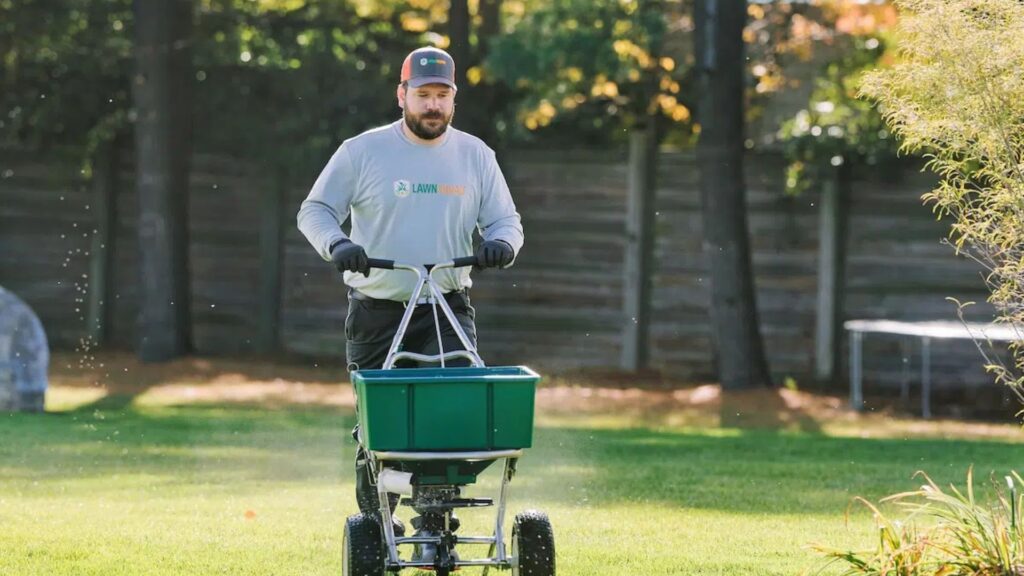
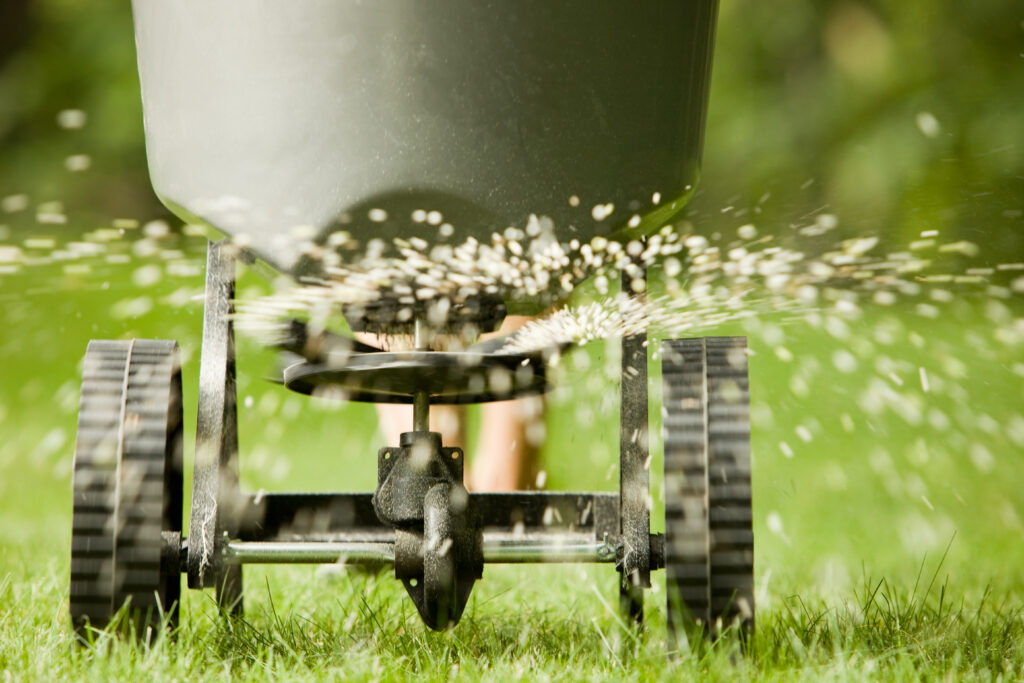
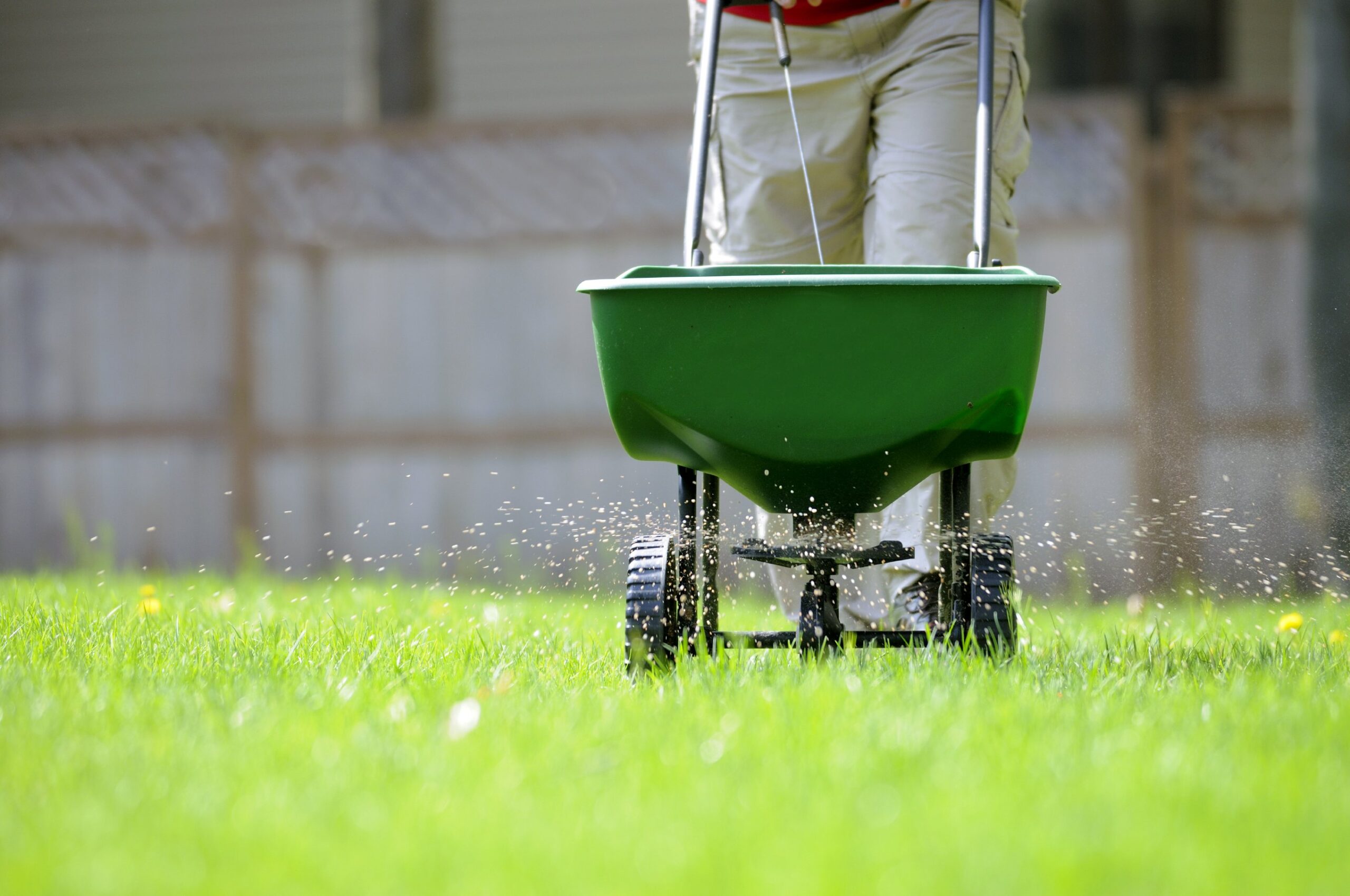
Deflector shields on spreaders are also commonly required near water and hard edges, so granules throw in one direction only. If you spread your own fertilizer along a canal bank, a shield is worth owning.
Certification and Hiring Out
Florida requires commercial fertilizer applicators to hold certification, and local ordinances often add training requirements. This is a useful filter when you are choosing a company.
Ask directly whether applications are made under a certified applicator and how the company tracks local ordinance requirements across the municipalities it serves. Any reputable operation here answers that immediately, because it is a normal part of doing business. Hesitation on that question tells you something.
It is also worth asking how a company handles the restricted season. A program that promises the same application schedule year round in South Florida is either not following local rules or not being precise about what those applications contain. Neither is a reason to panic, but it is a reason to ask a follow up question.
Working Well Inside the Rules
The reframe we would offer is that these constraints mostly push you toward better practice rather than worse results. Slow release nitrogen feeds more evenly. Skipping phosphorus on an established lawn costs nothing. Not applying before a summer downpour saves you money. Sweeping granules off the driveway takes a broom.
What the rules do genuinely require is planning. You cannot feed reactively whenever the lawn looks tired, because part of the year is restricted. Applications need to be timed into the permitted windows, and the dry season we are entering is the main one.
Where a lawn looks poor during a restricted period, the productive response is usually irrigation, pest management, or micronutrients rather than nitrogen. On our high pH limestone soils, a yellow lawn is frequently short on available iron rather than nitrogen anyway, and iron applications are a different question from the nitrogen restriction.
What to Do Next
Look up your own jurisdiction’s current fertilizer ordinance before your next application. Municipal and county rules in our area differ, and the authoritative source is the local one rather than any article, including this one. It takes a few minutes and it is the only way to be certain.
Then check the bag you already own. Find the nitrogen breakdown and the phosphorus number. If it has substantial slow release nitrogen and a zero for phosphorus, you are holding a product appropriate for an established lawn here.
Get a soil test if you have not had one. It tells you pH, which on limestone soil is usually the single most useful number you can have, and it establishes whether phosphorus is genuinely needed. Given how commonly high pH drives the yellowing homeowners here fight, a test often redirects the whole plan.
If you would rather have someone handle compliance, timing, and product selection for your South Miami lawn, we are here for that. Visit lawnsquad.com to find Lawn Squad of South Miami and request a free quote. Our VitaminLawn program is built around the soils, water quality requirements, and year round growing conditions we actually work with here.