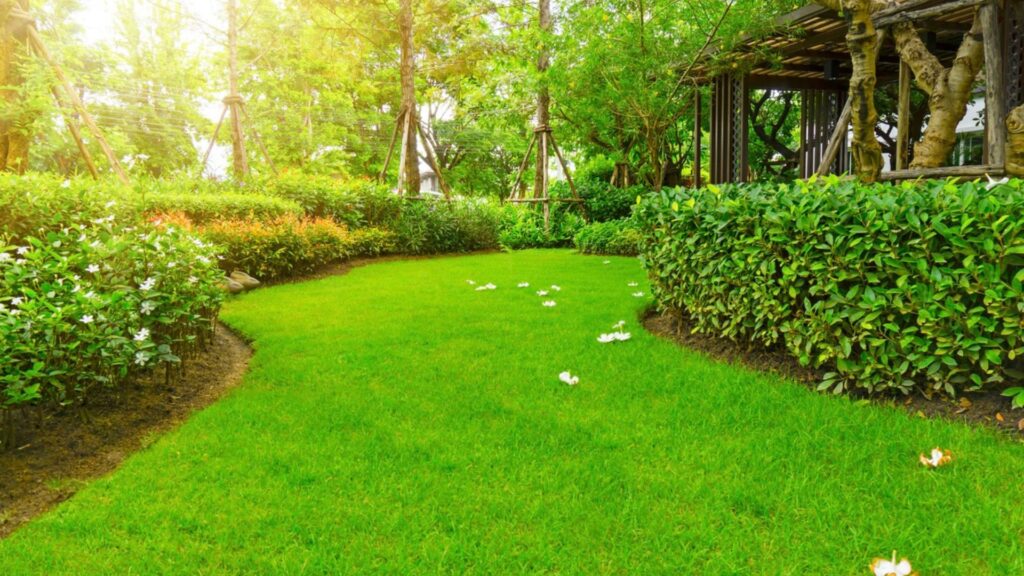
The short answer: The best fertilizer plan for Utah lawns includes 5 to 6 applications spread throughout the growing season, starting in early March and ending with a winterizer in late September or early October.
Utah’s cool season grasses need consistent nutrition from early spring through fall. A single “feed and forget” application will not give you the results you want.
Quick overview:
- Basic plans: 5 fertilizer applications paired with weed control
- Standard plans: 6 applications plus grub prevention and insect control
- Premium plans: 6 applications plus disease control, soil testing, root stimulant, and aeration
Keep reading to learn exactly when to fertilize, what nutrients your Utah lawn needs, and how to choose the right plan for your property.
The Complete Fertilizer Approach: Lawn Squad’s Multi-Round Programs
At Lawn Squad of Utah County, we have developed fertilizer programs specifically designed for Utah’s unique growing conditions. Our programs range from 5 to 6 fertilizer applications timed on a 42-day interval throughout the season.
This timing is not random. It matches the natural growth cycles of cool season grasses like Kentucky bluegrass, which is the most common lawn grass in Utah County. Your grass needs different nutrients at different times of year, and our programs deliver exactly what your lawn needs when it needs it.
Whether you fertilize your own lawn or hire professionals, understanding why timing matters will help you get better results.
Why Fertilizer Planning Matters More Than Most Utah Homeowners Realize
Many Utah homeowners make the mistake of buying a bag of fertilizer in spring, spreading it on their lawn, and calling it done for the year. Then they wonder why their lawn looks patchy, turns brown in summer, or gets overrun with weeds.
Here is what happens when you do not follow a proper fertilizer plan. In spring, your grass uses up the nutrients quickly during its growth surge. By June, those nutrients are gone. Your grass enters summer stressed and weak, making it vulnerable to heat, drought, insects, and disease.
A starving lawn cannot fight off crabgrass and dandelions. It cannot develop deep roots to survive dry periods. It cannot recover from foot traffic or mowing stress. Every problem becomes worse when your lawn lacks proper nutrition.
Utah County presents specific challenges for lawn fertilization. Our soils tend to be alkaline, which locks up certain nutrients and makes them unavailable to your grass. Our hot, dry summers stress lawns that are not properly prepared. Our cold winters can damage lawns that did not receive proper fall nutrition.
From Alpine and Highland down to Provo and Orem, and from Eagle Mountain east to Midway, Utah County lawns share these same challenges. A fertilizer plan designed for Utah conditions will outperform generic advice every time.
Understanding Utah’s Cool Season Grasses
Before diving into fertilizer plans, you need to understand what type of grass you are feeding. Almost all Utah County lawns contain cool season grasses, primarily Kentucky bluegrass with some perennial ryegrass and fine fescue mixed in.
How Cool Season Grasses Grow
Cool season grasses have two main growth periods. The first happens in spring when soil temperatures warm up after winter. The second happens in fall when temperatures cool down from summer heat.
During summer, cool season grasses slow their growth significantly. They are not dead, just conserving energy to survive the heat. This is called summer dormancy, and it is completely normal.
What This Means for Fertilizing
You want to feed your lawn heavily during its active growth periods and more lightly during summer stress periods. Dumping high-nitrogen fertilizer on your lawn in July can actually burn it because the grass cannot use those nutrients when it is trying to survive the heat.
Our fertilizer programs account for these growth cycles. We apply slow-release fertilizer in early spring to fuel the first growth surge. We adjust our summer applications to support the lawn without pushing it too hard. We finish with a winterizer that helps roots store energy for spring green-up.
The ELITE Fertilizer Plan: Maximum Results for Utah Lawns
Our ELITE program represents the most comprehensive fertilizer plan available for Utah County lawns. It includes 6 fertilizer applications plus everything else your lawn needs to thrive.
Round 1: Early Spring Foundation (March)
This round starts the season right with pre-emergent crabgrass control combined with slow-release fertilizer. The slow-release formula feeds your lawn gradually over several weeks instead of dumping all the nutrients at once.
We also include a soil test in this round. This tells us your soil pH and nutrient levels so we can customize recommendations for your specific lawn.
Why it matters: Pre-emergent must go down before soil temperatures reach 55 degrees consistently. Miss this window and you will fight crabgrass all summer.
Round 2: Spring Growth Support (April)
As your lawn enters its peak spring growth, we apply another round of fertilizer along with broadleaf weed control. This round also includes surface insect control to eliminate pests before they damage your turf.
Why it matters: Spring is when dandelions and other broadleaf weeds are most vulnerable to treatment. Killing them now prevents them from spreading seeds.
Round 3: Early Summer Protection (Late May)
This round transitions your lawn from spring growth mode to summer survival mode. We apply fertilizer along with broadleaf weed control, surface insect control, grub prevention, and disease control.
Why it matters: Grub prevention must go down before Japanese beetle and other grub-producing insects lay their eggs. Preventative treatment costs far less than treating an active grub infestation.
Round 4: Summer Maintenance (July)
During the hottest part of summer, we continue supporting your lawn with fertilizer, weed control, insect control, grub prevention, and disease control. The fertilizer blend is adjusted for summer conditions.
Why it matters: Fungal diseases like brown patch and dollar spot thrive in summer heat and humidity. Disease control protects your lawn when it is most vulnerable.
Round 5: Fall Recovery (August)
As temperatures begin cooling, your lawn enters its second major growth period. This round includes fertilizer, root stimulant, weed control, insect control, disease control, and core aeration.
Why it matters: The root stimulant encourages deep root development before winter. Aeration reduces soil compaction and allows nutrients and water to reach the root zone.
Round 6: Winter Preparation (Late September)
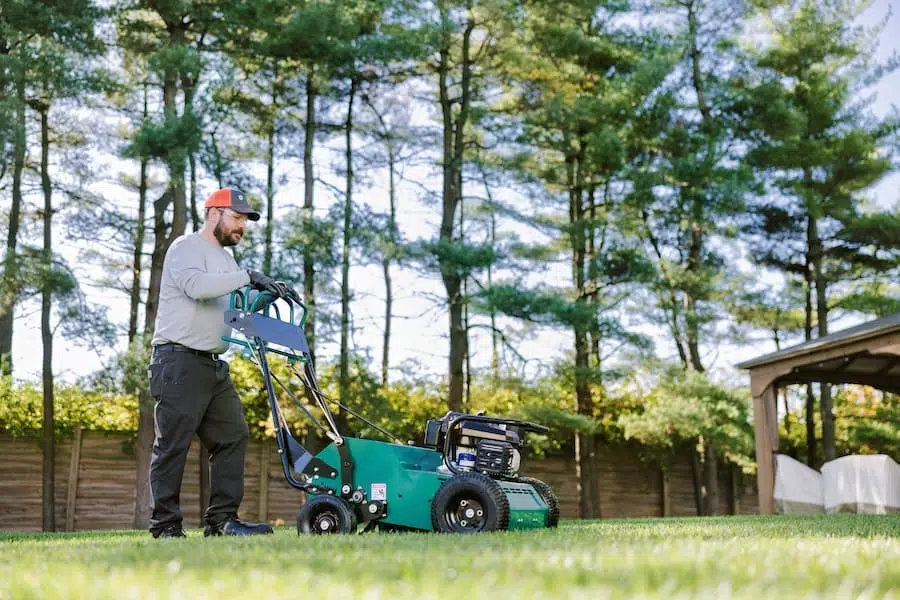
The final round prepares your lawn for winter with fertilizer, weed control, insect control, winterizer, and a second aeration treatment.
Why it matters: Winterizer fertilizer is high in potassium, which strengthens cell walls and helps grass survive freezing temperatures. A well-winterized lawn greens up faster in spring.
The PRO Fertilizer Plan: Balanced Care for Utah Lawns
Our PRO program provides excellent lawn care with 6 fertilizer applications and essential treatments at a moderate price point.
What PRO Includes
The PRO program mirrors the ELITE timing but with slightly fewer services. You still get all 6 fertilizer applications, both pre-emergent treatments, all 5 broadleaf weed control applications, surface insect control, grub prevention, and winterizer.
What PRO Does Not Include
The PRO program does not include disease control, soil testing, root stimulant, or aeration. These services can be added separately if needed.
Who PRO Is Best For
The PRO program works well for lawns that are already in decent shape and do not have a history of fungal disease problems. It provides solid nutrition and weed control without the premium price of the ELITE program.
The ESSENTIAL Fertilizer Plan: Core Care for Utah Lawns
Our ESSENTIAL program focuses on the fundamentals of fertilization and weed control for homeowners who want professional results on a budget.
What ESSENTIAL Includes
The ESSENTIAL program includes 5 fertilizer applications, both pre-emergent treatments, and 4 broadleaf weed control applications. It skips the Round 5 treatment entirely, focusing resources on the most critical times of year.
What ESSENTIAL Does Not Include
The ESSENTIAL program does not include insect control, grub prevention, disease control, soil testing, root stimulant, winterizer, or aeration.
Who ESSENTIAL Is Best For
The ESSENTIAL program suits homeowners with newer lawns that do not have established pest or disease problems. It also works for budget-conscious homeowners who want to handle insect control and aeration themselves.
How to Calculate Fertilizer Costs for Your Utah Lawn
Fertilizer pricing depends primarily on your lawn size measured in square feet. Here is how to figure out what your lawn will cost to treat.
Step-by-step process:
- Measure your lawn’s length and width in feet
- Multiply length times width for total square feet
- Subtract areas like driveways, patios, and garden beds
- Find your size range in the pricing guide below
Example: A lot that is 80 feet wide and 120 feet deep equals 9,600 square feet. After subtracting the house footprint of 2,000 square feet, driveway of 600 square feet, and patio of 400 square feet, your lawn is approximately 6,600 square feet. This falls in the 6K to 10K range.
Fertilizer Application Pricing by Lawn Size:
| Lawn Size | Price Per Application |
|---|---|
| 1,000 to 5,000 sq ft | $60 to $68 |
| 6,000 to 10,000 sq ft | $72 to $88 |
| 11,000 to 15,000 sq ft | $92 to $108 |
| 16,000 to 20,000 sq ft | $112 to $128 |
| 21,000 to 25,000 sq ft | $131.50 to $145.50 |
What About Organic Fertilizer Options?
Some Utah County homeowners prefer organic fertilizers for environmental or personal reasons. We offer an organic fertilizer program that uses 100% organic products.
Organic fertilizers release nutrients more slowly than synthetic fertilizers. They also improve soil health over time by adding organic matter. However, organic products cost more and may take longer to show visible results.
Organic Fertilizer Pricing by Lawn Size:
| Lawn Size | Price Per Application |
|---|---|
| 1,000 to 5,000 sq ft | $80 to $95 |
| 6,000 to 10,000 sq ft | $102.50 to $132.50 |
| 11,000 to 15,000 sq ft | $140 to $170 |
| 16,000 to 20,000 sq ft | $177.50 to $207.50 |
| 21,000 to 25,000 sq ft | $215 to $245 |
Important note: Our organic program includes fertilizer only. Organic weed control options exist but are less effective than synthetic herbicides. Most organic program customers accept some weeds or spot-treat problem areas separately.
Common Fertilizer Mistakes Utah Homeowners Make
After caring for lawns throughout Utah County since 2001, we have seen the same fertilizer mistakes repeated over and over.
Mistake #1: Fertilizing Only Once Per Year A single application cannot provide season-long nutrition. Your lawn uses up those nutrients within weeks, leaving it starving for the rest of the year. Consistent feeding produces consistent results.
Mistake #2: Using the Wrong Fertilizer Ratio Different times of year call for different nutrient ratios. High-nitrogen fertilizer in fall pushes tender top growth that winter will kill. The right product at the wrong time can hurt more than help.
Mistake #3: Applying Too Much at Once More is not better with fertilizer. Over-application burns grass, pollutes groundwater, and wastes money. Always follow label rates or trust professionals who calibrate their equipment properly.
Mistake #4: Ignoring Soil pH Utah’s alkaline soils can lock up nutrients even when you apply them correctly. Without a soil test, you might be fertilizing a lawn that cannot absorb what you are giving it.
Mistake #5: Skipping the Winterizer Fall fertilization is actually more important than spring fertilization for cool season grasses. Winterizer helps roots store carbohydrates for winter survival and spring green-up. Skipping it shows in April.
DIY Fertilizer Plans vs. Professional Programs: Which Should You Choose?
DIY fertilizer plans give you control over products and timing. You can save money on labor costs if you already own a spreader and have time to learn proper techniques. However, mistakes are common and can be expensive to fix. Best for: Homeowners who enjoy lawn care, have time for research and application, and own or will purchase quality spreading equipment.
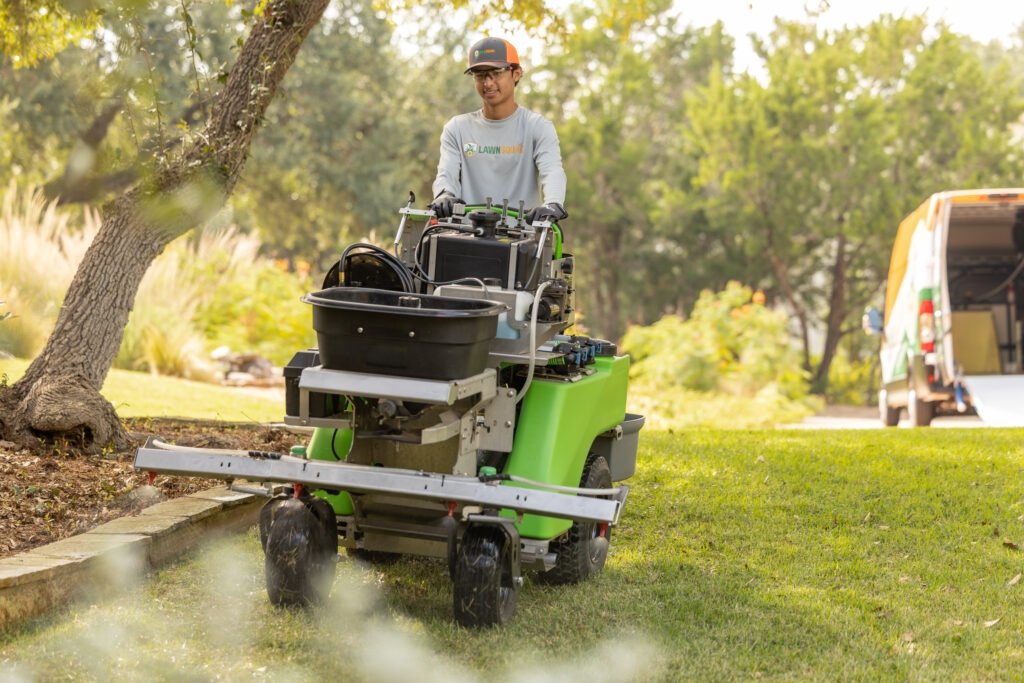
Professional programs like those from Lawn Squad provide expertise, proper timing, and commercial-grade products. We calibrate our equipment for accurate application rates and adjust our blends for Utah conditions. You get consistent results without the guesswork. Best for: Busy homeowners who want reliable results, those who have struggled with DIY approaches, or anyone who prefers spending weekends doing something other than lawn care.
Your Utah Lawn Fertilizer Calendar at a Glance
ELITE Program Schedule
| Round | Timing | Fertilizer Type | Additional Services |
|---|---|---|---|
| 1 | Early March | Slow-release | Pre-emergent, soil test |
| 2 | Mid April | Balanced | Pre-emergent, weed control, insect control |
| 3 | Late May | Summer blend | Weed control, insect control, grub prevention, disease control |
| 4 | Early July | Summer blend | Weed control, insect control, grub prevention, disease control |
| 5 | Mid August | Fall blend | Root stimulant, weed control, insect control, disease control, aeration |
| 6 | Late September | Winterizer | Weed control, insect control, aeration |
DIY Fertilizer Schedule
| When | What to Apply | Key Notes |
|---|---|---|
| Early March | Slow-release with pre-emergent | Before soil reaches 55 degrees |
| Late April | Balanced fertilizer | After first mowing of season |
| Early June | Light summer feeding | Reduce nitrogen rate by 25% |
| Late July | Light summer feeding | Water in immediately |
| Early September | Fall fertilizer | Increase nitrogen for fall growth |
| Late October | Winterizer | High potassium formula |
The Bottom Line
The best fertilizer plan for your Utah lawn is one that provides consistent nutrition throughout the growing season, timed to match the natural growth cycles of cool season grasses.
Key principles to remember:
- Utah lawns need 5 to 6 fertilizer applications per year for best results
- Timing matters as much as the products you use
- Slow-release fertilizers provide steadier nutrition than quick-release options
- Fall fertilization is more important than most homeowners realize
- Soil testing reveals problems that fertilizer alone cannot fix
- Consistency year after year builds a lawn that gets better over time
Utah County homeowners who follow a proper fertilizer plan enjoy thicker, greener lawns that resist weeds, survive drought, and bounce back from stress faster than neglected lawns.
Let Lawn Squad Handle It For You
Every Utah County lawn has different needs. Your soil pH might be higher than your neighbor’s. Your lawn might face more shade or more foot traffic. Your grass variety might respond differently to certain fertilizers.
Our lawn care programs account for these variables with trained technicians who understand Utah County conditions.
ELITE Program includes:
- 6 perfectly timed fertilizer applications throughout the season
- Professional soil testing to identify your lawn’s specific needs
- Pre-emergent crabgrass control in early spring
- Broadleaf weed control at every visit
- Surface insect control to eliminate lawn pests
- Grub prevention before damage occurs
- Disease control to stop fungal problems
- Root stimulant to encourage deep, healthy roots
- Winterizer to prepare your lawn for cold weather
- Fall aeration to reduce compaction
- Unlimited service calls between treatments
Tired of guessing which fertilizer to buy, when to apply it, and how much to use? Let the professionals handle it.
Contact Lawn Squad of Utah County today at 385-474-9032 to get a free quote and start building the lawn you have always wanted.