The short answer: South Florida lawns face three major challenges that lawns in other parts of the country simply don’t deal with: salt exposure from coastal air and irrigation water, intense year-round sun that can stress even tropical grasses, and sandy or rocky soil that drains too fast and lacks nutrients.
These factors combine to create a unique growing environment. What works for lawns in Orlando or Tampa often fails here in Miami-Dade County.
Quick overview:
- Salt damage: Coastal winds and brackish irrigation water can burn grass and prevent nutrient absorption
- Sun intensity: South Florida receives more UV radiation than almost anywhere else in the continental U.S.
- Soil problems: Sandy soil drains nutrients before roots can absorb them; rocky soil limits root growth entirely
- Heat stress: Temperatures regularly exceed what even warm-season grasses prefer
Understanding these challenges is the first step toward solving them. Let’s break down each one and explore what actually works in South Miami.
The Complete Lawn Care Approach: Our 8-Round Program
At Lawn Squad of South Miami, we’ve spent over two decades learning what local lawns need to overcome these challenges. Our programs are built specifically for Miami-Dade County conditions, not generic warm-climate advice.
Our system addresses salt, sun, and soil problems through carefully timed treatments that work together. We apply root stimulants when soil conditions are most challenging. We include iron treatments to counteract nutrient lockout from high pH soil. We time fertilizer applications to maximize absorption before our sandy soil drains it away.
Whether you tackle these challenges yourself or hire professionals, understanding the science behind each problem will help you make better decisions.
Why These Challenges Matter More Than Most Homeowners Realize
South Florida sits in a unique climate zone. We’re technically subtropical, but our coastal location and low elevation create conditions you won’t find anywhere else in the continental United States.
Salt is everywhere, even if you can’t see it. Coastal winds carry salt spray miles inland. That salt settles on grass blades and soil, drawing moisture out of plants and interfering with nutrient uptake. If you live within five miles of the ocean (which includes most of South Miami), your lawn experiences salt stress even if you never water with well water.
Our sun is genuinely different. Miami sits at about 25 degrees north latitude, giving us nearly vertical sun angles during summer. This means more intense UV radiation hitting your grass per square foot than lawns receive in Georgia, the Carolinas, or even Central Florida. That intensity causes faster moisture loss and can literally bleach grass if it’s already stressed.
The soil underneath South Florida is unlike anything else. Much of Miami-Dade County sits on porous limestone. Some neighborhoods have just inches of soil over solid rock. Others have deep sandy soil that water flows through like a sieve. Neither type holds nutrients well, which means fertilizer applied in the morning can be gone by afternoon.
Lawn Squad of South Miami has worked with every soil type across our service area, from Coral Gables to Palmetto Bay to Kendall. We’ve learned that generic lawn care advice fails here because our conditions are genuinely extreme.
Salt Damage: The Hidden Lawn Killer in South Miami
Salt damage is the challenge most South Florida homeowners don’t see coming. The symptoms often look like other problems, leading people to treat the wrong issue entirely.
How Salt Damages Your Lawn
Salt affects grass in two ways. First, it draws water out of plant cells through osmosis. Even when soil is moist, grass can experience drought-like stress because salt makes it harder for roots to absorb water.
Second, high salt levels interfere with nutrient absorption. Your lawn might have plenty of nitrogen, potassium, and phosphorus in the soil, but salt blocks the roots from taking it in. The grass slowly starves while surrounded by food it cannot eat.
Signs of Salt Damage
Look for these warning signs:
- Brown or yellow tips on grass blades, especially after windy days
- Grass that looks dry even after watering
- Thin, weak growth that doesn’t respond to fertilizer
- Patches of damage closer to the ocean or along roads (where salt spray is heaviest)
Sources of Salt in South Miami
Ocean spray: Winds carry salt particles from Biscayne Bay and the Atlantic. After storms or high-wind days, salt levels on your lawn spike dramatically.
Irrigation water: Many South Miami homes use well water, which often contains dissolved salts. Every time you irrigate, you add more salt to your soil. Some wells produce water that’s essentially unusable for lawn irrigation without treatment.
Road treatments: While rare in Miami, salt used for de-icing in northern parts of Florida can affect lawns near major roads.
Reclaimed water: Some neighborhoods use reclaimed water for irrigation. This water often contains higher salt levels than municipal tap water.
Managing Salt in Your Lawn
Deep watering helps flush salt below the root zone. Instead of watering lightly every day, water deeply two or three times per week. This pushes accumulated salt down through the soil profile.
Test your irrigation water. If you use well water, have it tested for salinity. Readings above 1,000 parts per million will stress most lawn grasses. Above 2,000 ppm, you may need to switch water sources or install treatment systems.
Choose salt-tolerant grass varieties. St. Augustine grass handles moderate salt levels reasonably well, which is one reason it dominates South Florida lawns. Some cultivars, like “Palmetto” St. Augustine, tolerate salt better than others.
Apply gypsum to help counteract sodium. Gypsum (calcium sulfate) can help displace sodium in soil, allowing it to flush away with watering. Lawn Squad of South Miami uses soil amendments like this when testing reveals high sodium levels.
Sun Stress: When Too Much Light Becomes the Problem
Most people assume more sun means better grass growth. In South Florida, the opposite is often true. Our intense sunlight creates stress that can overwhelm even sun-loving grasses.
How Excessive Sun Damages Lawns
Photoinhibition occurs when grass receives more light energy than it can process through photosynthesis. The excess energy damages plant cells instead of fueling growth. Think of it like overloading an electrical circuit.
Rapid moisture loss happens because intense sun superheats leaf surfaces. Water evaporates from grass blades faster than roots can replace it, even when soil moisture is adequate.
Soil temperature extremes develop when direct sun bakes exposed soil. Surface temperatures can exceed 140 degrees on summer afternoons, hot enough to damage roots in the top inch of soil.
Signs of Sun Stress
Watch for:
- Grass that wilts in afternoon despite adequate watering
- Blue-gray color instead of healthy green (an early stress signal)
- Footprints that remain visible for hours after walking on the lawn
- Brown patches in the hottest, most exposed areas of your yard
- Grass that recovers in the evening but looks stressed again by midday
Managing Sun Stress in South Miami
Raise your mowing height. Taller grass shades its own roots and retains moisture better. For St. Augustine, never cut below 3.5 inches. During summer’s most intense heat, raising to 4 inches provides even more protection.
Water in the early morning. Watering before 10 AM gives grass time to absorb moisture before peak sun intensity. The cooling effect also helps reduce stress during the hottest hours.
Avoid fertilizing during heat waves. Nitrogen pushes top growth, which increases water demand. Applying fertilizer when grass is already heat-stressed can cause more harm than good. Lawn Squad of South Miami times fertilizer applications carefully to avoid peak stress periods.
Consider strategic shade. Trees and landscaping that provide afternoon shade can dramatically reduce lawn stress. Even partial shade during the hottest hours (2 PM to 5 PM) makes a significant difference.
Root stimulant treatments help grass access deeper water. Our ELITE program includes root stimulant in Round 4 specifically to help grass develop deeper root systems before summer’s peak stress.
Soil Challenges: Building a Foundation on Sand and Rock
South Florida soil creates problems that homeowners from other regions never encounter. Understanding your specific soil type is essential for effective lawn care.
Sandy Soil: The Nutrient Sieve
Much of South Miami sits on sandy soil that formed from ancient coral and shell deposits. This soil has almost no ability to hold water or nutrients.
The problem: Fertilizer and water pass straight through sandy soil. Nutrients applied in the morning can drain below the root zone by evening. This means grass stays hungry even with regular feeding, and you waste money on products that wash away before they help.
The solution:
- Use slow-release fertilizers that feed gradually over weeks
- Apply smaller amounts more frequently instead of heavy applications less often
- Add organic matter to improve water retention
- Consider soil amendments that help sandy soil hold nutrients
Lawn Squad of South Miami uses professional-grade slow-release fertilizers specifically because they work better in our sandy conditions.
Rocky Soil: The Root Barrier
Parts of South Miami, particularly areas near Coral Gables and Pinecrest, have just a few inches of soil over solid limestone. Roots cannot penetrate this rock, which creates several problems.
Limited root depth means grass cannot access deep water reserves. During dry periods or irrigation restrictions, lawns over rock suffer first and most severely.
Poor drainage in shallow soil seems counterintuitive given our sandy conditions, but when soil sits on impermeable rock, water has nowhere to go. After heavy rains, these areas can become waterlogged even while neighboring properties drain quickly.
Nutrient concentration builds up in thin soil layers because there’s nowhere for excess fertilizer to go. This can lead to salt buildup and nutrient toxicity if applications aren’t carefully managed.
The solution:
- Water more frequently but for shorter duration
- Use lighter fertilizer applications to avoid buildup
- Accept that some grass varieties won’t thrive in extremely shallow soil
- Consider raised beds or soil addition for problem areas
High pH Soil: The Nutrient Lock
South Florida’s limestone base makes our soil naturally alkaline, often with pH levels above 7.5. While grass tolerates a range of pH levels, high alkalinity causes “nutrient lockout” where essential elements become chemically unavailable to plants.
Iron deficiency is the most visible result. Grass turns yellow-green (chlorotic) even when iron is present in the soil because high pH prevents absorption. This is why Lawn Squad of South Miami includes iron treatments in our programs.
The solution:
- Apply iron in chelated form, which remains available at high pH
- Use sulfur or acidifying fertilizers to gradually lower pH
- Test soil periodically to monitor pH levels (included in our ELITE program)
How to Test Your Soil
Knowing your soil type guides every other lawn care decision. Here’s how to assess what you’re working with.
The squeeze test for texture:
- Take a handful of moist (not wet) soil from your lawn
- Squeeze it firmly in your fist
- Open your hand and observe the result
Sandy soil will fall apart immediately. It won’t hold shape at all. Clay soil will hold its shape and feel sticky. Loamy soil (the ideal) will hold shape briefly, then crumble when poked.
Most South Miami soil fails the squeeze test entirely because it’s too sandy to hold together.
The depth test for rock:
- Push a screwdriver or metal rod into your soil
- Note how deep you can go before hitting resistance
- Test in multiple locations since depth varies
Less than 6 inches to rock indicates challenging conditions. Less than 3 inches is extremely challenging and may limit your grass options.
Professional soil testing reveals pH, nutrient levels, and salt content. Lawn Squad of South Miami includes soil testing in our ELITE program because this information guides our treatment decisions all year.
What About Aeration for South Florida Soil?
Aeration removes small plugs of soil to reduce compaction and improve water penetration. It’s essential for healthy lawns, but timing matters more in South Florida than in other regions.
Sandy soil compacts less than clay soil, but heavy foot traffic and irrigation still create compaction over time. Aeration helps water and nutrients reach roots instead of running off the surface.
Pre-emergent conflicts create timing challenges. Aeration disrupts the barrier that pre-emergent herbicides create in soil. If you aerate at the wrong time, you’ll break that barrier and allow weeds to germinate.
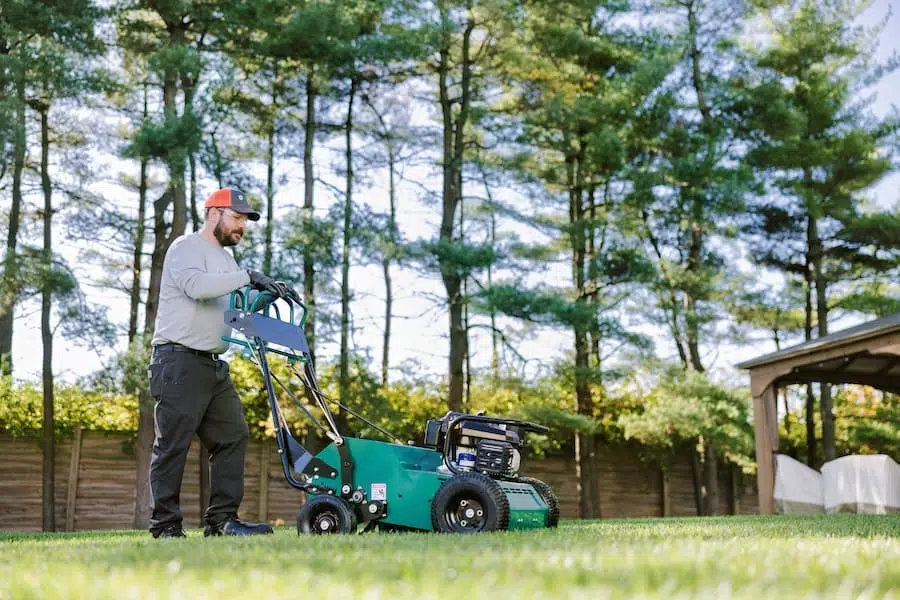
Lawn Squad of South Miami includes aeration in Rounds 4, 5, and 6 of our ELITE program, carefully timed to avoid pre-emergent conflicts while maximizing benefit during summer stress periods.
For DIY homeowners, the safest time to aerate is late spring (May) after pre-emergent has had time to work but before the worst summer stress.
Common Mistakes Homeowners Make With South Florida Soil
After serving South Miami for over two decades, we’ve seen these mistakes repeatedly.
Mistake #1: Using Northern Fertilizers
Fertilizers formulated for northern lawns often release too quickly for our sandy soil. The nutrients flush away before grass can use them. Look for slow-release formulas or products specifically labeled for Florida conditions.
Mistake #2: Overwatering to Compensate for Sandy Soil
Watering more won’t make sandy soil hold nutrients. It just wastes water and can promote fungal diseases. Instead, focus on improving soil structure over time with organic amendments.
Mistake #3: Ignoring pH Problems
Yellowing grass leads many homeowners to apply more nitrogen fertilizer. If the real problem is high pH causing iron lockout, extra nitrogen makes things worse. Test before you treat.
Mistake #4: Fighting the Rock
Trying to force deep-rooted grass varieties into shallow, rocky soil is a losing battle. Sometimes the best solution is accepting limitations and choosing grass types (like certain St. Augustine cultivars) that tolerate shallow root zones.
Mistake #5: Skipping Soil Tests
Guessing at soil conditions wastes money and can damage your lawn. A simple soil test reveals exactly what your lawn needs, eliminating guesswork.
Professional Care vs. DIY: Which Handles These Challenges Better?
Professional lawn care brings specialized knowledge of local soil conditions, commercial-grade products formulated for South Florida, and equipment calibrated for precise applications. Professionals can adjust treatments based on what they observe during each visit.
Best for: Homeowners dealing with multiple challenges (salt plus shallow soil, for example), those with persistent problems that haven’t responded to DIY treatment, or anyone who wants expert diagnosis of complex issues.
DIY lawn care allows you to respond immediately to problems and gives you complete control over products and timing. You’ll develop deep knowledge of your specific property’s conditions.
Best for: Homeowners with straightforward soil conditions, those who enjoy working in the yard, and properties without severe salt exposure or extreme soil limitations.
Your South Florida Lawn Challenge Checklist
Salt Management
| Action | Frequency | Notes |
|---|---|---|
| Test irrigation water | Annually | Check salinity levels |
| Deep watering | 2 to 3 times weekly | Flushes salt below roots |
| Monitor after storms | After high-wind events | Salt spray peaks following storms |
| Gypsum application | As needed based on testing | Helps displace sodium |
Sun Stress Prevention
| Action | Frequency | Notes |
|---|---|---|
| Raise mowing height | Ongoing | Minimum 3.5 inches for St. Augustine |
| Morning irrigation | Daily or as scheduled | Complete before 10 AM |
| Root stimulant | Annually (spring) | Included in ELITE Round 4 |
| Monitor for wilt | Daily during summer | Blue-gray color is early warning |
Soil Health
| Action | Frequency | Notes |
|---|---|---|
| Soil test | Every 2 to 3 years | Included in ELITE program |
| Core aeration | 1 to 3 times yearly | Time to avoid pre-emergent conflict |
| Iron application | As needed | Addresses high pH chlorosis |
| Slow-release fertilizer | Per program schedule | Essential for sandy soil |
The Bottom Line
South Florida’s combination of salt, sun, and challenging soil creates lawn care conditions found nowhere else in the country. Generic advice fails here because our environment is genuinely unique.
Key principles to remember:
- Salt damage often mimics other problems; test before treating
- More water doesn’t fix sandy soil; better timing and products do
- High pH locks out nutrients even when they’re present in soil
- Sun stress requires management, not just more irrigation
- Soil depth over rock determines what grass varieties can succeed
- Testing eliminates guesswork and saves money long-term
Master these challenges, and your lawn will thrive where others struggle. Ignore them, and you’ll fight the same battles season after season.
Let Lawn Squad Handle It For You
Every South Miami property faces a different combination of salt, sun, and soil challenges. A lawn in Coral Gables over shallow limestone needs different care than a lawn in Kendall with deep sandy soil. Coastal properties deal with salt issues that inland homes never experience.
Lawn Squad of South Miami has spent over two decades learning every neighborhood’s specific conditions.
Our ELITE Program includes:
- Comprehensive soil testing to identify your exact challenges
- Iron treatments to overcome high pH nutrient lockout
- Root stimulant applications to help grass survive heat and drought
- Carefully timed aeration to improve soil conditions
- 8 rounds of precisely scheduled treatments
- Products formulated specifically for South Florida conditions
- Unlimited service calls when problems arise
Tired of yellow grass that won’t green up no matter what you try? Frustrated by patches that keep dying despite regular watering? Ready to stop guessing and start growing a lawn that actually thrives?
Contact Lawn Squad of South Miami today at (786) 224-4616 or visit lawnsquad.com/contact-us to get a free quote and discover how professional care can overcome your lawn’s toughest challenges.