The short answer: The best weed prevention for Florida lawns starts with pre emergent herbicides applied at the right time, but it doesn’t end there. A truly weed resistant lawn requires a combination of chemical prevention, proper mowing, correct watering, and healthy turf that naturally crowds out invaders.
In Northeast Florida, timing is everything. Apply pre emergent too late and weeds have already germinated. Apply it too early and it breaks down before peak weed season arrives.
Quick overview:
- Pre emergent herbicides: Apply in January and again in late summer to prevent seasonal weeds before they sprout
- Healthy turf practices: Thick, properly maintained grass leaves no room for weeds to establish
- Post emergent control: Treat any weeds that break through quickly before they spread
- Year round vigilance: Florida’s warm climate means weeds can germinate almost any month
Whether you handle weed control yourself or hire a professional, understanding how weeds work in our climate will help you stay ahead of them instead of constantly playing catch up.
The Complete Weed Prevention Approach: Lawn Squad’s Multi Round Programs
At Lawn Squad of Jacksonville and St. Augustine, we’ve built weed prevention into every level of our lawn care programs. Our approach combines multiple pre emergent applications with consistent broadleaf weed control throughout the year.
What makes weed prevention in Northeast Florida different from other regions? Our warm climate allows weeds to germinate during windows that don’t exist up north. Summer weeds like crabgrass overlap with winter weeds like poa annua, creating year round pressure that requires year round attention.
Our ELITE program includes pre emergent applications in Rounds 1, 2, 6, and 7, plus broadleaf weed control in all eight rounds. This comprehensive coverage addresses both summer and winter weed cycles specific to Duval, St. Johns, and Nassau counties.
Why Weed Prevention Matters More Than Most Northeast Florida Homeowners Realize
Weeds aren’t just an eyesore. They actively steal water, nutrients, and sunlight from your grass. A lawn losing resources to weeds becomes weaker, thinner, and more vulnerable to disease and insects.
Here’s what happens when homeowners skip prevention and only treat weeds after they appear:
Root system establishment: By the time you see a weed, it has already developed roots competing with your grass. Some weeds like nutsedge develop underground tuber systems that can persist for years even after you kill the visible plant.
Seed production: A single crabgrass plant can produce over 150,000 seeds in one season. Those seeds remain viable in your soil for years, creating an ever growing weed bank that makes future control harder and more expensive.
Spreading through runners: Many Florida weeds spread through above ground or below ground runners. One small patch of dollarweed can colonize your entire lawn in a single growing season if left unchecked.
Herbicide resistance: Treating the same weeds repeatedly with the same products can lead to resistant populations. Prevention avoids this cycle entirely by stopping weeds before they ever emerge.
The key principle here is simple: an ounce of prevention is worth a pound of cure. Stopping weeds before they germinate costs less, works better, and keeps your lawn healthier than constantly battling established weeds.
Pre Emergent Application Guide for Northeast Florida Lawns
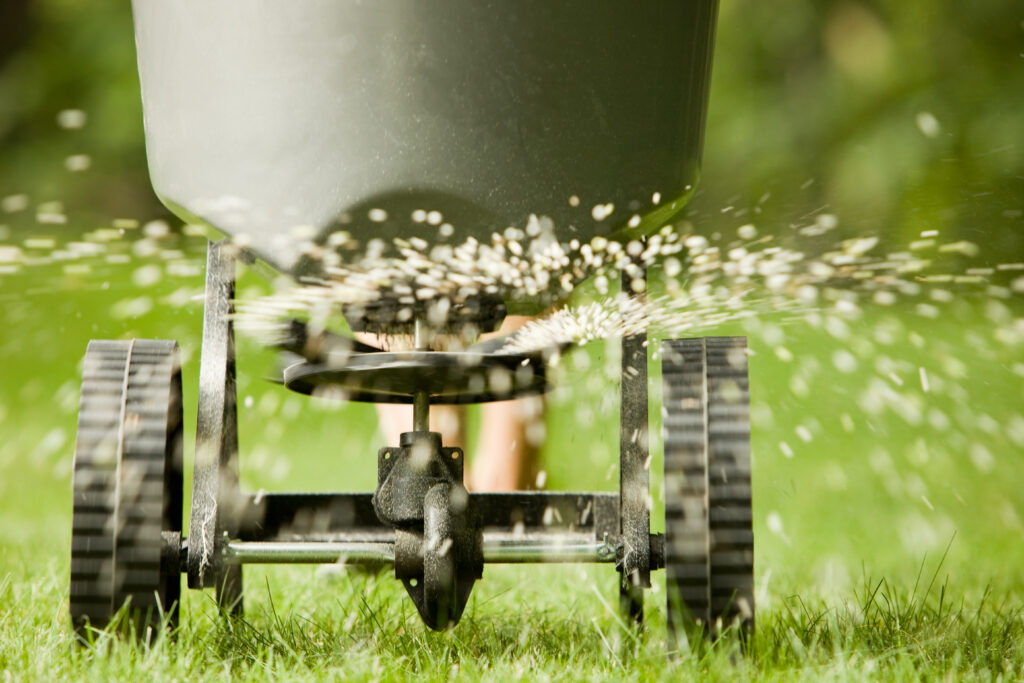
Pre emergent herbicides are the foundation of effective weed prevention in Jacksonville, St. Augustine, Ponte Vedra Beach, and surrounding areas. Here’s how to use them correctly.
Application 1: Late Winter Pre Emergent (January through February)
This application targets summer annual weeds like crabgrass, goosegrass, and spurge.
- Apply when soil temperatures are consistently below 55 degrees but rising
- In Northeast Florida, this window typically falls in mid January through early February
- Use products containing prodiamine, pendimethalin, or dithiopyr
- Water in lightly after application to activate the chemical barrier
Why this matters: Summer annual weeds begin germinating when soil temperatures reach 55 degrees consistently. Once they sprout, pre emergent is useless against them.
Application 2: Late Winter Reinforcement (February through March)
For heavy weed pressure areas, a second pre emergent application extends protection through spring.
- Apply about six weeks after the first application
- This round is included in Lawn Squad’s ELITE and PRO programs
- Helps prevent late germinating summer annuals and early sedge pressure
Why this matters: Pre emergent products break down over time. A single application may not last through our extended warm season.
Application 3: Late Summer Pre Emergent (August through September)
This application targets winter annual weeds like poa annua, henbit, and chickweed.
- Apply before soil temperatures drop below 70 degrees consistently
- In Duval, St. Johns, and Nassau counties, this typically means late August through mid September
- The same active ingredients that prevent summer weeds also prevent winter weeds
Why this matters: Winter weeds germinate in fall and grow slowly through winter, then explode in early spring. By February, they’re mature plants that are much harder to control.
Application 4: Fall Reinforcement (September through October)
For lawns with heavy winter weed history, a fourth pre emergent extends protection.
- Apply six to eight weeks after the late summer application
- This round completes the year round prevention cycle
- Especially important in shaded areas where winter weeds thrive
Critical warning: Never apply pre emergent within 60 days of overseeding. The same barrier that stops weed seeds will also prevent grass seed from germinating. If you plan to overseed, skip pre emergent in that area and use post emergent control instead.
At Lawn Squad, our programs include four pre emergent applications (ELITE and PRO) or three applications (ESSENTIAL) to maintain continuous protection throughout the year.
Broadleaf Weed Control Guide for Northeast Florida
Pre emergent doesn’t stop every weed. Perennial weeds and those that spread through runners require post emergent broadleaf control.
Common Broadleaf Weeds in Jacksonville and St. Augustine
- Dollarweed: Round leaves with a stem attached to the center. Thrives in wet, overwatered lawns throughout Duval and St. Johns counties.
- Clover: Three leafed plants that spread quickly in lawns lacking nitrogen. Common in poorly fertilized yards.
- Florida pusley: Low growing weed with small white flowers. Extremely common in Northeast Florida lawns.
- Doveweed: Fleshy leaves that resemble grass. Difficult to control once established.
- Matchweed: Small leaves in pairs along creeping stems. Spreads rapidly in thin turf.
Post Emergent Application Strategy
- Apply broadleaf herbicides when weeds are actively growing, not during drought stress or extreme heat
- Morning applications work best when temperatures are below 85 degrees
- Multiple applications spaced two to three weeks apart may be needed for tough weeds
- Always follow label rates to avoid damaging your grass
Why this matters: Post emergent herbicides work by being absorbed through weed leaves. Stressed weeds with closed stomata absorb less product and may survive treatment.
At Lawn Squad, every program level includes broadleaf weed control in all eight rounds, ensuring consistent pressure on weeds throughout the growing season.
Sedge and Grassy Weed Control for Florida Lawns
Some of the toughest weeds in Northeast Florida aren’t broadleaf weeds at all. Sedges and grassy weeds require specialized products and techniques.
Nutsedge Control
Nutsedge looks like grass but grows faster and has a yellowish green color that stands out in your lawn.
- Standard broadleaf herbicides don’t work on nutsedge
- Specialized sedge control products containing sulfentrazone or halosulfuron are required
- Multiple applications are usually necessary because underground tubers resprout
- Best results come from treating when nutsedge is young and actively growing in late spring
Lawn Squad’s ELITE and PRO programs include sedge suppression treatments in Rounds 4, 5, and 6 when nutsedge is most active.
Crabgrass Control
Crabgrass is the most common grassy weed in Jacksonville, St. Augustine, Ponte Vedra Beach, and Fernandina Beach lawns.
- Prevention is far more effective than post emergent treatment
- If crabgrass breaks through pre emergent, specialized post emergent products can help
- Crabgrass dies with the first frost, but seeds remain viable for years
- Healthy, thick turf naturally shades out crabgrass seedlings
Dallisgrass and Goosegrass
These perennial grassy weeds are among the hardest to control in Florida.
- Both form clumps that disrupt lawn uniformity
- Post emergent control is difficult and may require multiple treatments
- Prevention through pre emergent and thick turf is the best strategy
- Severe infestations may require spot treatment with non selective herbicide and reseeding
How to Calculate Herbicide Application Rates
Applying the right amount of product is essential for both effectiveness and safety.
Step by step process:
- Measure your lawn area in square feet (length times width for each section)
- Read the product label for the recommended rate per 1,000 square feet
- Calculate total product needed by dividing your lawn size by 1,000 and multiplying by the label rate
- Calibrate your spreader or sprayer to deliver the correct amount
Example: Your lawn is 8,000 square feet. The product label recommends 3 pounds per 1,000 square feet. You need 24 pounds total (8,000 divided by 1,000 equals 8, times 3 pounds equals 24 pounds).
Why calibration matters: Under application leaves gaps in coverage where weeds break through. Over application can damage grass and wastes money.
What About Organic Weed Prevention?
Many homeowners in Jacksonville, St. Augustine, and surrounding areas ask about organic alternatives to chemical weed control.
Organic weed prevention focuses on cultural practices rather than chemical barriers. The goal is creating conditions where grass thrives and weeds struggle.
At Lawn Squad, we offer a Hybrid Program that combines organic fertilizer with synthetic weed control. This approach reduces chemical fertilizer use while maintaining effective weed prevention.
Key organic weed prevention strategies include:
- Building soil health through compost and organic matter
- Maintaining proper mowing height to shade out weed seedlings
- Overseeding to thicken turf and fill gaps where weeds establish
- Corn gluten meal as a natural pre emergent (though less effective than synthetic options in Florida’s climate)
We recommend organic focused approaches for homeowners willing to accept some weed presence in exchange for reduced chemical use. For homeowners wanting a pristine, weed free lawn, synthetic products remain more effective in Northeast Florida’s challenging conditions.
Common Weed Prevention Mistakes Northeast Florida Homeowners Make
After serving thousands of customers across Jacksonville, St. Augustine, Ponte Vedra Beach, Atlantic Beach, and Fernandina Beach, we’ve seen these weed prevention mistakes repeatedly.
Mistake 1: Applying Pre Emergent Too Late By the time homeowners notice last year’s weeds returning, it’s already too late for prevention. Pre emergent must go down before weed seeds germinate, not when you see the first sprouts.
Mistake 2: Relying on Pre Emergent Alone Pre emergent stops seeds but does nothing against established perennial weeds or those spreading through runners. A complete program requires both pre emergent and post emergent applications.
Mistake 3: Mowing Too Short Scalping your lawn removes the leaf canopy that shades soil and prevents weed seed germination. Every time you mow too short, you’re opening the door for weeds.
Mistake 4: Overwatering Many Florida weeds, especially dollarweed, thrive in constantly wet soil. Overwatering creates perfect conditions for weeds while stressing your grass.
Mistake 5: Skipping Fall Pre Emergent Homeowners assume weed season ends when summer does. In Northeast Florida, winter weeds germinate in fall and become major problems by spring if not prevented.
Prevention vs. Cure: Which Approach Should You Choose?
Prevention focused approach uses pre emergent herbicides and cultural practices to stop weeds before they appear. This method requires planning and consistent timing but results in fewer weeds, less chemical use overall, and a healthier lawn. Best for: Homeowners who want minimal weeds with the least amount of ongoing treatment
Cure focused approach waits until weeds appear and then treats them with post emergent products. This method requires less planning but results in constant weed pressure, more chemical applications, and a lawn that always seems to have visible weeds. Best for: Homeowners who missed the prevention window and need to address existing problems before transitioning to prevention
The ideal approach: Combine prevention and cure. Use pre emergent to stop most weeds, then spot treat any that break through with post emergent products. This is exactly what Lawn Squad’s programs deliver.
Your Northeast Florida Weed Prevention Calendar at a Glance
ELITE Program Weed Control Schedule (8 Rounds)
| Round | Timing | Weed Control Services |
|---|---|---|
| 1 | January | Pre emergent, broadleaf weed control |
| 2 | February | Pre emergent, broadleaf weed control |
| 3 | April | Broadleaf weed control |
| 4 | May | Broadleaf weed control, sedge suppression |
| 5 | June | Broadleaf weed control, sedge suppression |
| 6 | August | Pre emergent, broadleaf weed control, sedge suppression |
| 7 | September | Pre emergent, broadleaf weed control |
| 8 | November | Broadleaf weed control |
DIY Weed Prevention Calendar
| Month | Priority Action | Target Weeds |
|---|---|---|
| January | Apply pre emergent | Summer annuals (crabgrass, goosegrass) |
| February | Reinforce pre emergent if needed | Summer annuals |
| March through May | Post emergent broadleaf control | Dollarweed, clover, Florida pusley |
| June through July | Sedge control applications | Nutsedge, kyllinga |
| August | Apply fall pre emergent | Winter annuals (poa annua, henbit) |
| September | Reinforce pre emergent | Winter annuals |
| October through December | Post emergent as needed | Any breakthrough weeds |
The Bottom Line
Effective weed prevention for Florida lawns requires a year round commitment to properly timed treatments and healthy turf practices.
Key principles to remember:
- Pre emergent timing is critical and must happen before weeds germinate
- Four pre emergent applications per year provide the best protection in Northeast Florida
- Broadleaf control throughout the year addresses weeds that escape pre emergent
- Sedge and grassy weeds require specialized products, not standard broadleaf herbicides
- Cultural practices like proper mowing and watering support chemical control efforts
Homeowners who follow a consistent prevention schedule spend less time, money, and frustration on weeds than those who only react to problems after they appear.
Let Lawn Squad Handle It For You
Every lawn in Jacksonville, St. Augustine, Ponte Vedra Beach, Fernandina Beach, and surrounding areas faces different weed pressure based on grass type, soil conditions, shade patterns, and past maintenance history.
Lawn Squad’s programs account for all of these variables with treatments specifically designed for the weed challenges in Duval, St. Johns, and Nassau counties.
Our ELITE Program includes:
- Four pre emergent applications timed perfectly for Northeast Florida’s climate
- Broadleaf weed control in all eight rounds for year round pressure on weeds
- Sedge suppression treatments targeting nutsedge during peak growing season
- Soil testing to identify conditions that favor weed growth
- Unlimited service calls if weeds break through between scheduled visits
Our PRO Program includes:
- Four pre emergent applications for continuous protection
- Broadleaf weed control in all eight rounds
- Sedge suppression and iron treatment for thick, competitive turf
Our ESSENTIAL Program includes:
- Three pre emergent applications covering key prevention windows
- Broadleaf weed control in six rounds
Tired of spending your weekends pulling weeds or watching crabgrass take over every summer? Our team has served Northeast Florida homeowners since 2001 and knows exactly which weeds thrive here and how to stop them.
Contact Lawn Squad of Jacksonville and St. Augustine today at (904) 594-7380 to get a free quote and finally win the war against weeds in your lawn.