The short answer: Protecting your Palm Beach County lawn from salt spray and storm damage requires a combination of the right grass type, proper soil health, deep root development, and quick action after severe weather hits.
Coastal properties in West Palm Beach, North Palm Beach, Jupiter, and Palm Beach Gardens face constant exposure to salt-laden air and occasional flooding from tropical storms. Inland areas like Wellington and Loxahatchee deal more with standing water and wind damage than salt, but still need storm preparation.
Quick overview:
- Salt damage prevention: Build soil health and encourage deep roots that can handle stress
- Storm preparation: Strengthen turf before hurricane season with proper fertilization and aeration
- Recovery: Act fast after storms to flush salt and repair damaged areas
Keep reading to learn exactly how to protect your investment and bounce back quickly when bad weather strikes.

The Complete Storm Protection Approach: Our Year-Round Program
At Lawn Squad, our lawn care programs for Palm Beach County are designed with coastal challenges in mind. We time treatments to build maximum turf strength before hurricane season arrives.
Our approach focuses on creating resilient lawns that can withstand salt exposure and recover quickly from flooding. Strong roots, balanced nutrition, and proper soil conditions give your grass the best chance of surviving whatever South Florida weather throws at it.
Whether you manage your own lawn or work with professionals, understanding how salt and storms affect turf will help you make better decisions for your property.
Why Salt and Storm Protection Matters More Than Most Palm Beach County Homeowners Realize
Salt damage does not always look like what you expect. Many homeowners blame brown patches on drought or disease when the real culprit is salt buildup in the soil from years of coastal exposure.
Salt pulls moisture out of grass roots through a process called osmotic stress. Even when you water regularly, salt-damaged turf cannot absorb what it needs. The grass slowly weakens, becomes more vulnerable to pests and disease, and eventually dies in patches.
Storm damage goes beyond what wind and flooding do during the event itself. Standing water suffocates roots. Debris blocks sunlight. Salt water pushed inland by storm surge can poison soil for months. Sand deposits smother grass. The damage you see two weeks after a storm is often worse than what you saw the morning after.
This is why Palm Beach County lawns need specialized care that accounts for our unique coastal environment. Generic lawn care advice written for landlocked areas simply does not address these challenges.
Building a Salt-Resistant Lawn in Palm Beach County
The best defense against salt damage is a lawn strong enough to handle the stress. Here is how to build that resilience.
Step 1: Choose the Right Grass Type
Not all grass handles salt equally well. St. Augustine is the most common turf in Palm Beach County and has moderate salt tolerance, which works for most properties. Bermuda grass handles salt better and recovers faster from damage, making it a good choice for beachfront homes. Zoysia falls somewhere in between.
If you are installing new sod or overseeding, consider your property’s salt exposure level when choosing grass varieties.
Step 2: Build Healthy Soil
Healthy soil acts like a buffer against salt. Organic matter in soil helps bind salt particles and prevents them from reaching roots as quickly. Regular fertilization with the right nutrients keeps beneficial soil organisms active.
Lawn Squad’s ELITE program includes a soil test in Round 1 so we know exactly what your soil needs. This is especially important for coastal properties where salt may have already affected soil chemistry.
Step 3: Encourage Deep Root Growth
Shallow roots sit in the zone where salt concentrates most heavily. Deep roots can access moisture and nutrients below the salt layer, giving your grass a survival advantage.
Proper mowing height encourages deeper roots. Keep St. Augustine at 3.5 to 4 inches tall. Taller grass develops longer roots. Our ELITE program includes root stimulant treatment in Round 4 specifically to promote stronger root systems before summer stress arrives.
Step 4: Improve Drainage
Salt damage gets worse when water sits on your lawn. Standing water allows salt to soak deeper into soil and stay in contact with roots longer. Good drainage moves salt-laden water away before it causes maximum damage.
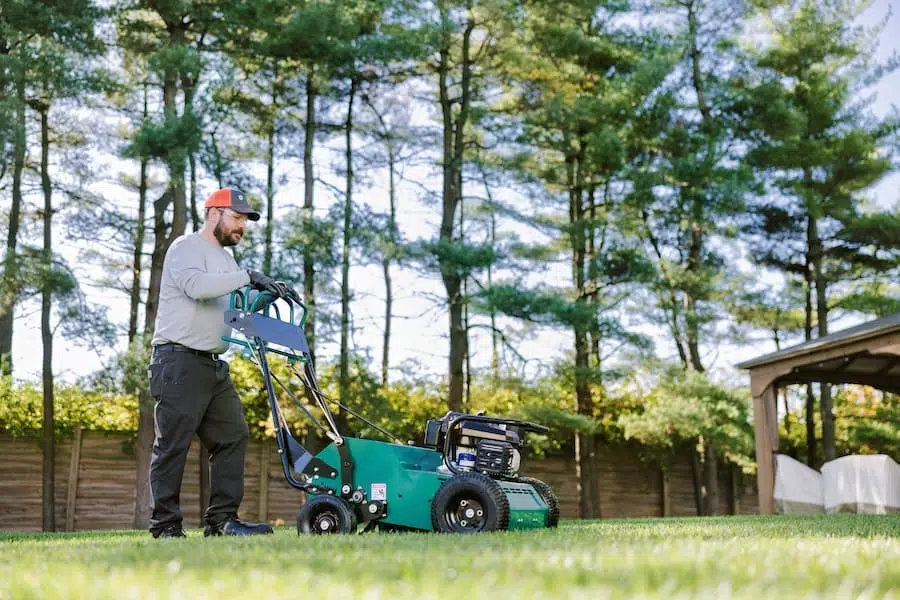
Aeration helps water move through compacted soil. Our programs include aeration during Rounds 4, 5, and 6 to maintain good soil structure throughout the wet season.
Step 5: Flush Salt Regularly
If you live within a mile of the ocean, your lawn receives salt spray constantly. Regular deep watering helps flush accumulated salt down through the soil and away from the root zone.
Water deeply once or twice per week rather than light daily watering. Deep irrigation moves salt below root level while light watering just redistributes it.
Critical warning: Never use water softener discharge on your lawn. Softened water contains high sodium levels that will damage turf faster than ocean salt spray.
Storm Preparation Guide for Palm Beach County Lawns
Hurricane season runs from June through November, with peak activity in August and September. Here is how to prepare your lawn for tropical weather.
Before Storm Season (April through May)
This is your most important preparation window. Round 4 of our treatment schedule falls in May specifically to strengthen lawns before hurricane season.
Apply fertilizer with root stimulant to encourage deep root development. Healthy, well-fed grass recovers faster from any type of damage. Treat for insects and disease so your lawn enters storm season without existing problems that would slow recovery.
Aerate compacted areas to improve drainage. Better drainage means less standing water after heavy rainfall.
Pre-Storm Checklist (When a Storm Threatens)
Mow your lawn a day or two before a storm arrives if you have time. Shorter grass suffers less wind damage than tall grass, and debris cleanup is easier on a freshly mowed lawn. Do not scalp it, but a slightly shorter cut than normal is fine.
Water deeply 24 to 48 hours before the storm. Well-hydrated grass handles stress better than drought-stressed turf. The coming rain will provide plenty of moisture, but you want roots fully hydrated before wind and salt exposure begin.
Clear your lawn of anything that could become a projectile or smother grass after the storm. Patio furniture, toys, potted plants, and yard decorations should go inside or into storage.
Important: What Not to Do Before a Storm
Do not apply fertilizer right before a hurricane. Heavy rain will wash it away before your lawn can absorb it, wasting your money and polluting waterways. Wait until after the storm passes and conditions stabilize.
Do not apply any pesticides or herbicides. These products need time to work and dry conditions to stay effective. Pre-storm applications are wasted applications.
Post-Storm Lawn Recovery in Palm Beach County
The first 48 to 72 hours after a storm are critical for lawn recovery. Fast action prevents secondary damage that can be worse than the storm itself.
Step 1: Safety First
Before walking your property, watch for downed power lines, hanging branches, and other hazards. Do not touch any debris that might be in contact with electrical lines. Wait for utility crews to clear your area before beginning cleanup.
Step 2: Remove Debris Quickly
Debris blocks sunlight and traps moisture against grass, creating perfect conditions for fungal disease. Leaves, branches, and other organic matter start killing grass underneath within 48 hours.
Remove debris as soon as safely possible, but do not drag heavy items across the lawn. Lift and carry or use a wheelbarrow to avoid tearing up stressed turf.
Step 3: Flush Salt from Soil
If your property flooded with salt water or received heavy salt spray, flush the soil immediately. Apply one to two inches of fresh water across your entire lawn as soon as possible after the storm passes.
Repeat this deep watering every two to three days for the first two weeks after salt exposure. You are trying to push salt down below the root zone before it can cause permanent damage.
Step 4: Avoid Foot Traffic
Storm-stressed grass is fragile. Limit walking on your lawn for the first week after a major storm. Every footstep compacts wet soil and damages weakened turf.
If you must cross the lawn repeatedly for cleanup, lay down plywood boards to distribute weight and protect grass.
Step 5: Wait Before Treating
Resist the urge to fertilize immediately after a storm. Damaged grass cannot absorb nutrients efficiently, and saturated soil will just leach fertilizer away.
Wait at least two weeks after a major storm before applying fertilizer. Let your lawn stabilize and begin recovery naturally first. Then feed it to support new growth.
Step 6: Watch for Disease
Fungal diseases thrive in post-storm conditions. Warm temperatures, high humidity, and damaged grass create the perfect environment for brown patch, gray leaf spot, and other fungal infections.
Watch for circular brown patches, unusual spots on grass blades, or areas that seem to be getting worse instead of better. Fungicide treatment may be necessary to stop disease from spreading.
Lawn Squad’s programs include disease control treatments in Rounds 1, 4, 6, and 8. If you experience storm damage between scheduled visits, contact us for a service call to assess whether additional treatment is needed.
How to Identify Salt Damage vs. Other Lawn Problems
Salt damage can look like several other common lawn issues. Here is how to tell the difference.
Salt damage signs:
- Brown or yellow tips on grass blades, especially on the windward side of your property
- Damage patterns that follow prevailing wind direction
- Worse symptoms closer to the ocean and better conditions further from water
- Gradual decline over weeks or months rather than sudden death
Drought stress signs:
- Grass blades fold or curl inward
- Footprints remain visible after walking on lawn
- Entire lawn affected somewhat evenly
- Quick recovery after watering
Fungal disease signs:
- Circular patches with distinct edges
- Unusual colors like gray, pink, or orange on grass blades
- Patterns that spread outward from a center point
- Worse in shaded or poorly drained areas
Insect damage signs:
- Irregular brown patches that feel spongy
- Grass pulls up easily from damaged areas
- Visible insects or grubs when you dig into soil
- Birds pecking at lawn more than usual
If you are unsure what is causing your lawn problems, Lawn Squad can diagnose the issue during a service call and recommend appropriate treatment.
What About Lawn Fungicide Treatment?
Fungal disease is one of the biggest threats to Palm Beach County lawns after storms. High humidity, warm temperatures, and stressed grass create ideal conditions for fungus to spread.
Preventative fungicide treatment before problems develop is far more effective than trying to cure active infections. Our ELITE program includes disease control in four rounds throughout the year, timed to protect your lawn during highest risk periods.
Curative fungicide treatments are available when active disease is present, but they cost more and take longer to show results than prevention.
We recommend preventative fungicide for any Palm Beach County property that has experienced fungal problems in the past, sits in a shaded or poorly drained area, or is located in a high humidity microclimate.
Common Salt and Storm Mistakes Palm Beach County Homeowners Make
Living on the coast means learning lessons the hard way sometimes. Here are mistakes we see frequently that you can avoid.
Mistake 1: Ignoring Salt Buildup Between Storms
Salt accumulates constantly on coastal properties, not just during hurricanes. Monthly deep watering to flush salt should be part of your routine maintenance, not just emergency response.
Mistake 2: Fertilizing Right Before or After Major Storms
Pre-storm fertilizer washes away. Post-storm fertilizer cannot be absorbed by damaged roots. Either way, you waste money and potentially harm the environment. Wait for stable conditions.
Mistake 3: Leaving Debris Too Long
Every day debris sits on your lawn, the grass underneath gets weaker. We understand cleanup is exhausting after a storm, but prioritizing lawn debris removal pays off in faster recovery.
Mistake 4: Overwatering After Salt Exposure
Flushing salt is important, but waterlogged soil causes its own problems. Water deeply, then let soil drain before watering again. Do not keep the lawn constantly saturated.
Mistake 5: Replanting Too Soon
After major damage, homeowners often want to resod immediately. But salt-contaminated soil will just kill new grass too. Test soil salinity and flush thoroughly before investing in new sod.
Coastal Property vs. Inland Property: Different Storm Challenges
Coastal properties in North Palm Beach, Palm Beach Gardens, and Jupiter face salt spray as a constant issue, not just during storms. Storm surge can push salt water directly onto lawns. Wind exposure is typically higher. Recovery often requires extensive salt flushing.
Best approach: Year-round salt management, salt-tolerant grass varieties, and aggressive post-storm flushing protocols.
Inland properties in Wellington and Loxahatchee deal more with freshwater flooding and wind damage. Salt is less of a concern unless a major hurricane pushes storm surge far inland. Standing water and poor drainage are the primary challenges.
Best approach: Focus on drainage improvement, debris management, and disease prevention after heavy rain events.
Your Storm Season Lawn Care Calendar at a Glance
Pre-Season Preparation (April through May)
| Task | Timing | Why It Matters |
|---|---|---|
| Fertilize with root stimulant | May (Round 4) | Builds root strength before stress season |
| Aerate compacted areas | May through June | Improves drainage for heavy rain |
| Treat for insects | April through May | Eliminates existing problems before storms |
| Disease prevention | May (Round 4) | Protects against post-storm fungal issues |
Storm Season Maintenance (June through November)
| Task | Timing | Why It Matters |
|---|---|---|
| Continue scheduled treatments | Rounds 5, 6, 7 | Maintains turf health through stress period |
| Monitor for salt damage | Monthly | Catches problems early when easier to fix |
| Deep water to flush salt | Every 2 to 4 weeks | Prevents salt accumulation in soil |
| Pre-storm mowing | When storm threatens | Reduces wind damage and eases cleanup |
Post-Storm Recovery (As Needed)
| Task | Timing | Why It Matters |
|---|---|---|
| Remove debris | Within 48 hours | Prevents suffocation and disease |
| Flush salt from soil | Immediately, repeat for 2 weeks | Removes salt before root damage |
| Assess damage | 1 week after storm | Determines recovery plan |
| Resume fertilization | 2 weeks after storm | Supports new growth when grass is ready |
The Bottom Line
Palm Beach County lawns face challenges that homeowners in other parts of Florida never deal with. Salt exposure is a year-round reality for coastal properties, and every hurricane season brings the potential for significant damage.
Key principles to remember:
- Strong roots and healthy soil are your best defense against both salt and storm damage
- Pre-season preparation in April and May determines how well your lawn survives summer
- Fast action after storms prevents secondary damage that is often worse than the initial impact
- Salt flushing should be part of regular maintenance, not just emergency response
- Professional programs are timed specifically to build lawn resilience before stress periods
When you understand the unique challenges of coastal lawn care and follow the right maintenance schedule, your grass can thrive despite everything South Florida weather throws at it.
Let Lawn Squad Handle It For You
Every Palm Beach County property faces different levels of salt exposure and storm risk. Your distance from the ocean, drainage patterns, soil type, and grass variety all affect what your lawn needs to stay healthy.
Our programs account for these factors with treatments timed specifically for South Florida’s challenging conditions.
Lawn Squad programs include:
- Soil testing to identify salt buildup and nutrient deficiencies
- Root stimulant treatments to encourage deep, resilient root systems
- Disease control timed for high-risk periods after storms
- Aeration to improve drainage before wet season
- Unlimited service calls when storm damage requires extra attention
Worried about how your lawn will handle the next hurricane? Tired of watching salt damage spread despite your best efforts? Ready for a professional approach designed specifically for coastal properties?
Contact Lawn Squad today at 561-954-4170 or visit https://lawnsquad.com/contact-us/ to get a free quote and give your lawn the protection it deserves.