Stop the Stickers Now: Lawn Burweed Control for Charleston-Area Lawns This Winter
Stop the Stickers Now: Lawn Burweed Control for Charleston-Area Lawns This Winter
Short Answer: Lawn burweed, also called spurweed or stickerweed, is the low winter weed that leaves painful spiny burs in Lowcountry lawns every spring. It sprouts in thin turf in the fall, stays small and easy to miss through the winter, then grows quickly and forms its spines as the weather warms. The best time to control it is December through February, while the plants are small and before the burs form. If you wait until April, the burs are already there, and they stay in the lawn even after the weed dies. A thick, healthy lawn is the long-term fix.
If you are reading this, there is a good chance you remember last spring. Maybe you stepped barefoot onto the lawn in April and felt something sharp. Maybe your dog started limping after a run through the backyard, or your kids came inside picking little spiny burs out of their socks.
That was almost certainly lawn burweed, and it is one of the most common complaints we hear from homeowners in Charleston, Mount Pleasant, Summerville, Goose Creek, and North Charleston. Here is the part most people do not know: the time to stop next spring’s stickers is right now, in the middle of winter, while the weed is still small and hiding in your lawn.
What Lawn Burweed Is
Lawn burweed is a winter annual. That means it sprouts in the fall as temperatures cool, grows slowly through the winter, then finishes its life in late spring. It is a low, spreading plant with finely divided leaves that look a little like parsley or carrot tops.
Through December and January it stays small and flat, and most people never notice it. As temperatures warm in early spring, it starts growing fast and forms spine-tipped burs where the leaves meet the stems. Those burs are what you feel underfoot.
Why It Shows Up in Lowcountry Lawns
Burweed needs open space to get started. It germinates in thin turf, so it finds the places where your grass is weak: shady spots under trees, sandy areas that dry out quickly, high-traffic paths, and edges along driveways and sidewalks.
Centipede, St. Augustine, zoysia, and bermuda all go dormant in the winter. When your grass stops growing, it stops competing, and burweed gets months of mild Lowcountry weather with nothing crowding it out.
How to Spot It in December
Winter is actually the easiest time to find it if you know what to look for. Your dormant lawn is tan or brown, and burweed is green. Walk the yard on a sunny afternoon and look low to the ground for small, bright green clusters of feathery leaves.
Check the thin areas first. Look along the edges of beds, around mailboxes, beside the driveway, and in any part of the lawn that struggled last summer. If you found stickers in a certain area last spring, start there. Burweed tends to come back in the same places year after year.
Why Winter Timing Matters
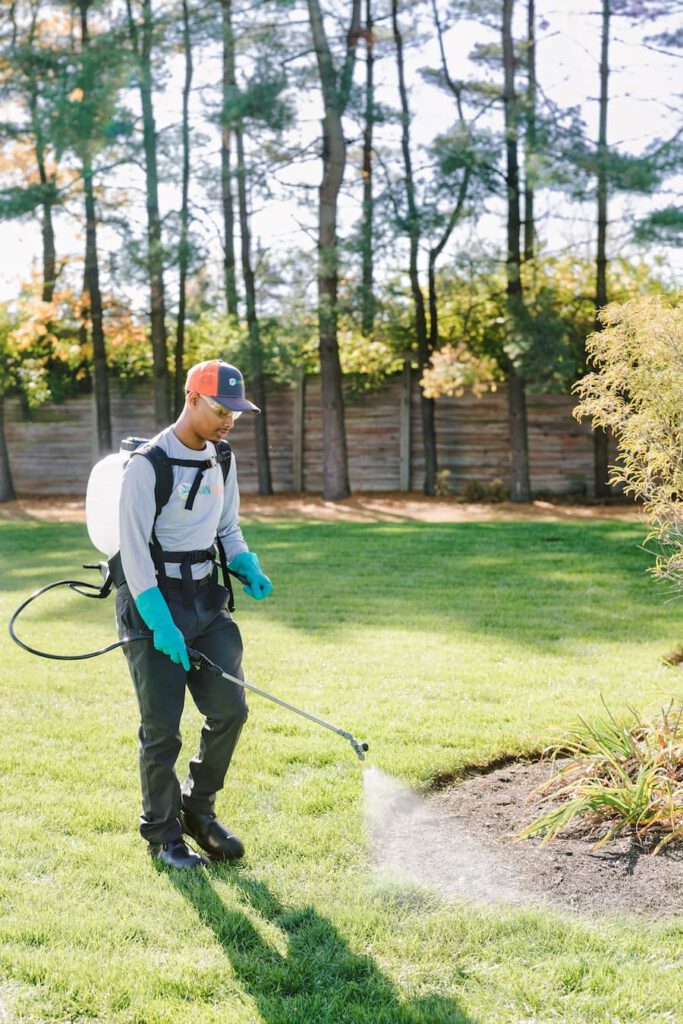
Clemson Extension is clear on this point: the key to controlling lawn burweed is treating it with a post-emergent weed control during December, January, and February. During those months the plants are small, easy to control, and have not yet formed their spiny burs.
That is the whole goal. You are not just killing a weed. You are stopping the burs before they exist.
What Happens If You Wait Until Spring
Control is still possible in March, April, and May, but by then the spines have already formed. Here is the frustrating part: those spines stay in the lawn after the weed dies. Dead or alive, burweed still hurts.
Mature plants are also harder to kill and may need more than one treatment, which increases the chance of stressing your grass right as it is trying to green up. Burweed dies on its own once air temperatures reach about 90 degrees in late spring, but by then the burs are scattered across your lawn for the season.
Choosing the Right Product for Your Grass
This is where many do-it-yourself treatments go wrong. Not every weed control product is safe on every grass. Some products that work well on burweed are safe on centipede and St. Augustine but can damage bermuda. Others are safe on bermuda and zoysia but must be used at reduced rates on centipede and St. Augustine.
Before anything goes on your lawn, you need to know which grass you have and match the product to it. A product that is fine for your neighbor’s lawn may not be fine for yours.
Lowcountry Cautions: Water Tables and Big Trees
Two things about our area make product choice even more important. Much of the Lowcountry sits on a high water table, and some weed control products carry label restrictions against use where groundwater is close to the surface.
The second is trees. Many yards here have large live oaks, magnolias, and other hardwoods with roots that run well beyond the canopy. Some products should not be applied within a set distance of the drip line of desirable trees and shrubs. Reading and following the label is not optional. It is how you protect the rest of your landscape.
Spot Treating Versus Whole-Lawn Treatment
If burweed is limited to a few areas, spot treating those areas makes sense and keeps product use low. If it is scattered across the lawn, a broader treatment is usually more effective, because seedlings are tiny in early winter and the visible clusters usually have smaller neighbors nearby. For just a handful of plants in a small yard, pulling them by hand before they form burs works too.
Common Mistakes
Waiting until you feel the stickers. By then, the burs are already formed and will stay in the lawn.
Using a product that is not labeled for your grass. This can injure or thin the turf, which opens the door to more weeds next fall.
Spraying during a cold snap. Weed control works best on a mild day when the weeds are actively growing.
Applying a spring weed and feed in late winter. Your warm-season grass is not ready for nitrogen yet, and early feeding can do more harm than good.
Scalping the lawn to get at the weeds. Mowing too low thins the grass and creates more of the open space burweed needs.
Other Winter Weeds You May See
While you are looking for burweed, you may notice other green weeds standing out in your dormant lawn. Annual bluegrass forms light green clumps that produce seed heads in late winter. Henbit has square stems and small purple flowers. Chickweed forms low mats of small, bright green leaves.
Like burweed, these are winter weeds, and winter is the right time to deal with them.
Building a Lawn That Crowds It Out
Treating burweed this winter takes care of this year’s plants. Keeping it from coming back comes down to a thicker lawn. Burweed germinates in thin turf, so dense grass leaves it far fewer places to start.
That means fertilizing and liming based on a soil test, mowing at the right height for your grass, watering deeply and only when needed, and addressing shade and traffic problems where you can. A pre-emergent applied in the fall, before burweed sprouts, adds another layer of protection for next year.
What a Burweed-Free Spring Looks Like
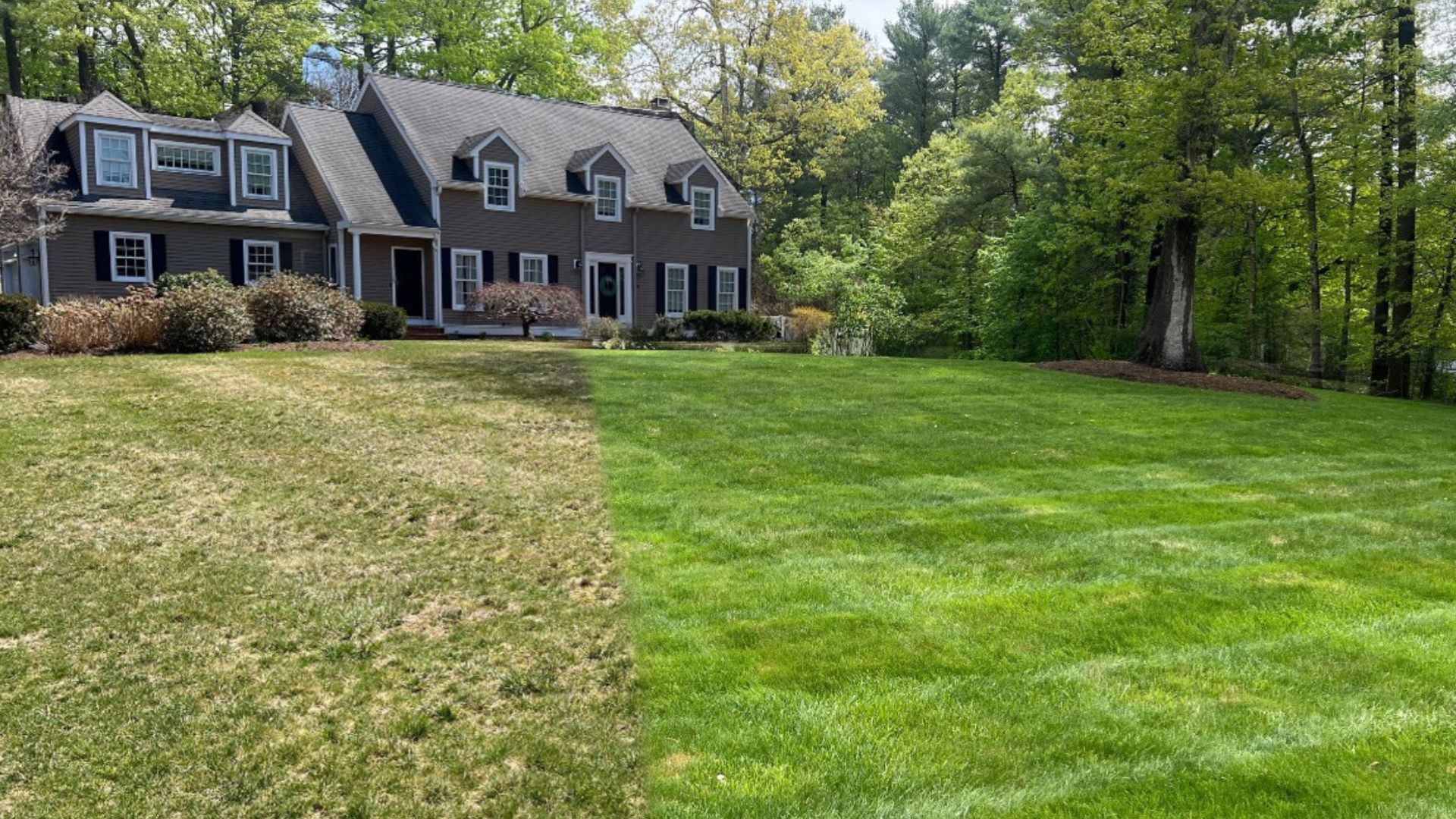
Imagine this. It is a warm Saturday in April. Your centipede lawn in Summerville is greening up, and the kids are running across it barefoot for the first time this year. The dog comes back inside without limping. Nobody is picking stickers out of their socks, because the burweed was treated in January, long before it had a chance to form a single bur.
What to Do Next
This month, walk your lawn on a sunny afternoon and look for small green clusters of feathery leaves in the thin areas, along edges, and wherever you found stickers last spring. Confirm which type of grass you have. Plan to treat between now and the end of February, while the plants are small, using a product labeled for your grass and following every label restriction.
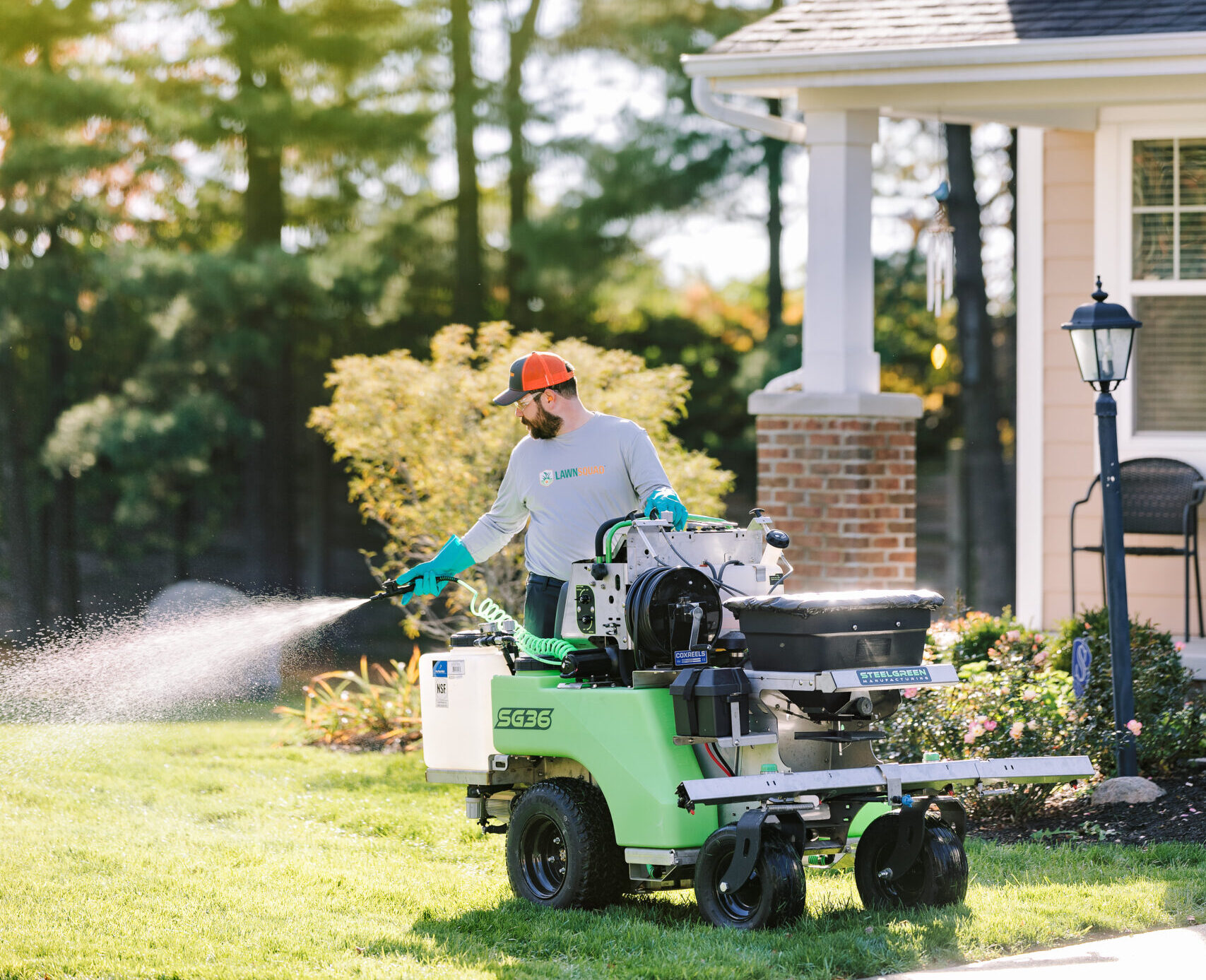
If you would rather have someone else handle the timing decisions, product selection, and application for your Lowcountry lawn, we are here for that. Lawn Squad of The Lowcountry serves homeowners across Charleston, North Charleston, Mount Pleasant, Summerville, Goose Creek, and the surrounding area. Visit lawnsquad.com to request a free quote.
Here is what to expect. We will walk your lawn, look for burweed and other winter weeds, confirm your grass type, and explain what we would apply and why. If your lawn does not need a treatment right now, we will tell you that honestly.