The short answer: Huntsville lawns need fertilizer applications spread throughout the year, with timing that matches our specific growing season in North Alabama. Most lawns do best with 5 to 8 fertilizer applications annually, starting in mid-January and continuing through early November.
The exact schedule depends on your grass type and how much care you want to invest. Warm season grasses like Bermuda and Zoysia have different needs than cool season grasses like Fescue.
Quick overview:
- Basic approach: 6 fertilizer applications across the growing season
- Standard approach: 8 applications with added treatments for better results
- Premium approach: 8 applications plus soil testing, root stimulants, and disease control
Keep reading to learn exactly when and how to fertilize your Huntsville lawn for the healthiest grass on your street.
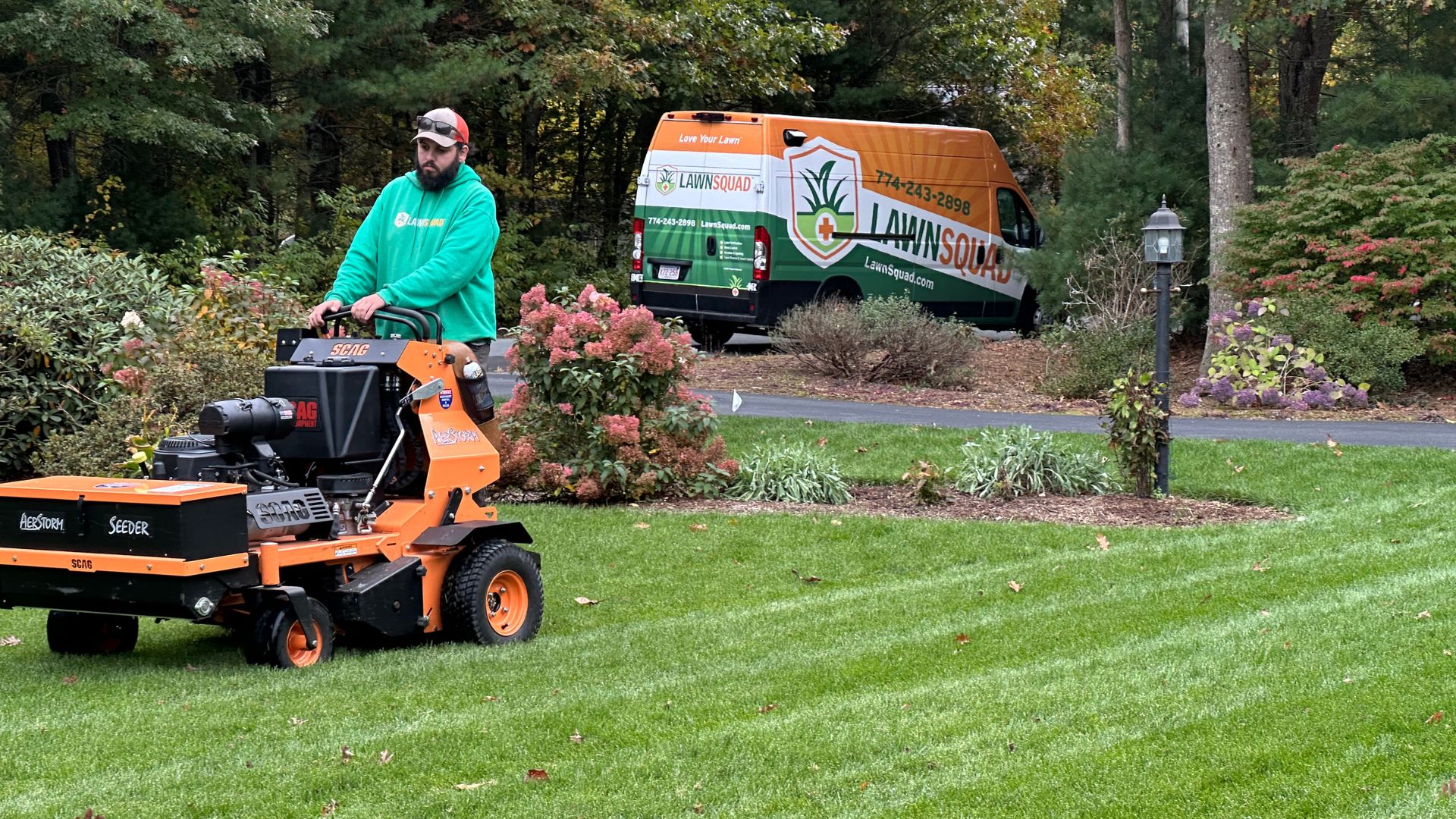
The Complete Fertilization Approach: Our 8 Round Program
At Lawn Squad of Huntsville, we have been caring for lawns in Madison County since 2001. Our treatment programs deliver fertilizer at precisely the right times for our local growing conditions.
What makes Huntsville different from other areas is our transitional climate. We sit right between the Deep South and the Upper South, which means our lawns face challenges from both hot summers and occasional cold snaps. Generic fertilization advice often misses these nuances.
Whether you fertilize your own lawn or hire professionals, understanding when and why to apply fertilizer will help you get better results from every application.
Why Fertilization Timing Matters More Than Most Huntsville Homeowners Realize
Fertilizing at the wrong time does more than waste money. It can actually damage your lawn and create problems that take months to fix.
Here is what happens when Huntsville homeowners get fertilization timing wrong:
Early spring mistakes push tender new growth before the last frost date. One late cold snap can kill all that new growth and set your lawn back weeks.
Summer fertilization errors force your grass to grow when it should be conserving energy. This stresses the lawn and makes it more vulnerable to heat damage, insects, and disease.
Fall timing problems can leave your lawn unprepared for winter. Fertilize too late and the grass cannot absorb nutrients before going dormant. Fertilize too early and you encourage growth that winter will kill.
The key principle every Huntsville homeowner needs to understand is this: fertilizer feeds your grass, but your grass can only use that food when conditions are right. Temperature, moisture, and daylight all affect how well your lawn responds to fertilization.
Our local expertise matters because Huntsville sits in a unique climate zone. We typically experience our last spring frost around late March and our first fall frost in early November. These dates drive everything about proper fertilization timing.
Spring Fertilization Guide for Huntsville Lawns
Spring is when your lawn wakes up from winter dormancy and starts actively growing. Getting fertilization right during this period sets the tone for the entire year.
Round 1: Mid-January Through February
This first application is about preparation more than feeding. Your lawn is still mostly dormant, but soil temperatures are starting to rise.
The primary goal is applying pre-emergent herbicide to stop crabgrass and other weeds before they germinate. We combine this with a light fertilizer application that will be ready when your grass breaks dormancy.
For Huntsville lawns, Round 1 typically starts around January 12th. This timing catches the pre-emergent window before soil temperatures reach the 55 degree threshold that triggers weed seed germination.
Our ELITE program also includes a soil test during Round 1. This tells us exactly what nutrients your specific soil needs, which prevents wasting money on fertilizers your lawn cannot use.
Round 2: Late February Through March
By late February, Huntsville lawns are starting to show green. Soil temperatures are climbing, and your grass roots are becoming active.
This application continues pre-emergent protection while adding fertilizer to support early spring growth. We also begin surface insect control because pest populations start building as temperatures rise.
Round 2 typically begins around February 23rd in Huntsville. The combination of pre-emergent and fertilizer gives your lawn the best start to the growing season.
Round 3: Early April Through May
This is when your Huntsville lawn shifts into active growth mode. Temperatures are consistently warm, and your grass is hungry for nutrients.
Round 3 delivers fertilizer along with broadleaf weed control for any weeds that escaped the pre-emergent barrier. Surface insect control continues to protect against spring pest emergence.
For ELITE customers, this round also includes Fire Ant and Mole Cricket prevention. These pests cause significant damage to Huntsville lawns, and prevention is far easier than treatment after an infestation establishes.
Our Round 3 typically starts around April 6th, right as spring growth hits full stride.
Critical warning: Avoid fertilizing right before heavy spring rains. Runoff carries nutrients into storm drains and waterways, wasting your investment and harming the environment. Check the weather forecast before any fertilizer application.
Summer Fertilization Guide for Huntsville Lawns
Summer fertilization requires a lighter touch than spring. Your lawn is under heat stress, and pushing too much growth makes problems worse.
Round 4: Mid-May Through June
This application transitions your lawn from spring growth mode to summer survival mode. The fertilizer formulation changes to support stress resistance rather than aggressive growth.
Round 4 includes broadleaf weed control, surface insect control, and sedge suppression. Nutsedge becomes a major problem for Huntsville lawns starting in late spring, and this is the time to address it.
For ELITE customers, Round 4 also delivers disease control. Fungal pressure increases dramatically as humidity rises, and preventative treatment stops problems before they start.
This round typically begins around May 18th in Huntsville. We also include aeration for ELITE customers to help water and nutrients reach grass roots more effectively during the stressful months ahead.
Round 5: Late June Through July
Midsummer fertilization focuses on keeping your lawn alive and healthy through the worst heat. This is not the time for heavy feeding.
Round 5 delivers a moderate fertilizer application along with continued weed and insect control. Sedge suppression continues because nutsedge stays active all summer.
ELITE customers receive aeration during this round to combat soil compaction from summer use.
Round 5 typically starts around June 29th. By this point, Huntsville temperatures regularly exceed 90 degrees, and your lawn needs support rather than stimulation.
Round 6: August Through Early September
Late summer is about preparing your lawn for fall recovery. The worst heat is passing, and your grass is ready to respond to care again.
Round 6 reintroduces pre-emergent herbicide to prevent fall weed germination. Fertilizer application increases slightly as temperatures moderate. Root stimulant helps your lawn rebuild the root system that summer stress damaged.
Surface insect control, sedge suppression, and disease control continue for ELITE customers. Aeration helps your lawn absorb the increased nutrients efficiently.
This round typically begins around August 10th in Huntsville.
Avoid Heavy Fertilization During Heat Waves
If temperatures exceed 95 degrees for extended periods, delay fertilizer applications until conditions moderate. Forcing growth during extreme heat damages your lawn more than skipping an application.
How to Calculate Your Lawn’s Fertilizer Needs
Understanding how much fertilizer your lawn needs prevents both under-feeding and over-feeding.
Step-by-step process:
- Measure your lawn’s square footage by multiplying length times width for each section, then adding them together
- Subtract the square footage of your house, driveway, flower beds, and other non-grass areas
- Check the fertilizer bag for application rate, typically listed as pounds per 1,000 square feet
- Divide your total square footage by 1,000, then multiply by the recommended application rate
Example: If your lawn is 8,000 square feet and the fertilizer calls for 3 pounds per 1,000 square feet, you need 24 pounds total (8 x 3 = 24).
Most Huntsville lawns range from 5,000 to 15,000 square feet. Knowing your exact size helps you buy the right amount and avoid waste.
What About Soil Testing?
Soil testing is the most overlooked step in lawn fertilization, and it makes a bigger difference than most Huntsville homeowners realize.
Your soil’s pH level determines how well your grass can absorb nutrients. If your pH is too high or too low, fertilizer applications provide limited benefit no matter how perfectly you time them.
Huntsville soils tend toward the acidic side, which is common throughout North Alabama. Acidic soil locks up nutrients and prevents grass roots from accessing them. A simple lime application can dramatically improve how your lawn responds to fertilizer.
Our ELITE program includes soil testing in Round 1. This tells us exactly what your lawn needs and allows us to customize applications for your specific property.
If you manage your own lawn, Madison County Extension offers soil testing services. The small investment in testing pays for itself many times over through more effective fertilization.
Fall Fertilization Guide for Huntsville Lawns
Fall is actually the most important fertilization period for Huntsville lawns. What you do in September, October, and November determines how your lawn looks next spring.
Round 7: Late September Through October
Fall fertilization supports your lawn’s final growth push before winter dormancy. This is when grass plants store energy in their root systems to survive winter and fuel spring green-up.
Round 7 delivers pre-emergent to prevent winter weeds, fertilizer to support root development, and continued broadleaf weed control. Surface insect control addresses fall pest activity before populations settle in for winter.
Disease control continues for ELITE customers because fall’s cooler temperatures and morning dew create perfect conditions for fungal problems.
This round typically begins around September 21st in Huntsville.
Round 8: Early November
The final fertilization of the year prepares your lawn for winter dormancy. This application uses a winterizing fertilizer formulation that promotes root strength and energy storage.
Pre-emergent continues to protect against winter annual weeds. Broadleaf weed control addresses any late-season weeds that could establish during winter.
Round 8 typically begins around November 2nd in Huntsville. This timing delivers nutrients while your grass is still active enough to absorb them.
Common Fertilization Mistakes Huntsville Homeowners Make
After serving the Huntsville area for over two decades, we have seen every fertilization mistake possible. Here are the ones that cause the most problems:
Mistake #1: Fertilizing Based on Calendar Dates Instead of Conditions A warm January might have your lawn greening up early, but that does not mean it is time to fertilize. Soil temperature matters more than air temperature. Roots need consistent warmth before they can effectively absorb nutrients.
Mistake #2: Using the Same Fertilizer Year-Round Your lawn needs different nutrient ratios in different seasons. Spring formulations promote blade growth. Summer formulations support stress resistance. Fall formulations encourage root development. Using the wrong type reduces effectiveness.
Mistake #3: Applying Too Much at Once More fertilizer does not mean faster results. Over-fertilization burns grass, promotes thatch buildup, and pollutes waterways. Follow application rates exactly, and when in doubt, apply less rather than more.
Mistake #4: Ignoring Soil pH All the fertilizer in the world cannot help a lawn with severely imbalanced pH. Huntsville’s acidic soils often need lime applications to unlock nutrient availability. Test your soil before investing in expensive fertilizer programs.
Mistake #5: Skipping Fall Fertilization Many homeowners stop fertilizing after summer, thinking the job is done for the year. Fall applications are actually the most important for building a healthy lawn. Skipping them leaves your grass weak going into winter and slow to green up in spring.
DIY Fertilization vs. Professional Programs: Which Should You Choose?
DIY fertilization gives you complete control over products and timing. You can save money if you have the time to learn proper techniques and maintain a consistent schedule. Best for: Homeowners who enjoy lawn care, have time for regular applications, and are willing to learn about soil science and plant nutrition.
Professional fertilization programs handle the complexity and timing for you. Trained technicians know exactly which products to use, when to apply them, and how to adjust for your specific lawn conditions. Best for: Busy homeowners who want guaranteed results, those with challenging lawn conditions, or anyone who prefers to spend weekends enjoying their lawn rather than treating it.
Your Huntsville Fertilization Calendar at a Glance
DIY Approach (6 Applications)
| When | What to Apply | Key Focus |
|---|---|---|
| Mid-January | Pre-emergent + light fertilizer | Weed prevention |
| Late March | Balanced fertilizer | Spring green-up |
| Mid-May | Slow-release fertilizer | Summer preparation |
| Mid-July | Light fertilizer | Heat stress support |
| Mid-September | Balanced fertilizer | Fall growth |
| Early November | Winterizer fertilizer | Root strength |
Lawn Squad Treatment Schedule (8 Rounds)
| Round | Start Date | Fertilizer + Key Services |
|---|---|---|
| Round 1 | January 12, 2026 | Pre-Emergent, Fertilizer, Broadleaf Weed Control, Soil Test |
| Round 2 | February 23, 2026 | Pre-Emergent, Fertilizer, Broadleaf Weed Control, Surface Insect Control |
| Round 3 | April 6, 2026 | Fertilizer, Broadleaf Weed Control, Surface Insect Control, Fire Ant Prevention |
| Round 4 | May 18, 2026 | Fertilizer, Broadleaf Weed Control, Surface Insect Control, Sedge Suppression, Disease Control |
| Round 5 | June 29, 2026 | Fertilizer, Broadleaf Weed Control, Surface Insect Control, Sedge Suppression |
| Round 6 | August 10, 2026 | Pre-Emergent, Fertilizer, Root Stimulant, Broadleaf Weed Control, Disease Control |
| Round 7 | September 21, 2026 | Pre-Emergent, Fertilizer, Broadleaf Weed Control, Surface Insect Control, Disease Control |
| Round 8 | November 2, 2026 | Fertilizer, Broadleaf Weed Control |
Huntsville Fertilization Pricing Guide
Fertilizer application costs in Huntsville depend on your lawn size. Here are the typical price ranges:
| Lawn Size | Standard Fertilizer | Organic Fertilizer |
|---|---|---|
| 1,000 to 5,000 sq ft | $50 to $58 | $65 to $79 |
| 6,000 to 10,000 sq ft | $62 to $78 | $86 to $114 |
| 11,000 to 15,000 sq ft | $82 to $98 | $121 to $149 |
| 16,000 to 20,000 sq ft | $102 to $118 | $156 to $184 |
| 21,000 to 25,000 sq ft | $121.50 to $135.50 | $191 to $219 |
These prices are per application. Full season programs that bundle multiple applications typically offer better value than individual treatments.
The Bottom Line
Fertilizing your Huntsville lawn correctly means matching applications to our specific growing season and your grass’s actual needs. Random fertilization wastes money and can damage your lawn. Properly timed applications transform struggling lawns into neighborhood showpieces.
Key principles to remember:
- Start pre-emergent and light fertilizer in mid-January before weeds germinate
- Increase fertilizer as spring growth accelerates through March and April
- Reduce fertilizer intensity during summer heat stress periods
- Resume heavier applications in fall when your lawn can use the nutrients
- Finish with winterizer fertilizer in early November before dormancy
- Test your soil to ensure proper pH and nutrient availability
Follow these principles and your Huntsville lawn will have the nutrition it needs exactly when it needs it.

Let Lawn Squad Handle It For You
Every Huntsville lawn is different. Your grass type, soil composition, shade patterns, and previous care history all affect what fertilization approach works best.
Our treatment programs account for all these variables with applications timed specifically for Madison and Limestone County growing conditions.
Our ELITE Program includes:
- 8 precisely timed fertilizer applications throughout the year
- Soil testing to customize nutrient recommendations for your property
- Pre-emergent applications in Rounds 1, 2, 6, and 7
- Root stimulant to maximize nutrient uptake
- Unlimited service calls if you notice problems between visits
Tired of guessing when to fertilize? Frustrated with bags of leftover product cluttering your garage? Ready for a lawn that makes your neighbors jealous?
Contact Lawn Squad of Huntsville today at 983-233-6002 or visit lawnsquad.com/contact-us to get a quote and put your lawn on the perfect fertilization schedule for North Alabama.