Short Answer: When a North Shore cool-season lawn is already stressed in early July, the priority is keeping crown tissue alive on heavy clay soils until cool weather returns. Stop the spring nitrogen habit, raise the mower to 4 inches with a sharp blade, switch to two deep early-morning watering cycles per week, manage the brown patch and dollar spot pressure that lake humidity drives, and confirm grub prevention is in place before late July. Hold off on overseeding, broadleaf herbicides, and aeration until early September. The plan below is the playbook we walk Winnetka, Glencoe, Wilmette, Highland Park, and Lake Forest customers through every July.
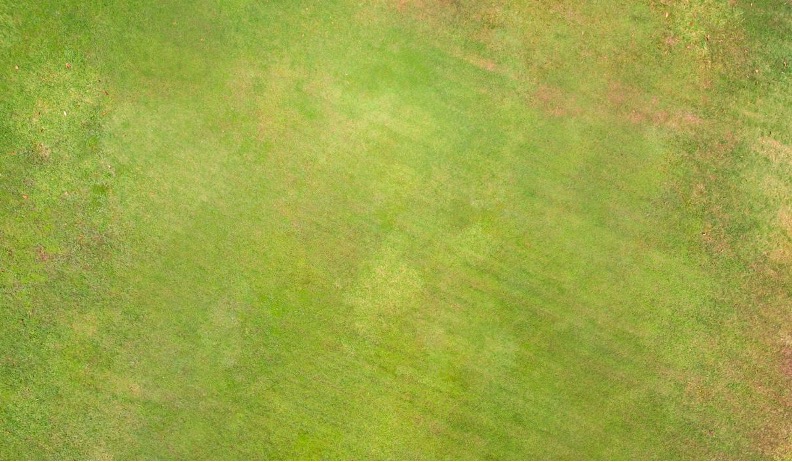
It is the first week of July on the North Shore. The lake breeze that kept Wilmette and Glencoe pleasant through June rolled out a few days ago. The dew sticks to the lawn until 10 a.m. and the afternoon hits the high 80s with the kind of soupy humidity that makes a screen door fog up. You walk to the curb to grab the recycling bin and notice the lawn looks different than it did on Memorial Day. A duller cast across the front. A bigger patch of yellow near the maple in the corner. A spot along the driveway where the grass is starting to thin and crunch.
We get this call every July from homeowners across Winnetka, Glencoe, Wilmette, Highland Park, Kenilworth, Lake Forest, Northbrook, Deerfield, and the rest of our service area. The honest answer is that some color loss on a Kentucky bluegrass and ryegrass lawn in a humid Chicago July is unavoidable. The grass is a cool-season plant and the conditions are not cool. But there is a real difference between a stressed lawn that recovers cleanly in September and a stressed lawn that quietly dies through August because nobody made the right moves at the right time. The goal of this article is to put your yard in the first category.
What Cool-Season Grass Is Actually Doing in July on the North Shore
Almost every lawn we treat in Lake and Cook Counties is a blend of Kentucky bluegrass, perennial ryegrass, and turf-type tall fescue. The three species are different in detail but they share a fundamental biology: they evolved for 60-to-75 degree weather and they slow down hard above 80. Soil temperatures at four inches across most North Shore properties run 78 to 85 through the first three weeks of July, with the lake-effect properties in Glencoe and Lake Bluff a degree or two cooler than the inland blocks in Buffalo Grove and Lake Zurich.
In those soil temperatures, your lawn is in maintenance mode. It pulls energy back from top growth, holds reserves in the crown and root system, and reduces water loss by closing stomata during the heat of the day. The visual result is a slower, slightly paler lawn. The functional reality is a plant that is trying to survive until cool weather returns.
That biology has one practical implication that drives every July decision: your goal in July is preservation. You are not going to push the lawn to look better than it did in May. You are trying to keep enough crown tissue alive that the September renovation, the early fall fertilizer, and the cool-weather recovery have something to work with.
Stop Pushing Nitrogen, Especially Quick-Release
The single most common July mistake on North Shore lawns is the homeowner who tries to feed the yellowing back to color with a bag of quick-release fertilizer from the big-box store. It does the opposite of what they want.
Quick-release nitrogen pushes top-growth response from a plant that is already running low on stored carbohydrates. The lawn produces tender new blade tissue it cannot support through afternoon heat. The roots lose ground trying to feed top growth they should not be making. And the new tender tissue is a perfect target for the brown patch and dollar spot that lake humidity creates on the North Shore overnight. A bag of fast nitrogen applied to a stressed July lawn typically shows up as a noticeably worse lawn within two weeks.
If you applied a slow-release product in early to mid June, the lawn has the nitrogen it needs. The next meaningful feeding for cool-season turf on heavy clay is the early September application, which is the highest-leverage fertilization of the year. Save your nitrogen budget for that one.
Raise the Mower to 4 Inches and Sharpen the Blade
Move the deck up to 3.5 or 4 inches and leave it there until Labor Day. Every quarter inch of additional height matters in heat stress. Taller blades shade the soil, slow evaporation off heavy clay, and starve crabgrass seedlings of the light they need to take off. Taller blades also support a deeper root system, since root depth roughly mirrors blade height. Deeper roots reach moisture that the surface inch of clay cannot hold past mid-morning on an 88-degree day.
The blade itself matters as much as the height. A dull mower blade tears the tip of each grass blade instead of slicing it clean. Those torn tips dry to a silver-gray haze the next morning and they are wide-open entry points for the disease pressure that the North Shore generates whenever fog and dew linger past 9 a.m. Pull the blade and sharpen it, or pay your local hardware store in Glenview or Wilmette to do it. Then keep a spare in the garage so you can swap mid-season without the lawn getting ahead of you. We sharpen our mower blades every 20 hours of use, which means most homeowners doing a half-acre lot once a week should sharpen at least twice through July and August.
One more rule: never remove more than one third of the blade in a single cut. If the lawn got ahead of you during a rainy week, raise the deck even higher, take the top off, and come back two days later for a second pass. Scalping a stressed lawn in July is one of the fastest ways to turn tired into dead.
Water Deep, Water Early, Water Less Often
The North Shore sits on heavy clay across most of our service area. That clay is a complicated water partner. It holds water well, which is good, but it also holds water for a long time after a rain or a sprinkler run, which means daily light watering quickly creates the saturated surface conditions that brown patch loves. The right schedule on this soil is different from the right schedule in a sandy market.
The target in July is one inch of water per week, total, including rainfall. Put a tuna can or a cheap rain gauge in the lawn and track what is actually arriving. Two long irrigation cycles per week, each putting down a half inch, run between 4 a.m. and 8 a.m., is the recipe that fits North Shore clay. Cycle-and-soak on modern controllers is your friend if the water is running off before it soaks in. Run for 10 minutes, pause for 30, run for another 10. The pause lets the clay accept water rather than shedding it.
Evening watering is the most common mistake we correct in July on the North Shore. A homeowner sets the irrigation for 6 p.m. so it does not interfere with morning routines. The lawn stays wet for 14 hours overnight in 70-degree dew points. By Friday they have brown patch developing in three places. Move the run time to predawn, ideally finishing before 8 a.m. so the sun can dry the canopy.
One lake-effect note: properties within a mile of the lake in Wilmette, Glencoe, Kenilworth, and Lake Bluff get a few extra hours of overnight humidity from the lake breeze. If your sprinklers run at 5 a.m. and the lawn does not dry until 10 a.m., move the run time to 4 a.m. The earlier finish gives the canopy more sun to dry.
Manage Brown Patch and Dollar Spot Cultural Pressure
Lake-effect humidity makes the North Shore one of the heavier disease-pressure markets for cool-season turf anywhere in the Midwest. The two diseases that drive July calls in our service area are brown patch and dollar spot.
Brown patch shows as irregular brown circles ranging from 6 inches to several feet across, often with a smoky gray ring along the leading edge in the early morning. It hits perennial ryegrass and tall fescue hardest, which means the rye-heavy front lawns common in Highland Park and Northbrook take the worst of it. Dollar spot shows as small bleached circles about the size of a silver dollar, with an hourglass lesion on individual grass blades. It hits Kentucky bluegrass hardest, especially on lawns running a touch low on nitrogen.
For most residential cases, cultural fixes do the work. Water deeply in early morning only, raise the cutting height, improve airflow by pruning low branches on shade trees, and pick up clippings from severely affected zones to reduce pathogen spread. A modest balanced fertilizer can help dollar spot specifically since the pathogen exploits nitrogen-deficient turf. Fungicide applications are appropriate for properties with severe pressure or where the homeowner is trying to protect a high-visibility lawn from spreading damage, but they are not the first move for a typical North Shore yard.
If a patch is expanding more than 6 inches a week despite cultural changes, call us. If it holds stable while you adjust inputs, give the cultural changes two to three weeks before escalating.
Confirm Grub Prevention Before Late July
Japanese beetle and masked chafer egg laying is in full swing across Lake and Cook Counties through July. The eggs they lay this month hatch into grubs that begin feeding on grass roots in late July and through August. The damage shows up as irregular brown patches that pull up like loose carpet, often near gardens where the adult beetles fed.
If a preventive grub treatment using chlorantraniliprole or imidacloprid was applied in late June, the lawn is protected. If not, the realistic preventive window closes by mid-July. After that, you shift to curative products applied after damage is visible, with more variable results.
Walk the lawn and do the tug test in any thinning area. Grab a handful of grass and pull. If it lifts easily, with no root resistance, grubs are already feeding and you need a curative treatment this week. If the grass resists firmly, you have time for preventive or you can confirm the preventive applied earlier is sitting in the soil ready for hatch.
A preventive grub application for a typical North Shore lot runs $80 to $150. A renovation after grub damage runs $2,000 to $4,000. The math is rarely close, and July is the last reliable preventive month.
What to Wait On Until September
The hardest part of the July playbook is recognizing what cannot be fixed in July and waiting for the right window. A few moves that feel urgent now are actively destructive in heat and need to wait until early September.
Seeding bare patches. Cool-season seed germinates poorly in July soil temperatures and competes badly with the summer weeds that will move in alongside it. Mark the bare spots, water them lightly to suppress weed germination, and overseed during the last week of August through the first three weeks of September.
Core aeration. Aerating a stressed lawn in July creates entry wounds for disease and pulls cores in 90-degree heat that the lawn cannot recover from. The right window for aeration on North Shore cool-season lawns is late August through mid-September, ideally paired with overseeding for maximum density.
Broadleaf herbicide blankets. Selective herbicides applied above 85 degrees create burn and stress on cool-season turf. Spot-treat the worst offenders with a small handheld sprayer if needed. Save blanket weed work for the cooler stretches in late September and early October.
Dethatching and power raking. Both are aggressive cultural practices that belong in early fall or early spring, not in the heart of summer stress.
What to Do Next
If your North Shore lawn is showing the kind of July stress that has you worried, we can come walk the property, identify what is heat stress versus what is disease, insect, or watering pattern, and put a realistic preservation plan in place for the rest of the summer. The walkthrough takes about 20 minutes and you leave with a clear plan rather than another month of guessing.
Lawn Squad of Chicago’s North Shore serves Buffalo Grove, Deerfield, Fort Sheridan, Glencoe, Glenview, Highland Park, Highwood, Kenilworth, Lake Bluff, Lake Forest, Lake Zurich, Libertyville, Lincolnshire, Northbrook, Techny, Vernon Hills, Wilmette, and Winnetka.
Call us at 847-305-2765 or request a free quote at lawnsquad.com. Our VitaminLawn program is built specifically for North Shore Kentucky bluegrass, rye, and fescue blends growing on heavy clay near the lake, with the July preservation moves built into the schedule so the lawn arrives at September ready for the aeration and overseeding work that decides next year’s appearance.