Short Answer: If your North Shore Bluegrass, Fescue, or Rye lawn is browning out by early July, the goal for the next eight weeks is protection, not recovery. Keep the crowns alive with about half an inch of water every 10 to 14 days, raise the mower to 4 inches, stop fertilizing until late August, and treat any disease that shows up. The real fix is core aeration and overseeding in early September, when cool nights return and our coastal soils start working with you again. July effort spent the wrong way actually undermines the September comeback we are counting on.
You step out the back door in Ipswich, Topsfield, or Hamilton on the first humid morning of July and the lawn does not look like it did Memorial Day weekend. The high spots are tan. The strip along the south-facing fence is straw colored. The little patch where the dog likes to lay is bare. The neighbor in Manchester texted you a photo of their yard yesterday and theirs looks even worse. You start thinking about ripping it out and starting over.
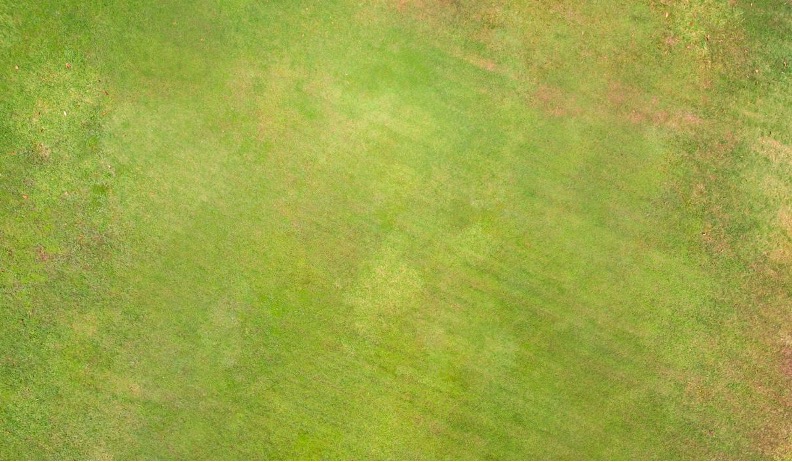
Stop. Take a breath. We have walked thousands of lawns on the North Shore in mid-July, and we can tell you with confidence that the yard you are looking at is almost certainly not dead. It is doing exactly what cool-season grasses are supposed to do when ocean-humid 88-degree days stack up with 70-degree nights. It is shutting down on purpose. Your job in July is not to wake it up. Your job is to keep it alive until the calendar saves you in September.
Why North Shore Cool-Season Lawns Hit a Wall in July
Most lawns from Newburyport down to Manchester-by-the-Sea are a blend of Kentucky Bluegrass, Tall Fescue, and Perennial Rye. These three grasses are built for the climate we have nine months a year. They love the 55 to 75 degree days that define April, May, late September, and October. They tolerate freezing nights with snow cover. What they cannot do is grow vigorously when soil temperatures push past 75 degrees and air temperatures stack day after day in the upper 80s.
In coastal Essex County, July typically brings 6 to 10 days above 90, soil temperatures in the upper 70s by mid-month, and dew points that stay sticky thanks to the ocean. The combination matters. Heat alone, a Kentucky Bluegrass plant can manage. Heat plus high humidity creates the brown patch and dollar spot pressure that turns a stressed lawn into a damaged one. Add the fact that our acidic, often shallow soils over ledge in places like Cape Ann hold only so much moisture in the root zone, and you have the conditions for summer dormancy.
Dormancy is a survival mechanism. The crown of the grass plant stays alive at the soil line. The blades go tan to conserve water. The roots stop growing actively. The whole plant essentially holds its breath. A healthy cool-season lawn can stay dormant for 4 to 6 weeks and still bounce back when nights cool down. That is the bet you are making in July.
What Real Watering Looks Like When the Lawn Is Already Stressed
This is where well-meaning homeowners do the most damage. The instinct when grass looks crunchy is to water more. Light, daily watering during a heat wave is one of the worst things you can do to a North Shore lawn. It wets only the top half-inch of soil, evaporates fast, encourages shallow roots, and creates the constant leaf wetness that triggers brown patch and dollar spot in our humid coastal nights.
If your lawn still has color and you are trying to keep it that way, water once or twice per week in a deep cycle. About an inch total per cycle, applied between 4 and 8 a.m. Move sprinklers if you have to. Catch the runoff on slopes by splitting the cycle into two shorter runs 45 minutes apart.
If your lawn has already gone dormant and looks tan, switch to a maintenance schedule. About half an inch of water every 10 to 14 days. That is enough to keep the crown alive, not enough to coax the plant out of dormancy and back into stress. Pushing dormant grass to green up in mid-July just to send it back into dormancy two weeks later is harder on the plant than leaving it asleep.
One more rule. If a storm rolls through Newburyport or Salisbury and dumps an inch of rain, turn off the irrigation. We see customers running automatic systems right through a soggy week without thinking about it, and that is a fast way to grow fungus on a stressed lawn.
The Mowing Adjustment That Saves the Most Grass
Raise the mower. If you have been mowing at 3 inches all spring, move to 3.5 inches in late June and 4 inches by early July. Sharper blade. Less frequent mowing.
Here is why it matters more than people think. Every blade of grass is a solar panel and a shade structure. Taller blades shade the soil, keep root-zone temperatures lower, and reduce evaporation. They also support a deeper root system, because the plant maintains roughly a 1-to-1 relationship between blade height and root depth. A 4-inch lawn over the Topsfield-Boxford clay loam might have roots 4 to 6 inches deep. A 2.5-inch lawn over the same soil might have roots only 2 inches deep, which puts the plant in chronic drought stress even when rainfall looks adequate.
Mow less often during the heat. If the lawn is not growing, do not mow it. Cutting tan, dormant grass just to make the lines look clean stresses the crowns and invites disease at the cut tips. Wait for cool nights and an inch of rain. The lawn will tell you when it is ready to grow again.
Keep blades sharp. A clean cut heals in 24 hours. A torn cut from a dull blade is an open door for the fungal spores already drifting around in July humidity.
Disease Pressure on Coastal Properties
July on the North Shore is brown patch and dollar spot season. The ocean keeps overnight dew on the grass for 8 to 12 hours during humid stretches, which is exactly the leaf wetness window these pathogens need.
Brown patch looks like irregular tan circles, often with a slightly darker smoke ring at the edge in early morning when dew is heavy. It hits Tall Fescue and Perennial Rye the hardest in our area. Dollar spot looks like silver dollar size bleached spots that can run together into larger patches, and it tends to hit Kentucky Bluegrass and Fescue blends when nitrogen levels are low.
If you see either, do not panic. Skip the evening watering immediately. Get a fungicide on the area within 7 days if the pattern is spreading. We use rotational chemistry for our VitaminLawn customers on the North Shore because these pathogens build resistance to single active ingredients fast. If you are treating yourself, look for a product with strobilurin or propiconazole on the label and follow rates exactly.
Pay attention to spots where you see white grub activity too. Late July is when first-instar grubs from June egg-laying start feeding in the root zone in Hamilton, Wenham, and Topsfield lawns. A preventive grub treatment in late June or early July is dramatically cheaper and more effective than the curative repair we are called for in September.
What Not to Do in July
A short list, because the no-list saves more lawns than the do-list this month.
- Do not fertilize with synthetic nitrogen on a stressed cool-season lawn. You are pushing top growth the roots cannot support, and you are burning crowns that are already heat stressed.
- Do not apply broadleaf herbicide in temperatures above 85 degrees. The product volatilizes, drifts onto your hostas and your neighbor’s hydrangeas, and the heat amplifies the chance of turf damage.
- Do not power rake or dethatch. This is a fall job.
- Do not seed bare patches in July. Seed will germinate, but the seedlings cannot survive the heat without daily babysitting. Wait for September.
- Do not scalp the lawn. Lower mowing in July is the surest way to convert dormancy into death.
How July Decisions Set Up September Recovery
Here is the part that matters most. The North Shore has one true window for major lawn renovation each year. It opens around the first week of September, when nights drop into the 50s and soil temperatures fall back into the high 60s, and it closes around the third week of October when the first hard frost arrives. Six weeks. That is the window for core aeration, overseeding, soil amendments, and the heavy fall fertilization that builds the lawn you want for next May.
Everything you do in July is in service of getting to that window with living crowns. Crowns are the bank account. If you spend them down through stress, disease, and mistakes in July, September has less to work with. If you protect them, September can do almost anything.
We start mapping renovation plans for our customers in Newburyport, Ipswich, Boxford, Hamilton, and the Cape Ann communities in mid-July. We walk the property, mark the dead zones, recommend the seed blend that fits the sun and soil, and put the aeration date on the calendar before the calendar fills up. The customers who book in July get the early September slots, which is exactly when the weather window opens.
What to Do Next
If your North Shore lawn is already showing summer stress and you are not sure what to do, we are here for that conversation. We will walk the property with you, identify what is dormancy versus disease versus grub damage, give you the watering and mowing plan for the next eight weeks, and map the September renovation that brings the lawn back stronger than it started.
Lawn Squad of North Shore MA serves Boxford, Byfield, Essex, Georgetown, Groveland, Hamilton, Haverhill, Ipswich, Manchester, Merrimac, Newbury, Newburyport, Prides Crossing, Rowley, Salisbury, South Hamilton, Topsfield, Wenham, West Boxford, and West Newbury.
Call us at 617-468-4557 or request a free quote at lawnsquad.com. Our VitaminLawn program is calibrated for cool-season Bluegrass and Fescue lawns on the acidic coastal soils of Essex County, and we will build the July-through-September plan that protects what you have and sets up a real fall recovery.