Short Answer: Pre-emergent crabgrass control on Murfreesboro Bermuda lawns is determined by soil temperature. The window opens when soil temperatures at 4-inch depth cross 50 to 55 degrees consistently. In our area, that typically happens in mid to late February through mid March. Warm springs push the window earlier; cold springs delay it. Crabgrass germinates earlier than Bermuda wakes up, so pre-emergent goes down on dormant or barely-greening Bermuda. The chemistry does not significantly slow Bermuda green-up. Split applications across two treatments (spring plus early summer) produce stronger control on chronic-crabgrass properties. Here is the practical guide for properties across Murfreesboro, Smyrna, La Vergne, and the surrounding area.
Pre-emergent crabgrass control is one of the highest-leverage decisions for Murfreesboro Bermuda lawns. The timing window matters more than the product choice. Get the window right and crabgrass control for the rest of the year is straightforward.
Across Murfreesboro, Smyrna, La Vergne, Christiana, Eagleville, and our broader service area, here is the practical guide.
The Soil Temperature Trigger
Crabgrass seeds germinate when soil temperatures at 4-inch depth reach 50 to 55 degrees Fahrenheit consistently. Air temperature does not drive this; soil temperature does.
For the Murfreesboro area, soil temperatures typically cross this threshold between mid to late February and mid-March. Warm springs can push the window earlier; cold springs delay it. Recent years have seen the window vary by 2 to 4 weeks depending on weather.
Bermuda wakes later than crabgrass. Bermuda needs 65 degrees of soil temperature for active green-up, while crabgrass needs only 50 to 55. This means pre-emergent goes down on dormant or barely-greening Bermuda, well before the lawn looks like it needs anything.
Why Earlier Timing for Murfreesboro
Compared to cool-season climates further north, our pre-emergent window opens significantly earlier. Properties used to thinking of April for pre-emergent application typically miss the window in our area.
The earlier timing matches our earlier crabgrass germination. By the time most homeowners are thinking about lawn care in April, the crabgrass barrier should already be in place.
Calendar-driven applications based on northern timing miss the Murfreesboro window badly. Soil-temperature-driven applications match what is actually happening locally.
How Pre-Emergent Works
Pre-emergent herbicides create a chemical barrier in the top half-inch of soil that interrupts root development of germinating grass seeds. Crabgrass seeds germinate just below the surface. When the developing root encounters the chemical barrier, root function is disrupted and the seedling dies before establishing.
The mechanism is entirely about timing. Once a seedling pushes its first leaf above ground, pre-emergent has no effect. The window is the 2 to 3 weeks before germination through the first 2 to 3 weeks after germination has finished.
Why Pre-Emergent Does Not Slow Bermuda
Pre-emergent chemistry targets germinating annual grass seeds, not established perennial grass. Bermuda’s runners and crowns are not affected by typical pre-emergent application.
Heavy rates or unusual product choices can produce mild slowing on Bermuda green-up, but the difference is typically less than a week. Properties using standard pre-emergent products at standard rates see no meaningful effect on Bermuda waking up.
The exception is Tennessee fescue mixed with Bermuda. Pre-emergent affects fescue seed germination, so spring overseeding of fescue in mixed-grass lawns conflicts with pre-emergent timing.
Tracking Soil Temperature
Several sources work for tracking soil temperature:
University of Tennessee Extension publishes soil temperature data through spring.
Direct measurement with a soil thermometer on your property is the most accurate. Cost is $10 to $20.
Visible indicators help. Forsythia in full bloom in our area typically correlates with soil temperatures approaching the threshold.
Combined data points produce reliable timing decisions.
Why Applying Too Early Backfires
Pre-emergent has finite effective life. Most products provide 8 to 12 weeks of full effectiveness.
Apply in early February and crabgrass germination does not begin until mid-March. The barrier is already 4 to 6 weeks into its lifespan when seeds wake up. By May, the barrier is at half strength. By July, late-summer germination flushes break through.
Properties on early-application schedules often see strong early-season control but crabgrass appearing in midsummer despite the application.
Why Applying Too Late Backfires
Apply after crabgrass has germinated and the product does almost nothing for seeds that already sprouted. The visible signal is crabgrass coming up despite an early-season application.
For Murfreesboro Bermuda lawns, the visible signal is usually clear by late May. If crabgrass is visible by Memorial Day on a lawn that received pre-emergent, the application was probably too late.
Split Application Strategy
For Murfreesboro properties with significant crabgrass history, a single application is rarely enough. Crabgrass has multiple germination flushes through spring and early summer.
The split approach uses two treatments. First at the soil-temperature window in late February or March. Second 8 to 10 weeks later, typically late April to early May. Combined coverage maintains the barrier through the entire germination season.
Cost runs 60 to 80 percent more than a single application. Effectiveness improves substantially on chronic-crabgrass properties.
What Disrupts the Barrier
Core aeration breaks the chemical barrier where cores come out. Schedule aeration for late spring or early summer (after Bermuda is actively growing), not after pre-emergent.
Heavy rainfall can move chemistry below germination zone. Most modern formulations resist this.
Soil disturbance from edging or digging breaks the barrier locally.
Spring overseeding into treated areas. Pre-emergent prevents grass seed germination too.
Common Murfreesboro Mistakes
Applying in April based on cool-season timing. Our window opens in February or March.
Using last year’s date when the year is different.
Combining pre-emergent with weed-and-feed at wrong timing. Forces a compromise.
Aerating after pre-emergent.
Watering in too aggressively.
Treating shaded areas where crabgrass does not thrive. Crabgrass needs sun.
Skipping the application on chronic crabgrass properties. Costs more in cleanup than prevention.
What If You Already Missed the Window
If crabgrass is already up by April or May:
Post-emergent crabgrass herbicide on small actively-growing plants. Most effective when plants have fewer than 4 leaves.
Hand pulling for small infestations.
Living with it for the season. Crabgrass is an annual that dies after first frost.
Late-summer pre-emergent for Poa annua (different timing requirements).
How to Build a Tracking Habit
Keep a soil thermometer in a representative area of the lawn from early February. Check once or twice a week. When you see 45 degrees rising, check daily. When soil crosses 50 to 55 degrees consistently for 3 to 4 days, apply pre-emergent within a few days.
This produces better timing than calendar-based applications, particularly in years with unusual weather patterns.
How Pre-Emergent Fits the Broader Program
Pre-emergent is one piece of a broader spring program. The full sequence: pre-emergent at soil-temperature window in February or March, scalping or first mow after Bermuda full green-up in April, fertilization once active growth is established in May, summer maintenance with aeration and consistent mowing.
Pre-emergent timing is the one item that cannot slip. Other items have flexible timing. Pre-emergent has a window of weeks; miss it and the year’s crabgrass control is compromised.
Cost-Benefit on Typical Murfreesboro Property
A correctly-timed application costs $80 to $140 for a typical residential lot. Split application doubles that to $160 to $280 for chronic-crabgrass properties.
Compared to post-emergent that costs $100 to $180 per application with less complete control, pre-emergent is more cost-effective per unit of weed control achieved.
The visual difference through summer is what matters most. Pre-emergent properties show clean Bermuda in July and August. Post-emergent-only properties show patchy weed pressure that never fully clears.
Properly Timing Application Within the Window
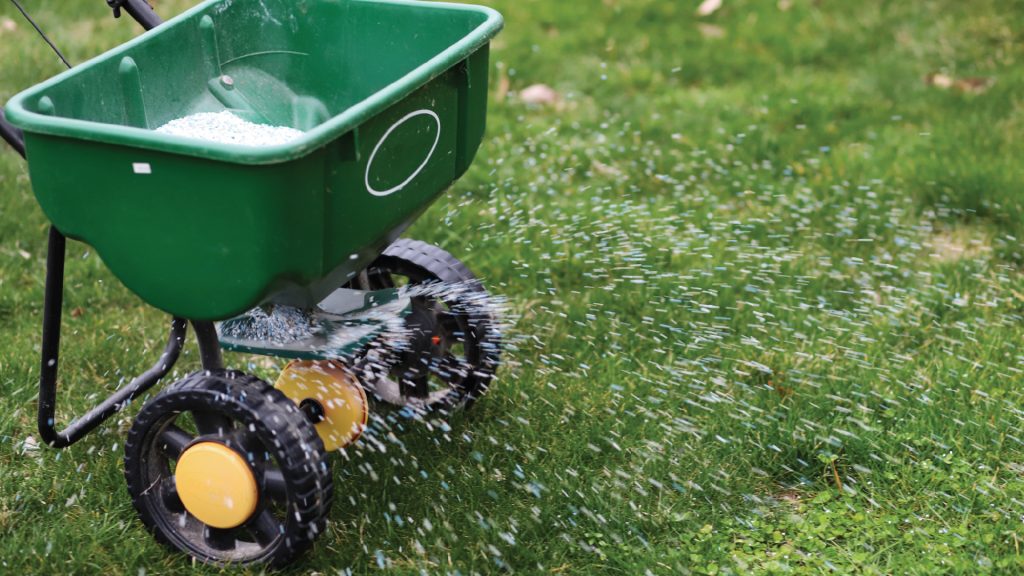
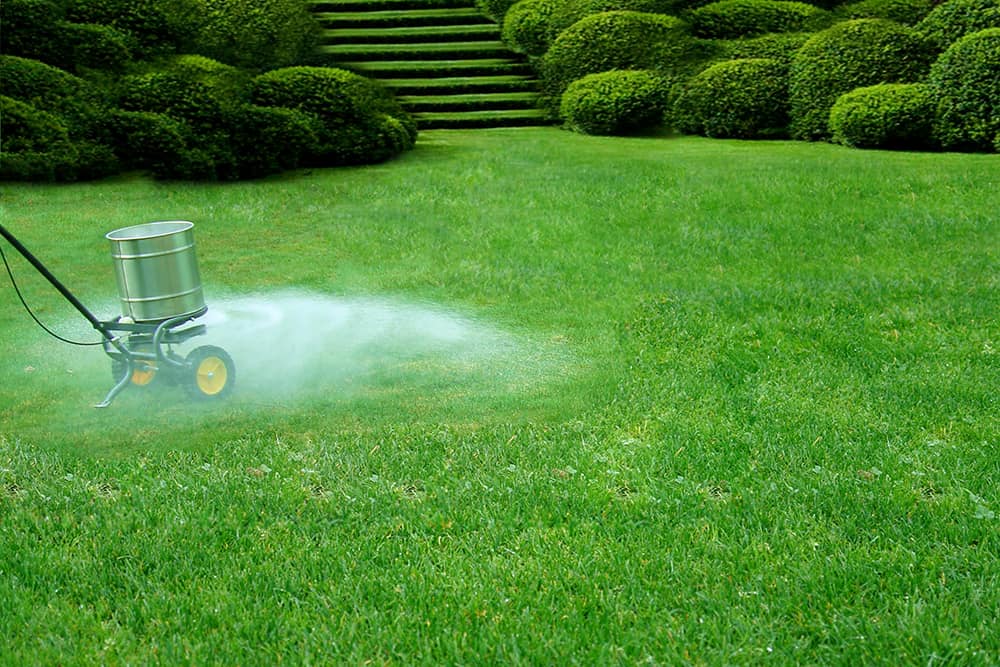
Within the soil-temperature window, the actual application day matters. Apply on a calm day to prevent product drift. Apply on a dry day with no immediate rain forecast (water activation should happen over hours, not minutes). Apply when air temperatures are above 50 degrees but below 75 for best chemistry behavior.
Most properties find that early morning applications work well because conditions tend to be calmer and cooler. Mid-afternoon applications during peak heat can produce reduced product effectiveness on some chemistries.
What to Do Next
If you would rather have someone else handle the timing decisions, product selection, and application for your Murfreesboro lawn, we are here for that.
Visit lawnsquad.com to find Lawn Squad of Murfreesboro and request a free quote. Our VitaminLawn program is built specifically for the grass types, soils, and weather patterns in our service area. Most homeowners see noticeable improvement within the first two applications.