
Overseeded This Fall? How to Get New Grass Through Its First Westchester Winter

Overseeded This Fall? How to Get New Grass Through Its First Westchester Winter
Short Answer: If you overseeded or seeded bare spots this fall, your new grass needs a little extra help before its first Westchester winter. Young bluegrass, ryegrass, and fescue seedlings have small root systems and limited reserves. A late-season, nitrogen-focused feeding in early to mid November, before New York’s December 1 fertilizer cutoff, helps them store energy for winter and grow quickly in spring. Keep leaves off seedlings every few days, mow them gently with a sharp blade, keep foot traffic off the new areas, and plan spring crabgrass control around the young grass.
If you are reading this, you probably put real work into your lawn this fall. Maybe you had the lawn aerated and overseeded in September. Maybe you finally reseeded the bare spot under the maple or along the driveway where the plow piles snow every winter. Now the new grass is up, it looks promising, and winter is on the way.
That is exactly when many Westchester homeowners start to worry about whether the seedlings will make it. It is a fair concern. Young grass is more vulnerable than an established lawn, but with a few steps this month, most fall seedings come through winter in good shape.
Why Fall Seeding Works in Westchester
Late summer and early fall is the best time to seed cool-season lawns in Westchester. Warm soil helps seed germinate quickly, cooler air reduces stress on young plants, and weed competition drops off as the season winds down. Seed that goes down from late August through September usually has several weeks of good growing weather before cold arrives.
By November, those seedlings have established roots and a few leaves, but they are still very young.
Why Young Grass Needs Extra Help
A mature grass plant has a deep root system, a thick crown, and plenty of stored energy. A seedling that germinated in September has short roots, a small crown, and only a few weeks of reserves.
That makes young grass more vulnerable to winter stress: freeze and thaw cycles that can lift shallow-rooted seedlings out of the soil, drying winds, snow mold, and foot traffic on frozen ground. It also means young grass benefits more than mature grass from any energy it can store before the soil freezes.
The Late-Season Feeding Matters More for New Grass
Many lawns seeded in September also received a starter fertilizer at seeding time. By November, most of that early feeding has been used up.
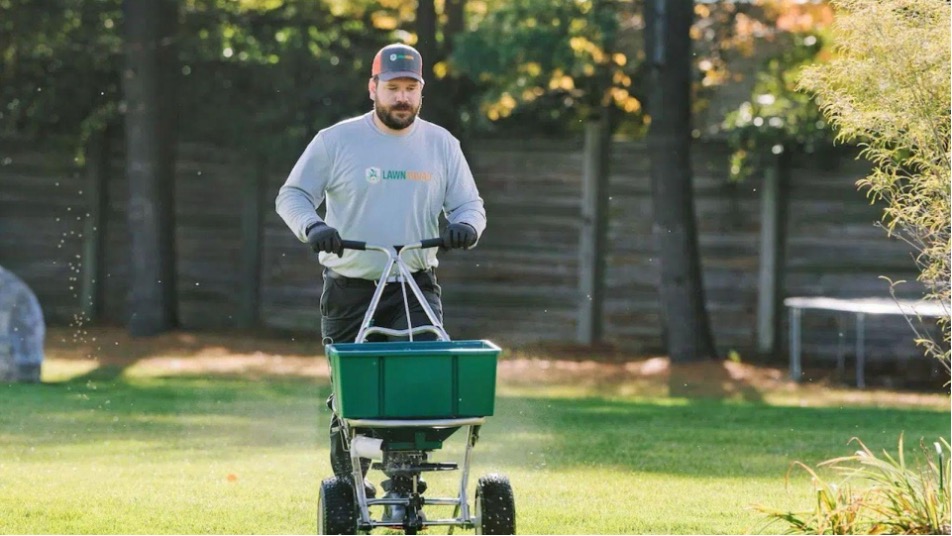
A late-season, nitrogen-focused feeding in early to mid November gives seedlings the nitrogen they need to keep building roots and store energy in their crowns. Here is what we have found works best. Apply while the seedlings are still green and the ground is not frozen, ahead of a light rain or with a gentle watering afterward.
In Westchester, there is a firm end date. New York State law and Westchester County law both prohibit lawn fertilizer from December 1 to April 1, so the late-season feeding needs to be down by November 30.
Phosphorus for New Lawns
Phosphorus supports root development, and it is especially helpful for seedlings. New York’s law allows phosphorus lawn fertilizer when establishing a new lawn, which is why starter fertilizers are used at seeding time.
For the late-season feeding, most fall-seeded lawns do not need more phosphorus if they received a starter fertilizer in September. A nitrogen-focused, phosphorus-free product is usually the right choice. If you are unsure, a soil test answers the question.
Leaves Are the Biggest Threat
In Westchester, leaves are the number one danger to new seedlings in November. A layer of oak or maple leaves that would barely bother an established lawn can smother young grass in a matter of days.
Clear leaves off newly seeded areas often, ideally every few days during peak drop. A leaf blower on a low setting or a gentle rake works better than aggressive raking, which can pull up shallow seedlings. Once the new grass is a little more established, mulching light leaf cover with the mower is fine.
Mowing Young Grass Before Winter
Mow new seedlings once they reach about three and a half to four inches, cutting them back to around three inches. That encourages them to produce new shoots, which helps the lawn thicken.
Before winter, mowing young grass at least once or twice helps prevent long, floppy blades from matting down under snow. Use a sharp blade, since a dull blade tears tender seedlings, and avoid mowing when the soil is soft and wet, when mower wheels can rut the lawn and pull up young plants.
Keep Traffic Off the New Areas
Seedlings are easily damaged by foot traffic, especially when the ground is soft in fall or frozen in winter. Keep kids, pets, and wheelbarrows off newly seeded areas as much as possible through winter. A temporary rope or stake line can help.
Watch for Frost Heaving
Freeze and thaw cycles can lift young seedlings with shallow roots partly out of the soil. If you see small clumps of seedlings sitting loosely on the surface after a thaw, gently press them back into contact with the soil. Seedlings that went into winter with deeper roots are much less likely to heave.
Snow and Plowing Near New Seed
If the area you seeded is next to the driveway, keep in mind where plowed snow will land. Heavy, salty snow piles sitting on new grass all winter can damage seedlings. If possible, direct snow piles elsewhere this first winter, and give the area a few deep waterings in spring to flush out any salt.
Planning Ahead for Spring
The most important thing to know about a fall-seeded lawn happens in spring. Most crabgrass preventers also stop grass seed from germinating, and some can injure very young grass. If you seeded this fall, check product labels and timing carefully before a pre-emergent goes down next year. In many cases, the new grass needs to be mowed a few times in spring first.
What to Do With Spots That Did Not Germinate
If some patches never came up this fall, it is too late to reseed them this year in Westchester. Seed sown in November usually sits dormant through winter and may germinate in spring, but it often loses out to weeds and is less reliable than fall seeding. A better plan is to mark those spots now and reseed them in late summer next year, when conditions are best. In the meantime, keep leaves and debris off the bare soil so it does not erode over the winter.
Expect Some Unevenness
Not every seedling will make it through winter, and that is normal. Some areas may come up thinner than others in spring, especially in shade or high-traffic spots. Most fall-seeded lawns keep thickening through April and May as the young plants tiller and spread.
What a Successful First Winter Looks Like
Imagine this. It is late April. The areas you seeded in September are green, thick, and blending in with the rest of the lawn. The bare spot under the maple is finally gone. The seedlings that looked so fragile in November made it through, because they went into winter well fed and free of leaves.
What to Do Next
If you seeded or overseeded this fall, apply a nitrogen-focused late-season feeding in early to mid November, before the December 1 cutoff, while the new grass is still green. Clear leaves off seedlings every few days, mow young grass gently with a sharp blade, keep foot traffic and snow piles off the new areas, and check timing before any crabgrass preventer goes down next spring.
If you would rather have someone else handle the timing decisions, product selection, and application for your Westchester lawn, we are here for that. Lawn Squad of Westchester serves homeowners across Westchester County. Visit lawnsquad.com to request a free quote. Our VitaminLawn program is built for the grass types, soils, and weather patterns we deal with here, and for the rules New York and Westchester County set on when and how lawns can be fed.
Here is what to expect. We will look at your grass, talk through how your lawn handled this year, and explain what we would apply before winter and why. If your lawn does not need a late-season application, we will tell you that honestly.