Is It Worth Treating Grubs in August, or Should I Just Seed Over the Damage?
Short Answer: Count first. Peel back a square foot of loose turf and see how many grubs are underneath. If you find more than about five to ten per square foot and they are still actively feeding, a curative treatment is worth it, mostly to protect the seed you are about to plant. Be realistic about it: curative products are a different chemistry than preventives, they work best on smaller grubs, they must be watered in immediately, and they reduce a population rather than eliminate it. If the grubs are already large and winding down, put your money into aeration and seed instead.
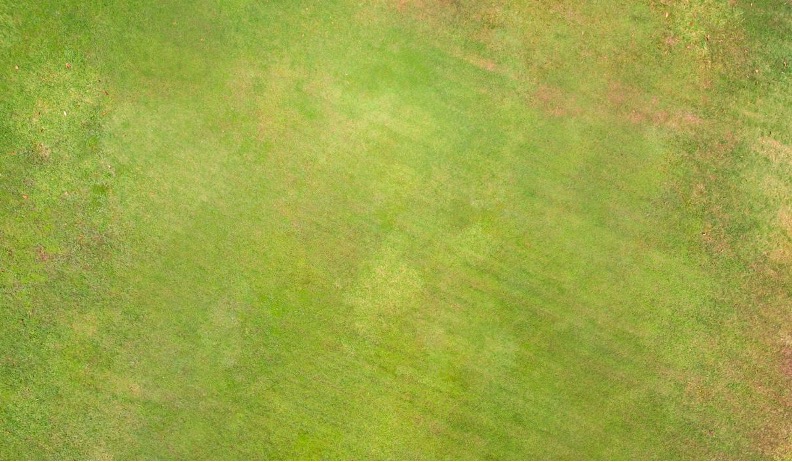
You noticed it on a Saturday. An irregular brown patch out near the sunny part of the yard, edges that do not follow any sprinkler pattern, maybe the size of a bath towel when you first saw it and the size of a car door two weeks later. You watered it and nothing happened. Then one morning there were holes in it, three or four inches across, turf flipped over like someone had been fishing. Step on the patch and it gives, spongy, the way a rug feels over a floor that is not quite there.
There is a sinking feeling that comes with realizing something is eating your lawn from underneath. The good news is that this is one of the more diagnosable problems in turf, and you can settle it yourself in about ten minutes.
What Grub Damage Actually Looks Like
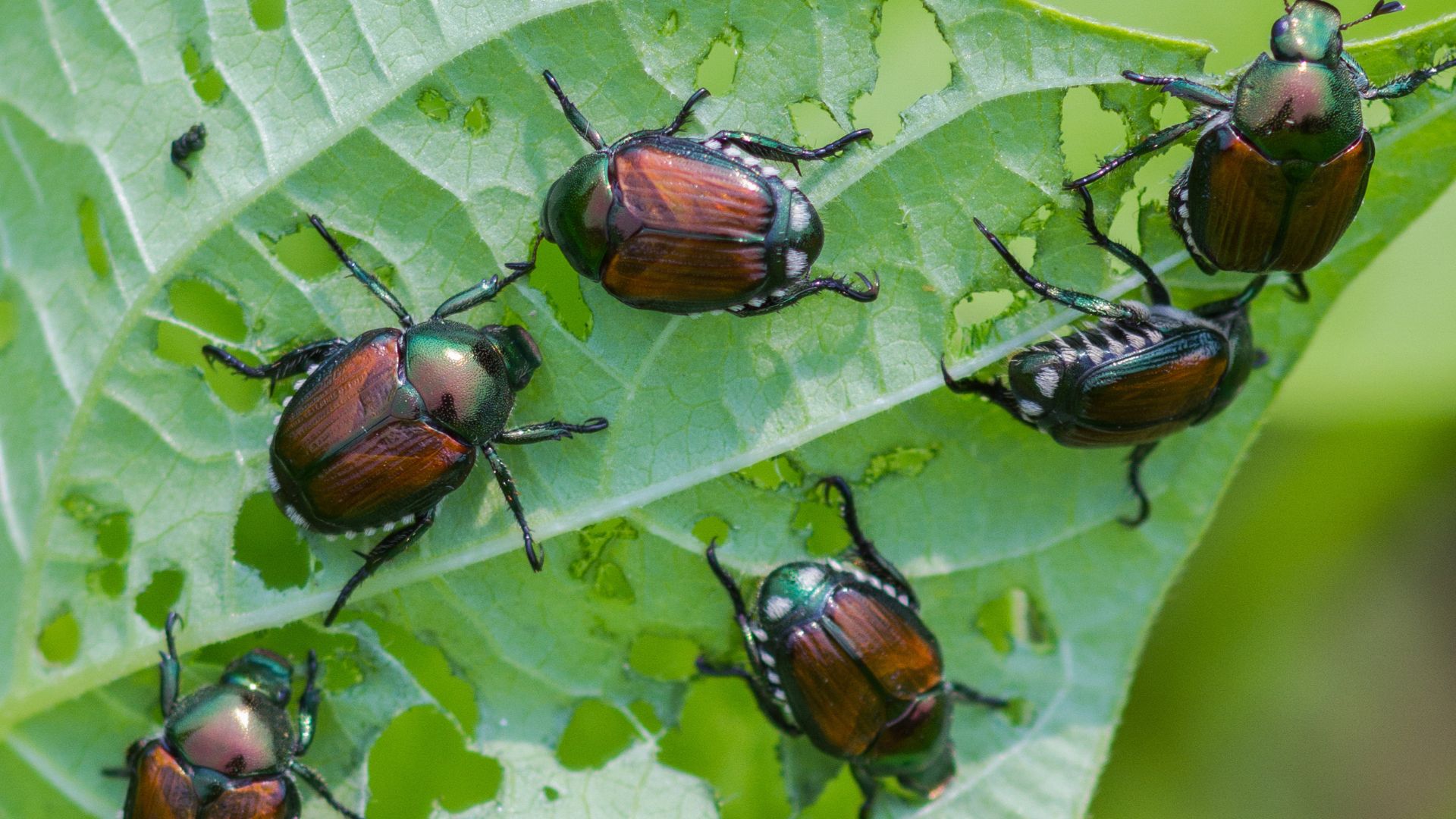
White grubs are the larvae of scarab beetles, Japanese beetles, masked chafers, European chafers and oriental beetles among them. Adults laid eggs in July into moist, sunny turf. Those eggs hatched, and the larvae have been eating grass roots ever since. By late August they are approaching their largest and hungriest stage, which is why damage that was invisible in July becomes obvious now.
Grubs sever roots just below the crown. The grass above stays green briefly, then browns in irregular patches that spread outward and do not respond to watering, because there is nothing left to take the water up. The giveaway is the texture. Healthy turf is anchored. Grub damaged turf feels loose and slightly spongy underfoot, and it is often worst in the sunniest, most irrigated part of the lawn, which is exactly where the beetles preferred to lay.
The Tug Test, and Counting What You Find
Go to the edge of a damaged area, where dying turf meets healthy turf, and pull up on the grass. If it lifts like a piece of carpet with no root resistance, you have your answer. Peel back roughly a square foot and count the white, C shaped larvae in the top few inches of soil.
Most university extension programs use a threshold of about five to ten grubs per square foot for a healthy, well rooted lawn, with lower numbers justifying treatment on lawns that are already stressed or unirrigated. A single grub is not an emergency. Grubs are present in almost every lawn in the country at some level. Do this in three or four spots, because populations are patchy and one hole is not a survey.
Two look alikes are worth knowing. Billbug larvae are also white and grub shaped but have no legs, while true white grubs have three obvious pairs near the head, and billbugs are commonly misdiagnosed as grubs in the arid West and the transition zone. Along the Gulf and in Florida, mole crickets and tropical sod webworm produce damage that reads similar from the driveway and requires completely different treatment.
Why the Skunks and Raccoons Showed Up
Those ragged holes are skunks, raccoons, crows or starlings digging for a protein source they can smell. Homeowners often call about the animals rather than the grubs, and the digging can genuinely do more visible damage than the feeding did.
Two honest points about that. Animals will dig for grub populations below a treatment threshold, so digging alone is not proof you need a treatment, and treating the grubs will not stop the digging immediately, because the animals keep checking a spot that paid off before. Repairing the turf and reducing the population is the fix. Repellents and scare devices tend to disappoint.
Curative and Preventive Are Not the Same Product
This is where a lot of frustration comes from, so we want to be direct about it. Preventive grub control uses long residual active ingredients applied earlier in the season, generally late spring into midsummer, timed to be present in the soil when eggs hatch. They target very small, newly hatched grubs, and when applied in the right window they are highly effective.
Curative products are a different chemistry. They are fast acting and short lived, applied to grubs that already exist, and they are meaningfully more effective on second instar larvae than on the large, tough, late instar grubs typical of late August. Applying one is a treatment, not a guarantee. Expect a real reduction in the population, not eradication.
Two things make or break a curative application. It must be watered in immediately and thoroughly, on the order of a half inch, because the product has to move down to where the grubs are feeding rather than sitting on the thatch. And it has to happen while the grubs are still up in the root zone. As soil temperatures fall, grubs move deeper to overwinter, and a treatment applied in mid or late October is money spent on soil.
Treat Now, or Seed Over It?
Here is the decision as we walk it with homeowners. If your counts are above threshold and the grubs are still actively feeding, treat first and then seed. Seeding into an active population means new seedlings put out their first fragile roots directly into the mouths of the things that caused the problem, and that is a genuinely poor use of seed money.
If your counts come back low, or you find mostly large grubs that have stopped feeding, skip the insecticide and spend the money on renovation. The damage is done for this year, the population will pupate regardless, and core aeration plus quality seed will do far more for the lawn. That is often the cheaper and better answer, and it is the one homeowners are surprised to hear from a lawn care company.
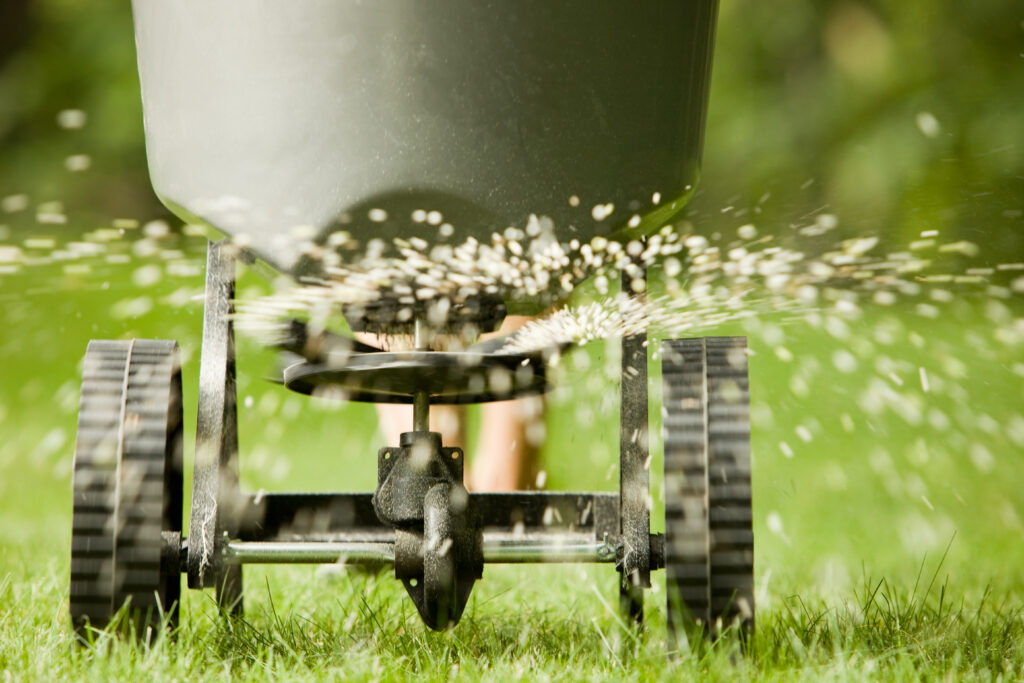
Either way, the dead area needs seed. Grub damaged turf does not knit back together on its own the way drought dormancy does, because the plants are dead rather than sleeping. Rake out the loose material, break up the surface, get seed into firm contact with soil, and water it like a seedbed. On cool-season lawns, late summer into early fall is the best seeding window of the year, so the timing works in your favor.
The longer term answer, and we will say it plainly rather than sell it as a surprise, is that this is a problem better prevented than cured. A lawn with a history of grub damage is likely to see it again, because the same sunny irrigated turf keeps attracting the same egg laying beetles. Preventive timing next season is easier, more reliable and usually no more expensive than reacting in August.
How This Plays Out by Climate Zone
In the cool-season North and across the transition zone, this is peak season for annual white grubs, and late August into September is the classic damage window on bluegrass, fescue and rye. In the warm-season South, bermuda and zoysia tolerate root feeding better because of their aggressive rhizomes and stolons, so the same population often produces less visible damage, though green June beetle larvae cause a distinctive problem by tunneling and pushing loose soil to the surface.
In the arid West, verify before treating, because billbugs and inconsistent irrigation coverage account for a large share of what gets reported as grubs. In tropical Florida and along the Gulf, grubs matter less than mole crickets, chinch bugs and sod webworm, and the identification step is where the money is saved.
What to Do Next
Do the tug test this week, in three or four spots, and write down what you find. That number decides everything else, and it costs you nothing but ten minutes and a hand trowel.
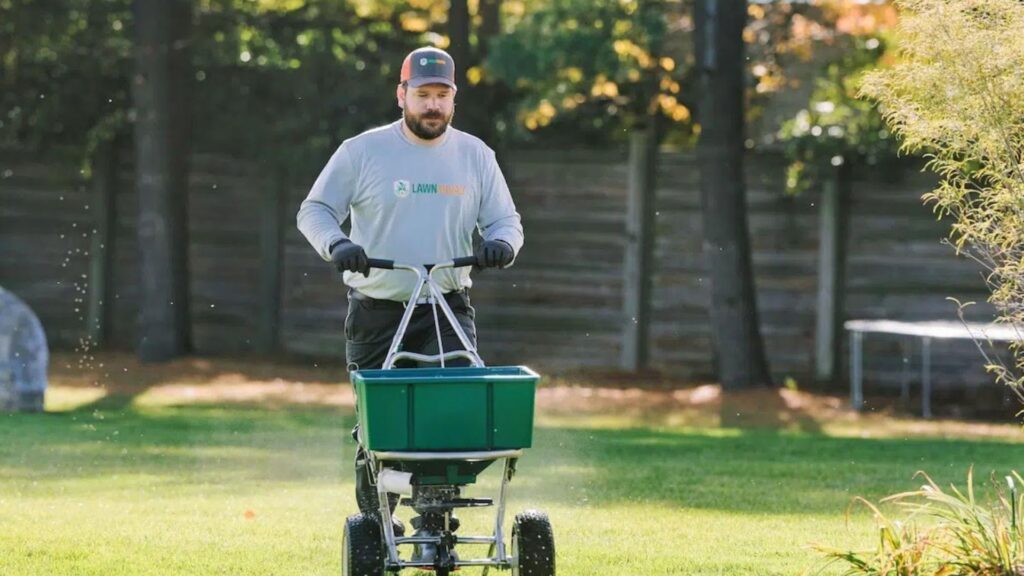
If you want a second opinion, or you would rather have the counting and the decision handled, find your local Lawn Squad at lawnsquad.com or call 833-816-7508 for a free quote. Every Lawn Squad location is independently owned and operated, and each builds its VitaminLawn fertilization and weed control program around the grass type, soil and climate where you actually live, with grub control timed to local beetle activity rather than a national calendar.
A first visit is a walk of the property, a few test cuts at the damage edges, a grass and insect identification, and a straight recommendation that may well be to skip treatment and seed instead. If a curative goes down, expect feeding to stop within days and no further spread, though the brown area stays brown until it is reseeded. At 30 days after seeding, expect visible fill in the damaged areas. At 90 days, expect the patches to be difficult to find, and a plan already on the calendar for preventive timing next summer.