The short answer: Proper lawn irrigation in The Palm Beaches means watering deeply and infrequently — typically two to three times per week — early in the morning, so your grass develops strong, deep roots without creating the soggy conditions that invite disease, weeds, and pest damage.
It sounds simple. But overwatering is one of the most common lawn problems we see across Palm Beach County, and it quietly causes more damage than most homeowners ever realize. Too much water at the wrong time drowns roots, fuels fungal disease, encourages nutsedge and dollarweed to take over, and wastes thousands of gallons every year.
The good news: a few straightforward adjustments to your irrigation habits can dramatically improve the health, appearance, and resilience of your lawn.
Quick overview:
- Timing: Water early in the morning, between 4 and 10 a.m., to reduce evaporation and disease risk
- Frequency: Two to three times per week during the growing season — not daily
- Depth: Apply enough water to reach 4 to 6 inches into the soil, encouraging deep root growth
- Adjustment: Reduce or suspend irrigation during rainy season and after significant rainfall
Keep reading to learn exactly how to dial in your irrigation system for a healthier, more drought-tolerant lawn in The Palm Beaches.which weeds are threatening Palm Beaches lawns right now — and how to get rid of them for good.
Why Irrigation Matters More Than Most Palm Beaches Homeowners Think
Water is the single most controllable factor in your lawn’s health — and the one most often mismanaged.
Your grass needs water to photosynthesize, absorb nutrients, and recover from heat stress. But the way you deliver that water matters just as much as how much you apply. Shallow, frequent watering produces shallow roots. Shallow roots mean your lawn is fragile — stressed by dry spells, susceptible to insect damage, and dependent on constant irrigation just to survive.
Deep, infrequent watering does the opposite. It trains roots to grow downward in search of moisture, building a strong underground system that makes your lawn genuinely drought-tolerant. A well-rooted St. Augustine lawn can handle several days without irrigation without showing stress. A shallow-rooted lawn wilts almost immediately when sprinklers are skipped.
Beyond root development, improper irrigation directly drives some of the most frustrating lawn problems in The Palm Beaches:
- Overwatering creates the wet soil conditions that fuel dollarweed, nutsedge, and fungal diseases like brown patch and gray leaf spot
- Underwatering stresses turf and opens thin, weak areas to weed invasion
- Late-day watering leaves grass blades wet overnight, dramatically increasing fungal disease risk
- Runoff wastes water, carries fertilizer and herbicides into stormwater systems, and can violate local irrigation restrictions
Getting irrigation right is not just about having a green lawn. It is about having a healthy, resilient lawn that requires less intervention overall.
Understanding The Palm Beaches Climate and Its Impact on Irrigation Needs
Palm Beach County has two distinct seasons that should drive two very different irrigation strategies.
Dry Season (November through May)
During the dry season, rainfall is infrequent and turf depends more heavily on supplemental irrigation. This is the period when consistent watering schedules matter most. Grass that goes too long without water during dry season develops drought stress, turns blue-gray, and becomes vulnerable to chinch bug damage — which thrives in hot, dry conditions.
That said, even during dry season, many homeowners over-irrigate. Running your system on a fixed schedule without checking actual soil moisture or rainfall often means watering when your lawn does not need it.
Rainy Season (June through October)
South Florida’s rainy season delivers frequent, heavy afternoon thunderstorms that can provide an inch or more of rainfall in a single event. During this period, many lawns need little to no supplemental irrigation at all — yet most automatic systems keep running on the same schedule year-round.
Running irrigation during rainy season is one of the leading causes of fungal disease outbreaks in The Palm Beaches. When grass stays wet from both rain and sprinklers, fungal spores have ideal conditions to spread. Adjusting or suspending your system during rainy season is one of the highest-impact changes you can make.
Palm Beach County irrigation restrictions also limit when and how often you may run your system. Always verify current South Florida Water Management District (SFWMD) and local municipal guidelines, as restrictions can vary by address and change seasonally.
How Much Water Does Your Palm Beaches Lawn Actually Need?
The general rule for established turf in South Florida is three-quarters to one inch of water per irrigation event, applied two to three times per week during the growing season.
But that number means very little without knowing how much your sprinkler system actually delivers. Many homeowners assume their system is applying the right amount when it may be delivering far more or far less than intended.
The Tuna Can Test
Here is a simple way to measure your system’s output:
- Place four to six empty tuna cans (or similarly sized containers) in different zones of your lawn
- Run each irrigation zone for its normal cycle time
- Measure the depth of water collected in each can
- Average the results
If your cans collect significantly more or less than three-quarters of an inch, adjust your run times accordingly. Uneven collection between cans also reveals coverage gaps or head problems that need attention.
Checking Soil Moisture Before You Water
The simplest irrigation tool you own is a screwdriver. Push a 6-inch screwdriver into your lawn. If it slides in easily, the soil has adequate moisture. If it meets significant resistance, the soil is dry and irrigation is needed.
You can also purchase an inexpensive soil moisture meter for a more precise reading. Either method helps you water based on actual lawn conditions rather than a fixed calendar schedule.
The Best Time of Day to Water Your Lawn
Water between 4 a.m. and 10 a.m. This is not a suggestion — it is one of the most important irrigation decisions you make.
Morning watering gives grass blades time to dry as temperatures rise through the day. By afternoon, leaf surfaces are dry, which dramatically reduces the risk of fungal disease. Morning irrigation also loses less water to evaporation than midday watering, since temperatures and wind are typically lower.
Avoid watering in the evening or at night. Grass that stays wet overnight is highly susceptible to brown patch, gray leaf spot, and other fungal infections that thrive in warm, moist conditions. A single season of late-night irrigation can introduce fungal problems that take months and multiple treatments to resolve.
Avoid midday watering as well. High temperatures and wind cause significant evaporation, meaning much of the water you apply never reaches the root zone. Midday irrigation is inefficient and can stress grass in extreme heat.
Recognizing the Signs of Watering Problems
Your lawn tells you when something is wrong. Learning to read those signals helps you correct problems before they become serious.
Signs Your Lawn Is Underwatered
- Blue-gray color: Grass blades shift from green to a blue-gray hue when drought-stressed
- Footprints that linger: Healthy turf springs back quickly after being stepped on; stressed turf holds footprints for several minutes
- Folded blades: Many grass varieties fold their blades lengthwise to conserve moisture when water-stressed
- Slow growth and thinning: Drought stress slows growth and reduces density over time
When you see these signs, increase irrigation frequency — but increase depth, not just run time. The goal is to wet the soil to 4 to 6 inches, not just the surface.
Signs Your Lawn Is Overwatered
- Dollarweed and nutsedge outbreaks: Both weeds thrive in consistently wet soil and are a reliable indicator of too much irrigation
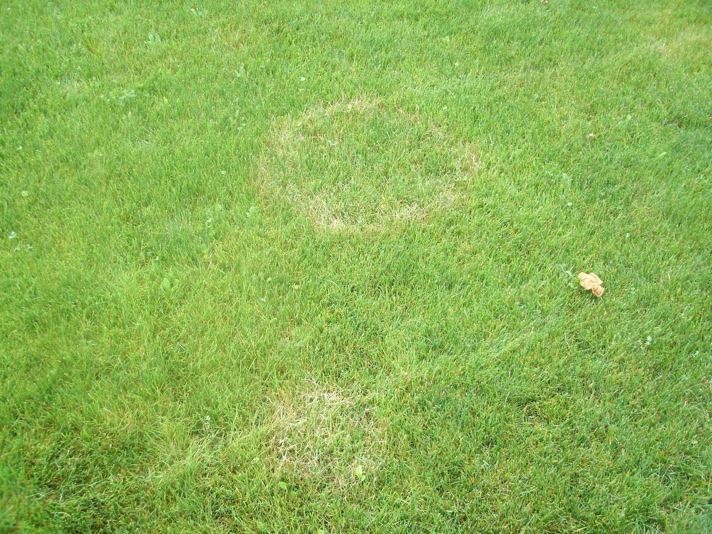
- Fungal disease patches: Circular brown rings, gray leaf spots, or slimy patches in the lawn suggest fungal activity driven by excess moisture
- Soft, spongy feel underfoot: Saturated soil compresses easily and can suffocate grass roots
- Persistent puddles or runoff: Water pooling or running off your lawn indicates soil is already saturated and cannot absorb more
- Thatch buildup: Overwatered lawns tend to develop excessive thatch, which harbors insects and disease
If you recognize several of these signs, reduce irrigation frequency and allow the soil to dry between watering cycles.
Irrigation System Maintenance: What to Check and When
An irrigation system that runs on schedule is only valuable if it is actually working correctly. Broken heads, clogged nozzles, and misaligned rotors waste water, create dry spots, and drive the uneven coverage that leads to thin, weedy areas.
Monthly Checks
Run each zone manually and walk the entire zone while it is operating. Look for:
- Heads not popping up — usually caused by debris or a broken riser
- Heads spraying sideways or at the wrong angle — often knocked out of alignment by mowing equipment
- Nozzles with reduced or uneven output — typically indicates clogging
- Heads watering pavement, driveways, or structures — pure waste that should be corrected immediately
Seasonal Tune-Up
At least once per year — ideally before dry season begins — have your irrigation system professionally inspected. A technician can identify pressure problems, check valve function, test rain and soil sensors, and adjust coverage patterns that may have shifted over time.
Rain Sensors and Smart Controllers
If your irrigation system does not have a functioning rain sensor, install one. Florida law actually requires rain sensors on all automatic irrigation systems. A properly functioning rain sensor suspends irrigation after significant rainfall, preventing the overwatering that drives disease and weed problems during rainy season.
Smart irrigation controllers take this a step further by connecting to local weather data and adjusting run schedules automatically based on rainfall, temperature, and evapotranspiration rates. For homeowners who want the most efficient possible system, a smart controller is one of the best investments you can make.
Irrigation Tips by Grass Type
Different turf varieties have slightly different water needs. Knowing your grass type helps you fine-tune your approach.
St. Augustine grass is the most common turf in The Palm Beaches. It has moderate water needs and responds well to deep, infrequent irrigation. St. Augustine is relatively drought-tolerant once established but shows stress quickly in sandy soils with poor water retention. It is highly susceptible to fungal disease when overwatered or watered at night.
Bermuda grass is more drought-tolerant than St. Augustine and can go longer between irrigation cycles once its roots are well established. It thrives in full sun and handles heat stress better than most varieties. Bermuda does poorly in shaded areas and requires less water in those spots to avoid disease.
Zoysia grass has excellent drought tolerance and requires less frequent irrigation than St. Augustine. It is slower to show stress and slower to recover, so the key is maintaining consistent deep watering rather than reactive irrigation when you notice stress symptoms.
How Irrigation Connects to Fertilization and Weed Control
Irrigation does not operate in isolation. It directly affects how well your fertilization and weed control programs perform.
Fertilization: Nutrients need water to move through the soil and reach grass roots. Applying fertilizer to dry soil without irrigation leads to poor uptake and potential burn. However, heavy irrigation immediately after fertilization can push nutrients below the root zone or cause runoff. A light quarter-inch of irrigation after fertilizer application activates the product without washing it away.
Pre-emergent herbicides: These products require water to activate and form an effective barrier in the soil. Apply a quarter inch of irrigation within 48 hours of a pre-emergent application if rain is not expected. Then avoid heavy irrigation or soil disturbance for at least two weeks so the barrier remains intact.
Post-emergent herbicides: These products need dry conditions to work. Avoid running irrigation for at least four hours after a foliar herbicide application — 24 hours is ideal. Watering too soon washes the product off leaf surfaces before it can absorb.
Weed pressure: As discussed earlier, overwatering directly fuels dollarweed and nutsedge outbreaks. Correcting irrigation habits is often as important as herbicide treatment when these weeds are a persistent problem.
Common Irrigation Mistakes Palm Beaches Homeowners Make
Running the Same Schedule Year-Round
Your lawn’s water needs in January are completely different from its needs in July. A fixed 12-month schedule either overwatering during rainy season or underwatering during dry season — often both at different times of year. Adjust your controller seasonally and suspend the system during periods of consistent rainfall.
Watering Every Day
Daily light watering produces shallow roots and wet surface conditions that invite disease and weeds. Switch to deeper, less frequent cycles and your lawn will be healthier within weeks.
Ignoring Broken or Misaligned Heads
A single broken head can waste hundreds of gallons per week while leaving a dry spot in your lawn. Regular monthly checks take less than 10 minutes and catch problems before they cause lasting damage.
Watering During or After Rain
If it rained today, your lawn probably does not need irrigation. A functioning rain sensor handles this automatically, but manually skipping irrigation after significant rainfall is one of the simplest ways to improve lawn health during rainy season.
Assuming More Water Fixes Stress
Brown or thin grass is not always a sign of underwatering. Fungal disease, chinch bugs, and nutrient deficiency all cause symptoms that look like drought stress. Watering a lawn with chinch bug damage or brown patch will make both problems significantly worse. Correctly identify the problem before reaching for more irrigation.
Professional vs. DIY Irrigation Management
DIY irrigation management works well for homeowners who are willing to monitor their system regularly, perform basic maintenance, and adjust schedules as conditions change. The tools required are inexpensive and the concepts are straightforward once you understand the fundamentals.
Best for: Hands-on homeowners with time to inspect their system monthly, adjust seasonal schedules, and learn to read their lawn’s stress signals accurately.
Professional irrigation service brings expert system evaluation, precision adjustments, and seasonal programming tailored to your specific property — without requiring you to become an irrigation specialist yourself.
Best for: Homeowners with complex systems, properties with persistent dry spots or disease problems tied to irrigation, and anyone who wants reliable performance without the ongoing management burden.
Your Palm Beaches Irrigation Quick-Reference Guide
| Factor | Recommendation |
|---|---|
| Watering frequency | 2–3 times per week (dry season); reduce or suspend during rainy season |
| Application depth | ¾ to 1 inch per session |
| Best time to water | 4 a.m. – 10 a.m. |
| Avoid watering | Evening, nighttime, or midday |
| Soil moisture check | Screwdriver test before each cycle |
| Rain sensor | Required by Florida law; check monthly |
| System inspection | Monthly visual check + annual professional tune-up |
| Rainy season adjustment | Reduce frequency significantly or suspend system |
The Bottom Line
Watering your lawn correctly in The Palm Beaches is less about applying more water and more about applying the right amount at the right time. Deep, infrequent morning irrigation — adjusted for rainfall and seasonal conditions — builds the strong, resilient turf that resists drought, disease, weeds, and pests far better than any other single practice.
Key principles to remember:
- Water deeply two to three times per week, not lightly every day
- Always water in the early morning to allow grass to dry before nightfall
- Reduce or suspend irrigation during rainy season
- Check your system monthly for broken or misaligned heads
- Use a rain sensor and consider a smart controller for maximum efficiency
- Correct irrigation habits when dollarweed or nutsedge are persistent problems
When your irrigation program is dialed in correctly, everything else you do for your lawn — fertilization, weed control, pest management — works better and lasts longer.
Let Lawn Squad Help You Get Irrigation Right
Every property in The Palm Beaches has unique irrigation needs based on its soil type, grass variety, sun exposure, and existing system design. What works perfectly for one lawn may be creating problems for another.
Lawn Squad technicians evaluate your lawn’s actual conditions and can identify when irrigation habits are contributing to weed, disease, or pest issues — giving you targeted recommendations rather than generic advice.
Lawn Squad programs include:
- Lawn health evaluations that identify irrigation-related problems
- Fertilization timed and applied to work with your watering schedule
- Weed control programs that account for moisture-driven weed pressure
- Fungal disease treatments when overwatering has created infection
- Recommendations for irrigation adjustments that improve every other aspect of your lawn care
Stop guessing at your sprinkler schedule and start growing a lawn that genuinely thrives.
Contact Lawn Squad today at 561-621-9217 or visit https://lawnsquad.com/contact-us/ to get your free quote and build a healthier Palm Beaches lawn from the ground up.