The short answer: Lawn disease and fungal infections in New Haven and Fairfield Counties are best managed through early identification, targeted fungicide treatments applied at the right time, and cultural practices — proper mowing, watering, and fertilization — that reduce the conditions that allow disease to take hold in the first place.
Connecticut homeowners tend to blame drought, pests, or poor soil when their lawn develops brown patches, thinning areas, or unusual discoloration. More often than not, fungal disease is the actual culprit — and treating the wrong problem makes things significantly worse. Applying more water to a lawn suffering from brown patch, for example, accelerates the infection rather than helping recovery.
The good news is that most common lawn diseases in New Haven and Fairfield Counties are highly treatable when caught early. And many can be prevented entirely with the right cultural practices.
Quick overview:
- Identification first: Different diseases look similar on the surface but require different treatments — correct diagnosis is essential
- Cultural controls: Mowing height, irrigation timing, and fertilization practices either invite disease or discourage it
- Fungicide treatments: Targeted applications at the right time stop active infections and prevent recurrence
- Timing matters: Many diseases are seasonal and predictable — knowing when to expect them lets you get ahead of outbreaks
Keep reading to learn which lawn diseases are most common in Connecticut and exactly what to do when you find them.
Why Lawn Disease Is a Significant Problem in New Haven and Fairfield Counties
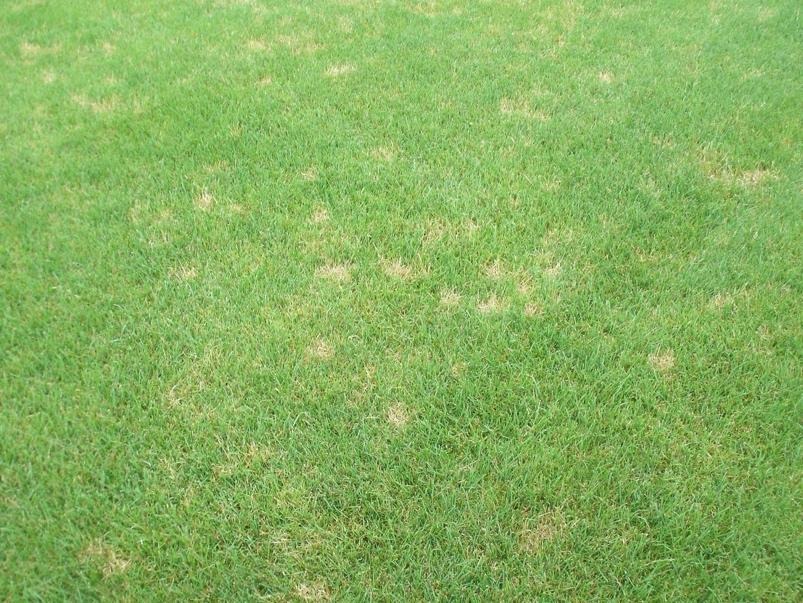
Connecticut’s climate creates conditions that favor fungal disease more than many homeowners realize. Warm, humid summers with frequent afternoon thunderstorms provide ideal moisture and temperature conditions for fungal spores to germinate and spread. Dense, lush cool-season turf — the kind everyone wants — can actually trap moisture at the soil surface and in the canopy, creating a microclimate where disease thrives.
The coastal areas of Fairfield County experience particularly high humidity levels that accelerate fungal activity during summer months. Inland areas of New Haven County face their own challenges, with heavier clay soils that retain moisture longer after rain events and create prolonged wet conditions at the root zone.
Compounding these natural factors are common lawn care habits that inadvertently promote disease. Evening irrigation, excessive nitrogen fertilization in summer, mowing wet grass, and scalping turf too short all create conditions that fungal pathogens exploit. In many cases, changing a few simple habits eliminates recurring disease problems without any chemical treatment at all.
That said, once a fungal infection is established, cultural changes alone rarely resolve it. Understanding when to reach for a fungicide — and which one to use — is just as important as understanding prevention.
The Most Common Lawn Diseases in New Haven and Fairfield Counties
Brown Patch
Brown patch is the most widespread and destructive lawn disease in Connecticut during summer. It is caused by the fungal pathogen Rhizoctonia solani and affects all common cool-season grasses, with tall fescue and perennial ryegrass being particularly susceptible.
Infections develop rapidly when nighttime temperatures stay above 70°F and humidity is high — conditions that occur regularly across New Haven and Fairfield Counties from late June through August. A lawn that looks healthy on Monday can show significant brown patch damage by the weekend under the right conditions.
What it looks like: Brown patch produces roughly circular patches of brown, dead-looking grass ranging from a few inches to several feet in diameter. The edges of active patches often show a darker, water-soaked ring — called a “smoke ring” — in the early morning before dew dries. Individual grass blades within the patch show tan lesions with darker brown borders. The center of older patches sometimes recovers while the outer ring continues to expand, creating a donut-like appearance.
What makes it worse: Evening or nighttime irrigation is the single biggest driver of brown patch outbreaks. Grass that stays wet overnight in warm temperatures creates ideal conditions for rapid fungal spread. Excessive nitrogen fertilization in summer pushes lush, soft growth that is highly susceptible to infection.
Treatment: Preventive fungicide applications in early summer — before nighttime temperatures consistently exceed 70°F — provide the best protection for lawns with a history of brown patch. Curative treatments applied at the first sign of infection stop active spread but cannot immediately restore already-damaged turf. Recovery occurs as new growth fills in over several weeks.
Dollar Spot
Dollar spot is caused by Clarireedia jacksonii and is one of the most common diseases in Connecticut lawns from late spring through early fall. It is particularly prevalent in lawns that are underfertilized or experiencing drought stress.
What it looks like: Dollar spot produces small, roughly circular patches of straw-colored dead grass about the size of a silver dollar — hence the name. Individual grass blades show distinctive tan lesions with reddish-brown borders that extend across the full width of the blade. In morning dew, you may see white, cobweb-like mycelium stretching across affected areas. Multiple dollar spot patches often merge over time to create larger irregular areas of damage.
What makes it worse: Nitrogen deficiency is the primary driver of dollar spot susceptibility. Lawns that are not receiving adequate fertilization are significantly more vulnerable than well-fed turf. Drought stress combined with low fertility creates near-ideal conditions for dollar spot outbreaks. Dew that sits on grass blades for extended periods also promotes infection.
Treatment: Improving fertility through timely fertilization often reduces dollar spot pressure significantly without any fungicide treatment. When infections are active, fungicide applications provide effective control. Improving morning airflow by trimming surrounding shrubs and trees that shade the lawn and trap humidity also helps reduce recurrence.
Powdery Mildew
Powdery mildew is immediately recognizable by the white, powdery coating it produces on grass blades. It is caused by Blumeria graminis and is most common in shaded areas of lawns in New Haven and Fairfield Counties.
What it looks like: Affected grass blades appear coated with white or grayish powder. The coating can be wiped off with a finger, distinguishing it from other discoloration. Heavily affected areas may yellow and thin over time as the fungus interferes with photosynthesis.
What makes it worse: Shade is the primary risk factor. Lawns under dense tree canopy or along north-facing walls where sunlight is limited are most susceptible. Low air circulation compounds the problem. Powdery mildew is most active during mild, humid weather in late spring and early fall.
Treatment: In heavily shaded areas, improving light penetration through tree pruning is the most effective long-term solution. Fungicide applications provide temporary control but recurrence is likely without addressing the underlying shade issue. In some persistently shaded areas, transitioning to a shade-tolerant ground cover rather than maintaining turf grass is worth considering.
Red Thread
Red thread is caused by Laetisaria fuciformis and is one of the most visually distinctive lawn diseases in Connecticut. It is most active during cool, moist weather in spring and fall.
What it looks like: Red thread produces irregular patches of pink to tan dead grass, typically 4 to 8 inches in diameter. The most distinctive feature — and the source of the name — is the bright red or pink thread-like fungal strands that extend from the tips of infected grass blades. These red threads are visible to the naked eye and make red thread unmistakable compared to other diseases. White, cottony mycelium may also be present near the soil surface.
What makes it worse: Like dollar spot, red thread is strongly associated with low nitrogen fertility. It thrives during cool (60 to 75°F), wet weather with extended periods of leaf wetness. Connecticut springs — often wet and mild for extended stretches — are prime red thread conditions.
Treatment: Improving fertility through a well-timed nitrogen application often reduces red thread significantly without fungicide. This disease is frequently a signal that your lawn is hungry. When infections are severe, fungicide treatment accelerates recovery. Red thread rarely kills turf outright but leaves a lawn looking ragged and patchy for several weeks if untreated.
Necrotic Ring Spot
Necrotic ring spot is caused by Ophiosphaerella korrae and primarily affects Kentucky bluegrass, making it a significant concern in many New Haven and Fairfield County lawns where bluegrass is a component of the turf mix.
What it looks like: Necrotic ring spot produces rings or arcs of dead or dying grass, typically 6 inches to 3 feet in diameter, with green grass often surviving in the center — creating a frog-eye pattern. The outer ring shows straw-colored, dead grass while the center patch may remain green. Affected grass pulls up easily due to root and crown rot.
What makes it worse: Necrotic ring spot develops in the root zone and is most damaging during summer heat stress when Kentucky bluegrass is already under pressure. It is associated with compacted soils and excess thatch. Symptoms often appear most dramatically in summer even though the fungus was active earlier in the season.
Treatment: Core aeration to reduce compaction and thatch management are important cultural components of long-term control. Fungicide applications are most effective as preventive treatments in spring before summer stress sets in. Recovery is slow — damaged areas may need overseeding in fall once the infection is controlled.
Snow Mold
Snow mold is unique to northern climates and is one of the most common late-winter and early-spring lawn problems across Connecticut. It develops under snow cover and becomes visible when snow melts in late February and March.
Two types occur in New Haven and Fairfield Counties:
Gray snow mold (Typhula spp.) produces circular patches of matted, grayish-white grass up to 2 feet in diameter. It requires snow cover to develop and typically does not penetrate below the crown of the grass plant, meaning recovery is usually good once temperatures warm.
Pink snow mold (Microdochium nivale) is more aggressive and more damaging. It produces salmon-pink to white patches and can develop without snow cover during cool, wet fall and winter weather. Pink snow mold can kill grass crowns and roots, leading to slower and less complete recovery than gray snow mold.
What makes it worse: Lush, succulent grass growth heading into winter — often the result of excessive late-fall nitrogen fertilization — is highly susceptible to snow mold. Tall, matted grass that was not cut short before the first snow also creates ideal conditions under the snow pack.
Treatment: The most effective snow mold management is preventive. Mow your lawn at a slightly shorter height (around 2 to 2.5 inches) for the final one or two cuts of the season to reduce matting under snow. Avoid heavy nitrogen applications after mid-October. Fungicide applications in late fall before the ground freezes provide additional protection for lawns with a history of severe snow mold. Once snow mold is visible in spring, light raking to break up matted areas and improve airflow promotes recovery. Most gray snow mold damage recovers on its own within a few weeks of spring green-up.
How to Tell Lawn Disease Apart From Other Problems
Fungal disease is frequently misdiagnosed as drought stress, pest damage, or fertilizer burn. Treating the wrong problem delays recovery and often makes things worse.
Disease vs. Drought Stress
- Drought stress causes uniform bluish-gray discoloration across the lawn, especially in full sun. Disease creates distinct patches with defined edges.
- Drought-stressed grass recovers within a day or two of irrigation. Disease patches do not improve with watering — and often worsen.
- Drought stress shows folded grass blades. Disease produces lesions, discoloration, or mycelium on individual blades.
Disease vs. Pest Damage
- Pest damage (especially grubs) causes turf to pull up easily from the soil with no resistance. Disease-damaged turf typically stays rooted.
- Grub damage is spongy underfoot due to root destruction. Disease patches feel normal underfoot initially.
- Look for visible insects in and around damaged areas to confirm pest activity before treating for pests.
Disease vs. Fertilizer Burn
- Fertilizer burn typically creates streaks or patterns that correspond to application overlap or spills. Disease creates organic, irregular patches.
- Fertilizer burn appears within days of an application. Disease develops more gradually over one to two weeks.
- Fertilizer burn affects the entire blade uniformly. Disease produces characteristic lesions, rings, or border patterns on individual blades.
Cultural Practices That Prevent Lawn Disease
The most effective — and least expensive — lawn disease management is prevention through proper cultural practices.
Water in the Morning
This single change prevents more fungal disease than any other cultural practice. Watering between 4 and 10 a.m. allows grass blades to dry as temperatures rise through the day. Grass that stays wet overnight in warm temperatures is prime territory for brown patch, dollar spot, and other diseases to spread rapidly.
Avoid Overwatering
Saturated soil and constantly wet thatch create ideal fungal conditions. Water deeply two to three times per week rather than lightly every day. Allow the soil to partially dry between irrigation cycles.
Mow at the Correct Height and Frequency
Tall, dense turf has better airflow than grass that is allowed to grow excessively long between mowings. Mow at recommended heights for your grass type and mow often enough that you are never removing more than one-third of the blade at once. Avoid mowing wet grass — this spreads fungal spores across the lawn.
Time Nitrogen Fertilization Carefully
Excessive nitrogen in summer pushes lush, succulent growth that is highly susceptible to brown patch and other summer diseases. Follow a Connecticut-appropriate fertilization schedule that emphasizes fall feeding over summer feeding for cool-season grasses.
Manage Thatch
A thatch layer exceeding half an inch traps moisture, harbors fungal spores, and restricts airflow at the soil surface. Annual core aeration and periodic dethatching keep thatch at healthy levels and dramatically reduce conditions that favor disease.
Improve Air Circulation
Lawns surrounded by dense shrubs, fences, or structures that restrict airflow dry more slowly and experience more disease pressure. Pruning surrounding vegetation to improve air movement across the turf surface makes a meaningful difference in high-humidity areas of Fairfield County in particular.
Fungicide Applications: What to Know
When cultural practices are not enough to prevent or control an active infection, fungicide applications provide effective treatment. Understanding how fungicides work helps you use them correctly.
Preventive vs. Curative Fungicides
Preventive fungicides are applied before disease symptoms appear, creating a protective barrier on plant tissue. They are most effective when applied ahead of the conditions that favor a specific disease — for example, applying a brown patch fungicide in early June before nighttime temperatures consistently exceed 70°F.
Curative fungicides are applied after symptoms are already visible. They stop active fungal spread but cannot immediately restore already-damaged tissue. Recovery depends on new growth filling in over the following weeks.
For lawns with a history of specific diseases, preventive applications nearly always produce better results than reactive curative treatments.
Fungicide Resistance
Rotating between fungicide products with different modes of action reduces the risk of fungal resistance developing over time. Using the same product repeatedly creates selection pressure that can result in resistant fungal populations that no longer respond to treatment. A professional lawn care program rotates products strategically to maintain long-term effectiveness.
Realistic Expectations
Fungicides stop disease spread and protect healthy tissue — they do not instantly green up dead grass. Damaged areas recover as new growth emerges, which may take several weeks depending on the extent of damage and time of season. Fall is typically when cool-season lawns recover most visibly from summer disease damage, as growing conditions improve and overseeding fills in thin areas.
Your New Haven and Fairfield County Lawn Disease Calendar
| Season | Primary Disease Threats | Key Actions |
|---|---|---|
| Late winter / early spring | Snow mold | Rake matted areas; allow recovery with warming temps |
| Spring (Apr – Jun) | Red thread, dollar spot, powdery mildew | Fertilize adequately; apply fungicide if needed |
| Early summer (Jun – Jul) | Brown patch, dollar spot | Switch to morning irrigation; consider preventive fungicide |
| Peak summer (Jul – Aug) | Brown patch, necrotic ring spot | Monitor closely; curative fungicide for active infections |
| Fall (Sep – Oct) | Dollar spot, pink snow mold prep | Final fertilization; final mow at slightly shorter height |
| Late fall (Oct – Nov) | Snow mold prevention | Preventive fungicide for history of severe snow mold |
Common Lawn Disease Mistakes Connecticut Homeowners Make
Watering in the Evening
This is the single most common driver of preventable brown patch outbreaks. Switching to morning irrigation is free, immediate, and dramatically reduces disease pressure.
Applying More Water When Disease Looks Like Drought Stress
Brown patch and drought stress look nearly identical at a glance. Watering a lawn with brown patch accelerates the infection. Always investigate before irrigating — look for the smoke ring border, blade lesions, or mycelium that distinguish disease from drought.
Over-Fertilizing With Nitrogen in Summer
Heavy summer nitrogen applications push lush growth that is highly vulnerable to brown patch. Follow a cool-season fertilization schedule that emphasizes fall feeding.
Ignoring Snow Mold Until Spring
By the time snow mold is visible, the damage is done. Preventive late-fall mowing and fungicide applications for high-risk lawns prevent the problem rather than reacting to it.
Giving Up on Diseased Areas Without Overseeding
Disease-damaged areas do not always fully recover on their own — especially after necrotic ring spot or severe brown patch. Fall overseeding of thin or bare patches is essential to restoring density and preventing those areas from becoming weed magnets the following spring.
Professional vs. DIY Disease Management
DIY disease management is practical for homeowners who can correctly identify disease symptoms, understand seasonal timing, and are comfortable selecting and applying fungicide products.
Best for: Attentive homeowners willing to monitor their lawn closely through the growing season, learn disease identification, and adjust cultural practices based on conditions.
Professional lawn disease management brings expert diagnosis, commercial-grade fungicide products, and preventive treatment schedules calibrated to local conditions in New Haven and Fairfield Counties.
Best for: Lawns with recurring disease problems that have not responded fully to DIY efforts, homeowners who have struggled to correctly identify disease versus other damage types, and anyone who wants reliable protection without the ongoing monitoring burden.
The Bottom Line
Lawn disease in New Haven and Fairfield Counties is predictable, seasonal, and — with the right approach — largely preventable. Connecticut’s warm, humid summers and cool, wet springs create ideal conditions for fungal activity, but most common diseases respond well to a combination of smart cultural practices and timely treatment.
Key principles to carry with you:
- Always water in the morning — never in the evening
- Correct diagnosis before treatment; disease, drought, and pests all look similar
- Preventive fungicide applications outperform reactive curative treatments for lawns with disease history
- Adequate fall fertilization reduces dollar spot and red thread pressure dramatically
- Snow mold prevention starts in fall — the final mow height and late-season fertilization timing both matter
- Overseed disease-damaged areas every fall to restore density and crowd out weeds
When cultural practices and timely treatments work together, a healthy, disease-resistant lawn in New Haven and Fairfield Counties is well within reach every season.
Let Lawn Squad Keep Your Connecticut Lawn Healthy
Every lawn in New Haven and Fairfield Counties has its own disease history, soil conditions, and risk factors. A program built around your lawn’s specific vulnerabilities — rather than a one-size-fits-all approach — makes the difference between recurring outbreaks and lasting results.
Lawn Squad technicians identify disease symptoms early, apply targeted fungicide treatments at the right time, and combine disease management with fertilization and cultural recommendations that reduce risk from the ground up.
Lawn Squad programs include:
- Seasonal disease monitoring built into every service visit
- Preventive and curative fungicide applications timed to Connecticut’s disease calendar
- Fertilization schedules designed to build disease-resistant turf — not create vulnerable lush growth
- Snow mold prevention for lawns with a history of late-winter damage
- Unlimited service calls when disease symptoms appear between scheduled visits
Stop watching the same patches come back every summer. Get ahead of lawn disease before it gets ahead of you.
Contact Lawn Squad today at 203-759-8991 or visit https://lawnsquad.com/contact-us/ to get your free quote and build a healthier, more resilient lawn in New Haven or Fairfield County.