The short answer: Protecting your lawn from pests in The Palm Beaches requires knowing which insects are active, catching damage early, and applying targeted treatments at the right time — before a small problem becomes a large, expensive repair.
Palm Beach County’s warm, humid climate is ideal for grass. Unfortunately, it is equally ideal for the insects that feed on it. Unlike cooler regions where freezing temperatures knock pest populations back each winter, South Florida lawns face year-round pressure from chinch bugs, grubs, armyworms, and more. By the time visible damage appears, an infestation may already be well established underground or spreading fast across the surface.
The homeowners who maintain the healthiest lawns in The Palm Beaches are not the ones who react to pest damage — they are the ones who prevent it through consistent monitoring and timely treatment.
Quick overview:
- Know your pests: Different insects cause different damage patterns and require different treatments
- Catch it early: Most pest damage looks like drought stress or disease until it is severe — knowing the difference saves your lawn
- Treat at the right time: Pest control effectiveness depends heavily on targeting insects at the right life stage
- Healthy turf helps: A thick, well-maintained lawn recovers faster and is less attractive to many common pests
Keep reading to learn exactly which pests threaten Palm Beaches lawns and how to stop them before they take over.
Why Lawn Pest Pressure Is a Year-Round Reality in The Palm Beaches
Most homeowners think of pest problems as a summer issue. In The Palm Beaches, that mindset leaves your lawn unprotected for a significant portion of the year.
Chinch bugs remain active through mild winters. White grubs — the larvae of various beetles — feed on roots from late spring through fall and overwinter in the soil. Armyworms can devastate a lawn in a matter of days during any warm month. Mole crickets tunnel through soil and sever grass roots throughout the growing season.
The absence of hard freezes means pest populations never fully collapse. Each generation builds on the last, and a lawn that escapes serious damage one season may face a much larger population the next if no preventive measures are in place.
South Florida’s sandy soils also play a role. Sandy soil drains quickly, stresses roots in dry conditions, and provides less physical resistance to burrowing insects like mole crickets and grubs than heavier clay soils further north. Stressed turf in sandy soil is significantly more vulnerable to pest damage than healthy, well-irrigated grass.
The Most Common Lawn Pests in The Palm Beaches
Chinch Bugs
Chinch bugs are the single most destructive lawn pest in South Florida, and St. Augustine grass — the most common turf in The Palm Beaches — is their preferred target.
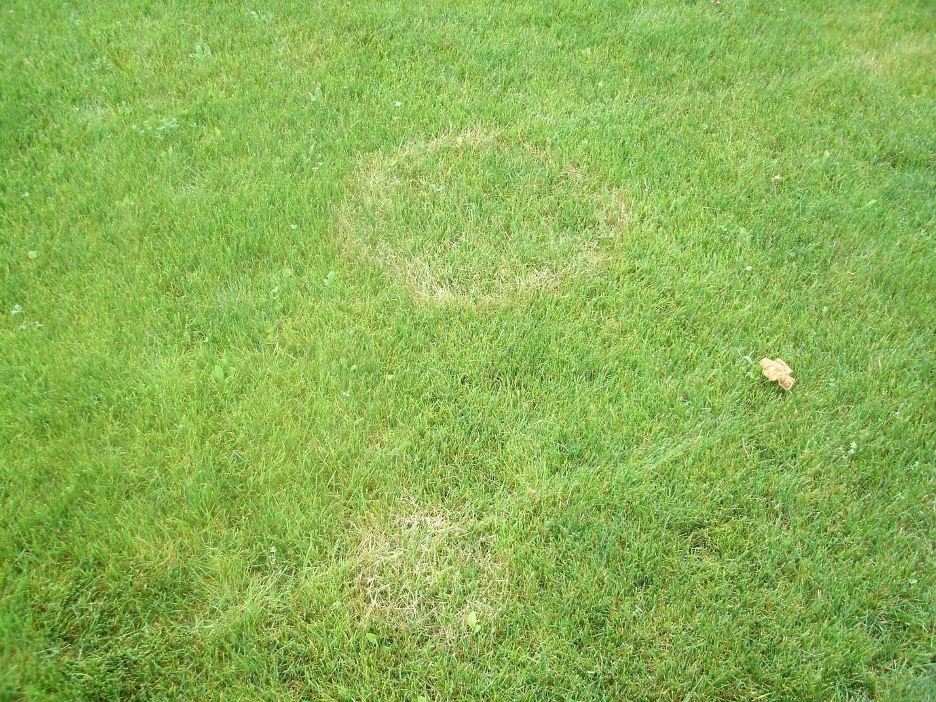
These tiny insects (adults are roughly one-fifth of an inch long) pierce grass blades and inject a toxin that prevents water uptake while they feed. The result looks almost identical to drought stress: patches of yellowing, then brown, dead grass that spreads outward from sunny areas near driveways, sidewalks, and lawn edges.
The critical distinction is that drought-stressed grass recovers when you water it. Chinch bug damage does not. If irrigation does not improve brown patches within a few days, inspect for chinch bugs immediately.
How to check for chinch bugs: Part the grass at the edge of a damaged area and look at the soil surface. Chinch bugs are visible to the naked eye — look for small black insects with white wing patches. You can also use the flotation method: remove both ends of a coffee can, press it several inches into the soil at the edge of a damaged area, fill it with water, and watch for chinch bugs floating to the surface within a few minutes.
Chinch bugs thrive in hot, dry conditions and in lawns with excessive thatch buildup. Keeping thatch under control and maintaining consistent irrigation reduces chinch bug pressure significantly.
White Grubs
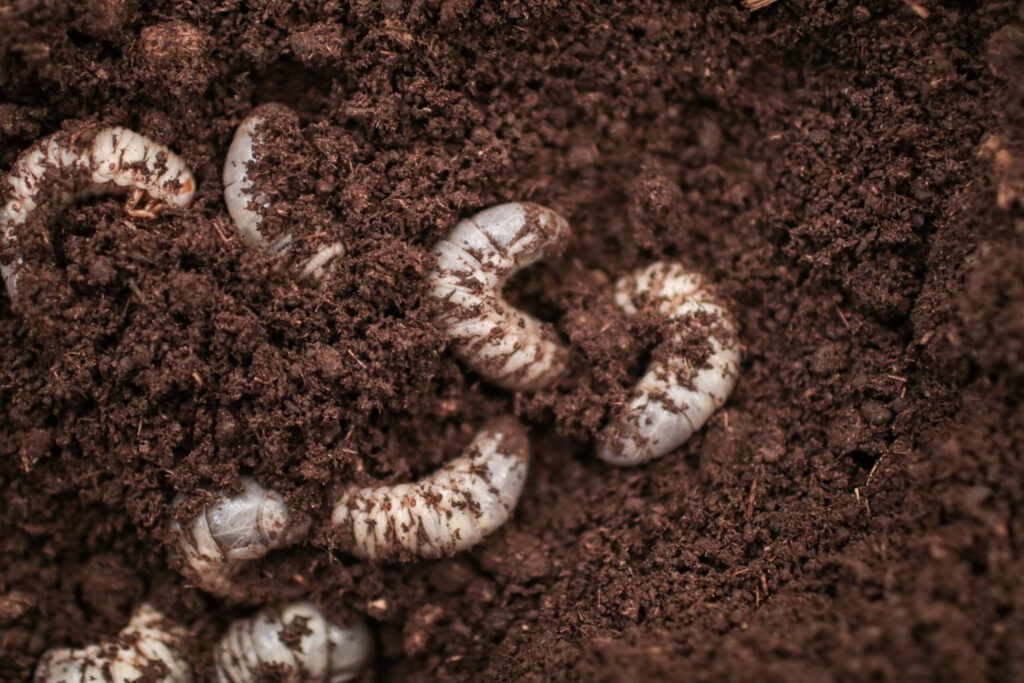
White grubs are the larvae of several beetle species common to Palm Beach County, including the Southern masked chafer and various May and June beetles. These C-shaped, cream-colored larvae live in the soil and feed on grass roots from late spring through fall.
Because grubs feed underground, damage is often invisible until it is severe. The first visible sign is typically patches of turf that look drought-stressed despite adequate irrigation. As root destruction progresses, affected grass pulls up from the soil with almost no resistance — like lifting a loose carpet — because the root system has been completely severed.
Secondary damage from grubs can be equally destructive. Armadillos, raccoons, and birds tear up lawns aggressively searching for grubs just below the surface. If you are finding large irregular holes or torn-up turf overnight, grub activity is often the underlying cause.
Timing matters enormously with grub control. Preventive treatments applied in late spring and early summer target young larvae when they are small and feeding near the surface. Curative treatments applied later in the season work against more mature grubs but require higher rates and are generally less effective. Getting ahead of grubs before damage appears is always the better strategy.
Armyworms
Fall armyworms are caterpillars — the larvae of a moth — that feed voraciously on grass blades and can strip a lawn to bare soil with alarming speed. In warm years, armyworm outbreaks can occur almost any month in The Palm Beaches, though late summer and fall tend to see the heaviest pressure.
Armyworm damage appears as irregular brown patches that expand rapidly, sometimes overnight. Unlike chinch bug damage, which spreads slowly from sunny edges, armyworm damage can appear anywhere in the lawn and moves fast. A lawn that looked healthy Monday morning can be severely damaged by Wednesday if a large population is present.
Armyworms feed most actively at night and in the early morning. During the day they shelter at the soil surface in thatch. If you see birds feeding aggressively across your lawn, look closely — they are likely tracking armyworm activity.
How to check for armyworms: Mix two tablespoons of liquid dish soap with two gallons of water and drench a square yard of turf at the edge of a damaged area. Armyworms will surface within a few minutes. Finding more than three caterpillars per square yard indicates a population large enough to cause serious damage.
Act quickly when armyworms are confirmed. A single generation can complete its feeding cycle in two to three weeks, and multiple generations can occur in a single season.
Mole Crickets
Mole crickets are large, burrowing insects that tunnel through the top several inches of soil, severing grass roots and disrupting the soil structure that holds turf in place. Tunneling activity creates spongy, uneven areas in the lawn and leaves visible raised ridges across the surface.
Two species are common in Palm Beach County: the tawny mole cricket and the southern mole cricket. Both cause similar damage, though they respond somewhat differently to various control products.
Mole cricket damage is most severe in spring when adults are most active, and again in late summer when the new generation of nymphs begins feeding. Lawns with sandy, well-drained soil tend to experience more mole cricket pressure than those with heavier soils.
Baits vs. sprays for mole cricket control: Both approaches work, but timing and application method matter. Insecticide baits are effective when applied in the evening on moist soil — mole crickets surface more readily in those conditions and are more likely to encounter the bait. Liquid insecticide treatments penetrate the soil and work well when watered in immediately after application.
Sod Webworms
Tropical sod webworms are moth larvae that feed on grass blades at night, leaving behind ragged, chewed areas that give turf a scalped appearance. They are common throughout The Palm Beaches from late spring through early fall and can cause significant damage quickly when populations are high.
Damage from sod webworms often appears first in patches near lights that attract the adult moths at night. Look for irregular brown areas with ragged blade edges rather than the clean, yellowing death pattern seen with chinch bugs.
The soap flush method used for armyworms works equally well to confirm sod webworm activity. Treatment is straightforward once the pest is confirmed, and most surface insecticides provide effective control.
Mealybugs and Scale Insects
Ground pearl is a type of scale insect that feeds on grass roots and is increasingly problematic in certain areas of Palm Beach County. Unlike the surface-feeding insects above, ground pearl attaches to roots and is nearly impossible to see without digging. It causes yellow, declining patches that do not respond to irrigation, fertilization, or standard pest treatments.
Unfortunately, there are currently no highly effective chemical controls for ground pearl. Management focuses on keeping turf as healthy as possible to slow decline and prevent spread to unaffected areas.
How to Tell Pest Damage Apart From Other Lawn Problems
One of the most common and costly mistakes homeowners make is treating the wrong problem. Pest damage, fungal disease, and drought stress can all look remarkably similar on the surface.
Pest Damage vs. Drought Stress
Both cause yellowing and browning. The key differences:
- Drought stress affects the entire lawn somewhat evenly, especially in full-sun areas. Pest damage creates distinct patches that spread in a pattern.
- Drought-stressed grass recovers within a day or two of irrigation. Pest-damaged areas do not improve with watering.
- Drought-stressed turf stays rooted firmly. Pest-damaged turf (particularly from grubs) pulls up easily from the soil.
- Drought-stressed grass folds its blades lengthwise and turns blue-gray. Chinch bug damage produces yellow then brown coloring without blade folding.
Pest Damage vs. Fungal Disease
Both create patches with somewhat defined edges. Key differences:
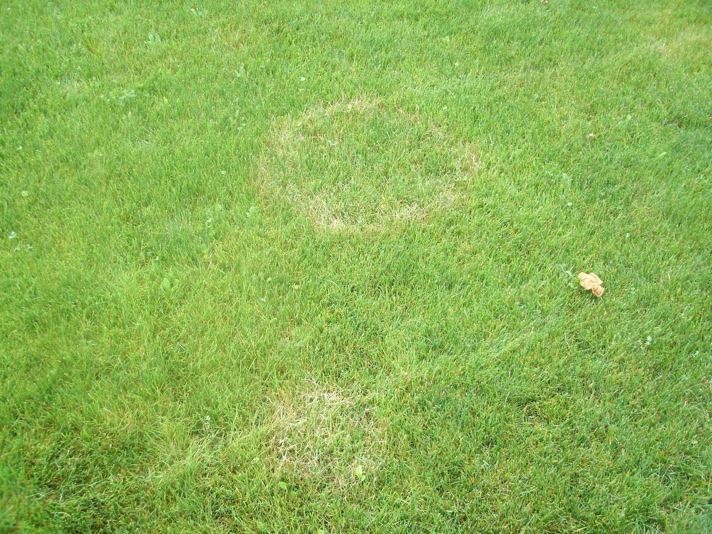
- Fungal disease patches often have a circular shape with distinct rings or a water-soaked appearance at the edges. Pest damage patches are more irregular.
- Fungal disease typically worsens after rain or heavy irrigation. Pest damage is not directly linked to moisture events.
- Close inspection of individual grass blades in a fungal outbreak reveals spots, lesions, or gray/brown coloration on the blade itself. Pest damage shows chewed, severed, or wilted blades without spotting.
When in doubt, inspect the soil and thatch layer directly. Most lawn pests are visible if you look closely enough.
Preventive vs. Curative Pest Control
Like weed management, lawn pest control works best when it is proactive rather than reactive.
Preventive Treatments
Preventive insecticide applications create a protective barrier in the turf and soil before pest populations build to damaging levels. Applied at the right time of year, preventive treatments are typically more effective, require lower application rates, and cause less turf stress than curative treatments applied after damage appears.
For grubs, preventive treatments applied in late spring and early summer target newly hatched larvae before they grow large enough to cause serious root damage. For chinch bugs, preventive applications in spring establish protection ahead of peak summer pressure.
Curative Treatments
When pest damage is already visible, curative treatments are needed to stop the infestation and prevent further spread. Curative products generally need to reach the target pest quickly, so application timing and technique matter even more than with preventive treatments.
Most surface-feeding pests — chinch bugs, armyworms, sod webworms — respond well to curative surface insecticide applications. Subsurface pests like grubs require products that penetrate the soil and are watered in immediately after application to move active ingredients into the root zone.
The Role of Healthy Turf in Pest Resistance
A dense, well-maintained lawn is genuinely less attractive to many pests and recovers significantly faster from damage when infestations do occur. Thick St. Augustine grass with minimal thatch buildup harbors fewer chinch bugs than thin, over-thatched turf. Lawns with deep, healthy root systems tolerate grub feeding at levels that would destroy shallow-rooted grass.
This is why pest control and general lawn care are inseparable. Fertilization, proper mowing height, correct irrigation, and weed control all contribute to turf density and root health that make pest damage less likely and less severe.
Lawn Pest Control Calendar for The Palm Beaches
| Season | Primary Pest Threats | Recommended Actions |
|---|---|---|
| Winter (Dec – Feb) | Reduced activity; grubs overwintering | Monitor; address thatch buildup |
| Spring (Mar – May) | Chinch bugs, mole crickets, early grubs | Preventive chinch bug treatment; mole cricket baiting |
| Summer (Jun – Aug) | Chinch bugs, grubs, armyworms, sod webworms | Peak monitoring period; curative treatments as needed |
| Fall (Sep – Nov) | Armyworms, sod webworms, second grub cycle | Monitor closely; treat armyworm outbreaks immediately |
Common Pest Control Mistakes Palm Beaches Homeowners Make
Watering After Noticing Brown Patches
The instinct when you see brown grass is to water more. With chinch bugs, this makes no difference and delays correct diagnosis. Always investigate the cause of browning before increasing irrigation.
Waiting Until Damage Is Severe
By the time large patches of dead turf are visible, pest populations are typically very high and control is more difficult. Monthly monitoring — especially during summer — catches problems when they are small and manageable.
Using the Wrong Product for the Target Pest
Not all insecticides work on all pests. A product labeled for surface insects may have no effect on soil-dwelling grubs. Always confirm the pest you are treating and select products specifically labeled for that insect.
Skipping the Water-In Step for Soil Treatments
Grub and mole cricket treatments need to be watered into the soil immediately after application to reach the target pest. Leaving these products on the surface dramatically reduces their effectiveness.
Treating Fungus or Drought Stress as a Pest Problem
Applying insecticides to lawns with fungal disease or drought stress wastes money, adds unnecessary chemical stress to already damaged turf, and leaves the real problem untreated. Correct identification before treatment is always worth the extra few minutes.
Professional vs. DIY Pest Control
DIY pest control is a reasonable option for homeowners comfortable with monthly monitoring and willing to learn the difference between pest species, damage patterns, and product types. Many effective pest control products are available at local home improvement stores.
Best for: Attentive homeowners who inspect their lawn regularly, can correctly identify pest damage, and are comfortable with proper pesticide application and timing.
Professional pest control provides expert identification, commercial-grade products, and treatment timing calibrated to local pest activity cycles — without requiring you to become an entomologist.
Best for: Homeowners with persistent or recurring pest problems, anyone who has struggled to get DIY treatments under control, and those who prefer professional oversight to catch problems before they become expensive repairs.
The Bottom Line
Lawn pest control in The Palm Beaches is not a once-a-year task — it is an ongoing part of keeping a healthy lawn in a climate where insects never truly go dormant.
Key principles to carry with you:
- Learn to recognize the damage patterns of the most common pests before problems start
- Never assume brown patches are drought stress without investigating the root cause
- Preventive treatments in spring are more effective and less costly than curative treatments after damage appears
- Healthy, dense turf resists and recovers from pest pressure far better than thin or stressed grass
- Act immediately when armyworm or chinch bug activity is confirmed — both can cause severe damage within days
The homeowners with the best-looking lawns in The Palm Beaches are the ones who stay a step ahead of pest pressure rather than chasing it from behind.
Let Lawn Squad Protect Your Palm Beaches Lawn
Every lawn in The Palm Beaches faces unique pest pressure based on its grass type, location, soil, and history. Cookie-cutter pest treatments applied on a generic schedule often miss the specific insects damaging your turf at the specific time they are most vulnerable.
Lawn Squad technicians monitor for pest activity during every visit, identify problems early, and apply targeted treatments timed to local pest cycles — so your lawn gets the right treatment at the right time, every time.
Lawn Squad programs include:
- Pest monitoring built into every service visit
- Preventive and curative insecticide treatments for chinch bugs, grubs, armyworms, and more
- Integrated programs that combine pest control with fertilization, weed control, and turf health
- Unlimited service calls when pest activity appears between scheduled visits
- Expert identification so you always know exactly what you are treating and why
Do not wait until half your lawn is brown to take pest pressure seriously.
Contact Lawn Squad today at 561-621-9217 or visit https://lawnsquad.com/contact-us/ to get your free quote and keep your Palm Beaches lawn protected all year long.