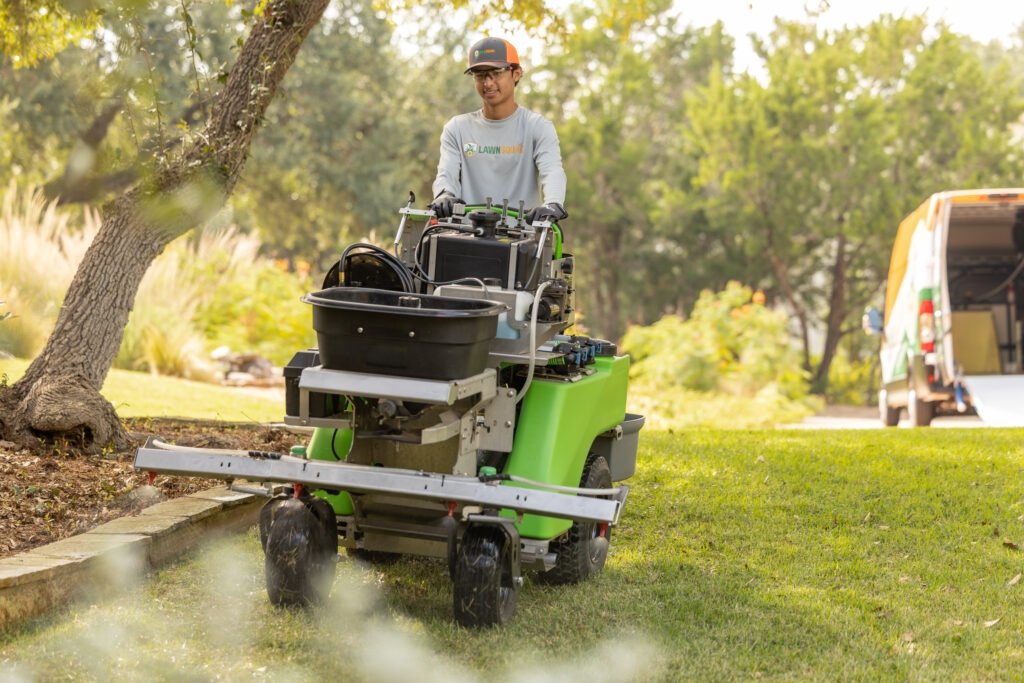
The short answer: Knoxville lawns need year-round attention with treatments spread across eight rounds from late January through mid-November. Most homeowners in the Knoxville area benefit from six to eight professional treatments per year, depending on their lawn’s needs and their goals.
A basic program covers six visits focusing on fertilizer, weed control, and grub prevention. A comprehensive program includes up to 14 treatments across 13 visits with added disease control, insect management, and aeration.
Quick overview:
- Basic care: 6 treatments covering fertilizer, pre-emergent, and weed control
- Standard care: 8 treatments adding surface insect control and sedge suppression
- Premium care: 14 treatments with full disease control, aeration, and soil testing
Keep reading to find the right approach for your Knoxville lawn based on your grass type, budget, and how much work you want to put in.
The Complete Lawn Care Approach: Our 8-Round Program
At Lawn Squad of Knoxville, we’ve developed a proven treatment schedule designed specifically for the transition zone climate that Knoxville homeowners deal with every year.
Our programs work because they account for the unique weather patterns in Knox, Blount, Anderson, and Jefferson counties. We know when crabgrass starts germinating in Farragut. We understand how humidity in Maryville affects fungal growth. We’ve seen what happens to lawns in Oak Ridge when treatments are timed wrong.
Whether you decide to handle lawn care yourself or hire professionals, understanding how Knoxville’s climate affects your lawn will help you make smarter decisions all year long.
Why Lawn Care Timing Matters More Than Most Knoxville Homeowners Realize
Getting the timing wrong on lawn treatments doesn’t just waste money. It can actually damage your lawn or make problems worse.
Apply pre-emergent too late in Knoxville, and crabgrass has already sprouted. Apply it too early, and it breaks down before the soil reaches germination temperature. Treat for grubs at the wrong time, and the product won’t reach them in their life cycle. Skip disease control during our humid summers, and brown patch can destroy sections of your lawn in days.
Here’s the key principle: Knoxville sits in what’s called the transition zone. This means our lawns face stress from both cold winters and hot, humid summers. Grass that thrives in cooler climates struggles in July. Grass that loves heat can die back in January. This makes timing more important here than in regions with simpler climates.
Our team at Lawn Squad has spent over two decades learning exactly when Knoxville lawns need each treatment. Generic advice from national websites often misses the mark for our specific conditions.
Cool Season Lawn Care Guide for Knoxville
Most lawns in Knoxville, Alcoa, and the surrounding areas contain cool season grasses like fescue and bluegrass. Here’s how to care for them throughout the year.
Round 1: Early Season Foundation (Late January)
Start the year with pre-emergent herbicide and fertilizer. The pre-emergent creates a barrier in the soil that stops weed seeds from sprouting. This is your first defense against spring weeds.
- Apply pre-emergent before soil temperatures reach 55 degrees consistently
- Use a balanced fertilizer to feed roots as they wake up from winter dormancy
- Consider a soil test to check pH levels and nutrient needs
WHY THIS MATTERS: Miss this window in Knoxville, and you’ll fight crabgrass all summer. The pre-emergent needs to be in place before weeds germinate, which happens earlier here than many homeowners expect.
Round 2: Spring Growth Phase (Early March)
Spring brings rapid growth in Knoxville. This round focuses on feeding that growth while controlling early broadleaf weeds.
- Apply a second pre-emergent application for extended protection
- Fertilize to support spring green-up
- Treat visible broadleaf weeds like dandelions and clover
- Begin surface insect control as temperatures warm
- Start disease prevention if your lawn has a history of spring fungal issues
Round 3: Late Spring Transition (Late April)
As Knoxville moves toward summer, grub prevention becomes critical.
- Continue fertilization for strong root development
- Maintain broadleaf weed control
- Apply grub preventative before grubs become active
- Continue surface insect treatments
WHY THIS MATTERS: Grubs feed on grass roots underground. By the time you see damage above ground, the destruction has already happened. Prevention in late spring stops the problem before it starts.
Round 4: Early Summer Stress Management (Early June)
June in Knoxville brings heat, humidity, and new challenges. This is often the most intensive treatment round.
- Fertilize with summer-appropriate formulas
- Continue weed control for persistent broadleaf weeds
- Apply sedge suppression for nutsedge (that light green, fast-growing weed)
- Second grub prevention application
- Begin disease control program for brown patch and other summer fungi
- Iron treatment helps maintain green color without pushing excessive growth
- Core aeration opens up compacted soil
Critical warning: Never skip disease control during Knoxville summers if your lawn has shown fungal problems before. Our humidity creates perfect conditions for rapid fungal spread.
Lawn Squad’s ELITE program includes all these treatments in Round 4, which is why many Knoxville homeowners find it easier to let professionals handle this complex round.
Round 5: Summer Survival (Mid-July)
July and August test Knoxville lawns. The goal shifts from growth to survival.
- Light fertilization with root stimulant to strengthen plants
- Selective weed control (avoid broad herbicide applications in extreme heat)
- Continue surface insect control
- Maintain sedge suppression
- Aeration helps water and nutrients reach stressed roots
Round 6: Late Summer Recovery (Late August)
As the worst heat passes, your lawn can start recovering.
- Pre-emergent application targets fall-germinating weeds
- Resume fuller fertilization
- Continue broadleaf weed control
- Final sedge treatment of the season
- Disease control for late-summer fungal activity
- Aeration prepares the lawn for fall overseeding
Round 7: Fall Strengthening (Early October)
Fall is prime time for Knoxville lawns. Cool season grasses thrive as temperatures drop.
- Fertilize to build root reserves for winter
- Aggressive weed control takes advantage of weeds preparing for dormancy
- Surface insect control for fall pests
- Disease prevention continues through fall moisture
- Aeration maximizes fall growing conditions
Round 8: Winter Preparation (Mid-November)
The final round sets your lawn up for winter survival and spring success.
- Winterizer fertilizer helps roots store nutrients
- Final broadleaf weed treatment catches late-season weeds
- Aeration helps compacted clay soils common in Knox County
Warm Season Lawn Care Guide for Knoxville
Some Knoxville homeowners, especially in sunnier areas of Blount County and southern Knox County, have warm season grasses like bermuda or zoysia. The timing differs significantly.
Spring: Let It Wake Up Naturally
Warm season grasses don’t green up until soil temperatures are consistently warm. In Knoxville, this typically means late April or May.
- Avoid heavy fertilization until the grass is actively growing
- Apply pre-emergent earlier (February) to prevent cool season weeds
- Wait for full green-up before aggressive weed treatments
Summer: Peak Performance Time
While cool season lawns struggle in July, warm season grasses thrive.
- Fertilize regularly during active growth
- Mow frequently as growth accelerates
- Water deeply but less often
Critical Consideration: Overseeding Timing
If you overseed warm season lawns, timing is very different:
- AVOID overseeding warm season grasses in fall like you would cool season lawns
- Warm season grasses should not be overseeded with cool season varieties
- If you want winter color, that requires specialized approaches not covered in standard programs
Fall and Winter: Prepare for Dormancy
Warm season grasses go dormant when temperatures drop, turning brown until spring.
- Reduce fertilization as growth slows
- Apply pre-emergent in late fall for winter weed prevention
- Accept brown color as normal, not dead
How to Calculate Your Lawn’s Square Footage
We’ve mentioned that pricing depends on square footage. Here’s how to figure out your lawn size if you don’t already know it.
Step-by-step process:
- Measure your total lot in feet (length times width)
- Measure your house footprint (length times width)
- Measure driveways, patios, and garden beds
- Subtract house and hardscape from total lot
Example: Your Farragut lot is 100 feet by 80 feet (8,000 square feet total). Your house covers 2,000 square feet. Your driveway and patio cover 500 square feet.
8,000 minus 2,000 minus 500 equals 5,500 square feet of lawn.
Most Knoxville lawns fall between 5,000 and 15,000 square feet. Knowing your size helps you get accurate pricing and ensures you apply the right amount of product if you’re treating it yourself.
What About Aeration and Overseeding?
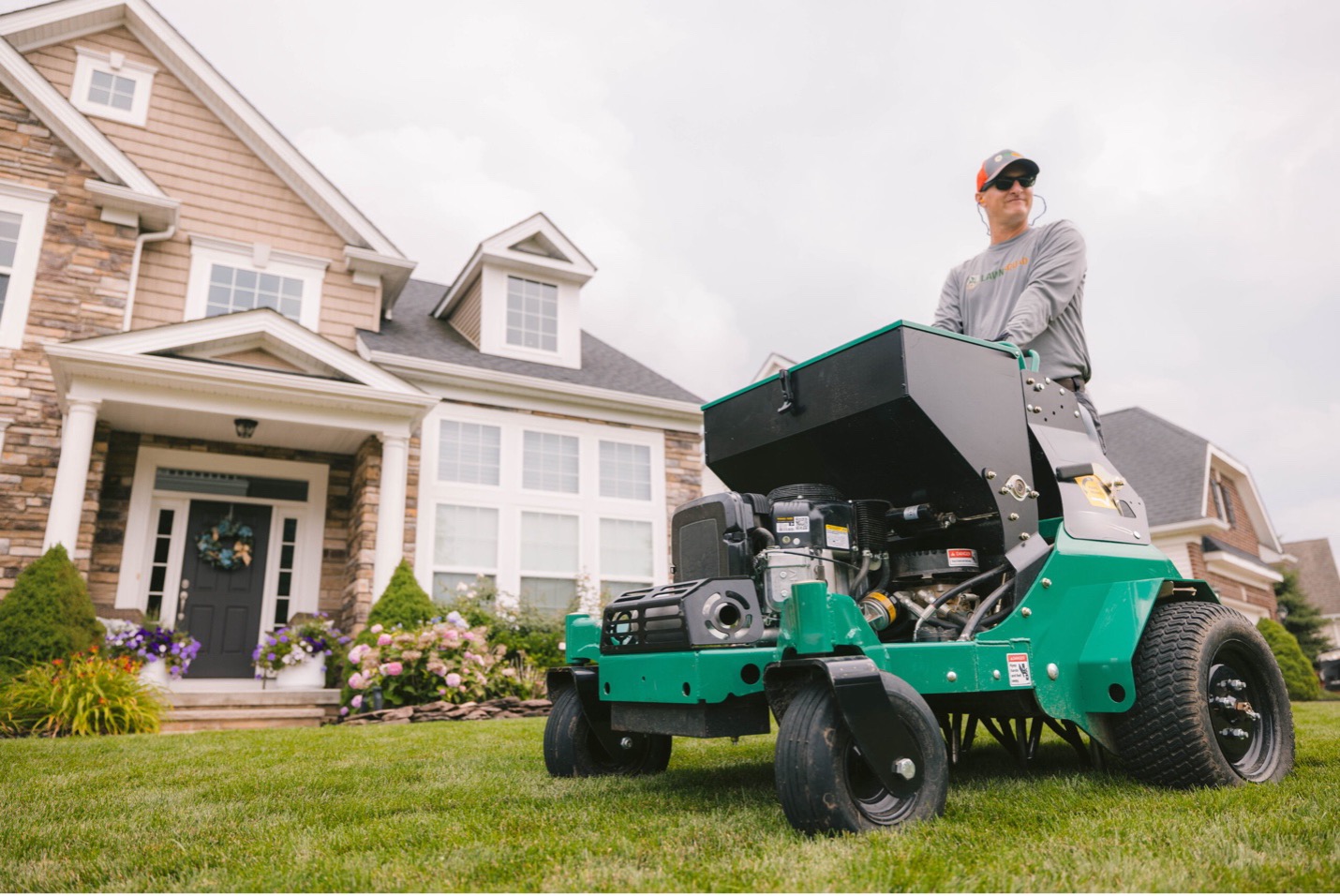
Aeration is one of the most underrated lawn services for Knoxville homeowners. Our clay-heavy soils compact easily, especially in high-traffic areas.
Core aeration removes small plugs of soil, allowing air, water, and nutrients to reach grass roots. This is particularly valuable in Knox County where clay soil dominates.
Lawn Squad includes aeration in multiple rounds of our ELITE program because Knoxville lawns benefit from regular aeration throughout the growing season.
When to aerate Knoxville lawns:
- Cool season lawns: Fall is ideal (September through November)
- Warm season lawns: Late spring through summer when actively growing
Important note: If you’ve had pre-emergent applied, wait at least 8 weeks before aerating. Aeration disrupts the pre-emergent barrier in the soil.
Common Lawn Care Mistakes Knoxville Homeowners Make
After serving the Knoxville area since 2001, we’ve seen the same mistakes cost homeowners time, money, and healthy lawns.
Mistake #1: Watering Every Day Light, frequent watering encourages shallow roots. Knoxville lawns need deep, infrequent watering (about 1 inch per week) to develop drought-resistant root systems.
Mistake #2: Cutting Grass Too Short Mowing too low stresses grass and lets sunlight reach weed seeds. Keep cool season lawns at 3 to 4 inches. Keep warm season lawns at 1.5 to 2.5 inches.
Mistake #3: Ignoring Soil pH Knoxville soils often run acidic. If your lawn won’t respond to fertilizer, pH might be the issue. A soil test reveals whether you need lime to raise pH.
Mistake #4: Treating Weeds at the Wrong Time Spraying herbicides in extreme heat can damage your lawn more than the weeds. Treat broadleaf weeds when temperatures are below 85 degrees.
Mistake #5: Skipping Fall Treatments Many homeowners stop lawn care after summer. But fall is when cool season lawns build the root reserves that determine next year’s health.
DIY Lawn Care vs. Professional Programs: Which Should You Choose?
DIY lawn care gives you control over timing and products. You can save money if you already own equipment and enjoy outdoor work. Best for: Homeowners with smaller lawns (under 5,000 square feet), flexible schedules, and willingness to learn proper techniques.
Professional lawn care ensures correct timing, proper products, and consistent application. It removes guesswork and physical labor. Best for: Homeowners with larger lawns, busy schedules, or lawns with persistent problems. Also ideal for anyone who wants guaranteed results without the learning curve.
Your Knoxville Lawn Care Calendar at a Glance
Cool Season Lawns (Fescue, Bluegrass)
| Round | Timing | Key Treatments |
|---|---|---|
| 1 | Late January | Pre-emergent, Fertilizer, Soil Test |
| 2 | Early March | Pre-emergent, Fertilizer, Weed Control, Insect Control |
| 3 | Late April | Fertilizer, Weed Control, Grub Prevention |
| 4 | Early June | Fertilizer, Sedge Control, Disease Control, Aeration |
| 5 | Mid-July | Fertilizer, Root Stimulant, Weed Control |
| 6 | Late August | Pre-emergent, Fertilizer, Disease Control, Aeration |
| 7 | Early October | Fertilizer, Weed Control, Insect Control |
| 8 | Mid-November | Winterizer Fertilizer, Weed Control |
Warm Season Lawns (Bermuda, Zoysia)
| Round | Timing | Key Treatments |
|---|---|---|
| 1 | Late February | Pre-emergent |
| 2 | Late April | Light Fertilizer as grass greens |
| 3 | June through August | Regular Fertilizer, Weed Control |
| 4 | Early October | Reduce Fertilizer, Pre-emergent |
The Bottom Line
Knoxville’s transition zone climate makes lawn care more complex than in many other regions. Your grass faces stress from winter cold and summer heat, requiring a year-round approach with carefully timed treatments.
Key principles to remember:
- Pre-emergent timing is critical and varies by grass type
- Grub prevention must happen before damage appears
- Summer disease control prevents rapid lawn destruction in our humidity
- Fall treatments determine next year’s lawn health
- Soil testing reveals hidden problems that fertilizer alone won’t fix
Follow this schedule, and your Knoxville lawn can be the healthiest on your street. Skip steps or get timing wrong, and you’ll spend the season fighting problems instead of enjoying your yard.
Let Lawn Squad Handle It For You
Every Knoxville lawn is different. Soil composition varies across Oak Ridge, Maryville, and Farragut. Sun exposure changes how your grass responds. Previous treatments affect current needs.
Lawn Squad’s programs account for all these factors with professional expertise developed over two decades serving the Knoxville area.
Our ELITE Program includes:
- 14 treatments across 13 visits for complete coverage
- Soil testing to identify your lawn’s specific needs
- Grub prevention, disease control, and insect management
- Multiple aeration treatments for our clay-heavy Knoxville soils
- Unlimited service calls if problems arise between treatments
Tired of guessing what your lawn needs and when it needs it? Don’t want to spend weekends spreading products and pulling weeds?
Contact Lawn Squad of Knoxville today to get a free quote and give your lawn the professional care it deserves. Call us at 865-876-0065 or visit lawnsquad.com/contact-us to get started.