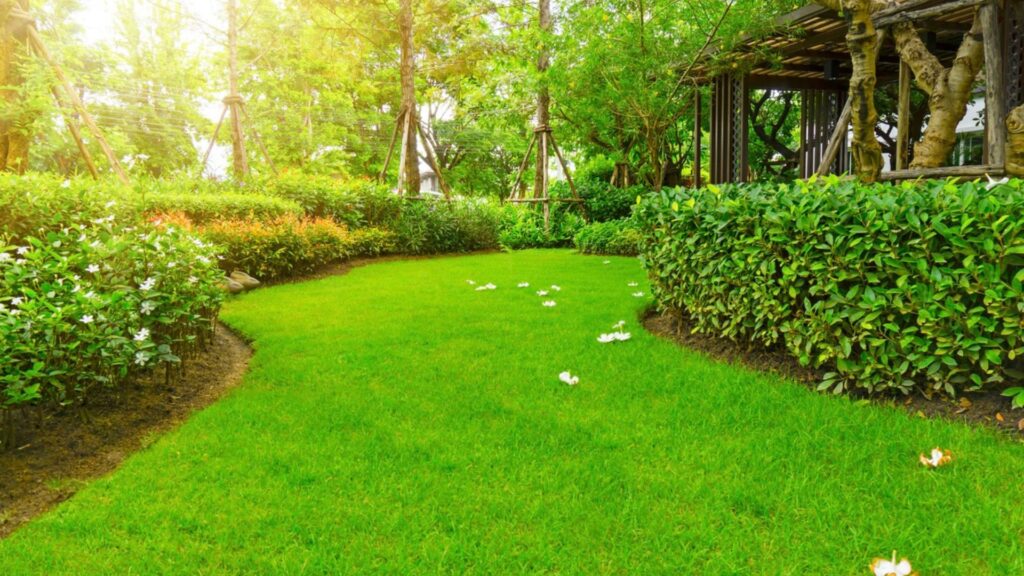

The short answer: Lawn care in Northeast Florida requires a year round approach because our warm, humid weather creates both opportunities and challenges you won’t find anywhere else. Your grass grows for most of the year, but so do weeds, insects, and fungal diseases.
The key is timing your treatments to match our unique climate patterns. Most lawns in Jacksonville, St. Augustine, Ponte Vedra, and surrounding areas need between six and fourteen treatments per year depending on your goals and budget.
Quick overview:
- Basic care: Six treatments focusing on fertilizer and weed control
- Standard care: Eight treatments adding insect control and sedge suppression
- Premium care: Fourteen treatments on thirteen visits with full disease prevention, aeration, and fire ant control
Whether you tackle lawn care yourself or hire a professional, understanding how our climate affects your grass will help you make smarter decisions all year long.
The Complete Lawn Care Approach: Lawn Squad’s Multi Round Programs
At Lawn Squad of Jacksonville and St. Augustine, we’ve designed our lawn care programs specifically for the challenges homeowners face in Duval, St. Johns, and Nassau counties. Our programs range from six to fourteen treatments spread across the growing season.
What makes lawn care in Northeast Florida different from other parts of the country? Our warm season grasses like St. Augustine and Bermuda thrive in heat but face constant pressure from pests and diseases that love our humidity. A program designed for lawns in Ohio or even North Florida simply won’t work here.
Whether you decide to handle your lawn yourself or let us take care of it, the information in this guide will help you understand what your grass actually needs throughout the year.
Why Lawn Care Matters More Than Most Northeast Florida Homeowners Realize
Getting lawn care wrong in our region doesn’t just mean a less attractive yard. It can mean starting over completely with new sod, which costs thousands of dollars.
Here’s what happens when homeowners skip important steps or time their treatments incorrectly:
Weed takeover: Without pre emergent treatments in January and February, crabgrass and other weeds establish deep root systems before you even notice them. By summer, pulling weeds by hand becomes nearly impossible.
Fungal disease spread: Our humidity creates perfect conditions for diseases like brown patch and gray leaf spot. Once these diseases take hold, they can kill large sections of grass within weeks. Treatment after the fact costs much more than prevention.
Insect damage: Chinch bugs, armyworms, and grub worms can destroy a lawn seemingly overnight. In Jacksonville Beach, Atlantic Beach, Neptune Beach, and other coastal areas, these pests are especially aggressive.
Fire ant and mole cricket invasion: These destructive pests thrive in Northeast Florida’s sandy soils. Without prevention treatments, they can make your yard unusable and damage grass root systems.
The key principle here is simple: prevention costs less than cure. A well timed treatment schedule catches problems before they become expensive disasters.
DIY Lawn Care Guide for Northeast Florida Homeowners
If you want to handle your own lawn care, here’s what you need to know about each phase of the year in Jacksonville, St. Augustine, Ponte Vedra Beach, and surrounding areas.
Phase 1: Early Year Foundation (January through February)
This is your most important window for preventing spring and summer weeds.
- Apply pre emergent herbicide before soil temperatures reach 55 degrees consistently
- Use a product containing prodiamine or pendimethalin for best results in our sandy soils
- Apply broadleaf weed control to any existing weeds while temperatures are still mild
- Consider a soil test to understand what nutrients your specific lawn needs
Why this matters: Pre emergent creates a barrier that stops weed seeds from germinating. Miss this window and you’ll fight weeds all year long.
Phase 2: Spring Growth (March through April)
Your grass is waking up and hungry for nutrients, but so are the insects.
- Apply a balanced fertilizer as your grass begins actively growing
- Continue broadleaf weed control treatments
- Begin surface insect control, especially if you noticed insect damage last year
- In St. Johns County and southern Duval County, this is prime time for fire ant and mole cricket prevention
Why this matters: Spring is when your lawn builds the root system it needs to survive our brutal summer heat.
Phase 3: Summer Stress (May through August)
This is the toughest season for Northeast Florida lawns.
- Apply fertilizer with iron to maintain green color without pushing too much growth
- Add sedge control to combat nutsedge, which thrives in our summer heat
- Continue surface insect treatments, watching especially for chinch bugs in sunny areas
- Apply fungicide preventatively if your lawn has a history of disease
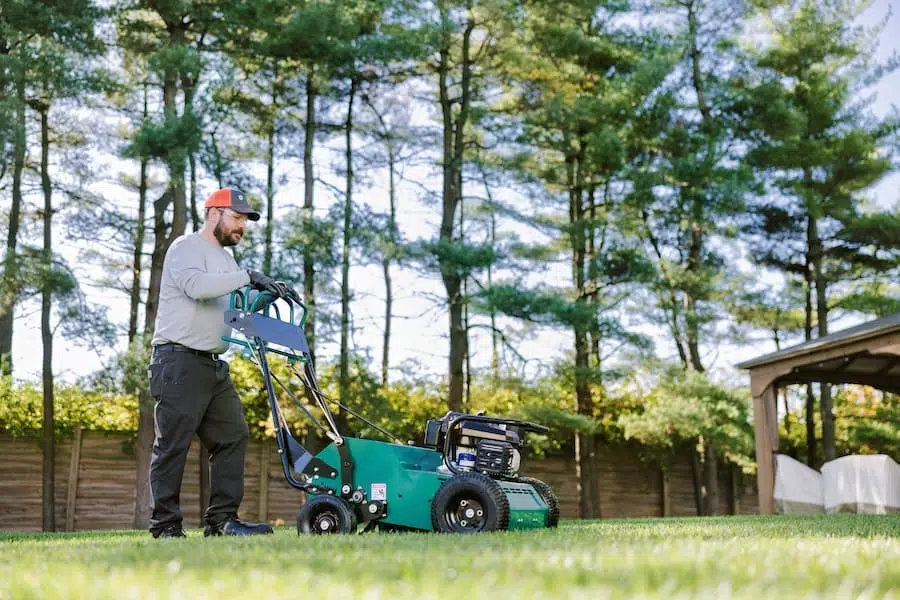
- Consider aeration to help water and nutrients reach grass roots
Why this matters: Summer stress combined with our humidity creates perfect conditions for everything bad: fungus, insects, and heat damage.
Phase 4: Fall Recovery (September through November)
Your lawn is preparing for winter, and so should you.
- Apply fall pre emergent before winter weeds germinate
- Continue fertilizer applications to build root reserves
- Scale back insect control as pest pressure decreases
- Address any disease issues before cooler weather arrives
Critical warning: Don’t skip fall pre emergent thinking the growing season is over. Winter weeds like poa annua will take over your lawn and look terrible by February.
At Lawn Squad, our ELITE program handles all of these phases automatically, with treatments timed specifically for conditions in Jacksonville, St. Augustine, Fernandina Beach, and everywhere in between.
Professional Lawn Care Guide for Northeast Florida Properties
For homeowners who want comprehensive care without the guesswork, professional programs offer significant advantages.
Professional Advantage 1: Precise Timing
- Trained technicians monitor soil temperatures and growth patterns across Duval, St. Johns, and Nassau counties
- Treatments happen exactly when they’re most effective, not when you remember to get around to it
- Professionals know that conditions in Ponte Vedra Beach differ from conditions in Elkton
Professional Advantage 2: Commercial Grade Products
- Professional products often contain multiple active ingredients working together
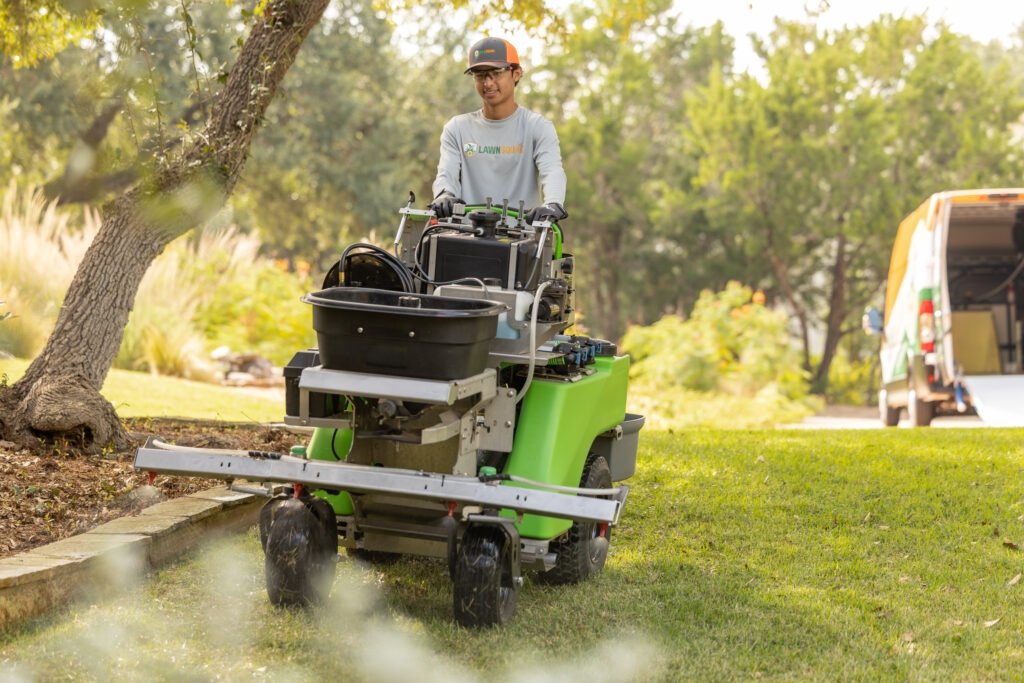
- Application rates are calibrated for your specific lawn size
- Products are matched to the specific grass type and soil conditions in your yard
Professional Consideration: Program Selection
Choose based on your lawn’s needs, not just price:
- If you have a history of insect damage or disease, the PRO or ELITE program pays for itself in prevented repairs
- If your lawn is relatively healthy and you mainly want weed control, the ESSENTIAL program may be sufficient
- Never skip fire ant and mole cricket prevention if you’ve had these pests before
Professional Advantage 3: Unlimited Service Calls
- If something goes wrong between scheduled visits, professionals come back at no extra charge
- This safety net alone can save hundreds of dollars compared to paying for emergency treatments separately
How to Calculate Your Lawn’s Square Footage
Understanding your lawn size helps you budget for care and avoid overpaying or underapplying products.
Step by step process:
- Break your lawn into rectangles and squares
- Multiply length times width for each section
- Add all sections together for total square footage
Example: Your front yard is 40 feet by 30 feet (1,200 square feet). Your backyard is 50 feet by 60 feet (3,000 square feet). Your side yard is 10 feet by 40 feet (400 square feet). Total lawn size: 4,600 square feet.
Most homes in Jacksonville, St. Augustine, and surrounding areas have lawns between 5,000 and 15,000 square feet. Larger properties in St. Johns County and rural Nassau County often exceed 20,000 square feet.
What About Soil Testing?
Many lawn problems in Northeast Florida trace back to soil issues that fertilizer alone won’t fix.
Our sandy soils often lack the nutrients and pH balance that grass needs to thrive. A professional soil test reveals exactly what your lawn is missing.
Lawn Squad includes a soil test in Round 1 of our ELITE program. This test identifies pH problems, nutrient deficiencies, and organic matter levels specific to your property.
Based on results, we may recommend limestone to raise pH or sulfur to lower it. These amendments make all your other treatments work better.
We recommend testing every two to three years, or immediately if your lawn isn’t responding to fertilizer the way you expect.
Common Lawn Care Mistakes Northeast Florida Homeowners Make
After serving thousands of customers across Jacksonville, St. Augustine, Ponte Vedra Beach, Atlantic Beach, and Fernandina Beach, we’ve seen these mistakes repeatedly.
Mistake 1: Skipping Pre Emergent Homeowners focus on killing weeds they can see instead of preventing weeds before they sprout. By the time weeds are visible, they’ve already established root systems. Prevention is always easier and cheaper than treatment.
Mistake 2: Overwatering Our humid climate means your lawn needs less irrigation than you think. Overwatering promotes fungal disease and weakens root systems. Most lawns need about one inch of water per week, including rain.
Mistake 3: Mowing Too Short Cutting grass too low stresses the plant and allows weeds to get sunlight they need to grow. Keep St. Augustine grass at 3.5 to 4 inches and Bermuda at 1.5 to 2 inches.
Mistake 4: Ignoring Early Warning Signs Yellow patches, brown spots, and unusual patterns in your grass are symptoms of problems that get worse quickly in our climate. Address issues immediately, not “when you get around to it.”
Mistake 5: Using the Wrong Products Products designed for cool season grasses in northern states can damage warm season lawns in Northeast Florida. Always verify that any product you buy is safe for your specific grass type.
DIY vs. Professional Lawn Care: Which Should You Choose?
DIY lawn care gives you complete control and can cost less if you already own equipment and have time to learn proper techniques. You’ll need to invest in a spreader, sprayer, and storage for chemicals. Plan to spend several hours per month during peak season. Best for: Homeowners who enjoy yard work, have flexible schedules, and want to learn the science behind lawn care.
Professional lawn care provides expert knowledge, commercial grade products, and guaranteed results without time investment. You’ll pay more per treatment but eliminate guesswork and equipment costs. Best for: Busy homeowners, those with challenging lawn conditions, and anyone who values their weekends more than saving a few dollars per month.
Your Northeast Florida Lawn Care Calendar at a Glance
ELITE Program (14 Treatments)
| Round | Timing | Key Services |
|---|---|---|
| 1 | January | Pre emergent, weed control, disease control, soil test |
| 2 | February | Pre emergent, fertilizer, weed control, insect control |
| 3 | April | Weed control, insect control, fire ant prevention |
| 4 | May | Fertilizer, weed control, insect control, sedge control, aeration |
| 5 | June | Weed control, insect control, sedge control, aeration |
| 6 | August | Pre emergent, fertilizer, weed control, insect control, disease control |
| 7 | September | Pre emergent, weed control, insect control |
| 8 | November | Fertilizer, weed control, disease control |
ESSENTIAL Program (6 Treatments)
| Round | Timing | Key Services |
|---|---|---|
| 1 | January | Pre emergent, weed control |
| 2 | February | Pre emergent, fertilizer, weed control |
| 3 | April | Weed control |
| 4 | May | Fertilizer, weed control |
| 6 | August | Pre emergent, fertilizer, weed control |
| 8 | November | Fertilizer, weed control |
The Bottom Line
Lawn care in Northeast Florida’s warm, humid climate requires a proactive, year round approach. Our unique conditions create challenges that homeowners in other parts of the country simply don’t face.
Key principles to remember:
- Pre emergent applications in January and February prevent months of weed problems
- Insect and disease pressure is constant in our humidity, so prevention beats treatment
- Timing matters more than product selection in most cases
- Fire ants and mole crickets require specific prevention treatments
- Professional programs include unlimited service calls that protect your investment
Homeowners who follow a consistent treatment schedule enjoy healthier, greener lawns with fewer emergency problems and lower long term costs.

Let Lawn Squad Handle It For You
Every lawn in Jacksonville, St. Augustine, Ponte Vedra Beach, Fernandina Beach, and surrounding areas has unique characteristics based on grass type, soil conditions, sun exposure, and irrigation setup.
Lawn Squad’s programs account for all of these variables with treatments specifically designed for Duval, St. Johns, and Nassau county conditions.
Our ELITE Program includes:
- Fourteen treatments across eight rounds for complete protection
- Four pre emergent applications to prevent weeds before they start
- Surface insect control from spring through fall
- Fire ant and mole cricket prevention
- Disease control treatments throughout the season
- Summer and fall aeration for healthier roots
- Soil testing to identify hidden problems
- Unlimited service calls if anything goes wrong
Tired of fighting weeds, worrying about brown patches, or spending your weekends spreading fertilizer? Our team has served Northeast Florida homeowners since 2001 and knows exactly what your lawn needs.
Contact Lawn Squad of Jacksonville and St. Augustine today at (904) 594-7380 to get a free quote and start enjoying a lawn you’re proud of without the hassle.