
How Do I Assess Summer Lawn Damage Before Planning Fall Renovation?
Short Answer: Grade four things before you buy anything. First, estimate how much of the lawn is still living desirable grass, because roughly half is the dividing line between overseeding and full renovation. Second, dig a plug and look at root depth and thatch thickness. Third, read the pattern and color of the damage, since circles, strips, and irregular yellowing all point to different causes. Fourth, inventory the weeds, because the species that won tell you whether the real problem is compaction, drainage, shade, or fertility. Those four grades turn into a specific fall plan rather than a guess.
Imagine walking the yard on a Saturday morning in late August with nothing in your hands, just looking. The front looks acceptable from the street and worse from six feet away. There is a hard tan strip along the driveway. The area under the maple has thinned to the point that you can see soil between the plants. Somewhere in the back is a section that has been crunchy underfoot since July, and the whole thing is dotted with weeds that clearly had a better summer than the grass did. The question in your head is not complicated. What do I actually do about this, and how much of it needs to happen?
Almost everyone we meet in August is somewhere between discouraged and impatient. The instinct is to fix it all right now, or to throw seed at everything and hope. Neither is the answer, and the good news is that the lawn will tell you exactly what it needs if you spend twenty minutes reading it.
Grade One: How Much Living Grass Is Actually There
This is the grade that determines your budget, so take it first, and take it honestly. Walk the property in sections and estimate what percentage of each area is still living, desirable grass rather than weeds, bare soil, or dead turf. Judge by area, not by appearance from the porch, because standing back always flatters a lawn.
The working rule across the industry is that roughly half is the dividing line. If an area still holds more than about half living turf, overseeding into the existing stand is usually the right and cheaper call, because you are reinforcing something that already works. If an area is below that, you are seeding into a losing position, and a full renovation that removes what is there and starts over often costs less over two seasons than three consecutive years of partial overseeding. Grade each zone separately. A lawn frequently earns a B in the front and a D along the back fence, and those are two different projects.
Grade Two: What the Roots and the Plug Say
Take a spade and cut a wedge about four to six inches deep in two or three representative spots. This one step separates people who fix lawns from people who repeat them. Look at three things in the profile.
Root depth first. Healthy roots are white to cream colored, springy, and extend several inches down. Short, dark, brittle roots mean either summer stress, a root disease, or insects. Second, the thatch layer, the spongy brown band between green growth and soil. Under about half an inch is normal and beneficial. Noticeably thicker than that and water, fertilizer, and seed are all being intercepted before they reach soil. Third, grab a handful of turf and pull. If it lifts like carpet with no root attachment and you find white C shaped larvae underneath, you have grubs, and no amount of seed fixes that until the grubs are addressed. Also push a screwdriver into moist soil. If it stops in the first two or three inches, the lawn is compacted and core aeration moves to the top of the list.
Grade Three: Pattern, Color, and How the Soil Takes Water
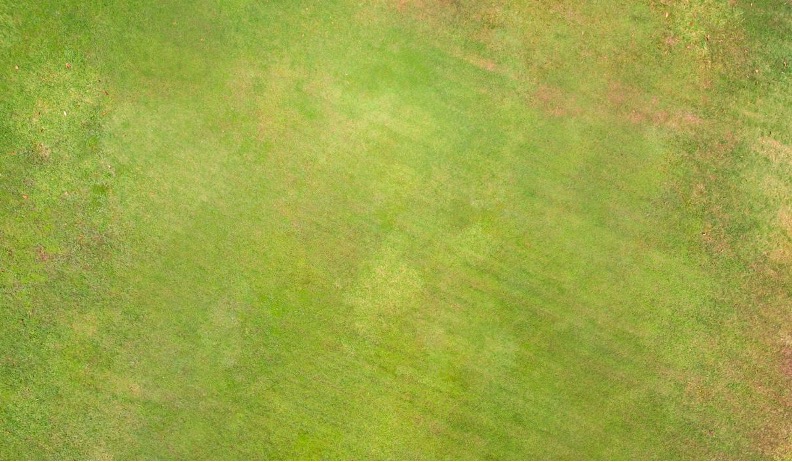
Shape is evidence. Clean circles and arcs point to disease. Long straight strips along pavement and driveways point to reflected heat and irrigation coverage. Irregular yellowing that spreads slowly and ignores watering points toward a root problem. Scattered small dead spots that appear over days, especially in the sunniest area, point toward insects. Sharp edged patches that match the throw pattern of a sprinkler head are an irrigation audit, not a lawn problem.
Then test the water itself. Run a zone for a few minutes and watch. If water beads, sheets, and runs downhill instead of soaking in, you have either compaction or hydrophobic soil, which is common where a dry spot has been dry long enough to repel moisture. Walk across the lawn late in the afternoon and look back. If your footprints stay visible for more than a minute, the grass is not rebounding, and it is under water stress right now regardless of what the controller says. These are the corrections that cost the least and change the most.
Grade Four: Your Weeds Are a Soil Report
Weeds are not random. Each species is telling you which conditions favored it over grass, and reading that list is free diagnostics. Prostrate knotweed hugging a path or a play area means compaction so severe that almost nothing else germinates there. Nutsedge concentrated in low spots means drainage or overwatering, since sedge outcompetes turf in saturated soil. Broad stands of crabgrass mean the turf was thin and the soil surface was exposed to sun in spring, which is a density and mowing height issue more than a herbicide issue.
Clover spreading widely often signals low nitrogen, because clover fixes its own. Moss means some combination of shade, compaction, moisture, and low fertility, and is a symptom rather than a cause, which is why killing it never keeps it away. Plantain and ground ivy both favor compacted or shaded ground. Write down which ones dominate. That list frequently identifies the true problem better than the grass does.
What the Same Report Card Means in Different Zones
Grades are universal. The prescription is not. In the cool-season North, a thin fescue or bluegrass lawn with decent roots is a straightforward aeration and overseeding job, and the window is short, so the report card needs to be finished in August rather than September. In the transition zone, the same reading usually adds disease management, because brown patch damage looks like drought damage and the two get different treatments.
In the warm-season South, thin bermuda or zoysia usually does not get seeded. Those lawns fill in laterally by stolon and rhizome, so the answer is aeration, correct fertility, and time, plus fall pre-emergent so winter weeds do not claim the open ground. In the arid West, low cover on a bluegrass lawn is often ring disease or shallow soil over compacted subgrade, and the fix pairs aeration with overseeding into more resistant material before secondary water shuts off. In tropical Florida and along the Gulf, thin St. Augustine that pulls up rootless is take-all root rot until proven otherwise, and that is a conditions and pH conversation, not a seeding one, because St. Augustine is established from sod or plugs rather than seed.
Turning the Grades Into a Fall Action List
Sequence matters more than effort. Correct the cause before you install the cure. That means insects and disease get handled first, then compaction through core aeration, then soil chemistry if a test calls for it, then seed or plugs, then a watering plan built for germination rather than for summer. Seed laid over grubs, over a thatch layer, or into compacted ground is the most common way homeowners spend real money and get nothing.
Then be realistic about how much you take on at once. A lawn graded zone by zone almost always shows one or two areas that need everything and a majority that needs only reinforcement. Fixing the worst two areas properly this fall beats spreading a thin effort across the whole property and repeating the exercise next year.
What to Do Next
Do the walk this week with a spade and your phone. Photograph each area, cut two plugs, and write down your four grades. You will arrive at any conversation about your lawn knowing more than most people ever do, and that is the point of doing it yourself first.
Then find your local Lawn Squad at lawnsquad.com or call 833-816-7508 for a free quote. Every Lawn Squad location is independently owned and operated, and the team near you builds its VitaminLawn program around your actual grass type, soil, and climate, which is what turns a report card into the right sequence for your region. A first visit is a walk of the property together, a plug or two, and a written plan with timing. At thirty days after fall work you should see germination and fill in beginning on a cool-season lawn, or noticeably better color and density on a warm-season lawn, though new seedlings will still look thin and young. At ninety days, cool-season areas should be knitting together into a stand you can see from the street, and warm-season lawns should be entering dormancy clean and weed free. Next August is when the grade really changes, and it changes because of what you decide this month.