The short answer: Ohio lawns need fertilizer five to six times per year, starting in early March and ending with a winterizer application in late September or October. The exact timing depends on weather patterns and soil temperatures, but spacing applications about 42 days apart gives your lawn consistent nutrition throughout the growing season.
Most Ohio homeowners should begin fertilizing in early March and apply their final treatment before the ground freezes in fall.
Quick overview:
- First application: Early March when soil temperatures reach 55 degrees
- Peak season: April through August with applications every 6 weeks
- Final application: Late September or October with winterizer fertilizer
Understanding when and why to fertilize helps Ohio homeowners achieve healthier lawns whether they do it themselves or hire professionals.sionals, understanding these basics will help your Dayton lawn survive and thrive through July and August.
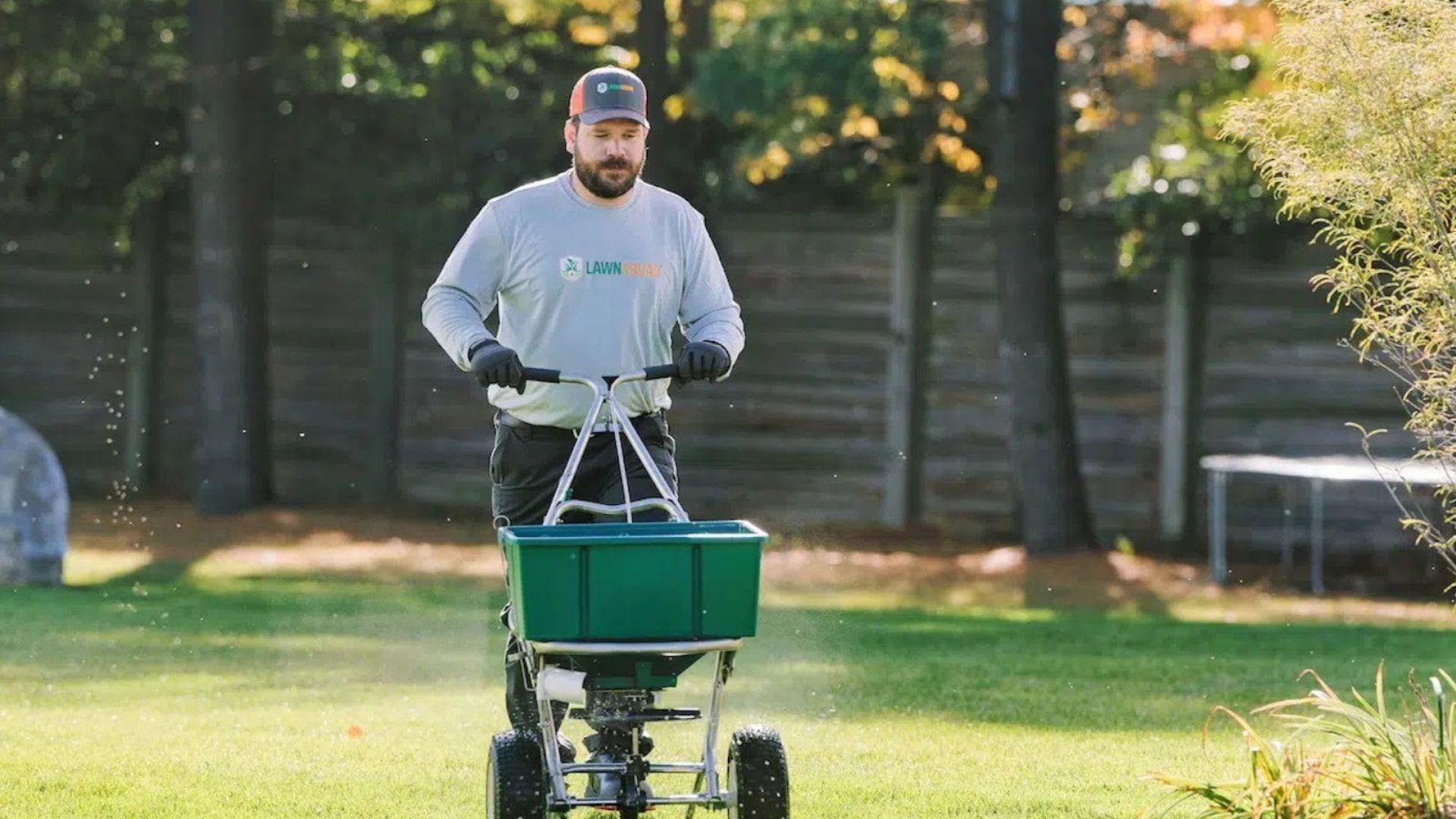
The Complete Fertilization Approach: Our 6 Round Program
At Lawn Squad of Dayton, we built our lawn care programs around the specific needs of Ohio’s cool season grasses. Our treatment schedule uses 42 day intervals that align with how grass grows and uses nutrients in our climate.
This approach works because it delivers the right nutrients at the right time. Early season applications focus on root development and weed prevention. Summer applications maintain color and fight stress. Fall applications prepare your lawn for winter and promote spring green up.
Whether you fertilize your own lawn or work with professionals, understanding this timing helps you make better decisions for your property.
Why Fertilization Timing Matters More Than Most Ohio Homeowners Realize
Ohio grows cool season grasses like Kentucky bluegrass, tall fescue, and perennial ryegrass. These grasses have two major growth periods: spring and fall. They slow down or go dormant during summer heat and winter cold.
Fertilizing at the wrong time wastes money and can actually harm your lawn. Applying heavy nitrogen in July pushes top growth when grass should be conserving energy. This weakens the plant and makes it more vulnerable to disease and drought stress.
Fertilizing too early in spring, before soil warms up, means nutrients sit unused and can wash away with spring rains. Fertilizing too late in fall means grass cannot absorb nutrients before going dormant.
Ohio’s variable weather makes timing even more important. A warm February followed by a cold March throws off the typical schedule. Snow in April delays applications. An early fall frost cuts the season short.
The Miami Valley and Greater Dayton area face all of these challenges. Our humid summers stress lawns differently than drier climates. Our cold winters require proper fall preparation for lawns to survive and thrive the following spring.
Spring Fertilization Guide for Ohio Lawns
Spring fertilization sets the tone for your entire lawn care season. Getting it right gives your grass a strong foundation.
Round 1: Early Spring (Early March)
This first application combines slow release fertilizer with pre emergent crabgrass control. Timing is critical because pre emergent must be down before soil temperatures reach 55 degrees consistently.
In the Dayton area, this typically means the first week of March. Applying too late allows crabgrass seeds to germinate before the barrier forms.
Slow release fertilizer feeds your lawn gradually as it wakes up from winter dormancy. This encourages strong root growth without pushing excessive top growth too early.
What to apply: Pre emergent crabgrass control plus slow release fertilizer
Why it matters: Pre emergent creates a barrier that stops crabgrass seeds from sprouting. Miss this window and you will fight crabgrass all summer.
Round 2: Mid Spring (Mid April)
The second application continues crabgrass prevention while adding broadleaf weed control and surface insect control. By mid April, dandelions and other broadleaf weeds are actively growing and vulnerable to treatment.
This round also includes another fertilizer application to maintain the nutrition your lawn needs during its first major growth period of the year.
What to apply: Pre emergent crabgrass control, fertilizer, broadleaf weed control, surface insect control
Why it matters: This is peak weed germination time. Treating now prevents small weeds from becoming big problems.
Critical warning: Do not apply crabgrass pre emergent if you plan to overseed in spring. Pre emergent stops all grass seed from germinating, not just crabgrass. If your lawn needs seeding, wait until fall.
Summer Fertilization Guide for Ohio Lawns
Summer fertilization requires a careful balance. Your lawn still needs nutrients, but too much nitrogen during heat stress causes more harm than good.
Round 3: Late Spring to Early Summer (Late May)
This application transitions your lawn from spring growth into summer maintenance. Fertilizer rates adjust for warmer weather while weed control continues targeting any breakthroughs.
Round 3 is also the ideal time for grub prevention in Ohio. Japanese beetle eggs hatch in early summer, and preventative treatment works best when applied before grubs start feeding on roots.
Disease control becomes important as humidity increases. Fungal diseases like brown patch thrive in warm, humid conditions that are common in the Dayton area during late May and June.
What to apply: Fertilizer, broadleaf weed control, surface insect control, grub prevention, disease control
Why it matters: Grub prevention timing is critical. Treat now or face expensive curative treatments and lawn damage later.
Round 4: Mid Summer (Early July)
Mid summer fertilization focuses on maintaining lawn health during the most stressful time of year. Fertilizer formulations shift toward slower release products that feed gradually without pushing growth during heat.
Weed control continues, though applications are timed carefully to avoid treating during extreme heat. Surface insect control protects against chinch bugs and other summer pests.
Grub prevention continues in this round for maximum protection. Disease control applications help prevent fungal outbreaks during humid July weather.
What to apply: Fertilizer, broadleaf weed control, surface insect control, disease control, grub prevention
Why it matters: Consistent summer nutrition keeps your lawn green and healthy without stressing it further.
Fall Fertilization Guide for Ohio Lawns
Fall is the most important fertilization season for Ohio lawns. Cool season grasses grow aggressively in fall and store nutrients for winter survival and spring green up.
Round 5: Late Summer to Early Fall (Mid August)
This application prepares your lawn for its second major growth period. As temperatures cool, grass shifts energy back into growth and root development.
Root stimulant products encourage deeper root systems that help your lawn survive winter and access water during dry periods. This is also prime time for core aeration, which relieves soil compaction and improves nutrient absorption.
What to apply: Fertilizer, root stimulant, broadleaf weed control, surface insect control, disease control, aeration
Why it matters: Fall root growth determines how well your lawn performs the following year. Strong fall roots mean faster spring green up.
Round 6: Fall (Late September to Early October)
The final application of the season includes winterizer fertilizer designed to carry your lawn through winter dormancy. Winterizer formulations contain nutrients that grass stores in its roots and crown for use during spring emergence.
Broadleaf weed control in fall targets perennial weeds while they are moving nutrients down to their roots for winter. Herbicide travels with those nutrients, making fall treatment more effective than spring treatment for many stubborn weeds.
Aeration continues in this round for lawns that need it. Fall aeration combined with overseeding is the most effective way to thicken thin lawns.
What to apply: Fertilizer, broadleaf weed control, surface insect control, winterizer, aeration
Why it matters: Winterizer is not optional. Lawns that skip this application green up slower and perform worse the following season.
How to Calculate Fertilizer Application Rates
Applying the right amount of fertilizer matters as much as timing. Too little wastes your effort. Too much burns your lawn and pollutes waterways.
Step by step process:
- Measure your lawn’s square footage (length times width for rectangular areas)
- Check the fertilizer bag for the recommended coverage rate
- Divide your lawn size by the bag coverage to determine how many bags you need
- Calibrate your spreader according to the bag instructions
For example, if your lawn is 10,000 square feet and a fertilizer bag covers 5,000 square feet, you need two bags. Most granular fertilizers recommend settings for common spreader brands right on the bag.
Practical tip: It is better to apply slightly less fertilizer than the maximum rate. You can always apply more, but you cannot take back a burned lawn.
What About Soil Testing?
Soil testing tells you exactly what your lawn needs instead of guessing. A simple soil test reveals pH level, nutrient deficiencies, and organic matter content.
Ohio soils vary significantly across the state. Clay soils common in the Dayton area often have different needs than sandy soils found in other regions. Without testing, you might apply nutrients your soil already has plenty of while missing ones it lacks.
Lawn Squad of Dayton includes a soil test in our ELITE program during Round 1. This test guides our treatment recommendations for your specific property.
We recommend soil testing every two to three years, or anytime your lawn is not responding to fertilization the way you expect.
Common Fertilization Mistakes Ohio Homeowners Make
After serving the Greater Dayton area and Miami Valley for over two decades, we have seen these mistakes repeatedly.
Mistake 1: Fertilizing Too Early in Spring
Eager homeowners spread fertilizer in February during a warm spell. The grass cannot use those nutrients yet, so they wash away with the next rain. Wait until early March when soil temperatures support nutrient uptake.
Mistake 2: Skipping Fall Fertilization
Many homeowners stop fertilizing after Labor Day, thinking the season is over. Fall is actually the most important time to fertilize Ohio lawns. Your grass is actively growing and storing nutrients for winter.
Mistake 3: Using the Wrong Fertilizer Type
Summer fertilizers should release slowly to avoid burning stressed grass. Spring and fall fertilizers can release faster because temperatures are moderate. Using a fast release fertilizer in July often damages lawns.
Mistake 4: Ignoring the Spreader Calibration
Every spreader is different. Using the wrong setting applies too much or too little fertilizer. Take time to calibrate your spreader according to the fertilizer bag instructions.
Mistake 5: Fertilizing Before Rain Storms
Light rain after fertilizing helps activate granular products. Heavy rain washes fertilizer off your lawn and into storm drains. Check the forecast and avoid application before major storms.
DIY Fertilization vs. Professional Programs: Which Should You Choose?
DIY fertilization costs less upfront and gives you control over products and timing. You can buy fertilizer at any home improvement store and apply it yourself with a basic spreader. However, you need to research proper products, rates, and timing for Ohio lawns.
Best for: Homeowners who enjoy lawn work, have time to learn proper techniques, and have straightforward lawn care needs.
Professional fertilization programs combine fertilizer with weed control, pest management, and other services in properly timed applications. Professionals use commercial grade products and know how to adjust for local conditions. The cost is higher but includes expertise and convenience.
Best for: Busy homeowners, larger properties, lawns with persistent weed or pest problems, and anyone who wants reliable results without researching products and timing.
Your Ohio Fertilization Calendar at a Glance
DIY Schedule
| When | What to Apply | Key Notes |
|---|---|---|
| Early March | Pre emergent plus slow release fertilizer | Apply before soil reaches 55 degrees |
| Mid April | Fertilizer plus broadleaf weed control | Target actively growing weeds |
| Late May | Fertilizer plus grub prevention | Critical timing for grub control |
| Early July | Slow release fertilizer | Avoid application during heat waves |
| Mid August | Fertilizer plus root stimulant | Prepare for fall growth period |
| Late September | Winterizer fertilizer | Do not skip this application |
Lawn Squad of Dayton Program Schedule
| Round | Start Date | What We Apply |
|---|---|---|
| Round 1 | March 2, 2026 | Pre emergent, slow release fertilizer, soil test |
| Round 2 | April 13, 2026 | Pre emergent, fertilizer, weed control, insect control |
| Round 3 | May 25, 2026 | Fertilizer, weed control, insect control, grub prevention, disease control |
| Round 4 | July 6, 2026 | Fertilizer, weed control, insect control, disease control, grub prevention |
| Round 5 | August 17, 2026 | Fertilizer, root stimulant, weed control, insect control, disease control, aeration |
| Round 6 | September 28, 2026 | Fertilizer, weed control, insect control, winterizer, aeration |
The Bottom Line
Proper fertilization timing transforms average Ohio lawns into healthy, green landscapes that resist weeds, pests, and weather stress.
Key principles to remember:
- Start fertilizing in early March when soil temperatures support nutrient uptake
- Space applications about 42 days apart for consistent nutrition
- Adjust fertilizer types for seasonal conditions, using slow release in summer
- Never skip fall fertilization, especially the winterizer application
- Consider soil testing to identify your lawn’s specific needs
Ohio lawns that receive properly timed fertilization develop stronger root systems, resist weeds more effectively, and recover faster from stress. The investment in good timing pays off all season long.
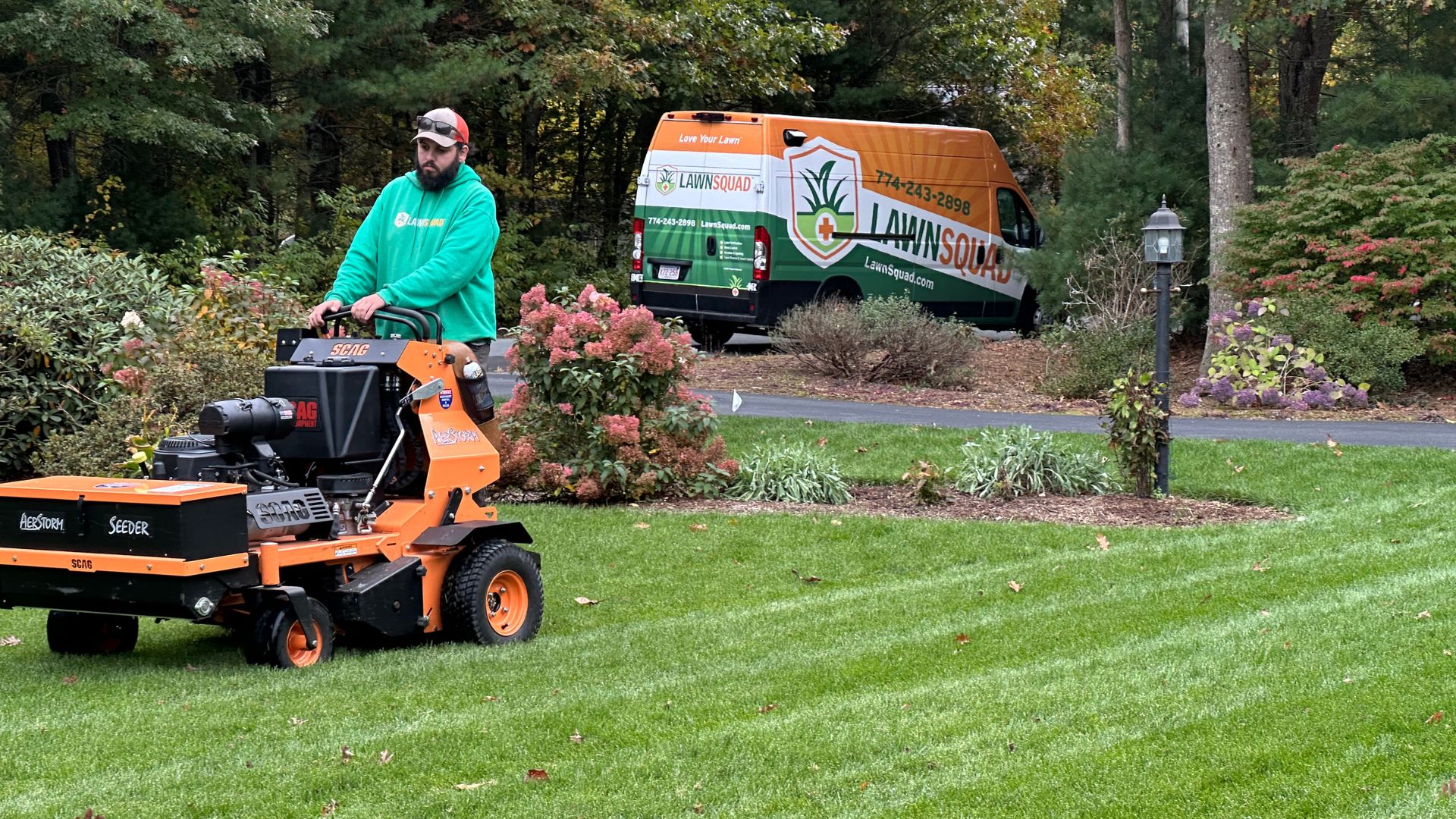
Let Lawn Squad of Dayton Handle It For You
Every Ohio lawn has different needs based on soil type, grass species, sun exposure, and property conditions. Our programs account for all these factors plus the specific challenges of the Miami Valley climate.
Our programs take the guesswork out of fertilization timing.
Our ELITE Program includes:
- Six fertilizer applications timed for Ohio’s growing season
- Pre emergent crabgrass control in early spring
- Broadleaf weed control throughout the season
- Grub prevention and surface insect control
- Disease control during peak fungal season
- Soil testing to identify your lawn’s specific needs
- Unlimited service calls between scheduled visits
Stop wondering if you are fertilizing at the right time with the right products. Let our experienced team deliver professional results while you enjoy your weekends.
Contact Lawn Squad of Dayton today at 937-984-1659 to get a free quote and put your lawn on a professional fertilization schedule.