The short answer: Lawn aeration is one of the most beneficial services for Huntsville lawns because our local soil types create conditions that literally suffocate grass roots. The clay-heavy soils found throughout Madison and Limestone Counties compact easily, blocking water, air, and nutrients from reaching the root zone where your grass needs them most.
Most Huntsville lawns benefit from aeration at least once per year, with heavily compacted properties seeing dramatic improvement from two or more treatments annually.
Quick overview:
- Core aeration: Removes soil plugs to relieve compaction and improve drainage
- Liquid aeration: Uses soil-penetrating products to loosen compacted soil
- Best timing: Late spring through fall for warm season grasses in Huntsville
Keep reading to learn exactly how aeration transforms struggling Huntsville lawns and why our local soil makes this service more important here than in many other areas.
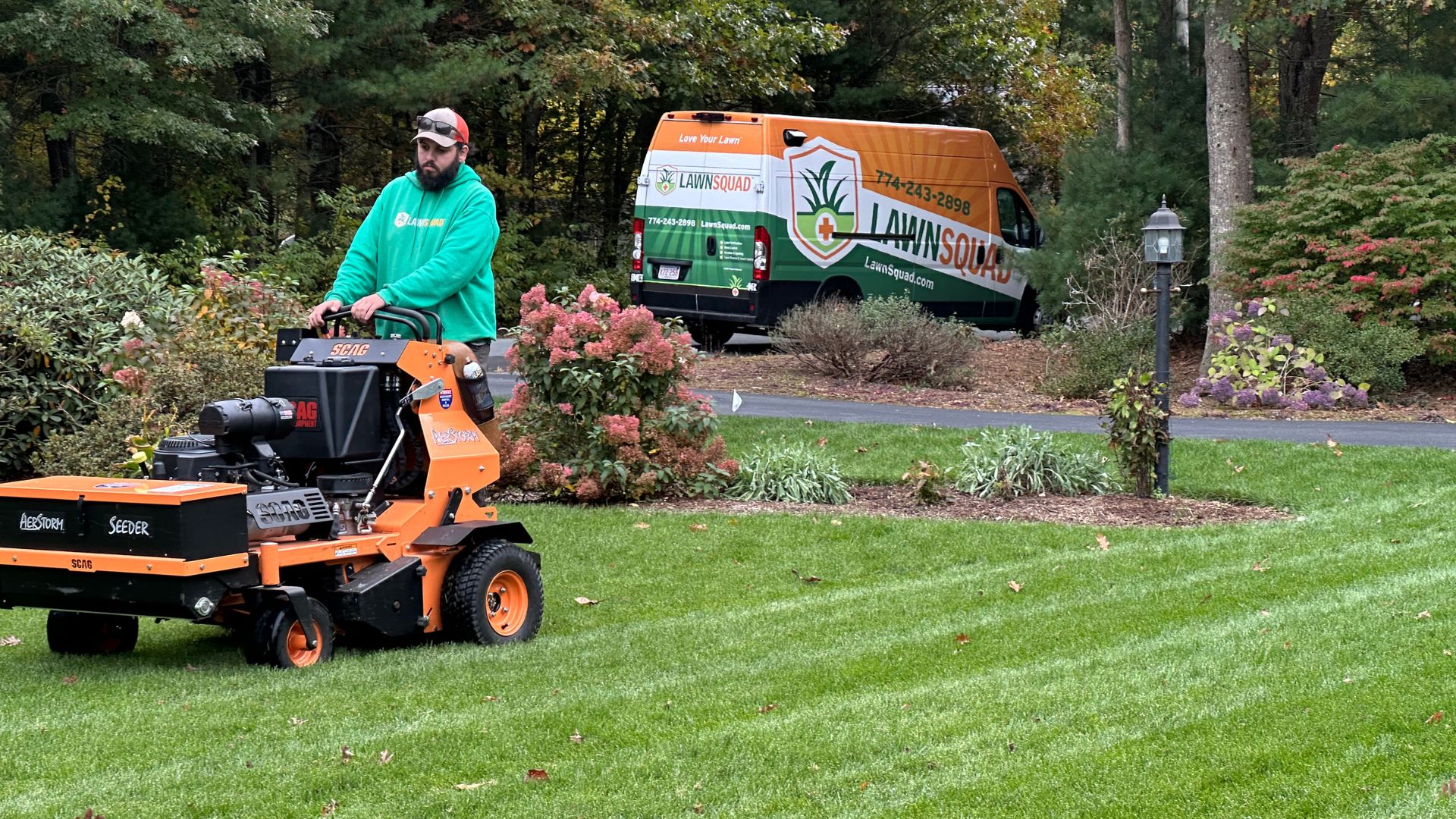
The Complete Aeration Approach: Our Multi-Season Program
At Lawn Squad of Huntsville, we include aeration in our ELITE program because we know how much Huntsville lawns need it. Our treatment schedule provides aeration in Rounds 4, 5, 6, 7, and 8, covering late spring through fall when your lawn benefits most.
What makes aeration so critical in North Alabama is the soil composition we deal with across Madison County. Unlike sandy soils that drain easily and resist compaction, our clay-based soils pack down tightly and create conditions that stress even healthy grass.
Whether you aerate your own lawn or rely on professional service, understanding why aeration matters helps you appreciate what this service does for your property.
Why Aeration Matters More in Huntsville Than Most Homeowners Realize
Skipping aeration in Huntsville does not just slow your lawn’s growth. It creates a cascade of problems that make every other lawn care effort less effective.
Here is what happens when Huntsville lawns go without aeration:
Water runs off instead of soaking in. Compacted clay soil becomes nearly waterproof. You water your lawn and watch the water puddle on the surface or run down the driveway. Your grass stays thirsty while you waste water and money.
Fertilizer never reaches the roots. Those expensive fertilizer applications sit on compacted soil where grass roots cannot access them. You pay for treatments that wash away with the next rain instead of feeding your lawn.
Shallow root development becomes the norm. Grass roots take the path of least resistance. When soil is hard and compacted, roots stay near the surface where they dry out quickly during summer heat and stress easily during drought.
Thatch buildup accelerates. Without healthy soil biology breaking down dead grass, thatch accumulates faster than it decomposes. This organic layer becomes another barrier between water, air, and roots.
The key principle every Huntsville homeowner needs to understand is this: your soil is the foundation of your lawn. No amount of watering, fertilizing, or weed control can overcome soil that physically prevents grass from thriving. Aeration addresses the root cause of many lawn problems rather than just treating symptoms.
Understanding Huntsville’s Soil Types
Before diving into aeration techniques, it helps to understand what we are working with in Madison and Limestone Counties.
The Clay Soil Challenge
Most Huntsville properties sit on soil with high clay content. Clay particles are extremely small and pack together tightly, leaving little space for air, water, or root growth.
When clay soil is wet, it becomes sticky and dense. When it dries, it hardens and cracks. Neither condition is good for grass roots trying to grow and absorb nutrients.
Clay soil also holds nutrients well, which sounds like a benefit but creates problems. Nutrients stay bound to clay particles where roots cannot access them. This is why soil tests in Huntsville often show adequate nutrients while lawns still struggle from nutrient deficiency.
Compaction Makes Everything Worse
Huntsville’s clay soil compacts easily from normal lawn use. Walking, playing, mowing, and even heavy rain all press soil particles closer together. Over time, even a lawn that started with decent soil structure becomes hard and impenetrable.
High traffic areas compact fastest. You can often see the difference between areas where people walk regularly and sections that see less use. The paths look worse because compaction is worse.
Soil Layers Create Additional Problems
Many Huntsville properties have layered soil from construction grading. Builders often spread a thin layer of topsoil over compacted subsoil. Grass roots grow through the topsoil layer but hit a wall of compacted clay beneath.
This layering creates drainage problems as water moves through topsoil then pools at the compacted layer. Roots sitting in saturated soil suffocate and die, even though the surface looks dry.
Core Aeration Guide for Huntsville Lawns
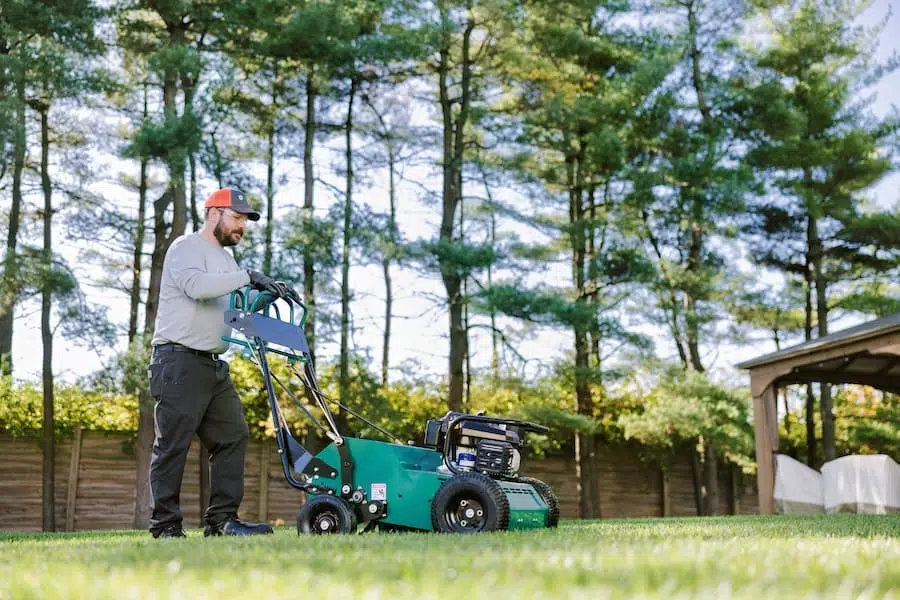
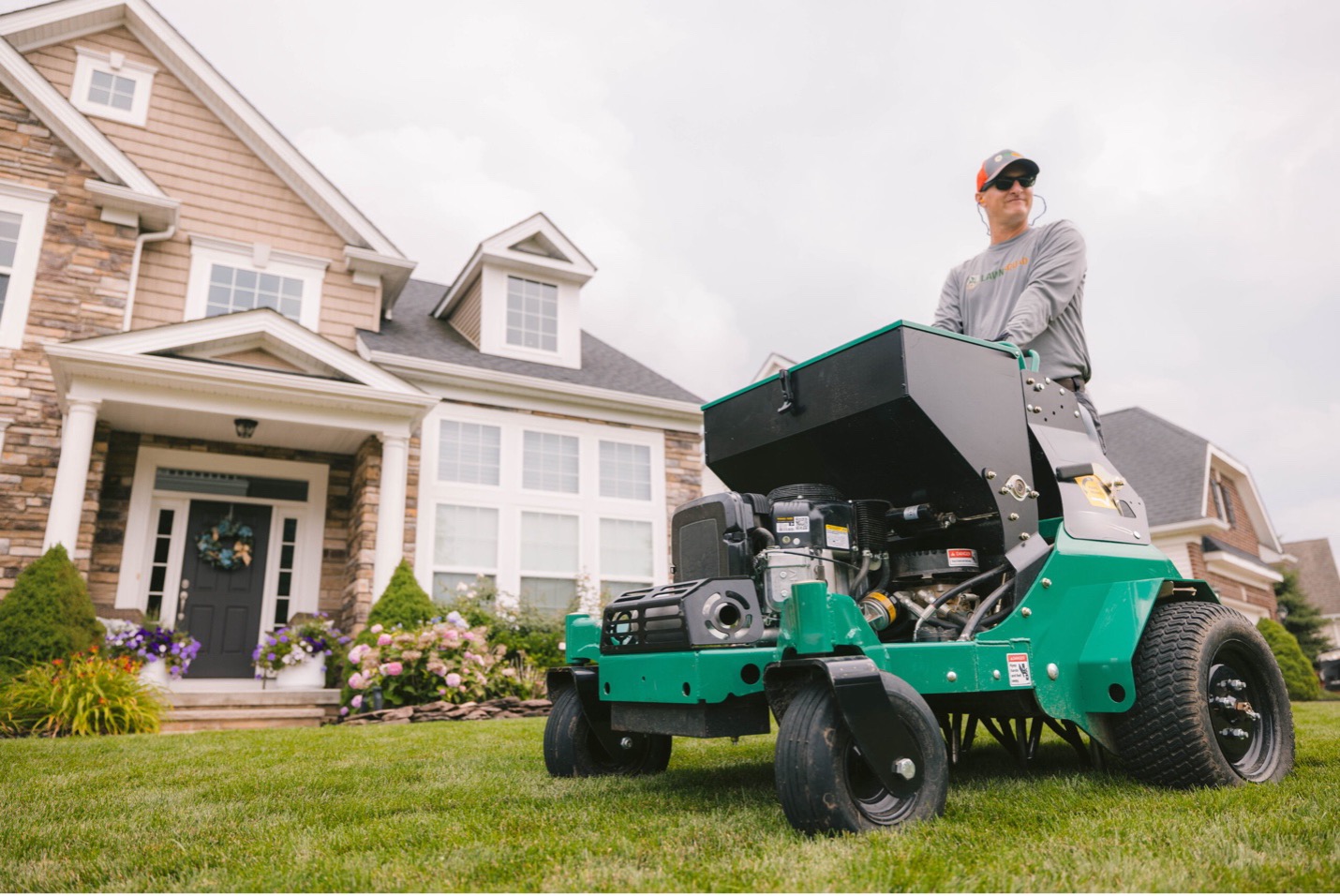
Core aeration is the gold standard for relieving soil compaction. This mechanical process removes small plugs of soil from your lawn, creating channels for air, water, and nutrients to reach the root zone.
How Core Aeration Works
A core aerator uses hollow tines to punch into the soil and pull out plugs approximately two to three inches deep and half an inch in diameter. These plugs are left on the lawn surface to break down naturally.
The holes left behind serve multiple purposes. They immediately improve water infiltration and air exchange. Over time, surrounding soil loosens as it expands into the open spaces. Roots grow into the holes where soil is loose and oxygen is plentiful.
The soil plugs on the surface break down within a few weeks, returning nutrients and beneficial microorganisms to the lawn. Many homeowners want to rake up the plugs, but leaving them in place provides real benefits.
Best Timing for Core Aeration in Huntsville
For warm season grasses common in Huntsville like Bermuda and Zoysia, the ideal aeration window runs from late spring through early fall when grass is actively growing.
Our treatment schedule includes aeration starting in Round 4 (mid-May) and continuing through Round 8 (early November). This timing aligns with peak growing periods when your lawn can recover quickly and take full advantage of improved soil conditions.
Avoid aerating warm season grasses during spring green-up or fall dormancy transition. The grass needs energy to recover from aeration, and these transition periods are already stressful.
What to Expect After Core Aeration
Your lawn will look rough immediately after aeration. The holes and soil plugs are visible and the surface feels uneven. This is normal and temporary.
Within one to two weeks, the plugs break down and holes begin closing. Within a month, your lawn looks normal but the benefits continue below the surface.
Many homeowners notice improved water absorption immediately. Areas that previously puddled now drain properly. Over the following weeks, grass color often improves as roots access nutrients more effectively.
Critical warning: Do not aerate lawns that have received pre-emergent herbicide within the past 60 days. Aeration holes break the pre-emergent barrier and allow weed seeds to germinate. Our treatment schedule accounts for this timing conflict.
Liquid Aeration Guide for Huntsville Lawns
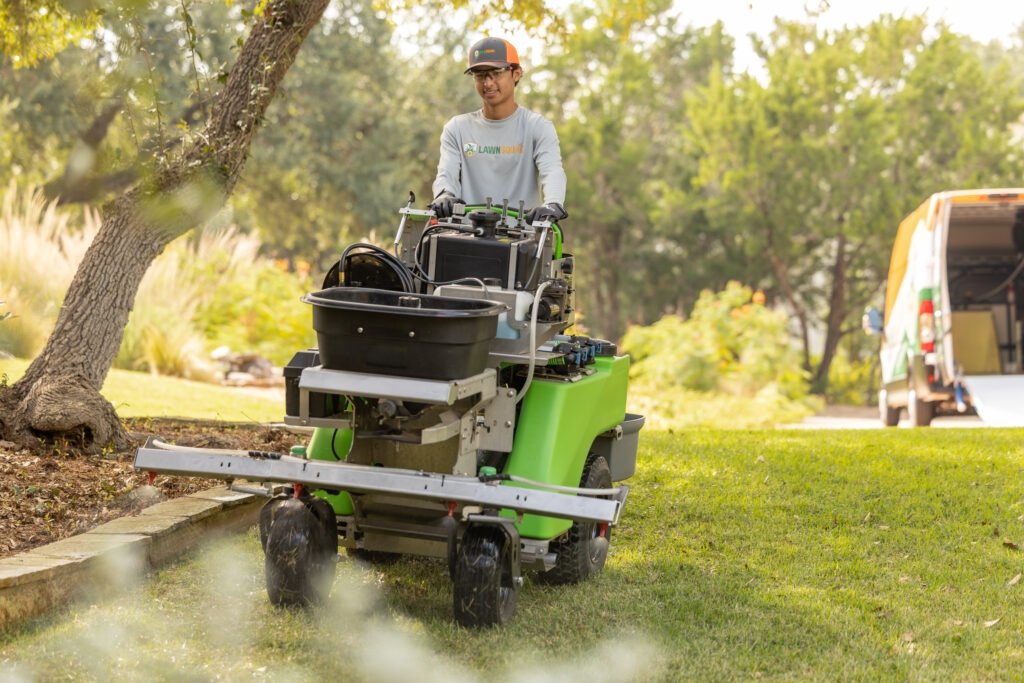
Liquid aeration offers an alternative to mechanical core aeration. This approach uses soil-penetrating products to loosen compacted soil without removing plugs.
How Liquid Aeration Works
Liquid aeration products contain soil conditioners that break the bonds between compacted soil particles. When applied and watered in, these products work their way into the soil and create microscopic spaces for air and water movement.
The effects are less dramatic than core aeration but build over time with repeated applications. Liquid aeration works well as a supplement to core aeration or for situations where mechanical aeration is not practical.
When to Choose Liquid Aeration
Liquid aeration makes sense for Huntsville lawns in several situations:
Between core aeration treatments to maintain soil structure. Spring and fall liquid treatments complement summer core aeration.
On lawns with irrigation systems where core aeration risks damaging buried lines. Liquid products pose no risk to underground components.
For properties with severe compaction that need more help than core aeration alone provides. Combining both methods addresses compaction from multiple angles.
During pre-emergent windows when core aeration would break the weed barrier. Liquid aeration maintains soil health without creating openings for weed seeds.
Liquid Aeration Timing in Huntsville
We offer liquid aeration in both spring and fall. Spring application helps soil recover from winter compaction and prepares your lawn for summer stress. Fall application relieves compaction from summer use and improves root development before dormancy.
Liquid aeration works best when soil is moist but not saturated. The products need to penetrate the soil, so bone-dry conditions reduce effectiveness.
How to Tell If Your Huntsville Lawn Needs Aeration
Not sure whether your lawn needs aeration? These simple tests reveal compaction problems:
The screwdriver test: Push a screwdriver into your lawn after watering. If it takes significant force to penetrate more than two inches, your soil is compacted and needs aeration.
The water puddle test: Watch your lawn during irrigation or after rain. Water should soak in within a few minutes. If it puddles on the surface for extended periods or runs off, compaction is preventing absorption.
The footprint test: Walk across your lawn in the morning when dew is present. If footprints remain visible for more than an hour, your soil is compacted and grass is stressed.
The root depth test: Use a shovel to cut a small section of turf and examine the roots. Healthy grass roots should extend four to six inches deep. Roots confined to the top two inches indicate compacted soil preventing deeper growth.
Visual indicators also reveal compaction problems. Thin grass, bare spots in high traffic areas, excessive thatch, and grass that struggles despite proper watering and fertilization all suggest soil compaction.
What About Overseeding After Aeration?
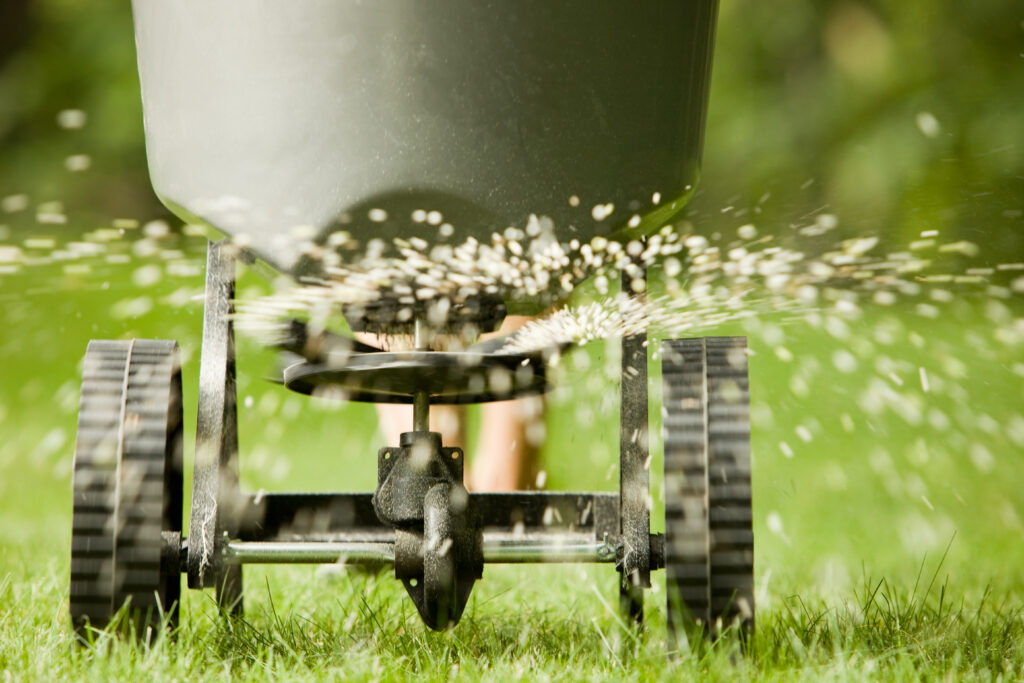
Aeration creates ideal conditions for overseeding because seeds fall into the holes where they have good soil contact and protection from birds and weather.
For Huntsville lawns that need thickening, combining fall aeration with overseeding produces excellent results. The seed germinates in the aeration holes and establishes strong root systems before winter dormancy.
Overseeding pricing in Huntsville depends on lawn size:
| Lawn Size | Overseeding Cost |
|---|---|
| 1,000 to 5,000 sq ft | $37 to $185 |
| 6,000 to 10,000 sq ft | $222 to $370 |
| 11,000 to 15,000 sq ft | $407 to $555 |
| 16,000 to 20,000 sq ft | $592 to $740 |
| 21,000 to 25,000 sq ft | $777 to $925 |
We require overseeding to be paired with aeration for best results. Seed scattered on compacted soil without aeration holes has poor germination rates and wastes your investment.
Important note: Overseeding conflicts with pre-emergent herbicide applications. If you plan to overseed, skip pre-emergent treatment for 60 days before and after seeding. Our team helps you plan the timing to avoid conflicts.
Aeration Pricing for Huntsville Lawns
Core aeration pricing depends on your lawn’s square footage:
| Lawn Size | Aeration Cost |
|---|---|
| 1,000 to 5,000 sq ft | $55 to $77 |
| 6,000 to 10,000 sq ft | $88 to $132 |
| 11,000 to 15,000 sq ft | $143 to $187 |
| 16,000 to 20,000 sq ft | $198 to $242 |
| 21,000 to 25,000 sq ft | $253 to $297 |
Our ELITE program includes aeration in five treatment rounds, providing exceptional value compared to purchasing individual aeration services throughout the season.
Common Aeration Mistakes Huntsville Homeowners Make
After serving Madison County lawns since 2001, we have seen every aeration mistake possible. Here are the ones that waste money or damage lawns:
Mistake #1: Aerating at the Wrong Time Aerating during dormancy or stress periods harms your lawn instead of helping it. Warm season grasses need to be actively growing to recover from aeration. Late spring through early fall is the window for Huntsville lawns.
Mistake #2: Not Marking Irrigation Heads and Buried Lines Core aerators will damage anything buried in the top three inches of soil. Mark all sprinkler heads, cable lines, invisible fence wires, and other underground components before aerating.
Mistake #3: Aerating Dry, Hard Soil Aeration works best when soil is moist. Dry soil prevents the tines from penetrating properly and can damage equipment. Water your lawn one to two days before scheduled aeration.
Mistake #4: Expecting Immediate Results Aeration benefits develop over weeks and months. The holes close, but soil structure continues improving as roots expand and biology activates. One aeration will not transform a severely compacted lawn overnight.
Mistake #5: Only Aerating Once Huntsville’s clay soil recompacts constantly. A single annual aeration helps, but multiple treatments throughout the growing season provide better results. Our ELITE program includes five aeration rounds because we know how quickly compaction returns.
Core Aeration vs. Liquid Aeration: Which Should You Choose?
Core aeration provides immediate, dramatic relief from compaction. The physical removal of soil plugs creates channels that instantly improve water and air movement. Best for: Severely compacted lawns, properties that have never been aerated, situations where maximum impact is needed.
Liquid aeration provides gradual improvement through soil conditioning. The effects accumulate over time with repeated applications. Best for: Maintaining soil structure between core aerations, lawns with irrigation systems, situations where mechanical aeration is not practical.
The ideal approach combines both methods. Core aeration provides the heavy lifting while liquid aeration maintains results between treatments.
Your Huntsville Aeration Calendar at a Glance
DIY Approach
| When | Service | Notes |
|---|---|---|
| Late May | Core Aeration | After grass is fully green and growing |
| Mid-Summer | Liquid Aeration | Maintain soil structure during stress |
| Early Fall | Core Aeration | Relieve summer compaction |
| Late Fall | Liquid Aeration | Prepare soil for winter |
Lawn Squad ELITE Treatment Schedule
| Round | Start Date | Aeration Included |
|---|---|---|
| Round 4 | May 18, 2026 | Yes |
| Round 5 | June 29, 2026 | Yes |
| Round 6 | August 10, 2026 | Yes |
| Round 7 | September 21, 2026 | Yes |
| Round 8 | November 2, 2026 | Yes |
The Bottom Line
Huntsville’s clay-heavy soil creates challenges that homeowners in sandy soil regions never face. Compaction is not a matter of if but when, and regular aeration is the solution that makes everything else work better.
Key principles to remember:
- Clay soil compacts easily and blocks water, air, and nutrients from reaching roots
- Core aeration provides immediate relief by removing soil plugs
- Liquid aeration maintains soil structure between mechanical treatments
- Warm season grasses should be aerated from late spring through early fall
- Multiple aerations per year produce better results than a single annual treatment
- Combining aeration with overseeding maximizes lawn thickness and health
Follow these principles and your Huntsville lawn will finally be able to access the water, air, and nutrients it needs to thrive.

Let Lawn Squad Handle It For You
Every Huntsville property has different soil conditions. Your specific clay content, compaction level, drainage patterns, and lawn use all affect how often you need aeration and which method works best.
Our treatment programs account for all these variables with aeration timed specifically for Madison County conditions and the soil types common throughout North Alabama.
Our ELITE Program includes:
- Aeration in Rounds 4, 5, 6, 7, and 8 covering the entire optimal treatment window
- Soil testing in Round 1 to understand your specific soil needs
- Root stimulant to maximize the benefits of improved soil conditions
- Unlimited service calls if you notice problems between visits
Tired of watching water run off your lawn instead of soaking in? Frustrated with fertilizer that never seems to help? Ready to address the real problem instead of just treating symptoms?
Contact Lawn Squad of Huntsville today at 983-233-6002 or visit lawnsquad.com/contact-us to get a quote and give your lawn the aeration program it needs to finally thrive in our challenging local soil.