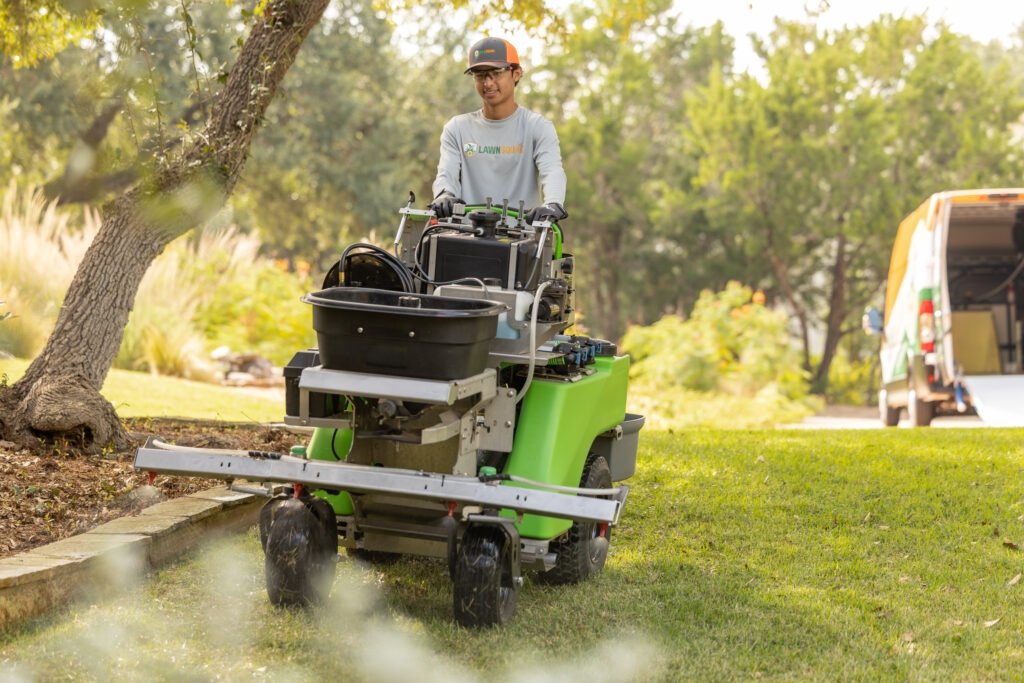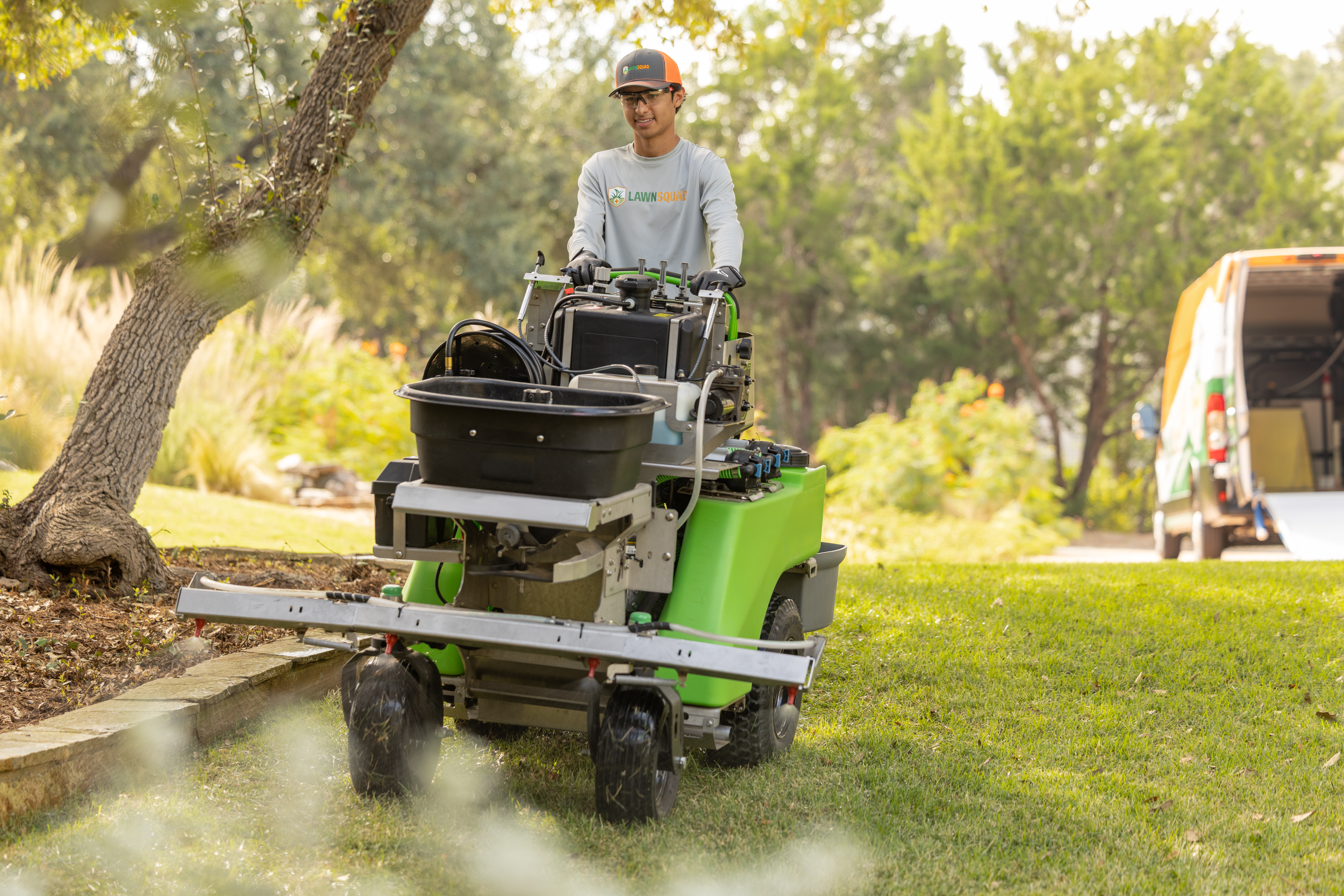
The short answer: The best time to aerate and overseed in Columbus is late August through early October, when soil is still warm, air temperatures are cooling, and weed competition is minimal.
Fall aeration and overseeding gives new grass seedlings ideal growing conditions before winter dormancy. Spring aeration is possible but creates conflicts with pre-emergent herbicides that prevent both weed seeds and grass seeds from germinating.
Quick overview:
- Best timing: Late August through September for combined aeration and overseeding
- Fall advantages: Warm soil, cool air, reduced weed pressure, no pre-emergent conflicts
- Spring considerations: Must skip pre-emergent in seeded areas, higher weed competition, heat stress on young seedlings
- Typical cost: $50 to $270 for aeration alone, $37 to $925 for overseeding depending on lawn size
If your lawn has thin spots, bare areas, or compacted soil that puddles after rain, aeration and overseeding can transform your turf within one growing season. Here’s exactly how to do it right in Central Ohio.ut the entire year.
The Complete Aeration and Overseeding Approach: Timed for Columbus Conditions
At Lawn Squad of Columbus, we schedule aeration services in Rounds 5 and 6 of our ELITE program, hitting the August and September windows that produce the best results for Central Ohio lawns.
This timing isn’t arbitrary. It’s based on the biology of cool season grasses and the specific climate patterns we experience in Greater Columbus, Dublin, Westerville, New Albany, and surrounding communities.
Cool season grasses like Kentucky bluegrass, perennial ryegrass, and tall fescue grow most actively when soil temperatures are between 50 and 65 degrees and air temperatures are between 60 and 75 degrees. In Columbus, these conditions occur in spring and fall, but fall provides a longer window of ideal conditions without the weed pressure and heat stress that challenge spring seeding.
Understanding why timing matters helps you make better decisions whether you’re doing the work yourself or hiring professionals to handle it.
Why Aeration and Overseeding Matter More Than Most Columbus Homeowners Realize
Soil compaction is an invisible problem that affects almost every lawn in Central Ohio. You can’t see it by looking at your grass, but its effects show up as thin turf, poor drainage, and grass that struggles despite regular fertilization.
Here’s what happens in compacted soil: the tiny air spaces between soil particles get crushed, leaving no room for water, oxygen, or roots. Grass roots need air to function. Without it, they stay shallow and weak, unable to access water and nutrients deeper in the soil profile. Shallow-rooted grass suffers during drought, recovers slowly from stress, and can’t compete effectively against weeds.
Columbus soils are particularly prone to compaction for several reasons. Our heavy clay content compresses easily under pressure. Foot traffic from kids, pets, and regular lawn use adds up over years. Even the weight of riding mowers contributes to compaction over time.
Aeration breaks up this compaction by removing small cores of soil, creating channels for air, water, and nutrients to reach grass roots. The improvement is often dramatic, with homeowners noticing better drainage, deeper root growth, and thicker turf within weeks of treatment.
Overseeding addresses a different problem: lawn density. Grass plants have a natural lifespan, and lawns thin out over time as older plants die. Thin lawns allow weeds to establish, show wear patterns more easily, and look patchy even with good fertility. Introducing new grass seed fills in thin areas and can introduce improved grass varieties with better disease resistance and drought tolerance.
Combined, aeration and overseeding provide both immediate soil improvement and long-term lawn thickening. It’s the single most effective treatment for transforming a struggling lawn.
Fall Aeration and Overseeding Guide for Columbus Lawns
Fall is the gold standard for aeration and overseeding in Columbus. Here’s how to do it right.
Step 1: Timing Your Fall Service (Late August to Late September)
The ideal window for fall aeration and overseeding in Columbus runs from approximately August 17 through September 28. This timing allows new grass seedlings six to eight weeks of growth before the first hard frost, typically in late October or early November.
Lawn Squad schedules Round 5 treatments starting August 17 and Round 6 starting September 28. ELITE program customers receive aeration in both rounds, maximizing soil improvement during this critical window.
Earlier in this window (late August) is generally better than later (late September) because it gives seedlings more time to establish before winter. However, successful overseeding can happen throughout September if soil stays warm and adequate moisture is available.
Step 2: Prepare the Lawn Before Aeration
Proper preparation improves aeration results significantly.
Mow your lawn slightly shorter than normal, around 2 to 2.5 inches, a day or two before aeration. This makes it easier for the aerator to penetrate the soil and improves seed-to-soil contact during overseeding.
Water the lawn thoroughly one to two days before aeration if rainfall has been lacking. Aerators work best in moist (not wet) soil. Dry, hard soil resists core removal, while soggy soil clogs the machine. Aim for soil that’s moist several inches deep.
Mark any irrigation heads, invisible fence wires, or shallow utility lines. Aerator tines can damage these systems if you don’t know where they are.
Step 3: Core Aeration Process
Core aeration removes small plugs of soil, typically 2 to 3 inches deep and about 0.5 to 0.75 inches in diameter. These cores are left on the lawn surface to break down naturally, returning nutrients to the soil.
For best results, make two passes over the lawn in different directions. This creates more holes per square foot and provides better overall coverage. High-traffic areas and visibly compacted zones may benefit from additional passes.
The cores left on the surface look messy but disappear within one to two weeks as rain and mowing break them down. Resist the urge to rake them up, as they contain beneficial microorganisms and nutrients that help your lawn.
Step 4: Overseeding Immediately After Aeration
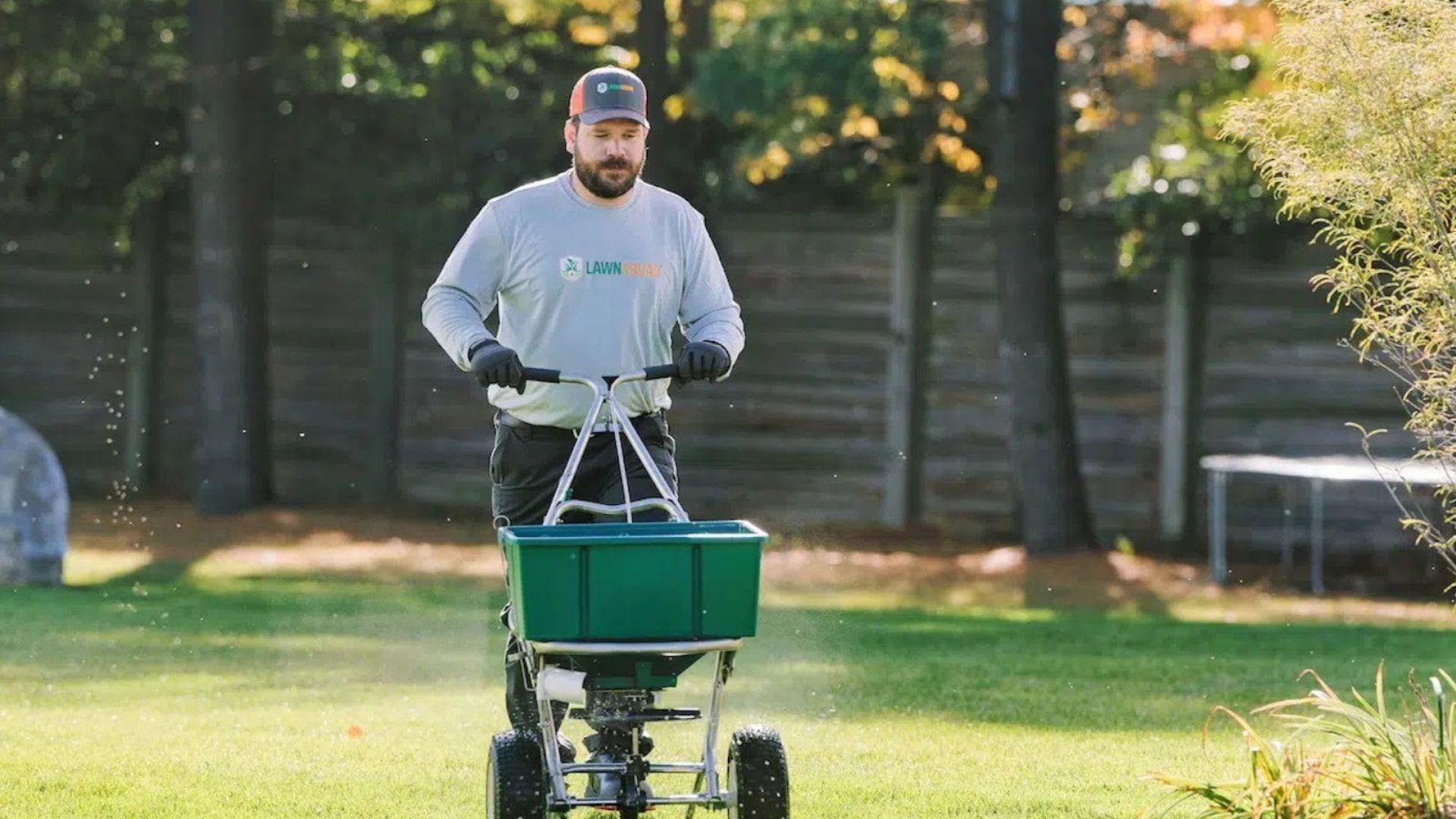
Apply grass seed immediately after aeration while the holes are fresh and open. The aeration holes provide perfect seed-to-soil contact, dramatically improving germination rates compared to broadcasting seed on an unprepared lawn.
Seed selection matters for Columbus lawns. We recommend cool season grass blends containing:
- Tall fescue: Drought tolerant, deep-rooted, handles heat better than other cool season grasses
- Kentucky bluegrass: Forms dense, attractive turf through spreading rhizomes, self-repairs damaged areas
- Perennial ryegrass: Germinates quickly (5 to 7 days), establishes fast, provides quick color while slower species develop
Seed rates vary by lawn condition. Thin lawns typically need 3 to 4 pounds of seed per 1,000 square feet. Bare spots may need 6 to 8 pounds per 1,000 square feet. Maintenance overseeding on healthy lawns uses 1 to 2 pounds per 1,000 square feet.
Step 5: Post-Seeding Care
New grass seed needs consistent moisture to germinate. Water lightly once or twice daily to keep the top inch of soil moist until seeds germinate (7 to 21 days depending on grass type). Avoid heavy watering that puddles or washes seed away.
Once grass reaches 2 inches tall, reduce watering frequency but increase depth. This encourages roots to grow downward rather than staying at the surface.
Wait to mow until new grass reaches 3 to 3.5 inches. Use a sharp blade and avoid removing more than one-third of the grass height at once. Dull blades or aggressive mowing can pull up young seedlings that haven’t fully rooted.
Critical warning: Avoid applying broadleaf herbicides to newly seeded areas until grass has been mowed at least three times. Most herbicides will damage or kill young grass seedlings. Lawn Squad coordinates treatment schedules to avoid this conflict for customers who receive both weed control and overseeding services.
Spring Aeration and Overseeding Guide for Columbus Lawns
Spring aeration and overseeding is possible in Columbus, but it comes with challenges that make fall the preferred option.
Understanding the Pre-Emergent Conflict
The biggest challenge with spring overseeding is the conflict with pre-emergent herbicides. Pre-emergent products work by preventing seeds from developing properly after germination. They don’t distinguish between weed seeds and grass seeds.
If you apply pre-emergent in early March (the correct timing for crabgrass prevention) and then try to overseed in April, your grass seed won’t germinate. If you skip pre-emergent to allow overseeding, crabgrass will likely invade the thin areas you’re trying to repair.
There’s no perfect solution to this conflict. Your options include:
- Skip pre-emergent and accept higher crabgrass pressure in seeded areas
- Apply pre-emergent to most of the lawn but skip areas you plan to seed
- Use siduron (Tupersan), a pre-emergent that allows grass seed germination while controlling crabgrass, though it’s more expensive and less widely available
- Wait until fall for overseeding and maintain full pre-emergent coverage in spring
Spring Timing if You Choose This Route
If you decide to aerate and overseed in spring, timing is compressed. The window runs from mid-March through mid-April in Columbus. Earlier risks cold soil temperatures that prevent germination. Later puts young seedlings into summer heat before they’re established.
Spring-seeded grass faces an uphill battle. Seedlings must establish quickly before summer heat arrives, typically having only 8 to 10 weeks of favorable growing conditions. Compare this to fall seeding, which gives seedlings 6 to 8 weeks of fall growth plus the entire following spring before facing summer stress.
Spring Aeration Without Overseeding
Spring aeration without overseeding avoids the pre-emergent conflict entirely. Aerating in March or April still improves soil structure and prepares the lawn for the growing season. You can maintain full pre-emergent coverage and plan overseeding for fall.
Lawn Squad offers spring aeration as a standalone service for customers who want soil improvement without seeding complications. This approach works well for lawns that have good density but suffer from compaction.
How to Calculate Seed and Service Needs
Understanding your lawn’s square footage helps you purchase the right amount of seed and get accurate service quotes.
Measuring your lawn:
- Sketch your property, breaking it into rectangles and triangles
- Measure each section (one adult pace equals approximately 3 feet)
- Calculate area: length times width for rectangles, base times height divided by 2 for triangles
- Subtract house footprint, driveway, patio, and landscape beds
- Add sections together for total lawn square footage
Seed calculation example: A 7,000 square foot lawn with moderate thinning needs approximately 3 pounds of seed per 1,000 square feet. Total seed needed: 21 pounds. Quality grass seed typically costs $3 to $6 per pound, so budget $63 to $126 for seed alone.
Service pricing at Lawn Squad of Columbus:
| Lawn Size | Aeration Only | Overseeding Only | Combined Service |
|---|---|---|---|
| 1,000 to 5,000 sq ft | $50 to $70 | $37 to $185 | $87 to $255 |
| 6,000 to 10,000 sq ft | $80 to $120 | $222 to $370 | $302 to $490 |
| 11,000 to 15,000 sq ft | $130 to $170 | $407 to $555 | $537 to $725 |
| 16,000 to 20,000 sq ft | $180 to $220 | $592 to $740 | $772 to $960 |
| 21,000 to 25,000 sq ft | $230 to $270 | $777 to $925 | $1,007 to $1,195 |
What About Liquid Aeration?
Liquid aeration has gained popularity as an alternative to core aeration. Understanding how it works helps you decide if it’s right for your lawn.
Liquid aeration products contain soil conditioners, typically humic acids and surfactants, that are supposed to loosen soil structure without mechanical disturbance. Manufacturers claim these products reduce compaction, improve water penetration, and enhance root growth.
Advantages of liquid aeration:
- No cores left on the lawn surface
- Won’t damage irrigation systems or underground utilities
- Can be applied more frequently than core aeration
- Covers areas mechanical aerators can’t reach easily
Disadvantages of liquid aeration:
- Research on effectiveness is limited compared to core aeration
- Does not create physical channels for root growth
- Results are less dramatic and take longer to appear
- Not as effective for severely compacted soils
Lawn Squad offers liquid aeration in both spring and fall for customers who prefer this option. However, we generally recommend core aeration for Columbus lawns because our heavy clay soils benefit from the physical hole creation that core aeration provides.
Bottom line: Liquid aeration can be a useful supplement to core aeration or an option for lawns where mechanical aeration isn’t practical, but it shouldn’t completely replace core aeration for compacted Central Ohio soils.
Common Aeration and Overseeding Mistakes Columbus Homeowners Make
After serving lawns throughout Greater Columbus since 2001, we’ve seen these mistakes repeatedly. Avoiding them dramatically improves your results.
Mistake #1: Aerating at the wrong time Aerating during summer heat stress or winter dormancy provides minimal benefit and can damage struggling turf. The best results come from aerating when grass is actively growing and can quickly recover and fill in the holes.
Mistake #2: Aerating dry, hard soil Aerators can’t penetrate bone-dry clay soil effectively. The tines skip across the surface or pull shallow, ineffective cores. Always water thoroughly one to two days before aeration if rainfall has been insufficient.
Mistake #3: Seeding without adequate seed-to-soil contact Broadcasting seed onto an unprepared lawn surface results in poor germination. Seeds sitting on top of thatch or dense grass can’t reach the soil to root. Aeration, dethatching, or at minimum aggressive raking improves contact dramatically.
Mistake #4: Inconsistent watering after seeding New grass seed needs consistent moisture during germination. One missed watering day during a hot spell can kill germinating seeds. Conversely, heavy watering that puddles can wash seed away or promote fungal disease.
Mistake #5: Mowing too soon or too aggressively Young grass seedlings are fragile. Mowing before they’re well-rooted can pull them out of the ground. Removing too much leaf tissue at once stresses plants that haven’t developed strong root systems. Wait until new grass reaches 3 to 3.5 inches and never remove more than one-third of the blade.
Mistake #6: Applying herbicides too soon Most broadleaf herbicides damage young grass seedlings. Wait until new grass has been mowed at least three times before applying weed control. This patience is hard when weeds appear in newly seeded areas, but herbicide damage is worse than temporary weed presence.
DIY Aeration vs. Professional Service: Which Should You Choose?
DIY aeration is possible with rental equipment from home improvement stores. Core aerator rentals typically cost $70 to $100 per day. You control the timing exactly, can make extra passes over problem areas, and save money on labor.
However, DIY aeration has challenges. Rental aerators are heavy and difficult to transport and maneuver. They require physical stamina to operate across an entire lawn. You need a vehicle capable of hauling the equipment. Results depend on your technique and equipment condition.
Best for: Physically capable homeowners with appropriate vehicles, smaller lawns, and willingness to learn proper technique.
Professional aeration provides commercial-grade equipment, experienced operators, and consistent results. Professional aerators are typically more powerful than rental units, pulling deeper cores with better coverage. Service includes transport, operation, and any necessary adjustments for your specific lawn conditions.
Best for: Larger lawns, homeowners without appropriate vehicles, anyone who wants reliable results without the physical labor, and those who value their weekend time.
Cost comparison for a 10,000 square foot lawn:
| Factor | DIY | Professional |
|---|---|---|
| Equipment rental | $70 to $100 | Included |
| Seed (30 lbs at $4/lb) | $120 | Included or additional |
| Fertilizer/starter | $30 to $50 | Often included |
| Your time | 3 to 5 hours | None |
| Total | $220 to $270 plus time | $300 to $490 |
The cost difference is smaller than many homeowners expect, especially when you factor in the value of your time and the likelihood of better results with professional equipment.
Your Columbus Aeration and Overseeding Calendar at a Glance
Recommended Fall Schedule
| Task | Timing | Details |
|---|---|---|
| Plan and schedule service | Early August | Book professional service or reserve rental equipment |
| Pre-aeration mowing | 1 to 2 days before | Cut to 2 to 2.5 inches |
| Pre-aeration watering | 1 to 2 days before | Ensure soil is moist several inches deep |
| Core aeration | August 17 to September 28 | Make two passes in different directions |
| Overseeding | Immediately after aeration | Apply seed while holes are fresh |
| Post-seed watering | Daily for 2 to 3 weeks | Light watering to keep top inch moist |
| First mowing | When grass reaches 3.5 inches | Use sharp blade, remove no more than 1 inch |
| Resume normal mowing | After 3 to 4 mowings | Gradually return to 3 to 3.5 inch height |
| Winterizer fertilizer | Late September to October | Included in Round 6 of Lawn Squad programs |
Spring Alternative Schedule
| Task | Timing | Details |
|---|---|---|
| Core aeration | Mid-March to mid-April | If overseeding, skip or modify pre-emergent |
| Overseeding (if doing) | Immediately after aeration | Understand pre-emergent conflicts |
| Post-seed watering | Daily for 2 to 3 weeks | More challenging as temperatures rise |
| First mowing | When grass reaches 3.5 inches | Must establish before summer heat |
The Bottom Line
Aeration and overseeding is the most effective single treatment for transforming thin, struggling Columbus lawns into thick, healthy turf.
Key principles to remember:
- Fall is the best time for aeration and overseeding in Columbus, providing ideal conditions without pre-emergent conflicts
- Core aeration addresses soil compaction that affects almost every Central Ohio lawn
- Overseeding introduces new grass plants to fill thin areas and improve overall lawn density
- Proper watering after seeding is critical, as inconsistent moisture kills germinating seeds
- Patience with mowing and herbicide application protects your investment in new grass
Columbus homeowners who aerate and overseed in fall consistently achieve the thick, carpet-like lawns that make neighbors ask what their secret is.
Let Lawn Squad Handle It For You
Every Columbus lawn has different compaction levels, thin areas, and growing conditions. Shade patterns, soil composition, drainage, and past lawn care history all affect what your specific property needs.
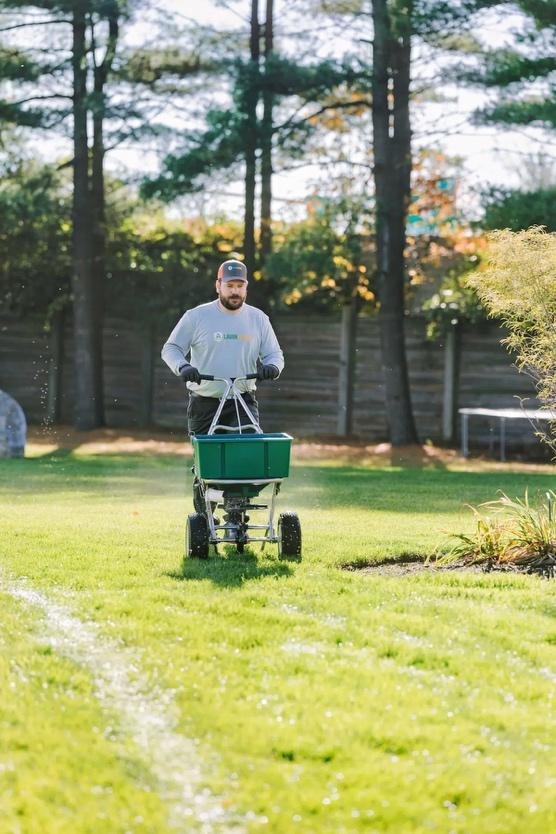
Lawn Squad of Columbus has transformed lawns throughout Greater Columbus, Dublin, Westerville, New Albany, Pataskala, Pickerington, and surrounding Central Ohio communities since 2001. Our ELITE program includes aeration in both Round 5 and Round 6, providing maximum soil improvement during the critical fall window.
Our aeration and overseeding services include:
- Commercial-grade core aeration equipment for deeper, more consistent results
- Two aeration treatments in the ELITE program for maximum compaction relief
- Premium grass seed blends selected for Central Ohio conditions
- Proper timing coordinated with your weed control schedule to avoid conflicts
- Starter fertilizer options to give new seedlings the best start
- Expert guidance on post-seeding watering and care
- Unlimited service calls if you have questions during the establishment period
Stop looking at your neighbor’s thick lawn and wondering why yours won’t fill in. Stop fighting the same thin spots year after year. Stop spending money on fertilizer that can’t reach compacted roots.
Contact Lawn Squad of Columbus today at 740-549-9991 to schedule fall aeration and overseeding and finally get the thick, healthy lawn you deserve.