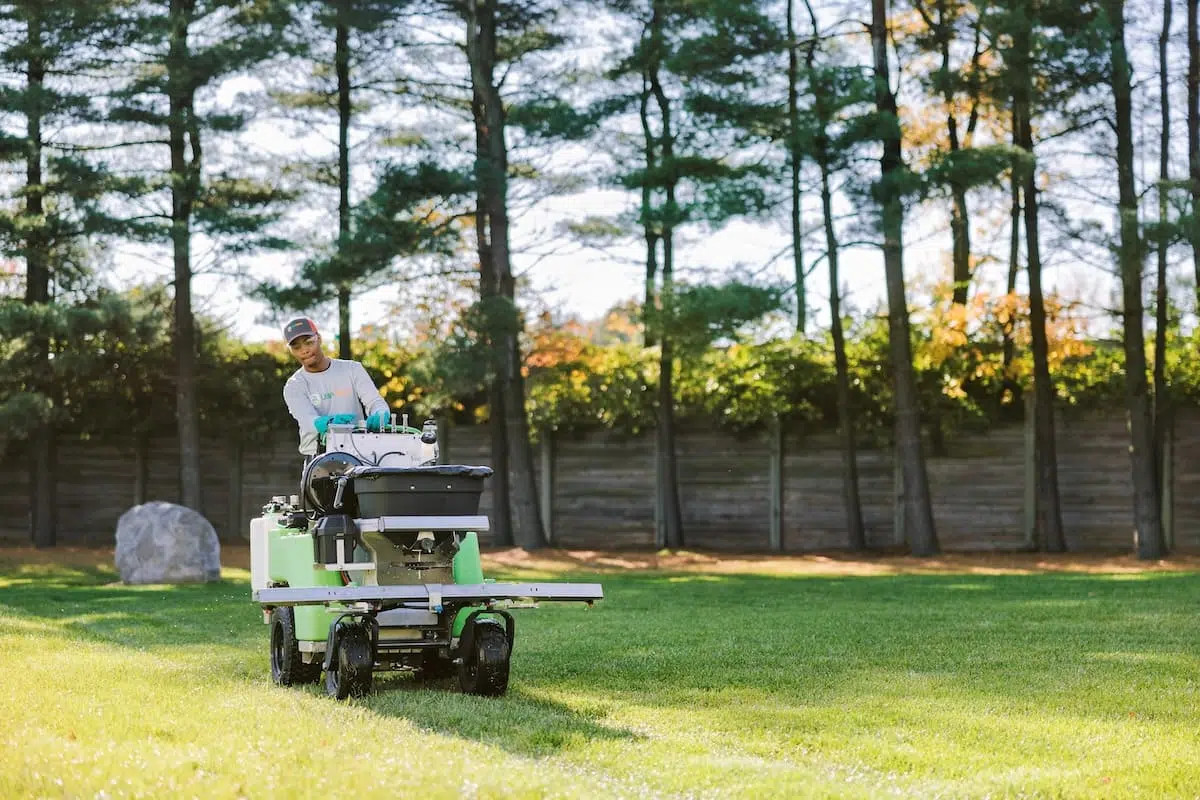
Tall Fescue in Frederick County: How a Late-Season Feeding Builds a Thicker Lawn for Spring

Tall Fescue in Frederick County: How a Late-Season Feeding Builds a Thicker Lawn for Spring
Short Answer: Tall fescue is the most common lawn grass in Frederick County, and it responds especially well to a late-season feeding in early November. As top growth slows, fescue keeps building roots and storing energy in its crowns until the ground freezes. A modest nitrogen application during that window helps the grass produce new shoots, called tillers, which is how fescue thickens. Because fescue does not spread aggressively on its own, that fall tillering is one of the best ways to turn a thin lawn into a dense one by spring. In Maryland, homeowners need to finish by November 15.
If you have lived in Frederick for a while, you have probably noticed that some lawns stay thick and deep green year after year, while others always seem a little thin no matter how much seed goes down. Very often, the difference is not the seed. It is what happens in the fall.
Most homeowners we talk to across Frederick County have tall fescue lawns, whether they know it or not. It is the grass of choice for our transition-zone climate. Understanding how fescue grows, especially in November, makes it much easier to get the thick lawn you are after.
Why Tall Fescue Rules Frederick County
Frederick sits in the transition zone, where summers are hot and humid enough to stress cool-season grasses, and winters are cold enough to keep warm-season grasses dormant for months. Tall fescue handles that balance better than most grasses. Its deep roots let it tolerate summer heat and dry spells, and it stays green well into late fall.
That is why it shows up everywhere, from newer neighborhoods around Urbana and Ballenger Creek to older lots closer to downtown and the farms and acreages out toward Middletown and Walkersville.
How Fescue Thickens
Tall fescue is a bunch-type grass. Unlike Kentucky bluegrass, which spreads with underground rhizomes, fescue grows in clumps and thickens mainly by producing new shoots from its crown. Those new shoots are called tillers.
This matters because fescue does not fill in bare spots very well on its own. A thin fescue lawn tends to stay thin unless the existing plants produce more tillers or new seed is added. The healthier and more energized each plant is, the more tillers it produces.
Why Fall Is Fescue’s Big Season
Tall fescue does most of its tillering and root building in the fall. As temperatures cool in September and October, the plant shifts its energy from surviving summer to building for the next year. That process continues into November, slowing as the days shorten but not stopping until the soil freezes.
A late-season feeding in early November supports that process at exactly the right time. The nitrogen the plant takes up now goes mostly into roots, crowns, and new tillers rather than tall, leafy growth. The result is a denser lawn when growth resumes in spring.
What Happens Without a Fall Feeding
A fescue lawn that skips its fall feedings usually does not look bad in November. It may stay green right along with the neighbors. The difference shows up months later.
In spring, an underfed fescue lawn tends to green up slowly and unevenly. Thin areas from last summer stay thin. Weeds like dandelions, clover, and crabgrass find those gaps quickly. And when the next summer heat arrives, a lawn with fewer tillers and shallower roots is more likely to struggle.
The Maryland Timing Factor
In Frederick, there is an extra reason to plan carefully. Maryland’s Lawn Fertilizer Law sets November 15 as the last day homeowners may fertilize their lawns until March 1. Certified lawn care professionals may apply a limited amount of nitrogen through December 1.
For fescue, that is not a problem as long as the feeding is planned ahead. Here is what we have found works best: aim for the first week or two of November, once mowing has slowed but the grass is still green. That lines up with the time fescue makes the best use of a late-season feeding, and it leaves a buffer before the deadline.
How Much Nitrogen Fescue Needs
Fescue does not need heavy feeding to benefit. Moderate rates spread across the fall tend to work better than one big dose. Maryland’s law also requires following University of Maryland fertilizer recommendations, which set limits on how much nitrogen can be applied at one time and over the year.
A late-season feeding is typically a modest application. The goal is not to make the lawn surge in November, but to give it enough to store for winter and spring.
Pair Feeding With Overseeding
If your fescue lawn is thin, fertilizer alone may not be enough. Because fescue does not spread aggressively, many thin lawns benefit from overseeding in late summer or early fall, ideally from late August through September in Frederick County. By November, any seed that germinated in September is young but established enough to benefit from a late-season feeding.
If you did not overseed this fall, a late-season feeding still helps the existing plants tiller and thicken. Overseeding can be planned for next fall.
Mowing Height Makes a Difference
Tall fescue does best when mowed tall, around three to three and a half inches through the growing season. Taller grass has deeper roots, shades out weed seeds, and makes more energy. Keep it there until growth nearly stops in November, then lower the mower slightly for the final cut, to around two and a half to three inches. Scalping fescue before winter removes leaf tissue it still needs and exposes the crowns to cold.
Leaves and Fescue
Frederick County’s mature oaks and maples drop a lot of leaves, often later than people expect. A thick leaf layer on fescue blocks sunlight in late fall, right when the grass is trying to store energy, and it creates damp conditions that favor winter disease. Mulching light leaf cover with the mower or clearing heavier layers before the late-season feeding helps the fertilizer reach the soil and helps the grass keep working.
What About Brown Patch?
Some Frederick homeowners remember brown patch from summer, the fungal disease that leaves irregular brown areas in fescue during hot, humid weather. A late-season feeding in November does not encourage brown patch, since temperatures are far too cool for it. Heavy nitrogen in late spring and summer is what tends to feed brown patch. Fall feeding is the safer, more effective time to push fescue toward density.
Spring Will Still Need Attention
A late-season feeding sets the lawn up well, but it is not the end of the story. When the blackout ends on March 1 and the soil warms, the lawn will still benefit from crabgrass prevention and a modest spring feeding. The difference is that a fescue lawn fed well in fall usually needs less pushing in spring, which means less mowing and a lower risk of brown patch when summer heat arrives.
What a Thicker Fescue Lawn Looks Like Next Spring
Imagine your yard next April. The thin areas along the driveway have filled in. The lawn feels thicker underfoot, with more blades per square inch. There are fewer gaps for dandelions to claim, and the color is even from front to back. That density was built in the fall, one tiller at a time.
What to Do Next
If you have a tall fescue lawn, plan a modest late-season feeding for the first week or two of November, once mowing has slowed but the grass is still green, and finish before the November 15 homeowner deadline. Keep mowing at about three inches until growth stops, clear leaves before you apply, and if the lawn is thin, plan overseeding for next September.
If you would rather have someone else handle the timing decisions, product selection, and application for your Frederick lawn, we are here for that. Lawn Squad of Frederick serves homeowners across Frederick County. Visit lawnsquad.com to request a free quote. Our VitaminLawn program is built for the grass types, soils, and weather patterns we deal with here, and for the rules Maryland sets on when and how lawns can be fed.
Here is what to expect. We will look at your grass, talk through how your lawn handled this year, and explain what we would apply before the season closes and why. If your lawn does not need a late-season application, we will tell you that honestly.