Feed Your Own Lawn or Hire It Out? An Honest Look for Palm Beaches Homeowners
Short Answer: Doing it yourself is entirely workable here and the cost gap is narrower than most people assume. Product for an average Palm Beaches lawn runs roughly $35 to $60 per application, against $65 to $140 for a professional visit. What tips the decision is usually not price. It is spreader calibration, keeping track of which applications local ordinances permit and when, and being willing to apply eight or more times a year because our lawns never go dormant. If you enjoy the work and will calibrate once a season, DIY produces results close to professional.
Most articles comparing do it yourself lawn care to hiring a company are published by companies who want the work, and they tend to skip the part where handling it yourself is perfectly reasonable. We would rather lay out the real numbers and let you decide. The homeowners who choose us after seeing honest math tend to be better customers than the ones who were talked into it.
So here is the comparison the way we would explain it to a neighbor in Jupiter or Boynton Beach. What each route costs, where the DIY approach tends to break down in our specific conditions, and when we would tell you to just do it yourself.
The Cost Math
Start with your actual turf area, since everything follows from it. A typical Palm Beaches lot carries somewhere between four and ten thousand square feet of grass once you subtract the house, driveway, pool deck, and beds. Most homeowners overestimate this considerably, which is where DIY budgets usually go wrong first.
A quality bag covers roughly five thousand square feet and runs about $30 to $55, with the slow release formulations our ordinances favor at the higher end. For an average lawn that is one to two bags per application, so roughly $35 to $60 in product. A professional visit for the same lawn generally runs $65 to $140.
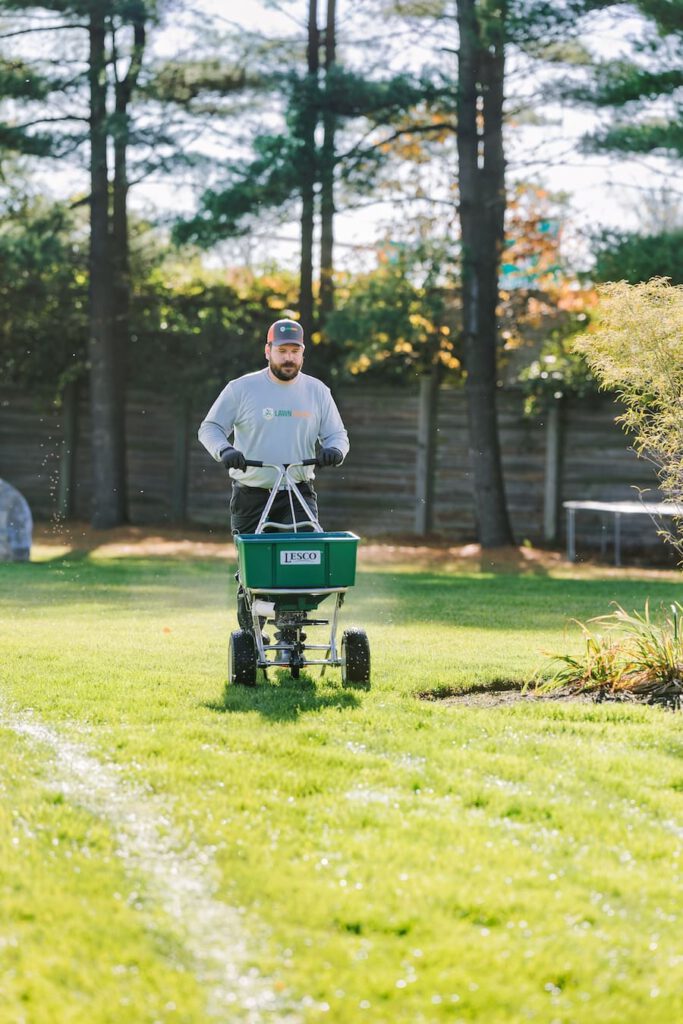
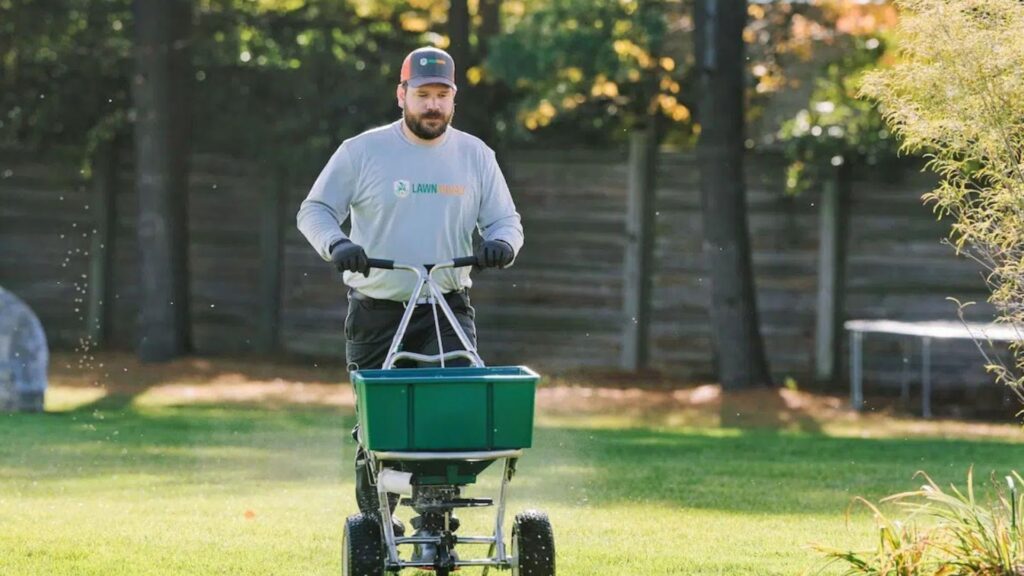
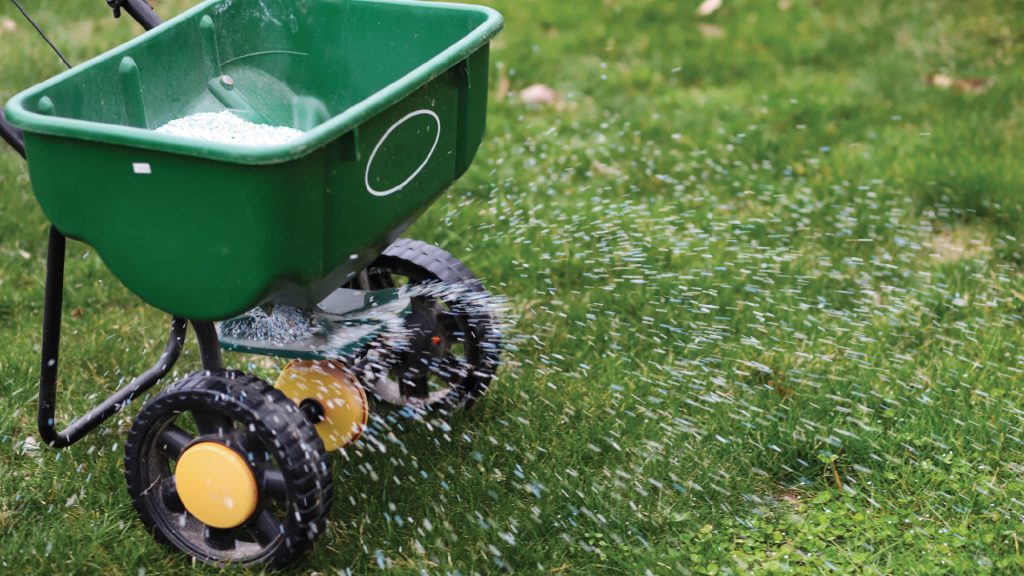
Then add the fixed costs. A broadcast spreader is $60 for a basic model or $150 and up for one that holds calibration reliably, plus a deflector shield if your property borders a canal or lake. Add a separate micronutrient or iron product, which is a genuine additional line here. Add about forty five minutes per application plus a trip to buy product.
Multiply that across eight or more applications and the annual DIY figure typically lands somewhere around $300 to $500 in product and time against $500 to $950 for a program. Real savings, but not the multiple most people expect.
Where the Gap Narrows
A few things close the distance more than homeowners anticipate. Partial bags are the most common. Leftover product sits in a humid Florida garage and clumps, and clumped fertilizer spreads unevenly or gets thrown out. Buying in quantities that match your lawn is harder than it sounds when bags come in fixed sizes.
The spreader purchase is a real first year cost, and a cheap spreader that loses calibration is worse than no spreader, because it produces striped or burned turf you then have to repair.
And program pricing is usually bundled. A fertilization only comparison is not apples to apples if the program you are weighing includes weed control, chinch bug management, and micronutrients. If you would buy those separately anyway, add them to the DIY column before comparing.
Where DIY Results Usually Slip
In our experience the difference in outcomes almost never comes from the product in the bag. It comes from three execution details, and all three are fixable.
Calibration is the largest. Every spreader setting number means something different on every bag, because granule size and density vary by product. The chart on the bag is a starting point tuned to a few popular spreaders, not a guarantee. Applying twenty percent heavy wastes money and can burn turf. Applying twenty percent light produces a lawn that never quite responds and leaves you wondering why. Most homeowners never verify, and this is the single biggest gap we see.
Pattern is second. Striping happens when passes do not overlap correctly, and it appears two weeks later as dark green bands with pale ones between. The fix is a consistent walking pace and overlapping the edge of your spread pattern rather than the edge of your wheel track.
Third is frequency discipline. Our lawns grow twelve months a year and our sand holds nothing, so light and frequent is the approach that works. That means eight or more applications, which is a lot of Saturdays. The applications homeowners skip are usually the ones in the least pleasant months, and skipping them is what produces the uneven year.
The Compliance Piece Becomes Yours
This is the factor specific to our market and it deserves its own mention. Palm Beach County and its municipalities regulate lawn fertilizer more closely than most of the country. Rules generally address seasonal restrictions on nitrogen and phosphorus during the summer rainy season, a required minimum share of slow release nitrogen, limits on phosphorus without a soil test showing need, and buffer distances near waterways.
When you hire a company, tracking that is their job and they work under a certified applicator. When you do it yourself, it becomes your responsibility to know your municipality’s current rule, since they differ locally and get amended. That is not a reason to avoid DIY, and plenty of homeowners manage it easily. It is a reason to look the rule up rather than assume.
There is also a practice provision worth adopting regardless. Fertilizer that lands on a driveway, sidewalk, or street should be swept back onto the turf rather than hosed off, because product on a hard surface has a direct route to a storm drain and then to the Intracoastal. Two minutes with a broom.
What Hiring Out Actually Buys
It is not the fertilizer. Commercial product is more consistent in granule size and blend uniformity, but that difference alone would not justify the price.
What you are buying is calibrated equipment, applications that happen whether or not you feel like it in August, ordinance compliance, and a set of eyes on the lawn eight or more times a year. Across the properties we manage here, that last item is often the highest value. Chinch bugs can take out a section of Floratam in weeks and they remain active through our mild winters. Sod webworms scalp lawns in the late rainy season. Catching either early is worth more than the application it was noticed during.
You are also buying diagnosis. A pale lawn here might be short on nitrogen, short on available iron because of high pH from limestone or shell fill, under insect pressure, or simply missing water from a blocked irrigation head. Those look similar and call for different responses, and guessing wrong costs a season.
When We Would Tell You to Do It Yourself
There are situations where hiring out does not make sense, and saying so costs us nothing. If you enjoy yard work, own a decent spreader, and will calibrate it once a season, you can get results very close to professional. Fertilization is among the most DIY friendly parts of lawn care, considerably more so than weed control or disease management.
Small lawns are another case. Under about three thousand square feet, the per visit minimum most companies charge makes the economics awkward, and a single bag covers a large share of your year.
And if the lawn simply is not your priority right now, that is a legitimate position. A lawn receiving three or four well timed applications a year will still be meaningfully better than one receiving none, and there is no obligation to run a full program to be allowed to care about your yard.
What to Do Next
Whichever way you lean, measure your actual turf area first. Pace the perimeter of each grass section, multiply, and subtract beds and hardscape. Nearly every homeowner we do this with finds a smaller number than they guessed, and every cost estimate and quote depends on that figure being right.
If you are going DIY, calibrate before the first pass. Put a known weight of product in the hopper, run a measured area, weigh what is left, and compare against the target rate on the bag. Fifteen minutes once a season is the difference between a program that works and one that does not.
If you are hiring out, ask any company three questions. Is the price based on measured square footage. How many applications per year and what is included. Does the company apply under a certified applicator and how does it handle local ordinance requirements. The answers sort companies fast.
If you would rather hand off the timing, product selection, and compliance for your lawn, we are here for that. Visit lawnsquad.com to find Lawn Squad of The Palm Beaches and request a free quote on your property. Our VitaminLawn program is built around the sandy soils, year round growth, and St. Augustine lawns we work with here, and we are happy to tell you honestly when your lawn does not need us.