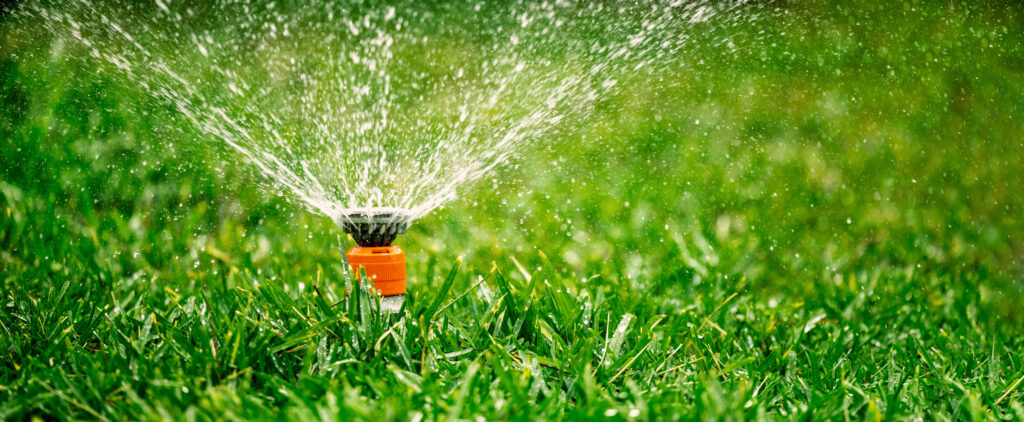
We get this question constantly once temperatures start climbing into the 80s: “Am I watering enough?” Usually, the person asking is either drowning their lawn on a timer that never got adjusted since spring or barely giving it enough to wet the surface before running off to work. Southeastern Massachusetts doesn’t make this easy either. We get humidity, sudden downpours, then a week and a half of nothing, and that pattern throws people off more than actual drought would.
There’s no perfect formula that applies to every yard, but there’s a solid starting point, and a lot of what matters comes down to habits more than exact numbers.

Start Around 1 To 1.5 Inches Per Week
For most lawns around here, such as fescue, we recommend increasing irrigation to 2 inches once you hit a real stretch of 85-90 degree days, especially if your yard sits on sandy ground.
Honestly, though, the total isn’t where most people go wrong. It’s the schedule. Plenty of homeowners water for ten minutes every evening because it feels like the responsible thing to do, and it isn’t. Short daily watering trains roots to stay near the surface, where it’s easy. Then the first genuinely hot week hits, and the lawn has nothing to fall back on. Two, maybe three longer sessions a week, soaking deep, do far more for a lawn’s resilience than watering it a little bit every single day ever will.
Our Summers Aren’t As Simple As They Look
People who grew up somewhere drier tend to assume New England summers are forgiving. They’re not, but they are deceptive. Humid mornings and the occasional thunderstorm make it look like the lawn’s getting plenty, when the roots three inches down are bone dry.
Soil type matters a lot more here than most watering guides account for. If you’re near the water in Wareham, Marion, Mattapoisett, or the shore side of Plymouth, chances are your soil is sandy and drains fast, so you’ll likely need to water more and more often than someone fifteen minutes inland. Head toward Raynham, Easton, or the clay-heavier pockets around Taunton, and it’s the opposite problem. Water sits longer, and blasting it fast just runs off before it soaks in. Slower cycles work better there.
And then there’s the storms. A hard afternoon downpour looks like it solved your watering problem for the week. Often it didn’t, most of that water ran straight off before the ground could absorb it.
Two Quick Ways To Check Without Overthinking It
- Walk across your lawn, then look back. Footprints that bounce back in a few seconds mean you’re okay. If they stay pressed into the grass, water it.

- Color is a good indicator, too. Right before the grass turns brown, it usually shifts to a duller, almost grayish-blue shade, and blades start curling inward. Catch it there and you’ll save yourself a lot of recovery work down the line.
Water Early. Not Because It’s A Rule, Because Of What Happens If You Don’t.
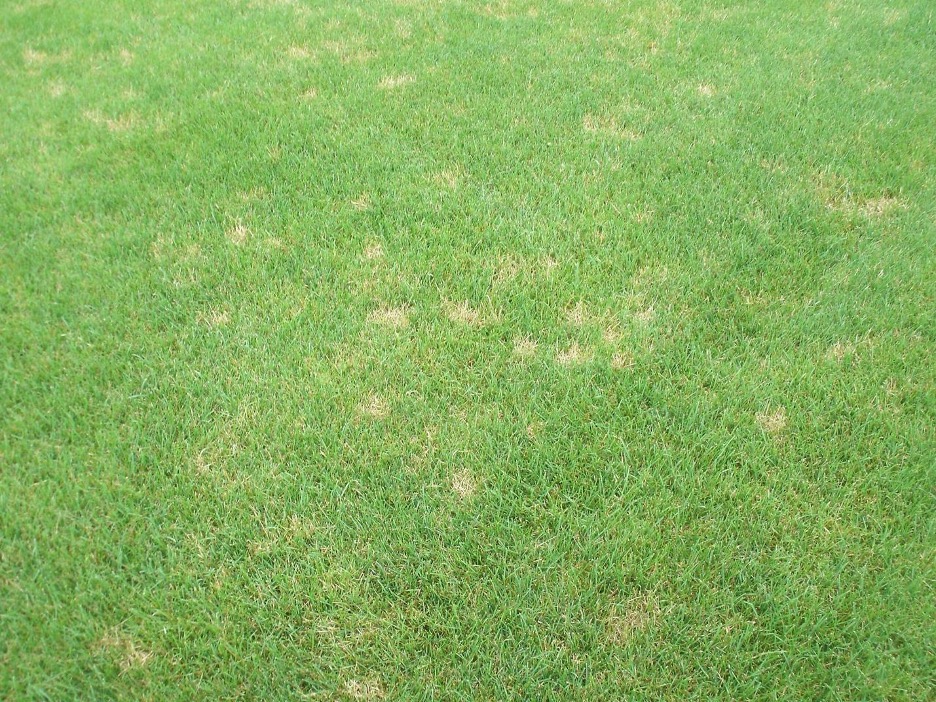
Somewhere between 5 AM and 9 AM in the morning is ideal. It gives water time to soak in before the sun does its worst, and it lets the grass dry out before nightfall. That last part isn’t a minor detail in our climate. If the grass stays wet overnight, combined with our humidity, it is basically an invitation for dollar spot, red thread and brown patch fungus. We see it every summer.

Evening watering feels convenient after a long day, sure, but it sets the stage for lawn disease and fungus.
Your Town Might Already Have Rules About Irrigating
New Bedford, Fall River, Taunton, Plymouth, Weymouth, and other localities have outdoor watering restrictions in place once things get dry enough, usually tied to certain days of the week or morning-only windows. These change from summer to summer depending on how much rain we’ve received, so before you set an irrigation timer and forget about it, it’s worth a quick call or check on your town’s website.

Mistakes Worth Avoiding
Beyond the daily watering habit already mentioned, a few others come up a lot. Sprinkler heads are pointed at the driveway instead of the grass. This is an easy fix, but few check until we point it out. New seed gets treated like an established lawn, when really it needs the surface kept damp, sometimes with light watering twice a day, until it germinates, then a slow transition to the deeper schedule once it’s rooted. And sprinklers left running on autopilot right after it rained, which an inexpensive rain gauge would prevent.
The Lawns That Need The Least Babying Usually Have The Deepest Roots
Here’s the thing nobody really explains when they talk about watering schedules: a lawn with strong roots just doesn’t need as much help from you. It can reach down into the soil for moisture on its own. A lawn with compacted soil and shallow roots is the one that’s in crisis mode the second it doesn’t rain for a week.

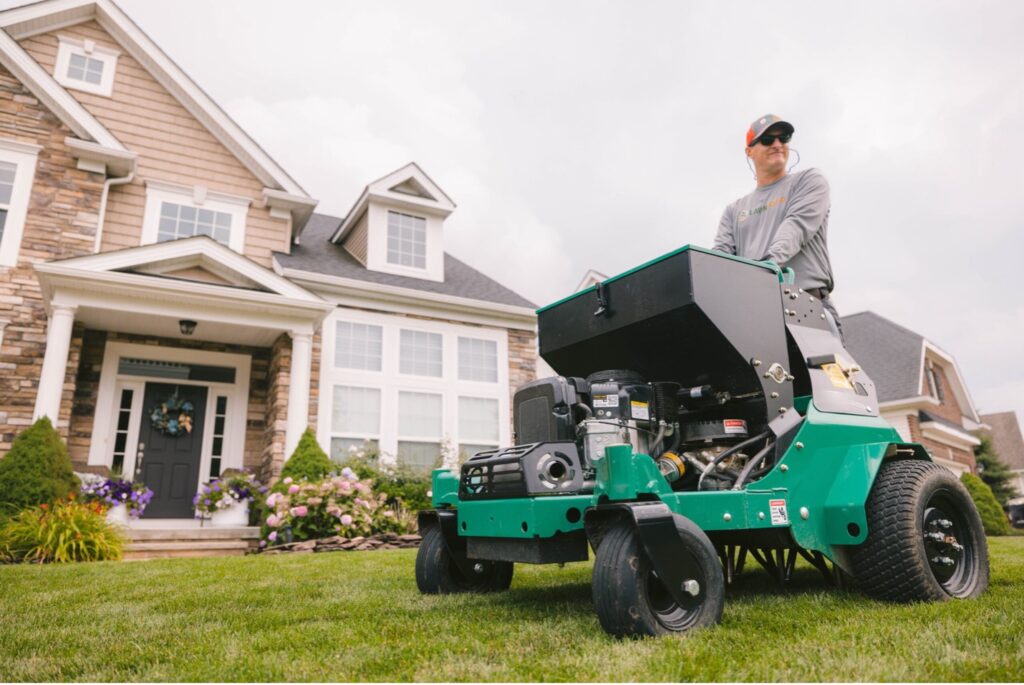
That’s really what our VitaminLawn Program is built around. Core aeration loosens up compacted soil so water gets down to the roots instead of pooling or running off. Pair that with fertilizing at the right times of year, and you end up with a lawn that can handle a dry stretch without you standing out there with a hose every night.
Still Struggling Despite A Good Watering Routine?
That usually points to something happening below the surface, not above it. We work with homeowners across New Bedford, Plymouth, Hingham, and the rest of Southeastern Massachusetts to build lawns with root systems strong enough to get through summer without constant attention.
Contact Lawn Squad of Southeastern Massachusetts today to get a free quote or call us at 774-295-1455.