How Do I Tell Take-All Root Rot From Gray Leaf Spot on My West Houston St. Augustine Lawn?
Short Answer: Look at the roots and then at a single blade. Take-all root rot attacks roots and stolons, so the turf yellows and thins in irregular patches and the runners lift away from the soil with almost no resistance, trailing short, dark, rotted roots. Gray leaf spot never touches the roots. It marks individual leaf blades with small oblong lesions that have gray or tan centers and darker borders, and it flares in hot, humid, heavily fertilized turf. Take-all responds to lowering soil pH and adding organic matter. Gray leaf spot responds to easing off nitrogen and shortening leaf wetness.
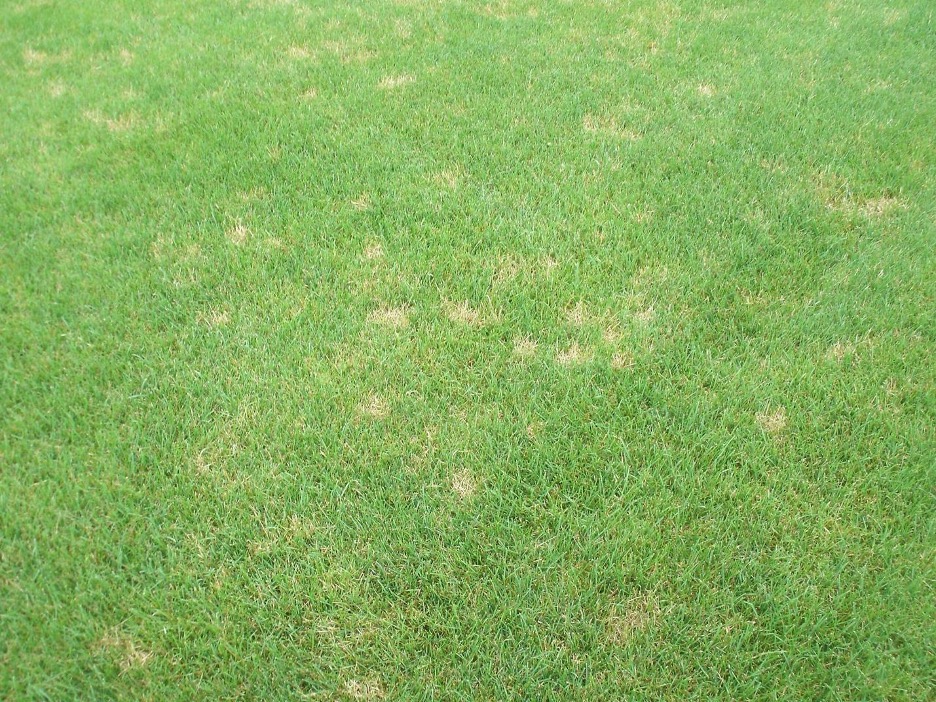
Step outside in Katy at six in the morning in August and the air is already wearing you. The St. Augustine is soaked with dew, your shoes are wet before the driveway, and a pale irregular area in the front yard has been quietly growing for three weeks. It is not the crisp brown of a missed sprinkler head. It is yellow, blotchy, and thinner than the grass around it.
Most homeowners here have already tried something. More fertilizer, more water, a bag of fungicide from the hardware store. When none of it works, the frustration is less about the lawn than about not knowing what you are fighting.
Why West Houston Lawns Get Hit From Two Directions
Our conditions are close to ideal for turf disease, and it comes down to water rather than heat. Black gumbo clay in Katy, Bellaire, and across the Sugar Land side holds moisture stubbornly and drains slowly. Add roughly fifty inches of annual rain, humidity that keeps the canopy wet from dusk until mid morning, and irrigation still on a summer schedule, and leaf surfaces stay damp for ten to fourteen hours at a stretch. Fungal spores need that moisture to infect, and we hand it to them on a plate.
The clay compounds it. Where a subdivision was built on scraped, compacted subsoil, the top few inches become a dense, low oxygen layer roots struggle in. Two pathogens then exploit two different weaknesses on the same lawn, which is why one yard here can have both.
Take-All Root Rot: A Root Problem Wearing a Leaf Costume
Take-all root rot is caused by a soil fungus, Gaeumannomyces, that colonizes roots and stolons. The key is that infection and symptom are separated in time, often by months. The fungus goes to work whenever the root zone is cool and moist, which here means fall, as soil temperatures come down off the summer highs, and again through the wet stretches of late winter and spring. Nobody is looking at the lawn in either window. Then July arrives, water demand climbs, and a lawn with a crippled root system cannot keep up.
What you see is chlorotic patches with vague wandering borders, often several feet across. The grass thins gradually rather than collapsing, new growth is stunted and pale, and the patches keep expanding through the hottest weeks, showing up first where stress is highest: compacted strips, low spots that stay wet, ground around tree roots.
The giveaway is underground. Grab a handful of runners and pull. Healthy St. Augustine stolons resist and tear. Take-all stolons lift away like a rug, trailing roots that are short, brown to black, and rotted instead of white, firm, and several inches long.
Gray Leaf Spot: The Damage Is All on the Blade
Gray leaf spot is a different animal. It lives on the leaf, and it thrives in exactly the hot, humid, wet nights we specialize in from July through September. The roots stay perfectly healthy.
Pick a single blade out of an affected area and hold it up. You are looking for small oblong lesions running along the blade, gray or tan in the center with darker brown to purple borders, often ringed by a thin yellow halo. Under heavy pressure they merge until the blade looks scorched. From ten feet away the lawn takes on a dull, smoky, olive cast.
Excess nitrogen makes gray leaf spot dramatically worse, and this is the part most homeowners have backwards. Lush, over fertilized St. Augustine has thin cell walls and stays wet longer, which makes it the most susceptible turf on the street, and new sod gets hit hardest for the same reason. If you answered the first yellow patch with more nitrogen, you may have fed the problem.
The Two Minute Test That Settles It
Walk to the edge where good grass meets bad, kneel, and pull a runner out of the soil. Runners that release easily with short dark roots and no clear blade lesions point to take-all. Firm, well anchored runners with white roots and clearly marked blades point to gray leaf spot. Both at once happens, and when it does the take-all is the priority, because a lawn without roots cannot recover from anything.
Where the damage sits tells you something too. Gray leaf spot concentrates where air movement is poor and the canopy stays wet longest: fence lines, shaded side yards, behind hedges. Take-all follows soil instead, tracing the compacted seams and low ground.
Correcting Take-All: pH and Organic Matter Do the Heavy Lifting
This is where honesty matters. Nothing you spray fixes take-all on its own. The fungus is suppressed by acidic conditions in the root zone, and much of our area runs neutral to alkaline, particularly where slab construction and fill dirt raised the pH.
The durable corrections are cultural. Get a soil test so you are working from a real number, then move pH downward with elemental sulfur or an acidifying nitrogen source such as ammonium sulfate, applied gradually rather than all at once. Topdress affected areas lightly with sphagnum peat moss, which acidifies the root zone and adds the organic matter our raw clay lacks. Core aeration opens the compacted layer, a higher mowing height feeds root regrowth, and watering deeply and less often keeps the surface from staying saturated.
Fungicide is a supporting player, and its timing is the entire point. Because the fungus colonizes roots during cool, moist conditions, the preventive application belongs in fall, as soil temperatures decline out of the summer range, with a second round the following spring on lawns with a history of it. Applied then and watered in so the product reaches the root zone rather than sitting on leaves, it protects roots before they are lost. Sprayed curatively in August on turf that is already yellow and thinning, it gives poor results, because the roots were lost months earlier and no fungicide grows them back. So for a lawn diagnosed this month, manage the summer culturally, start the pH work now, and put the fungicide on the calendar for fall.
Correcting Gray Leaf Spot: Back Off and Dry Out
The first move costs nothing: stop applying nitrogen to an actively infected lawn. The second is water timing. Irrigate in the early morning so the canopy dries as the sun comes up, never in the evening, which adds hours of leaf wetness to a night already set to deliver heavy dew.
Improve air movement by thinning shrubs crowding the turf. Mow with a sharp blade, since ragged cuts create wounds, and bag clippings from a badly infected area rather than spreading spores around.
Gray leaf spot runs on the opposite clock from take-all. It is a foliar disease of the hot, humid season, so the spray goes on during active pressure, meaning right now, while fresh lesions are appearing and the nights are wet, and it is repeated on the label interval for as long as those conditions hold. One application across a July through September stretch like ours is rarely enough. Rotate chemistries between rounds, because this pathogen develops resistance quickly when the same product is used over and over. Save it for lawns under real pressure or newly sodded turf, and remember that the cultural half carries as much weight: nitrogen backed off, irrigation moved to early morning, airflow opened up. Fungicide on an over fertilized lawn that stays soaked until ten in the morning is money spent against conditions still manufacturing the disease.
Gray leaf spot on established St. Augustine is usually a cosmetic setback rather than a death sentence, and most lawns corrected in August recover fully with fall growth.
What to Do Next
Do the pull test this evening before you buy anything. Runners that lift easily with dark, short roots mean a soil chemistry conversation. Healthy roots under spotted blades mean a nitrogen and moisture conversation. Those two paths lead to different products applied in different months, and picking the wrong one is the most common mistake we see here.
If you want it confirmed, call us at 713-489-6519 or start at lawnsquad.com for a free quote. We serve Katy, Houston, Bellaire, and Sugar Land. A first visit means walking the property with you, pulling runners, checking blade lesions, reviewing irrigation timing, and taking a soil sample where take-all is suspected. You will get a straight explanation and a realistic timeline.
Our VitaminLawn program is built around this exact set of conditions: St. Augustine on heavy gumbo clay in a humid, high rainfall climate, where feeding rates and soil amendments are tuned to suppress disease rather than encourage it. Alongside our lawn disease control service, it treats cause and symptom on the right calendar. On gray leaf spot, expect visible improvement inside 30 days. On take-all, expect a slower arc: some green up by 30 days, and real thickening as new roots establish through fall.