How Do I Plan the End of Utah County’s Watering Season Before Secondary Water Shutoff?
Short Answer: Keep watering at full summer depth through August, then taper run times gradually through September as nights cool and evaporation drops, rather than stopping all at once. In the final week your system is pressurized, give the lawn one long, slow soak that wets the soil eight to twelve inches down. After the valve closes, plan on culinary water through a hose and sprinkler roughly every ten to fourteen days on warm, dry stretches until the ground freezes. Confirm your own shutoff date with your city or irrigation company, since it varies.
Step outside in Lehi or Pleasant Grove at nine in the morning in mid August and you can feel the day loading up. The air is bone dry, the sun at forty five hundred feet has an edge to it that flatlanders never quite believe, and the Wasatch is standing there in full sun with no haze to soften anything. Walk barefoot across the lawn at four in the afternoon and the blades feel warm and slightly crisp. Kneel down where the sprinkler throw falls short near the sidewalk and the bluegrass has gone a dull blue gray, with your footprints still showing from an hour ago.
Then, sitting in the back of everyone’s mind, is the date. Sometime this fall the pressurized secondary line feeding your sprinklers goes quiet, and a lot of homeowners we meet in Orem and American Fork are not sure whether that means the lawn is done for the year or whether they are supposed to keep doing something about it.
Why the Shutoff Changes Everything About Fall Lawn Care
Most neighborhoods across this valley run on two separate water systems. Culinary water is treated and comes out of the tap. Secondary water, sometimes called pressurized irrigation, is untreated canal, reservoir, and river water delivered through its own set of pipes to sprinkler systems, and it costs a fraction of what treated water costs to put on a lawn. It is the reason lawns are affordable to keep here at all.
The catch is that it is a seasonal delivery system, not a year round utility. Cities and irrigation companies throughout Utah County shut their systems down in the fall, drain the lines, and do maintenance before winter. Dates differ from one provider to the next and shift a little each year based on runoff, storage, and weather, so the specific day for your street comes from your own city or irrigation company, usually by mailer, text alert, or a notice on their website. What is consistent everywhere is the shape of the problem: the water stops weeks before your lawn actually stops needing it.
August Is Not the Month to Back Off
The instinct to start conserving in late August is understandable and usually costly. August is our peak evaporative demand month. Between the altitude, the single digit afternoon humidity, and the long stretch of hot, cloudless days, turf loses water faster now than at any other point in the year.
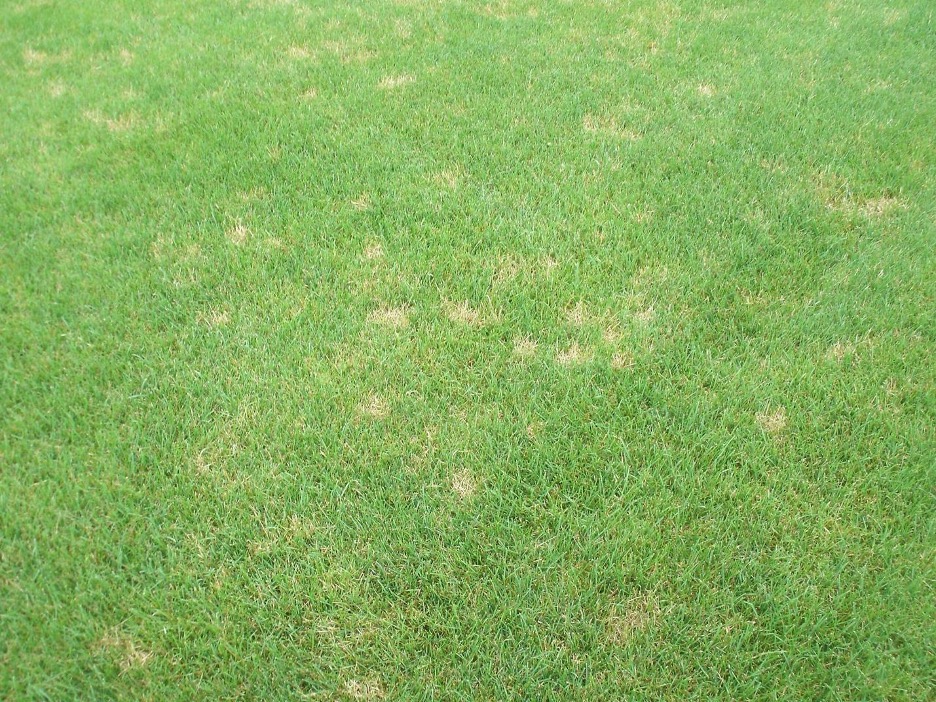
Kentucky bluegrass, which covers most lawns from Vineyard to Alpine, handles this by going dormant when it gets desperate. Dormancy is survival, not damage, but a lawn pushed into it in August comes out thin, and thin turf in this valley fills in with the things that love our conditions: field bindweed, prostrate spurge, and crabgrass along the hot concrete edges. Keep watering deeply through the month. The goal is moisture reaching six to eight inches down, delivered in fewer, longer cycles rather than a daily sprinkle that only wets the top inch.
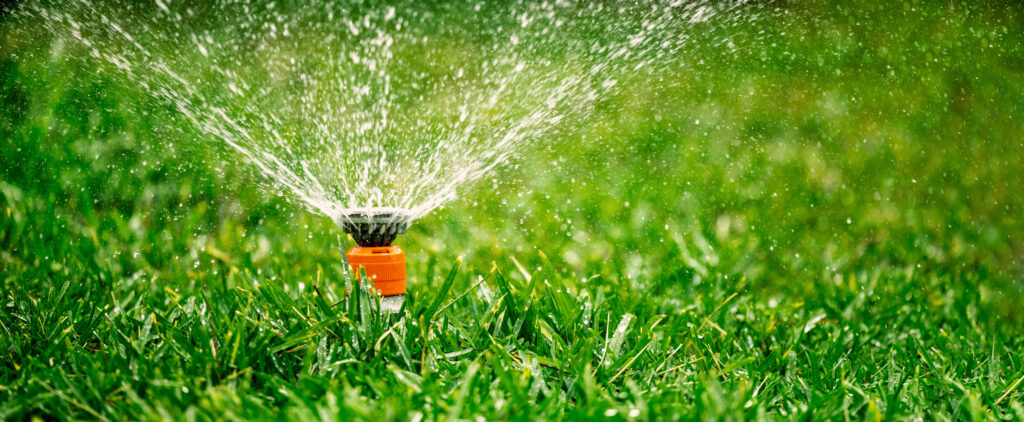
Our soils make deep watering trickier than it sounds. Much of the county sits on alkaline, calcium rich ground, often with a compacted layer a few inches down that water enters slowly. Homeowners who split a long run into two shorter cycles twenty to thirty minutes apart get far more water into the root zone and far less running down the gutter.
Tapering Through September Instead of Stopping Cold
As the nights cool in September and the sun angle drops, the lawn genuinely needs less. Cut total weekly run time gradually, roughly a quarter at a time every week or two, and pay attention to the lawn rather than the calendar. Grass that holds a footprint for more than a few seconds is telling you it wants water. Grass that springs back is fine.
This is also when to walk the yard while the system still has pressure, zone by zone, and look at what the heads are actually doing. Late season is when we find the misaligned head watering the driveway in Saratoga Springs, the sunken rotor in Lindon throwing into the grass six feet away, and the clogged nozzle that explains the one brown strip nobody could account for all summer. Once the water is off, none of that can be diagnosed until spring.
The Last Soak Before the Valve Closes
The single most valuable thing you can do all season takes one afternoon. In the last week your secondary water is running, give the lawn a deep, slow, thorough soak, considerably longer than a normal cycle, ideally split into stages so the soil can absorb it. You are filling the soil profile eight to twelve inches down and banking water the roots will draw on for weeks.
Imagine the difference in November. A lawn that went into the shutoff with a charged soil profile comes through the first cold snap green at the crown. A lawn that got its last drink at a normal fifteen minute setting is already stressed when the water stops, and it goes into winter with dry, brittle crowns. That is the lawn that greens up slowly and unevenly in April, especially on the south and west facing slopes in Draper and Eagle Mountain where winter sun and wind dry the surface without any snow cover to protect it.
Living on Culinary Water for the Last Few Weeks
After shutoff, our turf still has real growing weeks left. Soil stays warm well into the fall here, roots keep working after top growth slows, and October frequently gives us dry, sunny, breezy stretches that pull moisture out of the ground fast.
The practical answer is a hose and an oscillating or impact sprinkler on culinary water. You are not replacing your irrigation system, you are preventing desiccation. On dry, warm stretches, one deep watering every ten to fourteen days is usually enough, moving the sprinkler around the yard and letting each spot run long enough to soak in. Prioritize the areas that dry hardest: strips along driveways and sidewalks, west facing slopes, parking strips, and anywhere newly seeded. If storms roll through and the ground stays damp, skip it. If a warm, dry November arrives with no snow, keep going until the ground is frozen.
Schedule your sprinkler blowout thoughtfully. Lines need to be cleared with compressed air before a hard freeze, but having it done the same week the water goes off removes your option to run the system if the provider offers any late window. Plan it for after your last irrigation and before the first sustained freeze.
Fertilizing and Seeding Around the Calendar
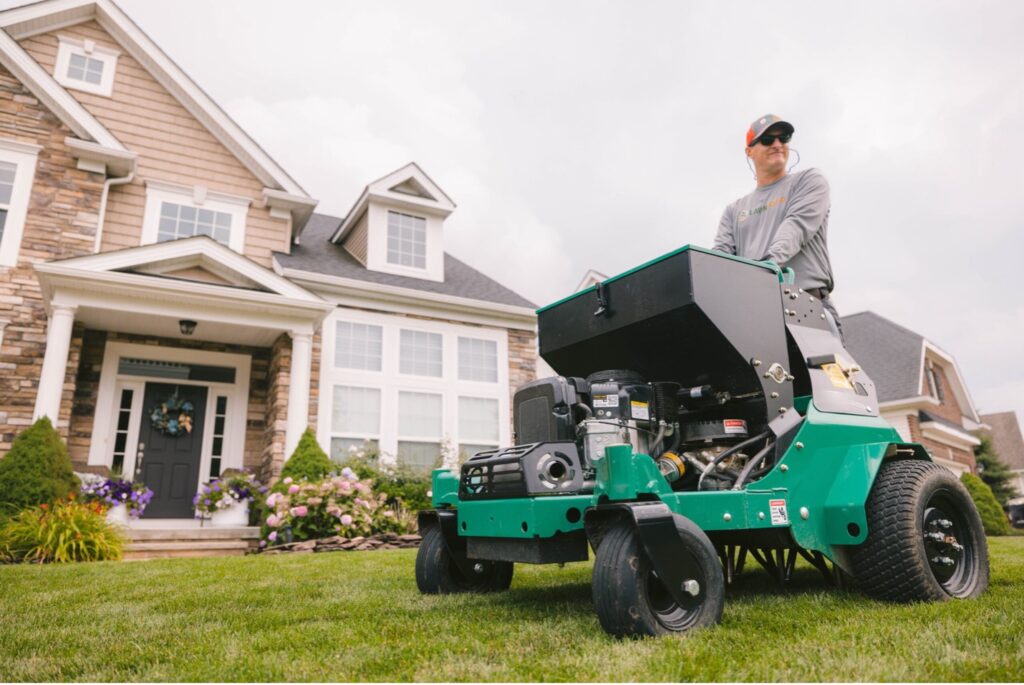
Fall is our best season for lawn improvement, and it has to be sequenced around the water. Aeration and overseeding belong in late August through mid September, while pressurized water is available to keep new seed consistently moist. Seeding after shutoff means hand watering a germinating stand daily with a hose, which almost nobody sustains.
Fertility works differently. A late fall feeding, applied while the grass is still green but growth has slowed, is absorbed and stored by the roots and pays off in earlier spring green up and better density. That application can go down after the secondary water is gone, since it needs far less moisture to move in than seed does.
What to Do Next
This week, do two things. Find out your actual shutoff date from your city or irrigation company and put it on the calendar with a reminder set for the week before, labeled deep soak. Then run each irrigation zone for a full cycle while you watch it and note anything spraying where it should not.
If you want help building the rest of the plan, call us at 385-336-6785 or request a free quote at lawnsquad.com. A first visit takes about half an hour. We check root depth, look at how water is moving through your soil, identify the weeds that are telling us about your conditions, and lay out a fall schedule built around your provider’s shutoff rather than a generic national calendar. Expect visible color response within two to three weeks of a fall feeding, and expect the real payoff at ninety days, in a spring green up that comes earlier and more evenly than the neighbors.
Our VitaminLawn program is built around exactly this: high desert conditions, alkaline soil, intense sun at altitude, and a watering season with a hard end date. Lawn Squad of Utah County serves Alpine, American Fork, Draper, Eagle Mountain, Lehi, Lindon, Midway, Orem, Pleasant Grove, Provo, Saratoga Springs, Vineyard, and Wallsburg. We are independently owned and operated, quotes are free, and our work is backed by a satisfaction guarantee.