
Why Do Nutsedge and Doveweed Explode in Palm Beach Lawns After August Rain?
Short Answer: Both thrive in the saturated soil our August storms create. Doveweed germinates later than most summer annuals, so it shows up just as the rainy season peaks, and its glossy blades are easily mistaken for young St. Augustine. Purple and yellow nutsedge are sedges rather than grasses, with triangular stems and underground nutlets that multiply when the plant is pulled. Both spread fastest where turf is thin and water sits. Control means correcting drainage and mowing height, then using a selective sedge or doveweed product, not a standard broadleaf spray.
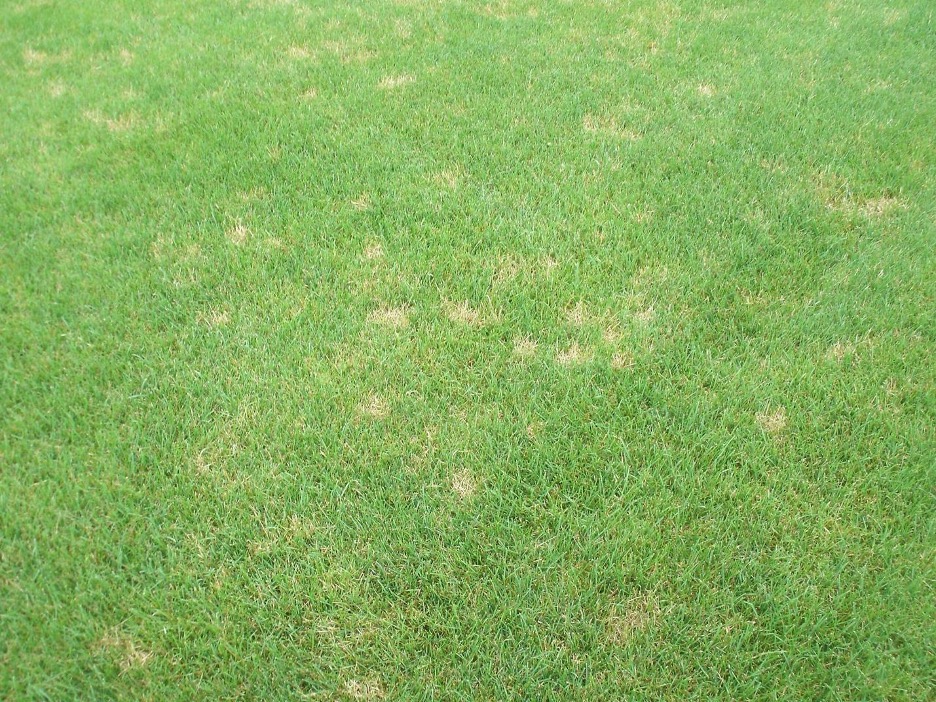
You step out the back slider in Delray Beach around seven with coffee in hand, and the yard is still soaked from the cell that rolled through at four. Out in the middle of the St. Augustine sits a patch a half inch taller than everything around it, a shade lighter, noticeably glossier. Water beaded off it and ran, so it is already dry on top while the rest of the lawn soaks your feet. Three weeks ago that spot looked like nothing. Now it has neighbors, and a second colony by the side gate downspout.
Most homeowners we talk to across Boca Raton and Lake Worth in August are not upset about a weed so much as about the speed of it. The lawn looked handled in June. What is unsettling is the sense that something got away from you while you were paying attention.
Doveweed Is the One That Fools Almost Everybody
Doveweed (Murdannia nudiflora) is behind most of the late summer calls we take. It has a thick, slightly succulent stem that creeps along the ground and short pointed blades that clasp that stem in a way that looks, at a glance, remarkably like a young St. Augustine runner. That resemblance is the whole problem. We walk properties in Boynton Beach where the homeowner has mowed carefully around a spreading mat for a month, assuming it was turf filling in.
The tells are there once you know them. Doveweed carries a shine St. Augustine does not, almost a waxy gloss that reads as a different green in low morning light. The blades are shorter and blunter, the stems rounder and juicier. Snap one and it gives with a soft crunch instead of the fibrous tear of a St. Augustine stolon. Later it throws small three petaled flowers, pale blue or lavender, low in the canopy.
The timing is what catches people. Doveweed germinates later than most summer annual weeds. While crabgrass and goosegrass come up in spring, doveweed is still waiting on warm soil and steady moisture, which here means it wakes up right as the rainy season hits full stride. A pre-emergent applied in February has usually run out of gas by then. That is a mismatch of calendars more than a product failure, and it is why doveweed is often a mid-season conversation in South Florida rather than a spring one.
Nutsedge Is Not a Grass, and That Changes the Whole Approach
Purple and yellow nutsedge look like grass from the kitchen window, and they are not. They are sedges. Roll a stem between thumb and finger and you feel three distinct edges instead of the flat or round stem of a true grass. Blades come off in sets of three, arranged a little like a propeller when you look straight down. Yellow nutsedge runs lighter, almost chartreuse, tapering to a fine point. Purple is darker and stiffer with a blunter tip, and it is the tougher of the two to run out of a lawn. Both outpace St. Augustine in warm wet weather, which is why sedge stands above the canopy within days of a mow and the yard reads as unkempt from the street even though it was cut on schedule.
Here is the part worth internalizing. Underground, nutsedge runs a network of rhizomes studded with small tubers called nutlets, and one established plant can sit on a surprising number of them. Pull the top and you almost never get the nutlets. What you do is break the signal keeping the rest dormant, and several respond by sprouting. That is why the bed you weeded by hand in July has more sedge now than before you started. Hand pulling nutsedge is one of the few lawn tasks that reliably makes things worse, and we would rather say so plainly than watch another Saturday go into it.
Why Our August Weather Is the Trigger
August here is not gentle rain. It is daily convective storms that dump a lot of water in a short window and leave the canopy warm and humid overnight. Both weeds are built for that. Doveweed needs sustained moisture at the soil surface to germinate, and a saturated lawn hands it that every afternoon. Nutsedge tubers break dormancy readily in warm wet soil, and the flush of shoots after a heavy rain week is dramatic.
The same conditions are hard on St. Augustine. Roots in saturated soil cannot take up oxygen well, the turf slows, and thin spots open. Weeds rarely invade dense healthy turf. They colonize openings. The storm that feeds the weed is the storm that weakens the competition, and the gap widens fast.
Drainage Is the Real Long Term Control
Our soil profile does not help. From Pompano Beach up through Palm Beach we work with sandy, alkaline soil over limestone, and in many neighborhoods the water table sits close to the surface. Sand drains beautifully until it hits a layer that does not, or until the ground around it is already full. In flatter older sections of Lake Worth Beach, and in low corners of newer subdivisions where grading pushed water toward a swale, you get areas that stay wet long after the rest of the yard has drained.
Walk the lawn the morning after a storm and notice where your shoes sink. Then look at where the doveweed and sedge actually are. On most properties we inspect, those two maps line up almost exactly. Sedge along a bed edge where a head throws long. Doveweed in the flat spot below a downspout. Both in the shaded north strip that never fully dries.
That overlap is good news, because it means you have levers beyond spraying. Fixing a broken head, shortening a zone during the rainy season, extending a downspout, or thinning a hedge to move air are all real weed control. We routinely find irrigation still running its April schedule in August, which in a wet month means the lawn is watered twice.
What Actually Works on These Two
Standard broadleaf weed control, the kind that handles dollarweed or clover, does very little to nutsedge and is unreliable on doveweed. Sedges need sedge specific chemistry, and doveweed responds best to particular active ingredients applied while the plant is young. Both take repeat applications a few weeks apart rather than one heroic treatment, because you are working through successive flushes.
There is also a real product safety issue. St. Augustine and some zoysia cultivars are sensitive to herbicides that are perfectly fine on bermuda, and August heat narrows the margin further. Applied at the wrong rate or to already stressed turf, a product can leave a bleached patch that looks worse than the weed did. That is the most common self inflicted damage we get called out to see in late summer.
Set expectations on timeline too. Doveweed usually browns and collapses within a couple of weeks. Nutsedge is slower, because good sedge chemistry has to move down into the tubers. Plan on managing an established purple nutsedge population across more than one season. Anyone promising to erase mature nutsedge in one visit is overselling.
The Seasonal Owner and HOA Wrinkle
Many of the properties we care for in Boca Raton and Palm Beach belong to people who are somewhere cooler right now. A doveweed colony can go from a dinner plate to a bedsheet between visits, and the HOA letter tends to arrive right after. The honest fix is scheduled inspection through the rainy months, not a bigger application in October once the turf has to regrow over bare sand.
What to Do Next
Start by identifying what you actually have. Get down close, check for the triangular stem and three way blade arrangement of sedge, and look for the glossy creeping stems of doveweed. Then walk the yard the morning after the next storm and note where water lingers. Those two pieces of information turn a vague weed problem into a specific plan.
If you would rather sort it out with help, we are glad to come look. Call Lawn Squad of The Palm Beaches at 561-621-9217 or visit lawnsquad.com for a free quote. A first visit is a walk of the property together, identification of what is growing where, a look at your irrigation schedule, and a straight answer about what is treatable now versus what should wait for cooler temperatures. We serve Boca Raton, Boynton Beach, Coconut Creek, Deerfield Beach, Delray Beach, Lake Worth, Lake Worth Beach, Palm Beach, Pompano Beach, and West Palm Beach.
Ongoing, our VitaminLawn program builds fertilization and weed control around your grass type, our sandy alkaline soil, and the rainy season calendar, with sedge control handled as its own targeted piece. At 30 days expect the doveweed gone and the sedge thinning and losing color. At 90 days, with mowing height held high and irrigation corrected, the goal is turf dense enough that next August’s flush has far fewer openings to take.