Why Does August Prep Decide How My Knoxville Fescue Lawn Looks in October?
Short Answer: August is preparation month in Knoxville, not seeding month. Our reliable germination window opens once soil temperatures drop out of the eighties and settle into the sixties and low seventies, which usually happens in the first two weeks of September and holds into early October. What you do over the next few weeks decides how that seed performs: handling broadleaf weeds early enough that herbicide timing does not conflict with seeding, scheduling core aeration, lowering the mower gradually, clearing debris, and confirming that every irrigation zone actually reaches the ground. Seed dropped on hot, hard clay in August germinates and then dies in the first dry stretch.
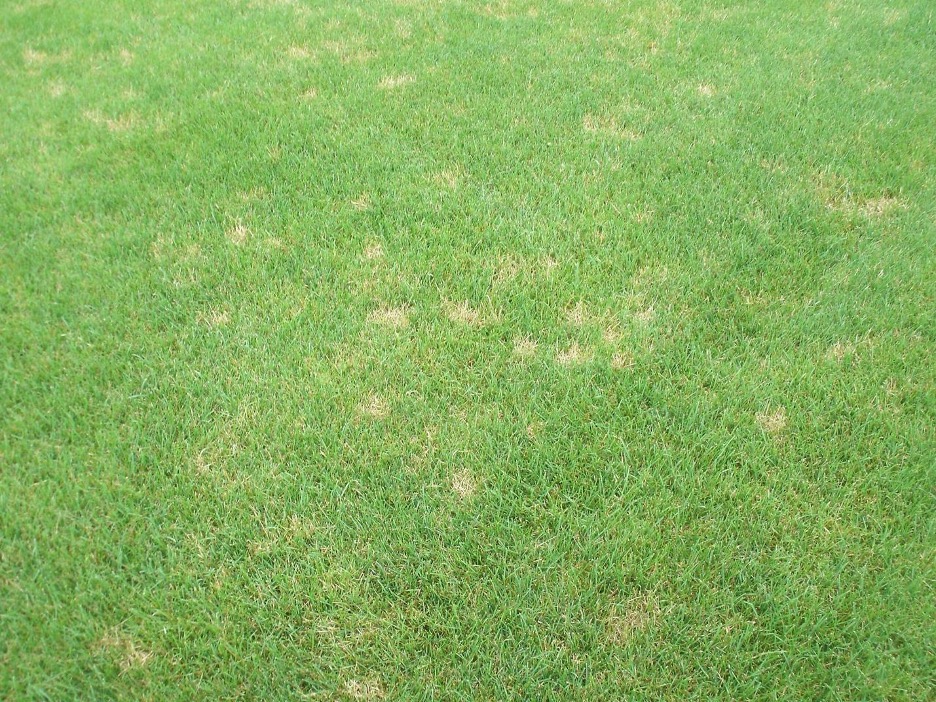
Step out the back door around seven in the evening this month and the lawn tells on itself. The shaded strip along the north side of the house still looks respectable. The middle of the yard has gone the color of a paper grocery bag, and the blades snap instead of bending when you walk across it. Along the driveway in Farragut and out through the Concord subdivisions, where topsoil over the ridge is barely deep enough to bury a garden trowel, there are patches worn to bare orange clay with chert gravel showing through. A screwdriver slides into the flower bed and will not go two inches into the turf.
Most homeowners we talk to this time of year are somewhere between discouraged and impatient. The lawn looked fine in May, it fell apart in July, and the instinct is to fix it right now. That instinct is the most expensive mistake in East Tennessee lawn care, and it is worth understanding why.
Why the Knoxville Seeding Window Is Later Than Your Instinct Says
Tall fescue germinates best when soil temperature sits roughly between sixty and seventy five degrees at seeding depth. Not air temperature. Soil. In August our air can drop into the upper sixties overnight and feel wonderful on the porch while the top inch of a sunny lawn still holds heat into the eighties by mid afternoon. Seed sown into that heat either sits and waits, which invites birds and washouts, or it sprouts during a rainy week and produces a seedling rooted about as deep as your thumbnail, which then meets the next dry stretch and dies.
Across our service area, seeding done in the first half of September consistently outperforms anything put down in mid August. Seedlings that come up in early fall get eight to ten weeks of cool nights over warm soil, which is exactly what fescue wants for root development. By the time real frost arrives in the valley, those plants have roots deep enough to survive winter and, more importantly, deep enough to survive next July. Fall seeding is not about how the lawn looks in October. It is about whether the lawn holds through next summer.
Rocky Clay, Ridges, and the Soil Contact Problem
East Tennessee soil is its own animal. We sit in ridge and valley country, and a lot of the lawns we walk have a thin cap of soil over weathered shale or limestone, with clay that turns to modeling putty when wet and to fired brick when dry. On the sloped lots common around Cedar Bluff and West Hills, decades of runoff have carried the good material downhill, so the crown of the yard is the hungriest ground on the property and the bottom corner grows fine.
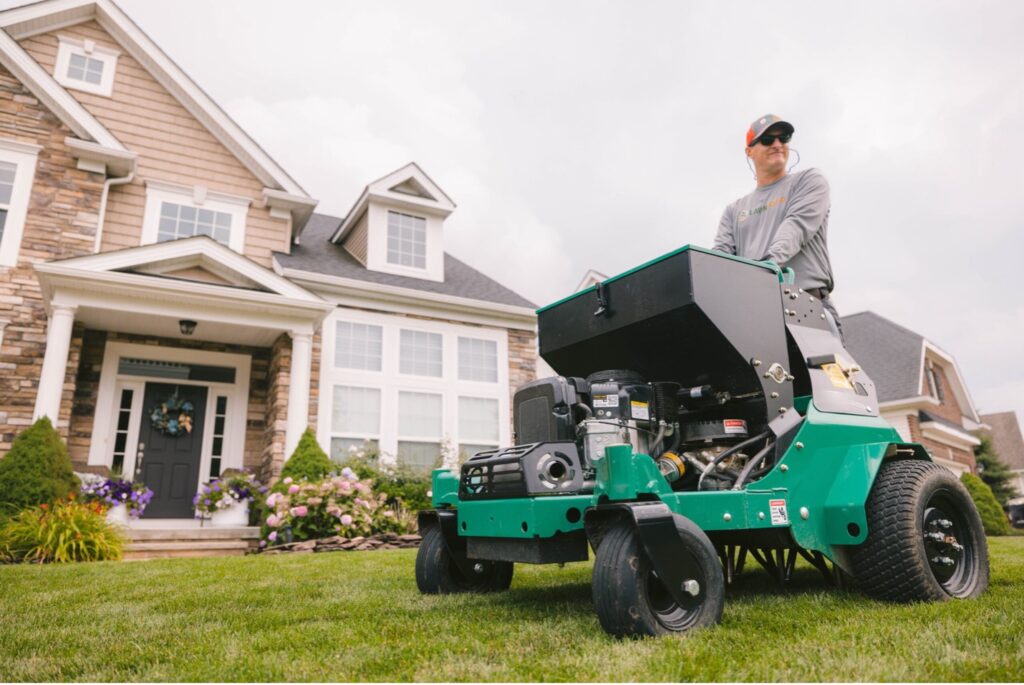
Seed cannot germinate lying on top of that. It needs contact with moist soil, not a mat of dead thatch or a glazed clay crust. This is why core aeration earns its keep here. Pulling plugs opens thousands of small pockets of loosened soil, gives seed somewhere to fall, and relieves the compaction that builds under mowers, kids, and dogs. On slopes the holes also catch water that would otherwise sheet off the hill into the street.
Where soil is genuinely thin, aeration alone will not build ground that is not there. A thin topdressing of quality compost worked into the aeration holes changes how the top inch holds water. On the worst ridge tops we treat, it is the difference between reseeding every year and reseeding once.
Weed Control Has to Happen Before the Seed, Not After
Here is a scheduling conflict that catches people every year. Most broadleaf weed products carry a waiting period before you can safely seed, and pre-emergents stop your fescue from germinating just as effectively as they stop crabgrass. Spray the yard for clover and spurge two weeks before seeding day and you may have quietly cancelled your own project.
The clean sequence is to handle the summer weed load early in August, give the label interval room to run out, then aerate and seed once soil temperature cooperates. Anything that pops up after seeding gets addressed later in the fall or the following spring, once the new grass has been mowed a few times and is tough enough to take a treatment. We would rather look at a few weeds in a stand of healthy new fescue than a clean, empty lawn.
Seed Choice and an Honest Word About Rates
Turf type tall fescue is the backbone of Knoxville lawns for good reason. It handles our heat better than bluegrass, stays green through most winters, and puts down deep roots when we let it. Buy a blend of several improved varieties rather than a single one, because disease pressure here is real and a blend spreads that risk. Read the tag on the bag. You are looking for a low weed seed percentage, essentially no other crop seed, and a recent germination test date. Bargain bags at the end of an aisle often carry annual ryegrass as filler, which sprouts fast, looks great in October, and dies in June.
On rate, more is not better. Overseeding an existing thin lawn takes a fraction of what a bare ground planting takes, and piling seed on creates seedlings that compete with each other for the same drop of water. Thick, crowded, weak seedlings are far more vulnerable to disease. A moderate rate with excellent soil contact beats a heavy rate broadcast over thatch every time.
The Watering Plan Is What Actually Decides the Outcome
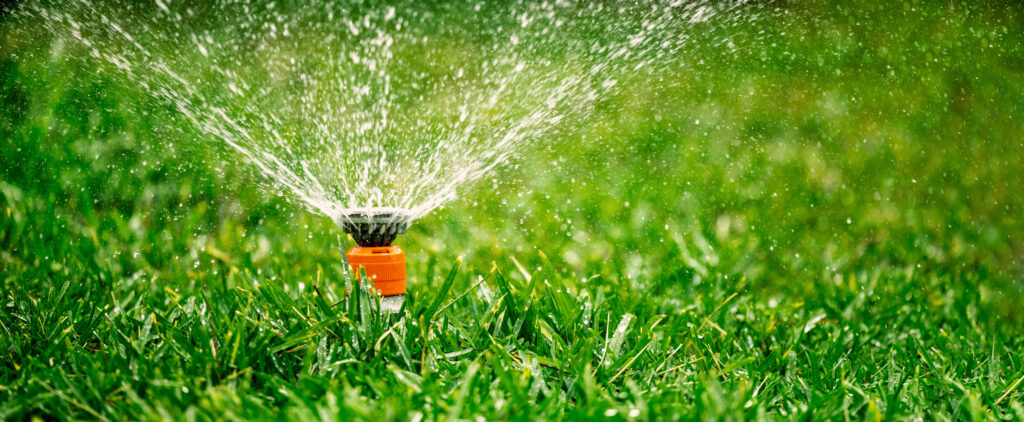
If we could enforce one thing on every seeding job, it would be the first three weeks of watering. New seed lives in the top half inch of soil, and in a sunny Knoxville September that layer can go from damp to bone dry between lunch and supper. The rule that works: light and frequent while germinating, then gradually longer and less often as the seedlings root.
In practice that means short cycles two or three times a day for the first couple of weeks, just enough to keep the surface dark colored, not puddled. Once you see a green haze and the seedlings reach mowing height, you back off toward deeper, less frequent watering that trains roots downward. This directly contradicts everything you were told about watering in July, and that is the part people get wrong. August is also the month to walk your zones with the controller running and find the head that has been spraying the fence since spring.
What to Skip This Month
Some of the best August advice is about restraint. On a heat stressed fescue lawn, a few things do more harm than good right now.
- Heavy nitrogen, which pushes soft growth into brown patch weather
- Scalping the lawn down before Labor Day rather than lowering it gradually just before seeding
- Dethatching a lawn that does not have measurable thatch, which on thin clay soil mostly removes what little living turf remains
Mow high, stay off the yard in the heat of the day, water deeply if at all, and put your energy into the prep list.
What to Do Next
The practical move right now is to get on the calendar. Aeration and overseeding in East Tennessee compresses into a few short weeks, and crews across Knox and Blount County book those weeks well before Labor Day. Call Lawn Squad of Knoxville at 865-564-9525 or visit lawnsquad.com for a free quote. A first visit is straightforward. We check thatch depth and compaction with a soil probe, identify what grass you actually have where, look at drainage and shade, and tell you plainly which areas will fill in on their own and which need seed. Sometimes the honest answer is that a section does not need our help.
Once seed goes down, expect to see the first fescue seedlings in roughly seven to fourteen days depending on temperature and how consistently the surface stays moist. At thirty days you should have a visible green fill with grass that has been mowed once or twice and still looks thin and fine bladed. That is normal. At ninety days, heading into the holidays, the stand should look genuinely thicker and hold decent color through winter, with the real payoff showing up when the lawn hangs on next July instead of collapsing in the heat.
From there, our VitaminLawn program keeps it going with fertilization and weed control built specifically around East Tennessee fescue, our clay soils, and the timing our climate demands rather than a national schedule. We serve Knoxville, Farragut, Concord, Cedar Bluff, West Hills, Oak Ridge, Mascot, Louisville, Rockford, Alcoa, and Maryville. Free quotes and a satisfaction guarantee come standard, and we are happy to tell you when the lawn does not need anything at all.