
Short Answer: Fall aeration and overseeding are the single highest-return cultural practices for Northern Kentucky cool-season lawns, and the window for doing it right runs from late August through the first week of October on Bluegrass and Fescue lawns sitting on Boone, Kenton, and Campbell county limestone clay. July is when the planning happens. Pull a soil test now, decide whether your lawn needs core aeration alone or aeration plus overseeding, choose the right seed blend for your sun exposure and traffic level, get on a crew calendar before August, and align the pre-emergent timing on either side of the overseed. Lawns that wait until September to start thinking about aeration end up with whatever date is left on whatever calendar still has openings. That is how good lawns become average ones.
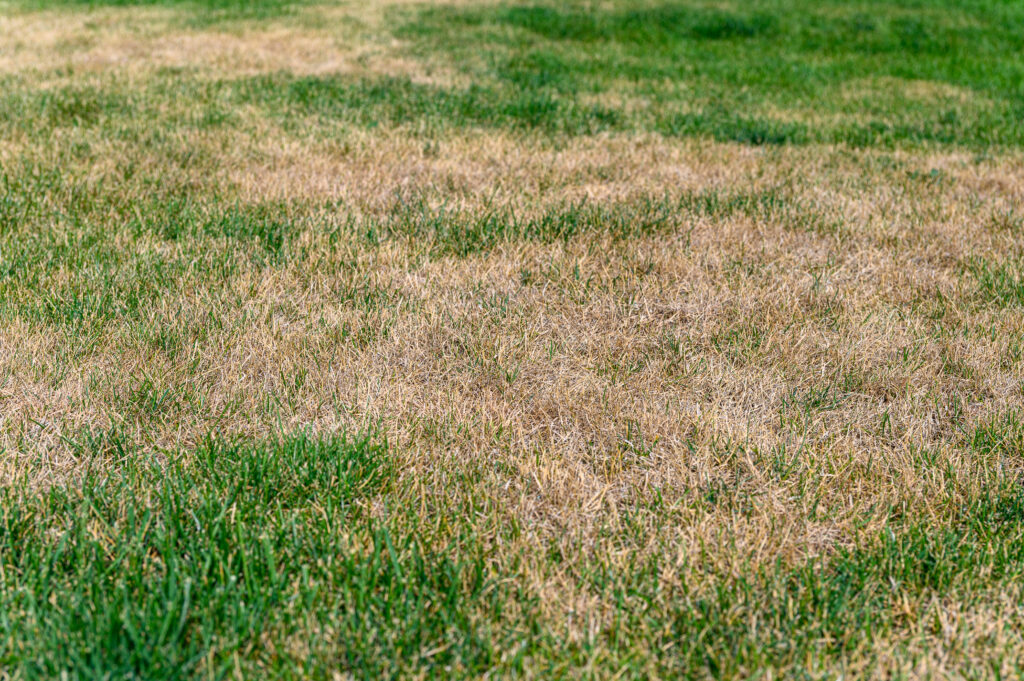
In July, fall feels like a long way off. The lawn is brown in spots, the air is heavy, and the calendar says there are still 60 days until Labor Day. But the truth on a Northern Kentucky cool-season lawn is that everything you do in September was decided in July. Whether the lawn gets aerated. What seed gets dropped in the cores. Whether the overseed germinates ahead of the first frost. Whether the renovation work pays back next April or stalls out and disappears under a layer of crabgrass.
This is a planning guide for homeowners in Florence, Union, Burlington, Independence, Erlanger, Edgewood, Fort Mitchell, Crestview Hills, Crescent Springs, Park Hills, Newport, Bellevue, Dayton KY, and Fort Thomas. The grass mix here is Kentucky Bluegrass and Tall Fescue dominant, with a little Perennial Rye in some seed blends, growing on the limestone-influenced clay that runs through Boone, Kenton, and Campbell counties. The fall renovation cycle on these lawns is short, intense, and unforgiving of late decisions.
Why the NKY Aeration Window Is Tight
Cool-season grasses germinate best when soil temperatures sit between 55 and 70 degrees. In Northern Kentucky, that window opens in late August as nighttime lows drop into the low 60s, and closes in mid October as overnight frost risk climbs. Realistically, the productive overseeding window in NKY is six weeks long.
Within that six weeks, the peak is mid September. Soil temperatures are still warm enough for fast germination (Tall Fescue germinates in seven to ten days at 65-degree soil), nighttime temperatures are mild, and there are still 30 to 40 days of active growing weather before the first hard frost. Seed dropped on September 10 gets to 30 days of maturity by October 10, which is the timing seedlings need to establish a real root system before winter dormancy.
The narrow window matters because the qualified aeration crews in NKY book their calendars by early August. The good ones are pulling cores in Erlanger on the Tuesday after Labor Day because that date got locked in during the second week of July. If you call your provider on September 5 hoping for a Saturday slot, you are getting whatever date is open, which often means late October when the window is closing.
Limestone Clay and What Aeration Actually Fixes
Northern Kentucky soils are limestone-influenced clay, which gives them a higher natural pH and calcium load than most other parts of the cool-season belt. That is mostly good news. The clay holds nutrients and moisture better than sand. The higher calcium supports cell wall integrity in the grass plant. The pH is in the range Bluegrass and Fescue prefer.
The downside of clay is compaction. Subdivision properties in NKY were almost universally built on stripped topsoil that was hauled in over compacted subsoil during construction. Over 10 or 15 years, foot traffic, mower wheels, and the natural settling of clay-heavy soil compact the root zone until oxygen, water, and roots all struggle to penetrate.
Core aeration pulls plugs of soil two to three inches deep, leaves the plugs on the surface to break down, and opens channels that let air and water move down into the root zone. On a compacted NKY clay lawn, the difference between an aerated lawn and a non-aerated lawn over two years is dramatic. Root depth doubles. Water infiltration improves. Fertilizer efficiency improves. Drought resilience the following summer improves measurably.
Aeration alone, without overseed, is still worth doing on a thick mature lawn that does not need new grass. But on most NKY lawns, the two go together because the open cores are perfect seed-soil contact points for overseeding.
Soil Test First, Aerate Second
The first thing to do in July is pull a soil test. The University of Kentucky Cooperative Extension offices in Boone, Kenton, and Campbell counties accept soil samples and run them through the UK soils lab. The cost is modest, the report is detailed, and the recommendations are tuned to Kentucky conditions.
Why test before aerating? Because the soil chemistry tells you what to put down with the seed. Limestone-influenced soils sometimes show iron lockout (the soil has plenty of iron, but the high pH ties it up where the plant cannot use it). Phosphorus levels matter heavily for seedling root development. Potassium levels affect winter hardiness for new seedlings. A starter fertilizer chosen blind, without a soil test, can miss the actual deficiency on your specific lawn.
Pull the sample in mid to late July. Lab turnaround in summer is typically two to three weeks. You will have the results in August in time to order the right starter fertilizer and adjust the seed program for any pH or micronutrient corrections.
Choosing the Right Seed for an NKY Lawn
The seed selection question on a Northern Kentucky overseed comes down to sun exposure, traffic, and what is already growing.
For sunny, traffic-heavy lawns (kids, dogs, the side yard the family uses for football), a turf-type Tall Fescue blend is the workhorse. Modern improved Tall Fescue cultivars have finer blade texture, better disease resistance, and deeper root systems than the older Kentucky 31 fescue. Plan on six to eight pounds of seed per 1,000 square feet for an overseed (twice that for a renovation).
For shaded areas, a fine fescue blend (creeping red, hard, and chewings fescues) handles low light and modest foot traffic better than Tall Fescue. Fine fescues also need less water and fertilizer once established.
For lawns where Kentucky Bluegrass is the foundation, a 90/10 or 80/20 Bluegrass and Perennial Rye mix gives you the rye nurse crop that germinates in five to seven days while the slower Bluegrass establishes over three to four weeks. Pure Bluegrass overseeds work but are slower to fill.
Avoid bargain seed. NKY hardware stores carry seed bags that look like a deal at $25 for 25 pounds. Read the label. If the weed seed content is above 0.5 percent or the inert matter is above 4 percent, you are paying to plant problems. Quality seed at $4 to $6 per pound is the better long-term spend on a lawn you intend to keep for ten years.
Pre-Emergent Timing Around the Overseed
This is the part homeowners get wrong most often. Standard crabgrass pre-emergents (prodiamine, dithiopyr, pendimethalin) work by preventing seed germination. They do not distinguish between crabgrass seed and the Tall Fescue seed you are about to drop. A pre-emergent applied in July or August will kill your fall overseed germination.
If you are overseeding in September, you need to plan the pre-emergent calendar around it. The standard fall pre-emergent application on a non-overseeded lawn goes down in mid August to suppress winter annual weeds. If you are overseeding, skip that application or use mesotrione (Tenacity), which is labeled for use at seeding because it does not block the desirable cool-season seed.
On the spring side, the lawn you overseeded in September is still maturing in April when the spring crabgrass pre-emergent normally goes down. Talk to your provider about a split application timing or about using a pre-emergent that is safer for young seedlings. The goal is to protect the investment you made in the overseed, not to keep an unbroken pre-emergent schedule at its expense.
What to Do Between Now and the First Aeration Pass
July through mid August is the bridge time. Specific actions to take this month:
- Mark a date on the calendar for your aeration. Late August through the first week of October. Lock the crew in by August 1.
- Pull the soil test. Get samples to the Boone, Kenton, or Campbell county Cooperative Extension office before the end of July.
- Order seed by mid August. The good Tall Fescue and Bluegrass blends sell out at quality seed dealers by Labor Day in busy years.
- Decide on any weed control work that needs to happen before the seed goes down. Broadleaf herbicides need at least 30 days of soil residual time before reseeding for most products. That means any cleanup spray happens in early August at the latest.
- Skip the late summer pre-emergent application if you are overseeding. Coordinate with your provider so nothing goes down by accident.
- Mow at 3.5 to 4 inches through July and August to keep the existing turf healthy. Healthy existing turf is the best companion to new seedlings in September.
What to Do Next
If you would rather not handle the soil test pickup, seed selection, calendar booking, pre-emergent coordination, and aeration scheduling on your own this summer, we can run it. Our team plans the fall renovation in July, executes the work in September, and follows through with the post-overseed care that gets seedlings to maturity before the first frost.
Lawn Squad of Northern KY serves homeowners across Florence, Union, Burlington, Independence, Erlanger, Edgewood, Fort Mitchell, Crestview Hills, Crescent Springs, Park Hills, Newport, Bellevue, Dayton KY, Fort Thomas, and the surrounding Boone, Kenton, and Campbell county communities.
Call us at 859-222-7335 or request a free quote at lawnsquad.com. Our VitaminLawn program is built specifically for Northern Kentucky cool-season Bluegrass and Fescue lawns growing on Ohio Valley limestone clay, with the fall aeration and overseeding cycle planned in July, executed in September, and supported through the establishment window into November. The lawns that look the best next April were planned this month.