
Short Answer: A fall renovation on the North Shore is not the same project as a fall renovation in central Massachusetts or the Connecticut River Valley. Salt spray off Massachusetts Bay, granite ledge inches below the surface, soils worked since the 1600s, dense oak shade, narrower cool-night windows, and wetlands buffer rules all reshape what works. The decisions that determine whether your September aeration and seeding actually transforms the lawn happen in July, when we can still see the damage, pull a UMass soil test, choose cultivars matched to your microclimate, and book the right calendar slot.
A homeowner in Manchester-by-the-Sea called us last August about a back lawn that had been overseeded the previous fall by a previous contractor. The seed germinated. Most of it died by October. The contractor had used a generic Northeast sun-and-shade blend with almost no salt-tolerant species, on a property where the prevailing summer wind carries chloride spray off Singing Beach roughly 300 yards away. The plan was right for a lawn in Worcester. It was wrong 900 feet from the Atlantic. We could have saved a year if the conversation had started in July.
That is the recurring story on the North Shore. The generic Northeast renovation playbook misses what makes our soils, our shorelines, our shade canopy, and our regulatory environment specific.
Cape Ann Salt Reality and the Cultivars That Actually Survive It
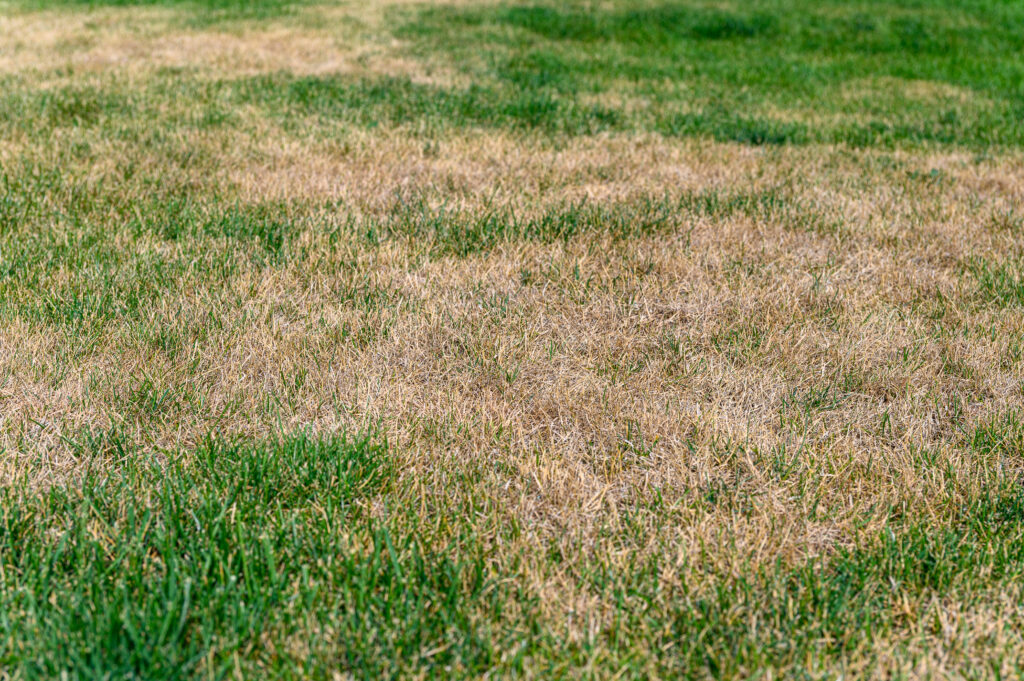
From Beverly along the coast through Prides Crossing, Manchester-by-the-Sea, Magnolia, the Gloucester neighborhoods, and out to Rockport, lawns that sit within roughly a quarter mile of open water take chronic low-dose salt exposure. It is not the visible spray from a single nor’easter that causes the damage. It is the cumulative chloride loading from onshore breezes carrying microdroplets that deposit on leaf blades and accumulate in soil week after week through summer.
Kentucky bluegrass tolerates this poorly. Standard perennial ryegrass tolerates it slightly better. The species that genuinely thrive are the fine fescues, specifically slender creeping red fescue, chewings fescue, and hard fescue. UMass Extension cultivar trial data from the Joseph Troll Turf Research Center in South Deerfield consistently shows fine fescues holding density and color under salinity stress that knocks bluegrass back by 40 percent or more.
For coastal properties we typically build a renovation seed mix around 60 percent fine fescue blend, 25 percent salt-tolerant tall fescue cultivars from the most recent NTEP regional trials, and 15 percent perennial ryegrass for quick germination. This is the opposite ratio from what a Topsfield or Boxford inland property gets. Calling that decision in July gives us time to source the specific cultivars from regional seed houses rather than settling for whatever a big-box bag contains.
Granite Ledge and Why a Standard Aerator Pass Will Skip Your Lawn
The North Shore sits on glacial bedrock that was scraped clean by the last ice sheet and never recovered a deep soil profile in many places. Drive through Marblehead Neck, Salem Willows, the Beverly Cove neighborhoods, the back lots of Manchester, or the upland portions of Hamilton and Wenham and you will see granite outcrops surfacing in lawns, gardens, and driveways. What you do not see is the ledge that runs four, five, or six inches below the surface and never breaks through.
A core aerator pulling plugs at three to four inches will hit that ledge, bounce, skip a section, and leave a meaningful percentage of the lawn un-aerated. Customers see the plug pattern across most of the lawn and assume the job was done, but the ledge zones, often the very spots where the grass already struggles, got nothing. In July we walk properties with a soil probe and flag the ledge zones on a property map. Some get hand-aerated with a step tool. Some get a liquid soil conditioner that opens pore space chemically rather than mechanically. Some get a conversation about whether sod over screened loam is a better long-term answer than another year of failed overseeding.
Salem, Marblehead, and Ipswich Soils Have a Different History
A new construction lot in Topsfield and a 1740 lot in Marblehead are not the same soil even if the UMass report comes back with similar pH numbers. The historic lots have been cultivated, amended, manured, and gardened continuously for more than three centuries. Organic matter is often high, which helps moisture retention. But the same lots can carry residues from coal ash pits, lead service line zones, pre-1978 lead paint scrape areas around foundations, and decades of pre-modern pesticide use.
We pull soil samples from multiple zones on historic properties rather than one composite, separating foundation perimeter, open lawn, and tree pit zones. Lime recommendations from a standard pH calculator can be wrong by a factor of two for high-organic colonial soils, because cation exchange capacity in soils with eight or nine percent organic matter requires more lime to move pH than a low-organic suburban soil. UMass Extension publishes adjusted recommendations for high-CEC soils.
Shade Pressure from Mature Oaks Is Not Solved by a Better Seed
Many North Shore properties sit under canopies of red oak, white oak, sugar maple, and the occasional Norfolk pine or hemlock that have been growing since before the property had a house. Mature trees of that scale block 80 to 95 percent of available light from reaching the lawn beneath them. No cool-season grass evolved for that level of shade. Fine fescues are the most shade-tolerant species available, and even they need around four hours of dappled light or two hours of direct light daily to maintain density.
The realistic conversation in July is which zones can be renovated successfully and which zones need a different design altogether. We map shade zones with a light meter at midday and again at four in the afternoon. Areas reading under 25 percent of open-sky light get either a heavy fine fescue blend with reduced density expectations, or a recommendation to transition to shade groundcover, mulch beds, or selective canopy thinning by a certified arborist. Pretending oak shade can be overseeded into a thick lawn is how customers spend money on seed every September for a decade with no progress.
The North Shore Renovation Window Is Narrower Than Inland MA
Cool nights arrive earlier on the North Shore than in the Pioneer Valley or even than 30 miles inland. Coastal radiative cooling pulls overnight lows into the low 50s by the third week of August in most years, and into the 40s by mid-September. That accelerates cool-season seed germination, which is the good news, but it also accelerates the calendar pressure on the back end.
Working back from the average first hard frost, which arrives around October 18 in Ipswich and Newbury and a few days later for the immediate coastal towns where ocean influence delays it, a seedling needs roughly six to eight weeks of active root development to overwinter. That puts the practical last seeding date in the first week of September for inland communities like Boxford and Topsfield, and around September 10 to 12 for the immediate coast. The opening end of the window is around August 18 when soil temperatures drop into the high 60s reliably. That gives us roughly three weeks of true renovation window, narrower than the four to five weeks an inland Massachusetts property gets. Booking in July is the only way to land inside that window on the dates that matter.
Estuary Properties, Deed Restrictions, and Tick Pressure
Properties adjacent to the Great Marsh, the Essex River, the Ipswich River, the Parker River, and the smaller tidal creeks across Newbury and Rowley fall under Wetlands Protection Act buffer zone rules and often additional local overlay districts. Phosphorus restrictions are stricter than statewide MA Department of Agricultural Resources defaults, and starter fertilizer choices have to reflect that. Renovation plans on these properties use zero-phosphorus starter unless the soil test documents a specific deficiency, and we lean on slow-release organic nitrogen sources to keep runoff risk low.
Several historic neighborhoods across Beverly Farms, Manchester, and parts of Marblehead carry aesthetic deed restrictions or association standards that require visibly maintained lawns. A bare, overseeded lawn in late September can technically put a homeowner out of compliance. We schedule the most visible phase of the renovation to fall within the narrowest window possible and plan starter fertility to push green-up quickly so the lawn is back to acceptable appearance before any inspection cycle.
And finally, tick pressure. Essex County sits in one of the highest deer tick density zones in Massachusetts, and a freshly renovated lawn that backs up to woods is exactly the transitional habitat where ticks move from leaf litter onto turf. We tie every wooded-edge renovation to a follow-on tick management plan. Our VitaminLawn program integrates the fall renovation with perimeter tick service so the lawn you just rebuilt does not become a tick exposure problem for the family in spring.
What to Do Next
If you own a lawn anywhere from Beverly to Salisbury, and especially if you sit on the coast, on a historic lot, near a salt marsh, under heavy oak canopy, or on ledge-prone ground, July is when the planning conversation actually has leverage. We will walk the property, run the light readings, probe for ledge, pull the UMass soil samples, match cultivars to your microclimate, and lock in your September aeration and seeding date before the calendar fills.
Lawn Squad of North Shore MA serves Beverly, Boxford, Byfield, Essex, Georgetown, Gloucester, Groveland, Hamilton, Haverhill, Ipswich, Manchester-by-the-Sea, Marblehead, Merrimac, Newbury, Newburyport, Prides Crossing, Rockport, Rowley, Salem, Salisbury, South Hamilton, Topsfield, Wenham, West Boxford, and West Newbury.
Call us at 617-468-4557 or request a free quote at lawnsquad.com. Ask about our VitaminLawn program, which pairs fall renovation with integrated tick service for properties along the wooded and salt-marsh edges that define so much of the North Shore.