
Short Answer: September is the prime aeration and overseeding window for New Hampshire lawns, but the outcome is decided in July. Granite State soils are acidic, thin, and rocky, which means a UNH soil test ordered now, a lime plan, careful weed timing, cultivar selection that handles real NH winters, and a property walk that accounts for your specific microclimate (Seacoast, Lakes, Monadnock, or Merrimack Valley) all matter more here than in points south. Skip the July work and your September renovation will under-deliver. Below is the playbook we walk Portsmouth, Manchester, Concord, Keene, Laconia, and Hopkinton customers through every summer.
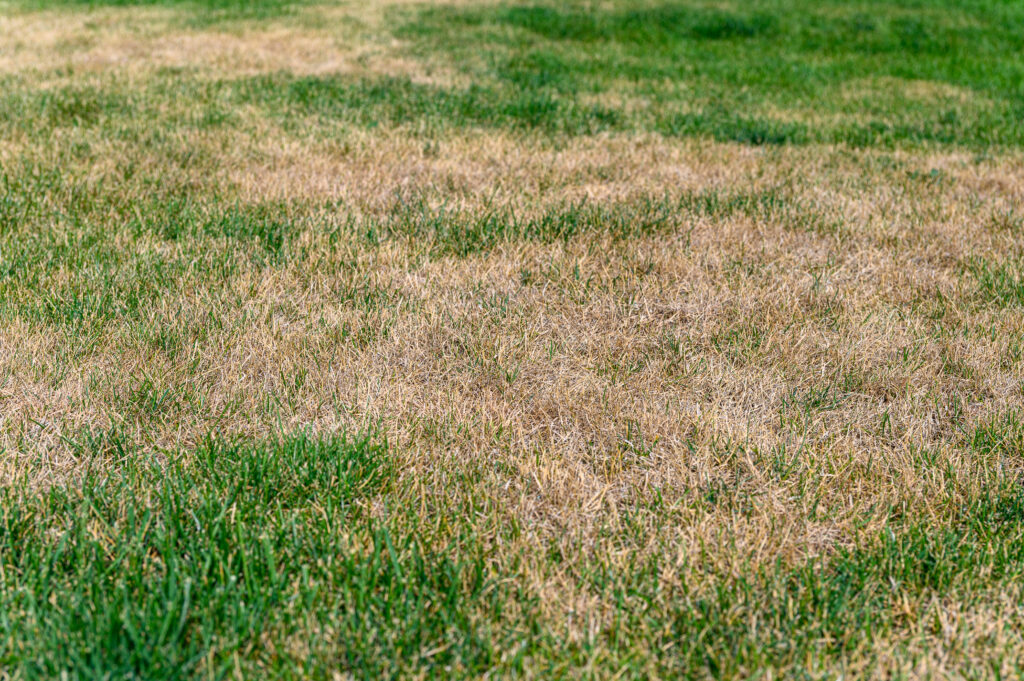
Late July on a sloping lakefront yard in Meredith. The owner is staring at a thinning lawn with two problems: a sun-scorched front strip facing Route 3 and a shaded backyard slope crawling with ground ivy under a stand of red oak. He wants the place to look right when his daughter brings her family up for foliage weekend in October. He has eight weeks to pull off a fall renovation, and most of those weeks need to happen before he puts a single seed on the ground.
This is the situation every Granite State property owner faces. New Hampshire is not a single lawn climate. It is at least four overlapping ones, sitting on glacial till, ledge, and acidic soils that punish anyone copying a renovation plan from a Massachusetts or Connecticut guide. The September aeration and overseeding work everyone talks about is real, but it only works if July is used to set the table.
The Granite State Soil Reality
Drive a soil probe into a typical NH yard and you will hit one of three things within the first six inches: glacial cobble, a flat slab of ledge, or thin loam over sand. The ice sheet scraped this state clean, and what got deposited is a chaotic mix of stones, sand, and a shallow organic layer. Soil maps for Hillsborough, Rockingham, Merrimack, Belknap, and Cheshire counties all show variations on the same theme: stony fine sandy loams, often with bedrock within 40 inches of the surface.
What this means for September aeration: standard core tines that pull a 3-inch plug in Connecticut clay will get stopped at 1.5 inches by a cobble in Bedford. Aerating an NH lawn properly often takes two passes in different directions, sometimes with a slicer-seeder used in tandem, and the operator needs to know when to back off tine depth to avoid bending equipment on hidden granite. Anyone quoting a single-pass aeration for an NH property is not paying attention.
The acidic pH compounds the problem. New England pine, oak, and hemlock litter has been dropping acidic organic matter on these soils for centuries. The bedrock itself is granitic. Acid rain through the second half of the twentieth century pushed pH lower still. Most NH residential lawns test between 5.0 and 5.8. UNH Cooperative Extension targets 6.0 to 6.5 for cool-season turf, which means nearly every NH lawn needs lime before nitrogen will do its job.
Four Microclimates, Four Different Renovation Calendars
One of the things that surprises people moving to NH from points south is how different the lawn calendar is from town to town. A property in Hampton on the Seacoast and a property in Bristol up in the Lakes Region are both legally in New Hampshire, but the fall renovation windows are not the same week.
Seacoast (Portsmouth, Dover, Exeter, Hampton)
The Atlantic moderates everything. Soil temperatures stay warmer later into fall, meaning the germination window opens later and stays open longer. Seacoast properties are typically best seeded the first or second week of September. The downside is heavier weed pressure from longer warm-season weed growth and salt-laden coastal winds that punish thin-bladed cultivars.
Merrimack Valley (Nashua, Manchester, Concord)
The most populated corridor and the most variable. Properties along the river valley warm and cool faster than the surrounding hills. Typical seeding window opens late August and runs through mid-September. Heavy residential density means heavier weed seed pressure from neighboring lots.
Lakes Region (Laconia, Meredith, Wolfeboro)
Cooler nights, often by 5 to 8 degrees compared to Manchester. The cold air drainage off surrounding hills shortens the fall window on the front end. Seeding can begin in the last week of August on most lakeside properties. Lake cottage owners with second homes often have a hard deadline of Columbus Day weekend or Labor Day weekend, which makes early scheduling critical.
Monadnock and Upper Valley (Keene, Peterborough, Hanover, Lebanon)
The earliest fall in NH. Cooler at elevation, with the most aggressive frost calendar. The renovation window opens in mid-to-late August and closes by the third week of September. Properties at higher elevation often see ground frost while Portsmouth is still mowing weekly.
The practical takeaway: the 7 to 10 day spread between the Seacoast and the Upper Valley is the difference between a successful September renovation and a half-germinated mess. Plan your aeration date by your actual microclimate, not by a generic Northeast calendar.
The UNH Extension Soil Test (Order It This Week)
The University of New Hampshire Cooperative Extension runs the most affordable and most NH-specific soil testing program in the region. A standard turf test runs about 20 dollars, takes two to three weeks to return, and gives you NH-calibrated recommendations for pH, lime application rate, phosphorus, potassium, and organic matter. The lab is at Spaulding Hall in Durham and you can mail samples or drop them at a county Extension office.
Why this matters more in NH than elsewhere: lime requirements vary enormously across NH properties. A sandy lot in Hampton might need 30 pounds per thousand square feet to nudge pH up half a point. A heavier loam in Hopkinton might need 60 pounds per thousand. Guessing wastes product and money on the over side, and wastes the whole renovation effort on the under side. UNH gives you the exact rate.
Order the test the first week of July. Results back by late July. Lime ordered and applied at September aeration. The new seedlings drop into soil with pH heading toward the right range, and your fall fertilizer actually gets taken up rather than sitting locked in acidic ground.
Cultivar Choice for Real New Hampshire Winters
Generic Northeast seed blends on the shelf at big-box stores in Salem or Tilton are typically formulated for the Boston-to-Philadelphia corridor. They lean heavily on heat-tolerant tall fescue, which performs well in southern New England but lacks the cold tolerance for an NH January when the mercury can sit below zero for a week at a time.
For New Hampshire properties, the cultivar mix that holds up:
- Kentucky bluegrass at 35 to 45 percent, weighted toward cold-tolerant cultivars. Park, Midnight, Award, and Bewitched all rate well for NH cold and recovery. KBG self-repairs from rhizomes, which matters when ice damage takes out patches in February.
- Turf-type tall fescue at 30 to 40 percent, choosing Northeast-bred varieties like the Rebel, Falcon, or Titanium series. Deep roots help on rocky NH soils where moisture pockets are deep.
- Perennial ryegrass at 15 to 20 percent for fast establishment ahead of an early NH frost.
- Fine fescue at 10 to 20 percent for the shaded oak and hemlock edges that line so many NH yards. Fine fescue tolerates acidic soils and low light better than any other cool-season grass.
Buy the seed in late July or early August. The reputable suppliers across the state, including Phelps in Newport and several Tractor Supply locations, sell through the better cultivars by Labor Day weekend.
Ground Ivy: The NH Renovation Nightmare
Ground ivy, locally called gill-over-the-ground or creeping Charlie, is the weed that ruins more NH renovations than any other. It loves the shaded, acidic, moist conditions that characterize half the yards in this state. By July it is creeping under maple drip lines, around stone walls, and into every thinning patch where the turf has weakened.
The trap: a homeowner sees ground ivy in mid-July, blanket-sprays a broadleaf herbicide, and then tries to overseed eight weeks later. Triclopyr and the other effective ground ivy products carry seeding restrictions that can stretch beyond the typical four-week label window when soils stay hot. The September seed germinates poorly because the herbicide residue is still active in the root zone.
The right NH play: spot-treat ground ivy in the first or second week of July with a triclopyr product, hit it again with a touch-up two weeks later if needed, and then leave the herbicide bottle on the shelf until late October. The aeration and overseed in September fill in the bare areas the ground ivy occupied, and a final spot treatment after the new turf is established cleans up regrowth before winter.
Property Scale Drives Different Plans
NH service area properties run a wider range than most states. The renovation plan changes by scale:
- Condo associations in Manchester and Portsmouth. Boards need a single coordinated September aeration date across multiple buildings, contractor access plans, and resident communication. July is the month to lock that date and notify residents.
- Working farm properties around Hopkinton and Henniker. Often have large open lawn zones bordering pasture or hayfield. Weed pressure from adjacent ag land is constant. The renovation plan typically includes a wider buffer treatment.
- Lake cottages in the Lakes Region. Often have shoreline buffer regulations under New Hampshire’s Shoreland Water Quality Protection Act. Fertilizer and lime applications within the 250-foot protected zone have specific phosphorus restrictions. Plan the renovation knowing where the protected zone starts.
- Second-home foliage properties. Often unoccupied through the renovation window. Need a service plan that includes the irrigation oversight the owner cannot provide remotely, plus a visual deadline tied to leaf-peeping weekends.
The Foliage Deadline
This is the NH wrinkle that nobody outside the state thinks about. Peak foliage weekends in early to mid October drive a hard visual deadline on properties that host family, rent to tourists, or sit on a road that gets serious leaf-peeper traffic. Renovating too late means brown bare patches when the property is on display. Renovating on time means the new turf is up two to three inches by Columbus Day and reads as a green carpet under the maples.
Working backward from a Columbus Day visual deadline: seedlings need 4 to 5 weeks to look respectable. That means seed down by Labor Day at the latest for foliage-focused properties. That means soil tested and lime ordered by late July. That means the renovation plan is built right now.
What to Do Next
If you would rather have the July planning, the September execution, and the NH-specific cultivar and lime decisions handled by people who run this work every fall from Portsmouth to Plymouth, we are ready. Our calendar for early September aeration fills first, and Lakes Region and Monadnock properties book earliest because their windows open earliest.
Lawn Squad of New Hampshire serves the Seacoast, Merrimack Valley, Lakes Region, and Monadnock region.
Call 603-716-9498 or request a free quote at lawnsquad.com. Our VitaminLawn program combines UNH-calibrated soil amendments, cold-tolerant cultivar blends bred for NH winters, microclimate-appropriate scheduling, and the year-round program that gets your Granite State lawn looking right by foliage weekend and even better next May.