Short Answer: Columbus has a narrow three-week window for core aeration and overseeding, roughly August 25 through September 15, when soil temperatures, daylight, and rainfall line up for fast establishment. That window books out by mid August every year. Homeowners who plan in July get the optimal date for their specific lawn, get aeration and overseeding sequenced correctly with starter fertilizer, and get any disease damage patched before the seed goes down. Homeowners who wait until late August get whatever date is left, which is often outside the optimal window. The work happens in September, but the planning, soil assessment, and scheduling all happen now.
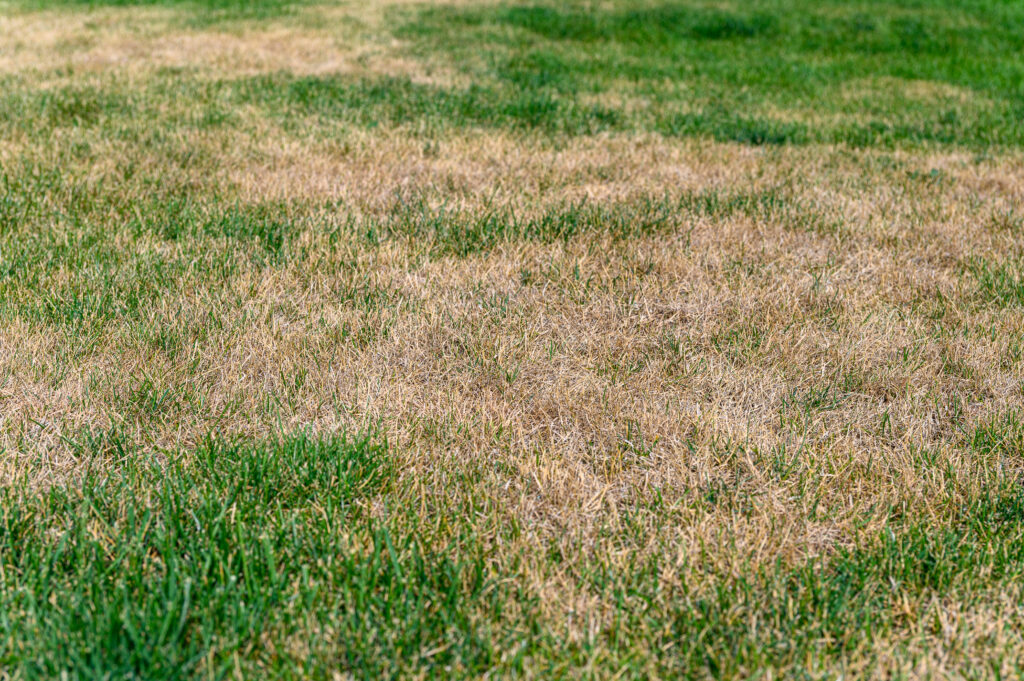
It is mid July in New Albany, and you are looking at a lawn that has had a hard summer. There is a thin spot under the maple where the lawn has thinned out over three years of compaction. There is a tan patch along the south property line that you suspect is brown patch from late June. There is a stripe along the driveway where the soil seems to have turned to concrete. All of these are fall problems. All of them get solved by core aeration and overseeding done in early September. And the call to set that up needs to happen now, in July, not in late August.
This guide explains why Columbus has such a narrow fall window, what your July decisions actually control, and how clay soil and the transition zone shape every part of the plan. The work is in September. The planning is right now.
The Columbus Fall Window Is Only Three Weeks Wide
Cool-season grass seed (Kentucky bluegrass, tall fescue, perennial ryegrass) germinates best when soil temperatures sit between 55 and 70 degrees with consistent moisture. In Columbus, that combination shows up reliably from about August 25 through September 15, give or take a few days depending on the year. Before that window, soils are still too hot and the seed bakes. After that window, soil temperatures fall fast and germination slows, leaving young seedlings vulnerable to the first hard frost in mid October.
Three weeks is not much. Cleveland gets a slightly wider window because nights cool earlier. Cincinnati gets a slightly later window because the Ohio River Valley holds heat. Columbus sits in the middle, with a window that is short and tight, and the work has to happen across the entire metro area in the same three weeks.
What that means practically: the calendar fills up. Every reputable lawn care company in central Ohio is operating at full capacity from late August through mid September. The lawns that get the best dates are the ones that booked in June and July. The lawns that call after Labor Day weekend get whatever is left, which often pushes them to mid or late September and reduces germination success.
Why Aeration Matters Specifically on Columbus Clay
If we lived in a sandy soil region, aeration would still help but it would not be load-bearing. We live on glacial till and Miami silt loam soils that range from clay loam in older Bexley and Worthington to heavier clay in newer Dublin, Powell, and New Albany subdivisions where construction stripped the topsoil and compacted what remained.
Clay soils compact under foot traffic, mower weight, and the simple settling that happens over years. Compacted soil has fewer air pockets, less drainage capacity, and a harder time letting root systems penetrate downward. The consequence on a lawn is what you see across thousands of central Ohio yards: thinning grass in high-traffic areas, water that pools after rain, roots that go a couple of inches deep instead of six, and grass that struggles every summer because it cannot find moisture below the surface crust.
Core aeration physically pulls plugs of soil out of the lawn, leaving holes that air, water, fertilizer, and grass seed can move through. On clay, this is not optional maintenance. It is the single highest-return investment we make on a Columbus lawn, and the results carry into the next spring, summer, and fall.
What July Decisions Actually Control
It might seem strange to think about fall aeration in the middle of summer heat, but several specific things have to be decided now in order for September to go right.
First, the date. Lawns vary in optimal aeration timing within that three-week window based on grass type, sun exposure, and recovery state. A heavily shaded Upper Arlington lawn with old bluegrass should be done at the earlier end. A sun-exposed Dublin fescue lawn that is still in active dormancy should be done at the later end. We can only honor those preferences for clients who book early.
Second, what gets done with the aeration. The plug pulls themselves are only step one. Overseeding right after aeration, while the holes are still open, increases seed-to-soil contact dramatically and lifts germination rates substantially. A starter fertilizer with a high phosphorus number applied at seeding feeds early root development. Without the July plan, these three steps often get separated by days or weeks, and the result is much less effective than a coordinated execution.
Third, disease assessment. If your lawn has brown patch or dollar spot damage from June and July, the dead patches need to be raked out and possibly treated before seed goes down on them. Diseased thatch and dead crowns will not support new seedlings, and overseeding directly on top of an unmanaged disease site often produces patchy, disappointing germination. July is when we identify these spots so they can be prepped properly.
Fourth, soil testing. If we have not pulled a soil sample on your lawn in three years or more, July is the right month to do it. Test results take 2 to 3 weeks to come back from the lab. Knowing your pH and nutrient levels before the fall aeration lets us amend with lime, sulfur, or specific nutrients while the holes are open, which is dramatically more effective than top-dressing later.
The Right Seed Mix for Columbus Properties
Not all overseeding is the same. The mix has to match the conditions of your specific lawn.
For full-sun lawns in Dublin, Powell, Hilliard, and New Albany where tall fescue dominates, we typically use a turf-type tall fescue blend with three or four cultivars. Modern fescue cultivars are dramatically more disease-resistant and drought-tolerant than the older Kentucky 31 fescue that dominated Columbus lawns through the 1990s. If your lawn is more than 15 years old and has never been overseeded with newer cultivars, the variety upgrade alone is a substantial improvement.
For lawns with partial shade in Worthington, Upper Arlington, Bexley, and parts of Westerville where Kentucky bluegrass is more common, we use a bluegrass and fine fescue mix that handles dappled light better than tall fescue does. Bluegrass also self-repairs through rhizomes, which means a denser, more even canopy over time.
For Gahanna and Reynoldsburg lawns that get heavy foot traffic from kids and dogs, we lean toward a fescue and bluegrass combination that combines fescue toughness with bluegrass self-repair.
The right mix is part of the July conversation. Standard generic seed bought at a big-box store in late August often skews toward annual ryegrass for fast green-up, which dies the next summer and leaves bare spots. Knowing the right mix and ordering quality seed takes a few weeks of lead time.
How the September Visit Actually Runs
For clients who book in July, a typical fall visit looks like this. We arrive in the morning. We run a core aerator across the entire lawn, pulling plugs 2 to 3 inches deep, with two to three passes in different directions on areas of known compaction. The plugs are left on the lawn to break down naturally, which returns soil microbes and a little organic matter to the surface.
Immediately after aeration, we apply the overseeding mix at a rate appropriate for the lawn density. On thin areas the rate is higher. On dense areas it is lighter. The seed falls into the open holes, which is the goal.
A starter fertilizer goes down at the same time, providing phosphorus for root development without pushing top growth that the new seedlings cannot support.
We finish with a watering plan tailored to the next 14 to 21 days. New seed needs light frequent watering until germination, then a shift to deeper less frequent watering once seedlings are an inch tall. We give you a written plan so the in-between days do not undo the work.
What Happens If You Wait
Every year, a portion of Columbus homeowners call us between September 10 and September 25 wanting fall aeration and overseeding. By that point, our schedule is full, the optimal window is closing, and the lawns that get squeezed in late often see substantially lower germination because soil temperatures have dropped below the ideal range.
The cost of waiting is not just a missed schedule. It is a year of compounding lawn problems: continued compaction, continued thinning, more weed pressure next spring because the canopy is not dense enough to shade out crabgrass, and another full summer of stress before the next chance to aerate. Skipping a year of fall aeration on clay soils is the single biggest setback a Columbus lawn can take.
What to Do Next
If you have not booked your fall aeration and overseeding yet, July is the month to do it. Even if you are not sure of the exact date, getting on the calendar now reserves the optimal window for your lawn type and gives us time to assess and plan properly.
Lawn Squad of Columbus serves Baltimore, Blacklick, Brice, Canal Winchester, Carroll, Columbus, Delaware, Dublin, Galloway, Grove City, Groveport, Hilliard, Lewis Center, Lockbourne, New Albany, Pataskala, Pickerington, Powell, Reynoldsburg, and Westerville.
Call us at 740-248-5880 or request a free quote at lawnsquad.com. Our VitaminLawn program includes coordinated fall aeration, overseeding, and starter fertilization built specifically for the clay soils and transition zone grass mixes that define central Ohio lawns.