
Short Answer: If your Carmel, Westfield, or Lafayette lawn is already showing heat stress in early July, shift the plan from making it perfect to keeping the crowns alive until fall. Water deeply once or twice a week (one inch total) early in the morning, mow tall at 3.5 to 4 inches with a sharp blade, pause nitrogen fertilizer until late August, hold off on broadleaf herbicides above 85 degrees, and accept that Kentucky bluegrass dormancy is healthy survival behavior on heavy Hoosier clay. Watch for summer patch, brown patch, and grub feeding as the real problems that need active treatment.
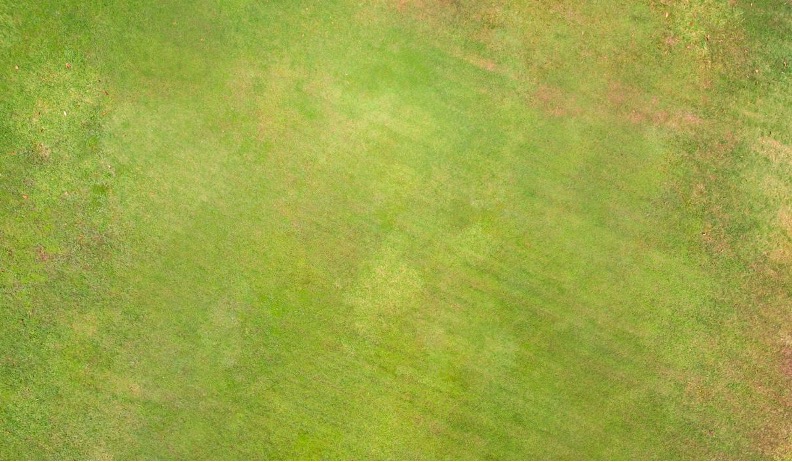
It is the first hot week of July across Central Indiana, the daytime temperature hits 89, the dew point sits in the upper 60s, and the lawn that looked so good in May is starting to fade. The browning strip near the driveway in Zionsville. The crispy patch on the south side of the Carmel cul-de-sac house. The thin section where the Westfield kids run between the trampoline and the house. The yard has crossed into the part of summer where Indiana cool-season grass is no longer thriving, it is enduring.
This is where most of the bad July decisions happen. Homeowners reach for fertilizer to “push it green.” They turn on the sprinklers every morning for 10 minutes. They drop the mower deck because the lawn “needs a haircut.” Every one of those moves makes the situation worse. Hoosier clay, July heat, and cool-season grass form a stress combination where the right play is to slow down and protect what is alive, not push the plants harder.
Here is the playbook we use across Central Indiana when a lawn is already in trouble in early July. The goal is not to win July. The goal is to survive July with intact crowns so the lawn responds in September.
Why Indiana Cool-Season Lawns Struggle in July
Kentucky bluegrass and turf-type tall fescue, the foundation of most Central Indiana lawns, are built for soil temperatures between 60 and 75 degrees. That is the comfort zone where roots grow, photosynthesis runs efficiently, and the plant builds carbohydrate reserves. From the first week of July through about mid-August across Carmel, Westfield, Lafayette, and the rest of our service area, soil temperatures regularly cross 75 degrees and stay there. On west-facing slopes and along asphalt driveways, soil surface temperatures can hit 95 degrees by mid-afternoon.
The heat is only half the problem. The other half is the Indiana clay. Central Indiana sits on some of the heaviest clay soils in the Midwest, layered with glacial till and decades of suburban construction backfill. Clay holds water beautifully in spring but drains slowly and turns concrete-hard in July when it dries. Roots cannot push through compacted hot clay, which means the same grass that had deep roots in May has reduced root capacity in July.
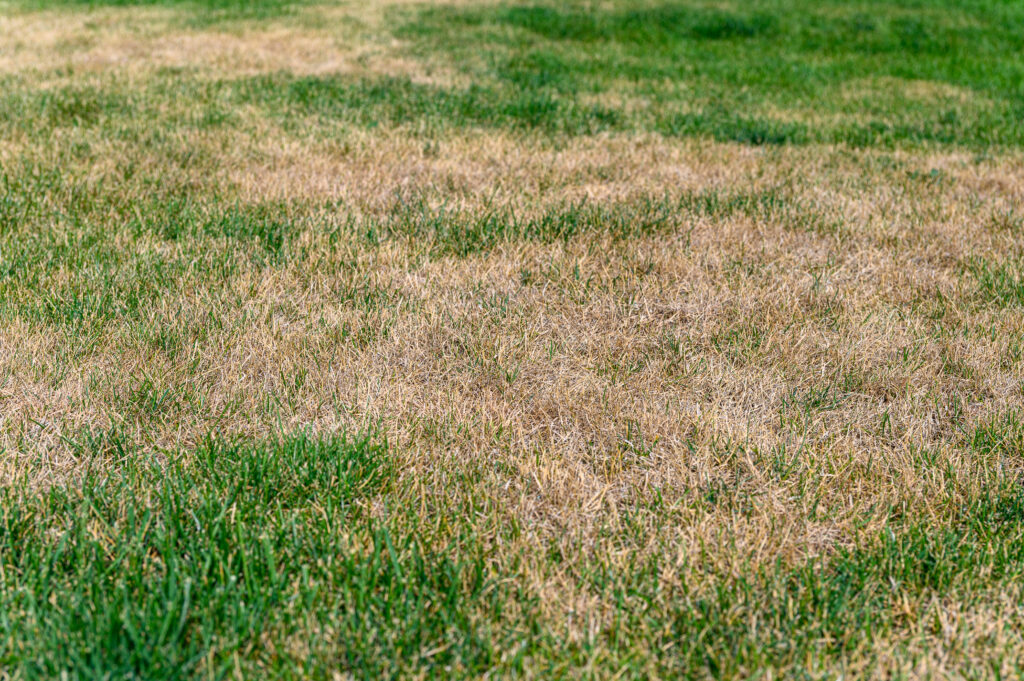
Kentucky bluegrass evolved a survival mechanism for this exact stress profile: summer dormancy. When heat and drought cross a threshold, the plant pulls energy back into the crowns at soil level, lets the leaf blades brown, and waits the heat out. A dormant bluegrass lawn looks dead. It is not. Provided the crowns receive minimal water to stay viable, the lawn re-greens in late August or September.
The Watering Plan That Works on Indiana Clay
Most July lawn damage in Central Indiana traces to watering pattern, not watering amount. The rule that works on Hoosier clay is deep, infrequent, and early in the morning.
Target one inch of water per week (one and a quarter during a heat wave), delivered in one or two cycles between 4 a.m. and 9 a.m. Morning watering lets the canopy dry as the sun rises, which keeps fungal disease pressure low. Evening or night watering leaves blades wet for 10 to 14 hours and is the single biggest risk factor for brown patch and dollar spot in our region.
Daily shallow watering is the worst pattern on clay. Ten minutes every morning trains roots to live in the top inch of soil. When the top inch dries out in afternoon sun, the grass wilts even though there is water sitting two inches deeper. Lawns watered shallowly are first to brown in a heat wave and slowest to recover after rain. The Carmel and Westfield irrigation systems we see set up this way are responsible for a lot of “why is my lawn dying?” calls in late July.
To calibrate, set tuna cans across each zone and measure how long the system takes to deliver a half inch. Most Central Indiana irrigation systems hit that in 20 to 30 minutes per zone. Run twice a week for the deep cycle. If you do not have irrigation, a hose-end sprinkler running 60 to 90 minutes per spot once per week works fine.
Mow High and Mow Sharp
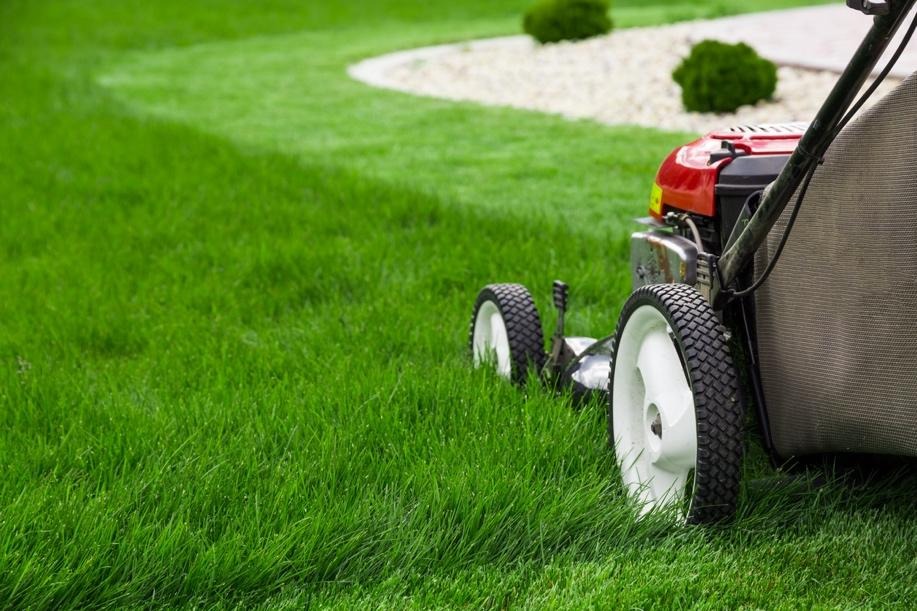
The mowing deck goes up before the next cut, not after. Set Kentucky bluegrass and fescue blends to 3.5 to 4 inches for the duration of July and August. Taller grass shades the soil, reduces evaporation, pushes roots deeper, and outcompetes the crabgrass that is still pushing through bare or thin areas.
Sharpen the mower blade. A dull blade tears rather than slices, leaving ragged tips that brown out and serve as entry points for disease. Most Carmel and Lebanon homeowners who mow themselves have not sharpened since spring. A $10 to $20 service at any local hardware store fixes it.
Cut only when the lawn has grown above your set height. Cool-season grass in heat-stalled growth or dormancy barely extends for weeks. Mowing inactive turf in 92-degree heat stresses it for no benefit. Wait for visible new growth before making another pass.
Leave the clippings on the lawn. Mulched clippings return moisture and nitrogen and do not contribute to thatch on healthy cool-season turf. The only reason to bag in July is if the lawn got away from you and the clippings would form mats that smother the canopy.
What to Hold Off On in July
The list of things to skip in July is as important as the list of things to do. Each one below makes a stressed cool-season lawn worse.
- Nitrogen fertilizer. Heavy nitrogen on a heat-stressed lawn pushes soft top growth at the expense of carbohydrate reserves and significantly increases disease pressure. Hold the bag until late August or early September.
- Broadleaf herbicide above 85 degrees. 2,4-D, dicamba, and triclopyr can volatilize at high temperatures, drift onto ornamentals, and burn the lawn. Most July spot-sprays do more harm than good. Wait for cooler conditions in early September.
- Core aeration. July is the worst possible month to core-aerate a cool-season lawn on Indiana clay. The plugs dry out, the open holes stress the crowns, and the soil is too hot for new root growth. September is the right window across our service area.
- Seeding. Soil is too hot for reliable Kentucky bluegrass or tall fescue germination. New seed in July typically wastes both seed and labor. The window opens again around Labor Day.
- Heavy dethatching or scarifying. Aggressive mechanical work takes more from stressed plants than it returns. Save it for fall.
Telling Heat Dormancy from Real Damage
Some July browning is normal Hoosier behavior. Some of it is a problem that needs action. Two checks usually sort which is which inside a minute.
Pull back a clump of brown grass and look at the crown where the blades meet the soil. Firm, white to pale-green crowns mean dormancy. The plant is alive and will recover. Crumbly, dry, brown crowns mean dead grass that needs to be replaced in the fall renovation.
Look at the pattern. Heat dormancy shows up evenly across exposed areas, especially on south and west-facing sections. Disease shows up as discrete circular or irregular patches with sharp borders that expand quickly across a humid week. Insect damage shows up as patches that pull up easily from the soil, like loose carpet, because roots have been chewed off. If the pattern is sharp-edged and expanding, do not write it off as heat.
The Real Indiana Problems to Watch in July
Three issues in July deserve active treatment across Carmel, Westfield, Zionsville, and the rest of our service area.
Summer patch is the meanest disease for established Kentucky bluegrass lawns in Central Indiana. It shows as rings or arcs of dead grass with a tuft of green grass surviving in the middle, like a doughnut. It is a root disease that does its damage out of sight and is mostly visible after the fact. Preventive fungicide programs starting in late May into June work. Curative work in July is harder. Lawns that show summer patch this year need to be on a preventive program next year.
Brown patch hits tall fescue when overnight lows stay above 70 degrees and humidity stays high. Tan or brown patches several feet across, often with a smoke ring visible in early morning dew. Caught early it responds to a fungicide application combined with morning watering only and no nitrogen.
Grub feeding shows up in late July on lawns that missed the June preventive window. Watch for patches that pull up like a loose rug, especially near rose bushes or linden trees where Japanese beetles have been active, and where skunks or raccoons have torn up sections looking for grubs. Curative grub products (trichlorfon) work if applied promptly. The window is short.
What to Do Next
If you would rather have someone walk the property, distinguish dormancy from disease from insect feeding, and build the right plan for the rest of summer and the fall recovery, that is what our July visits across Central Indiana are designed to do.
Lawn Squad of Central Indiana serves Carmel, Westfield, Zionsville, Lafayette, West Lafayette, Lebanon, Frankfort, Sheridan, Whitestown, Thorntown, Delphi, Monticello, Brookston, Dayton, Battle Ground, and surrounding communities across Central Indiana.
Call us at 765-343-4785 or request a free quote at lawnsquad.com. Our VitaminLawn program is built for the realities of Hoosier clay and cool-season turf, with summer programming designed to protect crowns through heat stress and set the lawn up for the fall aeration and overseeding window that does the heaviest lifting on Central Indiana recovery. July is not when we make Indiana lawns look great. It is when we keep them alive so September can bring them back.