Short Answer: When a Central Georgia Bermuda, Zoysia, or Centipede lawn browns in July despite regular watering, the cause is almost never simple drought. The six most common reasons we diagnose across Macon, Warner Robins, Milledgeville, and Perry are: shallow watering that creates shallow roots, red clay compaction sealing water out of the root zone, thatch intercepting water above the soil, large patch or dollar spot fungus exploiting humid Georgia nights, chinch bugs feeding in sun-baked patches, and over-fertilization that pushes succulent growth into the heat. The right fix depends on which cause is at work, and watering more makes several of them worse rather than better.
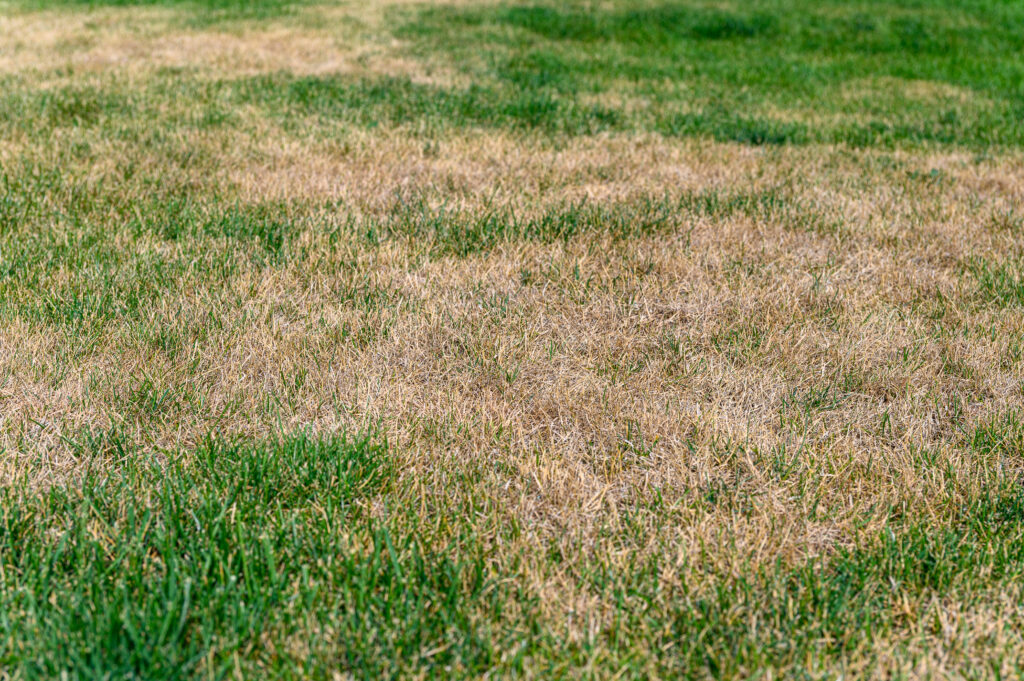
Every July we get the same call across Central Georgia. The homeowner has been watering all month. The yard was a textbook green on the Fourth of July weekend. Now patches are tan, the edges are brown, and the irrigation is running on schedule. “Why is this happening?”
The honest answer almost every time is that drought is not the real problem. Central Georgia rarely runs short of water for long. Even in a dry stretch, the red clay subsoil holds moisture well below the surface. By the time a Macon Bermuda lawn or a Warner Robins Zoysia lawn is browning in July with a functioning sprinkler system, the problem is between the water and the roots, or it is something using the heat-stressed lawn as an opening.
Here are the six causes we rule in or out on every Central Georgia summer lawn call, and what to do about each. The diagnostic tests at the end take about fifteen minutes and they will steer you toward the right fix.
1. Shallow Roots From Light Daily Watering
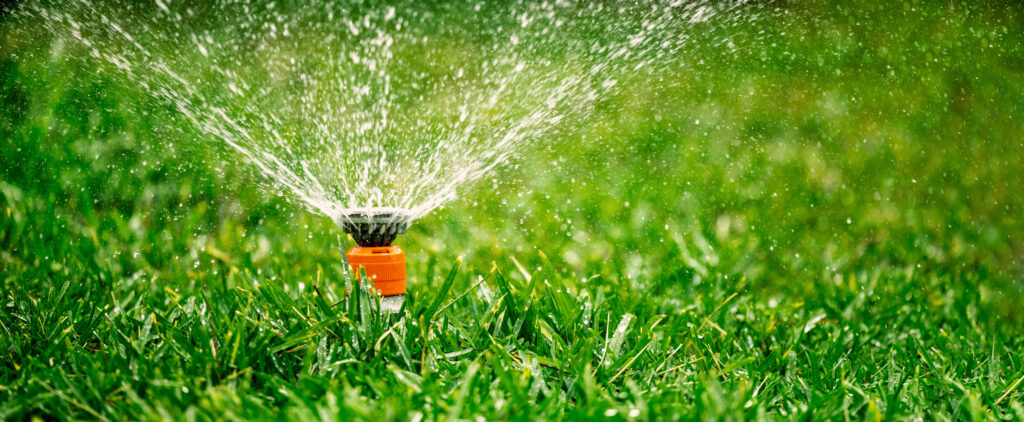
The most common cause we find on browning Bermuda lawns from Bonaire to Byron is short, daily sprinkler cycles. Fifteen minutes every morning sounds like generous watering. In reality it keeps only the top inch of soil moist, and Bermuda roots stay wherever the moisture is. When a 96-degree July afternoon dries the top inch faster than the system can replace it, the grass browns because the roots never grew deep enough to reach the moisture that is sitting eight inches down in the red clay.
The screwdriver test is the fastest diagnostic we know. Push a long-shaft screwdriver into the lawn an hour after an irrigation cycle. It should slide easily down six to eight inches. If it stops at two or three inches, the water is not reaching the depth the root system needs. The fix is to reset the controller to two cycles per week of about half an inch each, delivered between 4 and 8 a.m., and to give the roots a reason to chase moisture deeper.
2. Compacted Red Clay Sealing Water Out
Central Georgia red clay is generous in some ways and stubborn in others. When it is moist, it holds water beautifully. When it is dry and compacted, it seals over and rejects water like a paved surface. Areas of the lawn that get foot traffic, dog runs, kids playing, mower wheels every week, end up so compacted by July that half the irrigation runs off into the driveway or street before it ever soaks in.
Diagnose by comparing the screwdriver resistance in the brown area to a healthy green area. If the brown area is noticeably harder to penetrate in the top three inches, compaction is in play. The right fix is core aeration during active warm-season growth, which is late May through July across our service area. If the patch is small, a hand fork will work. Aerated lawns absorb water at roughly twice the rate of compacted ones, which means the same amount of irrigation suddenly becomes effective.
3. Thatch That Blocks Water Before It Reaches the Soil
Both Bermuda and Zoysia build thatch quickly. Centipede builds thatch even faster relative to its growth rate, which is one reason we see so many Centipede problems on older Macon and Milledgeville lawns. A thick thatch layer (over half an inch) is hydrophobic when dry. Water hits it, beads up, runs sideways, and the roots below get little of it.
Cut a pie-wedge shaped sample out of the lawn with a serrated knife. Look at the side. If you see a fibrous brown layer between the green canopy and the soil that is thicker than half an inch, thatch is intercepting your water. The midsummer move is to keep watering deeply and plan a verticut or aeration during fall regrowth, depending on the species. Centipede in particular benefits from a careful verticut in late spring, since aggressive de-thatching can stress it.
4. Large Patch, Dollar Spot, and Brown Patch Fungi
Central Georgia summer nights are humid. When the lawn does not dry quickly between dew and morning sun, fungal pathogens get aggressive. Large patch (Rhizoctonia solani) is the biggest disease problem we see on Zoysia and Centipede across our service area, particularly in shaded backyards in Macon and along the Ocmulgee floodplain. It shows up as circular tan or orange patches, often with a darker ring of newly infected grass on the outside edge. Patches can be three feet to fifteen feet across.
Dollar spot is more common on Bermuda. Silver-dollar-sized straw-colored spots that merge over time. Walk the lawn at first light. If you see a cottony white fuzz on the leaf blades, that is mycelium and confirms a fungal call. Watering more makes this worse. The fix is to water only in the early morning, ensure good airflow, raise the mowing height a notch on Zoysia and Centipede, and apply a labeled fungicide if the area is expanding more than a foot per week.
5. Chinch Bugs and Spittlebugs Feeding in Hot Sun
Chinch bugs love sun-baked Bermuda and St. Augustine in Central Georgia. Damage starts in full-sun areas along driveways, sidewalks, and south-facing walls. It looks exactly like drought damage, which is why so many homeowners spend weeks watering more while the chinch bugs feed undisturbed.
Spittlebugs are a separate, common Central Georgia pest, especially on Centipede. The early sign is a foamy white spit-like mass at the base of the grass blades. Heavy spittlebug pressure makes the leaf tips wilt and turn purplish-brown over the course of a week.
The float test catches chinch bugs. Push a metal can with both ends cut out into the soil at the edge of a brown area, fill with water, and wait five minutes. If chinch bugs are present they will float up. For spittlebugs, the foam masses on the lower stems are diagnostic. Treatment in either case is a targeted insecticide labeled for the specific pest.
6. Over-Fertilization Followed By Heat
If you fertilized heavily in June with a high-nitrogen product and the lawn is now browning at the leaf tips with a generalized yellow-tan cast across broad areas, you are likely seeing nitrogen-driven heat scorch. The lush growth from the feeding cannot keep up with the water demand once daytime highs climb past 92 degrees and nighttime lows stay in the mid 70s. The result is scorched tips that do not green back up with watering.
Centipede is particularly sensitive to this. Many Central Georgia Centipede lawns we see browning in July were actually overfed in spring or early summer. Centipede wants very little nitrogen, roughly one pound per thousand square feet for the entire year, and a heavy spring feeding pushes it into trouble. The fix is to stop feeding for the rest of the summer, mow at the recommended height, and let the lawn recover at its own pace. New growth will replace the scorched tissue within two to three weeks during active July growth.
The Quick Decision Tree We Use on Service Calls
Once you have ruled the six causes in or out, the diagnosis usually falls into one of these patterns:
- Uniform brown across the whole lawn, screwdriver stops shallow: shallow roots, possible compaction. Water deeper, aerate.
- Circular patches, fluffy fuzz at dawn, dark ring on outer edge: large patch or dollar spot. Reduce night moisture, fungicide.
- Expanding patches in full sun near hardscape: chinch bugs. Float test, targeted insecticide.
- Foamy white masses near soil line on Centipede: spittlebugs. Targeted insecticide.
- Yellow-brown tipped blades over broad areas after a recent fertilizer: nitrogen scorch. Stop feeding.
- Wedge test shows over half an inch of thatch: water interception. Plan a verticut.
- None of the above and the soil is dry six inches down: actual drought. Increase to one inch per week in two cycles.
Central Georgia warm-season turf is forgiving once you find and fix the right cause. Bermuda, Zoysia, and Centipede all recover quickly during July active growth as long as the crowns and stolons are intact. The trap most homeowners fall into is months of watering more without ever asking which of these six issues is actually in play.
What to Do Next
If you are watering and the lawn is still browning, the answer is rarely more water. It is almost always one of the six causes above. Run the screwdriver test, the wedge test, and the float test, and you will narrow it down quickly.
Lawn Squad of Central Georgia serves Allentown, Bolingbroke, Bonaire, Byron, Cadwell, Centerville, Chauncey, Chester, Clinchfield, Cochran, Danville, Dexter, Dry Branch, Dublin, Dudley, East Dublin, Eastman, Fort Valley, Gordon, Gray, Haddock, Hardwick, Harrison, Hawkinsville, Hillsboro, Irwinton, Jeffersonville, Kathleen, Macon, McIntyre, Milledgeville, Montrose, Oconee, Perry, Rentz, Sandersville, Smarr, Tennille, Toomsboro, Warner Robins, Warthen, and Wrightsville.
Call us at 478-901-2620 or request a free quote at lawnsquad.com. Our VitaminLawn program is calibrated for Central Georgia red clay, warm-season grass species, and the specific disease and pest pressures of our climate, with a customized plan rather than the same generic schedule from one yard to the next.