
Short Answer: For New Hampshire properties bordering woods, trails, or water, effective mosquito and tick control combines monthly barrier spray treatments, habitat changes at the lawn-to-woods transition, and (for some properties) larvicide stations targeting mosquito breeding sites. A monthly barrier program reduces both populations by 75 to 90 percent for about three weeks per application. The tick component is most effective when paired with a wood chip barrier at the woods edge, cleared leaf litter, and managed brush. For Lyme-belt NH families, the goal is reducing risk substantially, not eliminating it entirely.
If you live anywhere in southern New Hampshire (Bedford, Amherst, Hollis, Londonderry, Atkinson, the Seacoast towns, the hill country around Peterborough), you probably already know what we are talking about. Your kids come in from playing in the yard with a tick on the back of the leg. You pull a tick off the dog after a quick walk along the trail behind the neighborhood. You sit on the back deck at dusk and the mosquitoes find you in 30 seconds. The woods that make this state beautiful are also a constant source of biting insect pressure.
The honest conversation about mosquito and tick control in New Hampshire is different from the conversation in suburban Atlanta or coastal Florida. We are in the heart of the Lyme belt. Black-legged ticks (deer ticks) thrive in our hardwood forests. Mosquitoes breed in countless wetland pockets across our landscape. The question is not whether to do something about it. The question is what actually works for your property type and your family’s tolerance for risk.
Why NH Has Heavier Tick Pressure Than Most of the Country
New Hampshire reports one of the highest per-capita Lyme disease rates in the United States. Our combination of mixed hardwood forests, white-tailed deer populations, white-footed mice (the primary Lyme reservoir), and humid summers creates near-ideal conditions for black-legged ticks.
The tick lifecycle plays out in our yards:
- Adult ticks overwinter and mate in early spring
- Females lay eggs in leaf litter in May and June
- Larvae emerge in summer and feed on small mammals (mice especially)
- Nymphs are active in late spring and early summer, smaller and harder to spot, responsible for most Lyme transmission
- Adults are active in fall and again in spring whenever temperatures rise above freezing
That cycle means tick risk in NH is not just a summer concern. It is a March through November concern with peaks in late May, June, and again in October. The June nymph stage is the most dangerous because the ticks are small enough to miss during tick checks and infection rates run higher.
How Ticks Get Into Your Yard
Understanding the path ticks take into your yard explains why some treatment approaches work better than others. Ticks do not fly. They do not jump. They climb to the tip of a piece of vegetation and wait for a host to brush against them.
The hosts that carry ticks into NH yards:
- White-tailed deer (the primary tick taxi, especially for adult ticks)
- White-footed mice (the primary Lyme bacterial reservoir, very common in NH residential yards)
- Eastern chipmunks (active in stone walls, woodpiles, and rock gardens)
- Dogs and cats (yours and the neighborhood’s, transporting adult ticks)
- Wild turkeys (becoming more common in NH residential areas)
Once ticks arrive in the yard, they live in specific microhabitats: leaf litter under shrubs, the transition zone between mowed lawn and woods, tall grass along trails and stone walls, and the shaded ground cover under decks and outbuildings. They do not live in the open lawn. That is why treatment is most effective when it focuses on the right zones rather than blasting the entire property.
Monthly Barrier Spray Programs
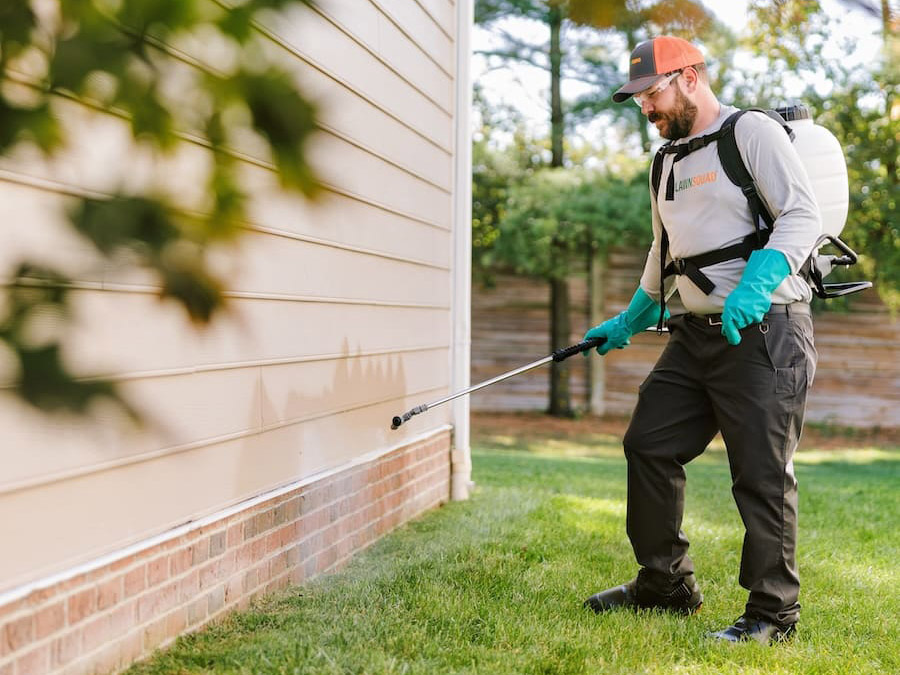
The standard professional approach to tick and mosquito control on NH residential property is a monthly barrier treatment, typically May through October. The technician applies a synthetic pyrethroid (commonly bifenthrin or lambda-cyhalothrin) to the targeted habitat zones.
For mosquitoes, the spray targets vegetation 3 to 8 feet off the ground where adult mosquitoes rest during the day: shrubs, lower tree branches, fence rows, and the perimeter of the yard. The active ingredient kills mosquitoes on contact and provides residual control for about 21 to 28 days.
For ticks, the spray targets ground-level habitat: the woods edge, leaf litter, low shrubs, and the lawn-to-woods transition zone. Tick-targeted application is often done as a more concentrated treatment to those specific zones rather than a uniform yard application.
What to expect from a barrier program in NH:
- 75 to 90 percent reduction in mosquito populations during the residual window
- Significant reduction in tick encounters, particularly in treated zones
- Same-day return to the yard after the spray dries (30 to 60 minutes)
- 6 to 7 monthly applications across the NH season, typically $500 to $800 for the full season depending on lot size
Honest limitations: nothing keeps a yard 100 percent free of either pest. New mosquitoes hatch all summer. New ticks arrive on hosts daily. The program reduces risk substantially, not absolutely. Heavy rain washes residue off vegetation and may shorten the effective window of any given application.
Habitat Modification: The Tick Multiplier
The piece most homeowners do not think about until we walk the property with them: tick control without habitat work is half a strategy. The habitat changes are often free or low-cost and they amplify the effect of every spray application.
What makes the biggest difference on NH wooded properties:
- Wood chip or gravel barrier. A 3-foot wide strip of wood chips, mulch, or pea gravel between your lawn and the woods creates a hot, dry zone that ticks avoid crossing. This single change reduces tick movement onto the lawn by an estimated 60 to 75 percent.
- Leaf litter management. Rake and remove leaf litter from beds, foundation plantings, and along stone walls in spring and fall. Leaf litter is where female ticks overwinter and lay eggs.
- Mow the woods edge. Keep grass cut short along the property line where it meets the woods. Tall grass is tick habitat.
- Manage rodent habitat. Move woodpiles away from the house and off the ground. Seal stone wall cavities where possible. Reduce ground-level cover where mice and chipmunks travel.
- Deer management. Where deer access can be limited (fencing, planting deer-resistant shrubs), tick pressure drops because adult ticks have fewer rides into the yard.
We walk through habitat assessment with every NH tick control customer because the spray and the habitat changes work together. Either alone is less effective than both combined.
Mosquito Larvicide for Properties Near Water
If your property is near a pond, slow-moving stream, drainage ditch, or low spot that holds water after rain, the adult mosquito spray is fighting an uphill battle. Female mosquitoes only travel short distances, so a backyard breeding site can sustain pressure on your yard all summer regardless of how often you spray adults.
Larvicide options for these properties:
Bti briquettes (Bacillus thuringiensis israelensis) are dropped into standing water and kill mosquito larvae specifically without harming fish, birds, or beneficial aquatic insects. They are the gold-standard option for ornamental ponds, rain barrels, and slow water features.
In2Care stations are placed in shaded yard locations and target female mosquitoes that come to lay eggs. The mosquitoes pick up a larvicide and a fungus, then spread both to other breeding sites they visit. Particularly useful for properties where breeding sites are hidden in the surrounding woods.
For NH properties near water, combining monthly barrier spray with larvicide treatment often delivers the closest thing to comprehensive control. Spray for adults already in the yard. Larvicide stops the next generation before it hatches.
What We Tell Lyme-Belt Families
Two things are true at the same time, and we tell every NH family this. First, professional tick and mosquito control significantly reduces risk on your property. The data on barrier sprays plus habitat modification is solid. Second, no yard treatment replaces the personal precautions that prevent Lyme transmission in the first place.
What still matters even with a good treatment program:
- Daily tick checks after time outside, especially for kids and pets
- Permethrin-treated clothing for hiking, gardening, or yard work
- Showering within 2 hours of being outside in tick habitat
- Knowing the early Lyme symptoms (expanding rash, flu-like illness, joint pain) and seeking treatment quickly
- Tucking pants into socks when working in beds or near the woods edge
The yard program reduces the number of ticks that reach you in the first place. Personal precautions catch the ones that get through. Together they give your family the best protection available short of moving to Arizona.
What to Do Next
If you want to walk your specific property with someone who knows NH tick and mosquito habitat, we are happy to do that. We will identify the highest-risk zones, recommend the right combination of treatment and habitat changes, and put together a program that fits your family.
Lawn Squad of New Hampshire serves homeowners across Southern New Hampshire.
Call us at 603-716-9498 or request a free quote at lawnsquad.com. Our mosquito and tick programs work alongside the VitaminLawn fertility and grub prevention work, so one team manages the whole property, knows where your kids and pets spend time, and times treatments to NH seasonal pressure rather than a national calendar.